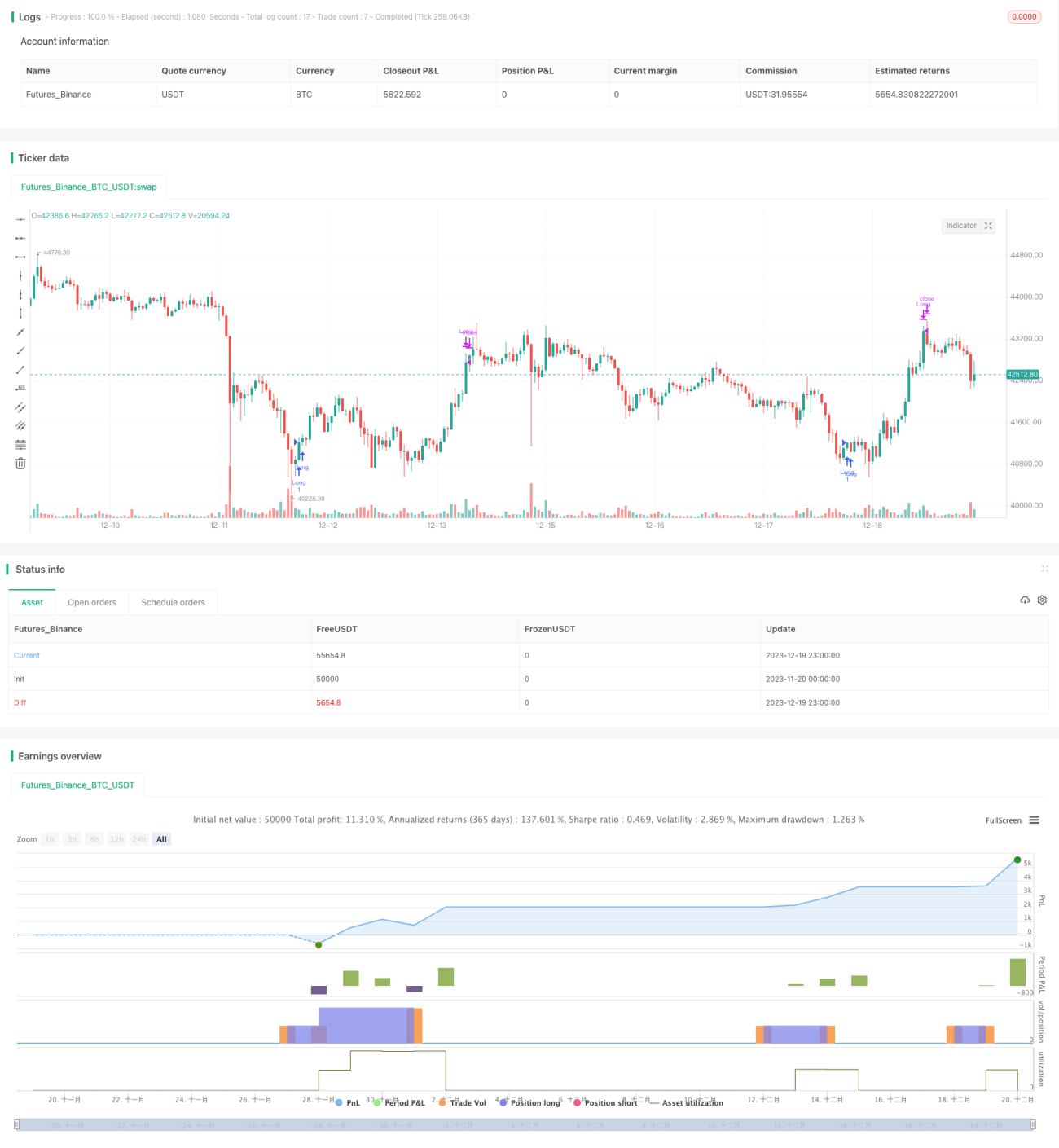
The Multi-Period Trading Strategy Based on Volatility Index and Stochastic Oscillator
Overview
This strategy combines the volatility index VIX and stochastic oscillator RSI through a composition of indicators across different time periods, in order to achieve efficient breakout entries and overbought/oversold exits. The strategy has large room for optimizations and can be adapted to different market environments.
Principles
-
Calculate the VIX volatility index: take the highest and lowest prices over the past 20 days to compute volatility. High VIX indicates market panic while low VIX suggests market complacency.
-
Compute the RSI oscillator: take the price changes over the past 14 days. RSI above 70 suggests overbought conditions and RSI below 30 suggests oversold conditions.
-
Combine the two indicators. Go long when VIX breaches the upper band or the highest percentile. Close longs when RSI goes above 70.
Advantages
- Integrates multiple indicators for comprehensive market timing assessment.
- Indicators across timeframes verify each other and improves decision accuracy.
- Customizable parameters can be optimized for different trading instruments.
Risks
- Improper parameter tuning may cause multiple false signals.
- A single exit indicator may miss price reversals.
Optimization Suggestions
- Incorporate more confirming indicators like moving averages and Bollinger bands to time entries.
- Add more exit indicators such as reversal candlestick patterns.
Summary
This strategy utilizes the VIX to gauge market timing and risk levels, and filters out unfavorable trades using overbought/oversold readings from the RSI, in order to enter at opportune moments and exit timely with stops. There is ample room for optimization to suit wider market conditions.
- 1

