Momentum Pullback Strategy

Overview
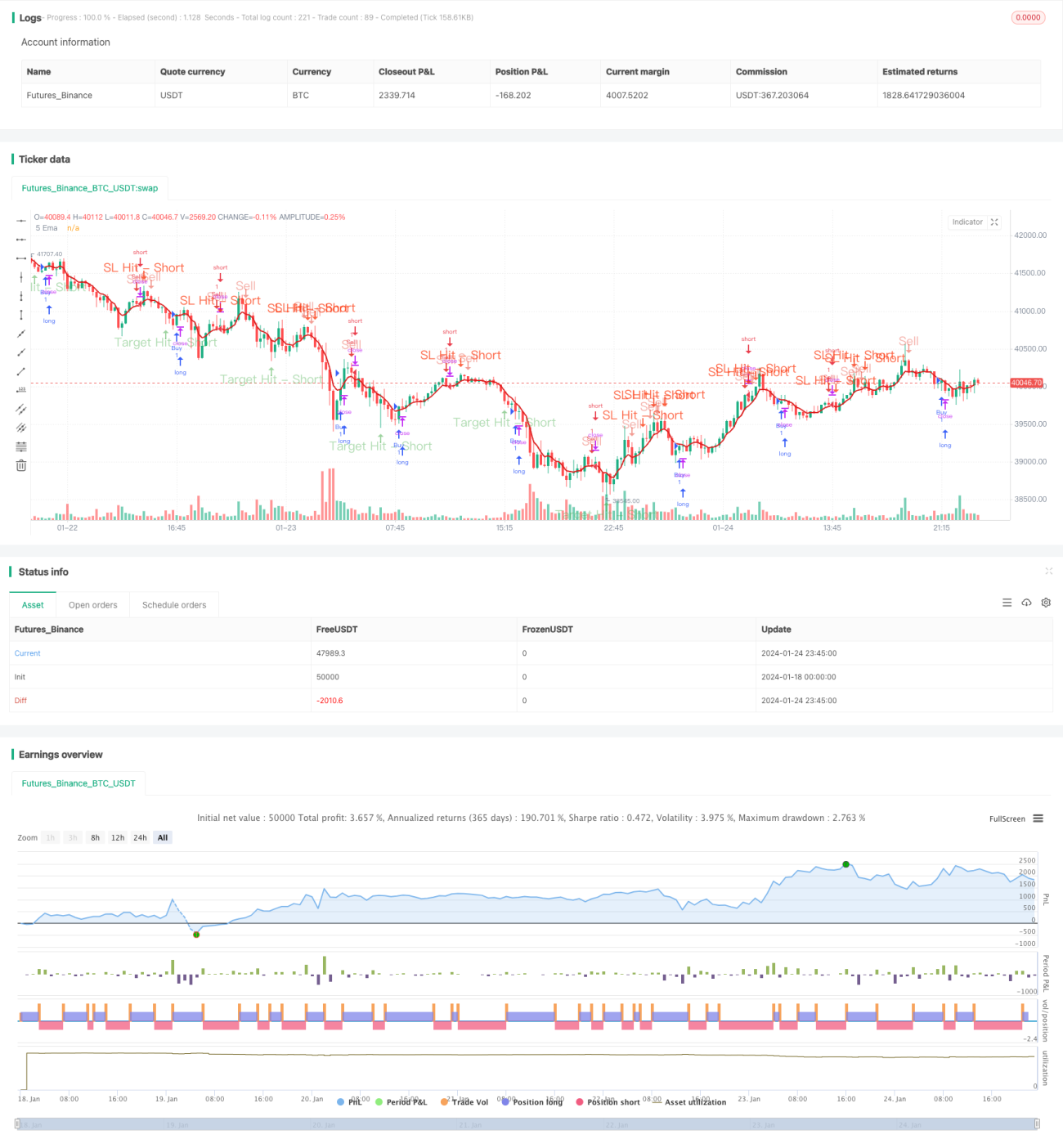
The Momentum Pullback Strategy is a medium-term trading strategy that combines moving averages and candlestick patterns to identify trading opportunities by detecting breakouts and pullbacks. It is suitable for trading highly leveraged financial products like options and futures.
Strategy Logic
The core logic of this strategy is based on the 5-day simple moving average. When the price is about to break through this average line, it will form a gap high or low candlestick, which signals a potential long or short opportunity. The entry signal is triggered when the second candle closing beyond the moving average does not break the previous gap candle's low or high. Stop loss and profit target levels are then set based on the risk-reward ratio.
When the price breaks above the 5-day MA and closes, the previous gap candle's high is the stop loss level. The profit target is set by subtracting a certain retracement range from the low, multiplied by the desired risk-reward ratio. Similarly for a downside breakout, the previous gap candle's low is the stop loss, while the take profit level is above the high plus a retracement range factored by the risk-reward ratio.
An optional filter is provided where the current candle's close should be slightly lower or higher than the gap candle's close for additional confirmation, avoiding false signals.
Advantage Analysis
- Clear and simple strategy logic, easy to understand and implement
- Identifies trends and pullbacks using moving averages
- More precise trade timing combining candlestick patterns
- Matches risk and reward, aligns with prudent trading
- Adjustable parameters for different products and timeframes
- Optional filter avoids some false signals
Risk Analysis
- Common technical analysis risks like being caught in trends, stop run-throughs
- Lagging nature of moving averages may miss quick reversals
- More false signals likely in range-bound markets
- Excessive trading from poor parameter tuning
Risks can be reduced via sensible stop losses, position sizing, less frequent trading etc. Combining other indicators to filter signals is also an option.
Optimization Directions
- Test different parameter sets for best performance
- Add other indicators or chart patterns to filter signals
- Explore dynamic, trailing stop loss enhancements
- Apply machine learning to auto-optimize parameters
- Develop auto stop loss / take profit plugins
- Robustness checks across products and timeframes
Conclusion
Overall this is an easy to understand and implement medium-term trading strategy. It capitalizes on trend reversals identified by moving averages and gap candles, with a rational risk control framework. While further improvements are possible, the core logic is versatile for wider application via parameter tuning, signal filtering etc.
- 1