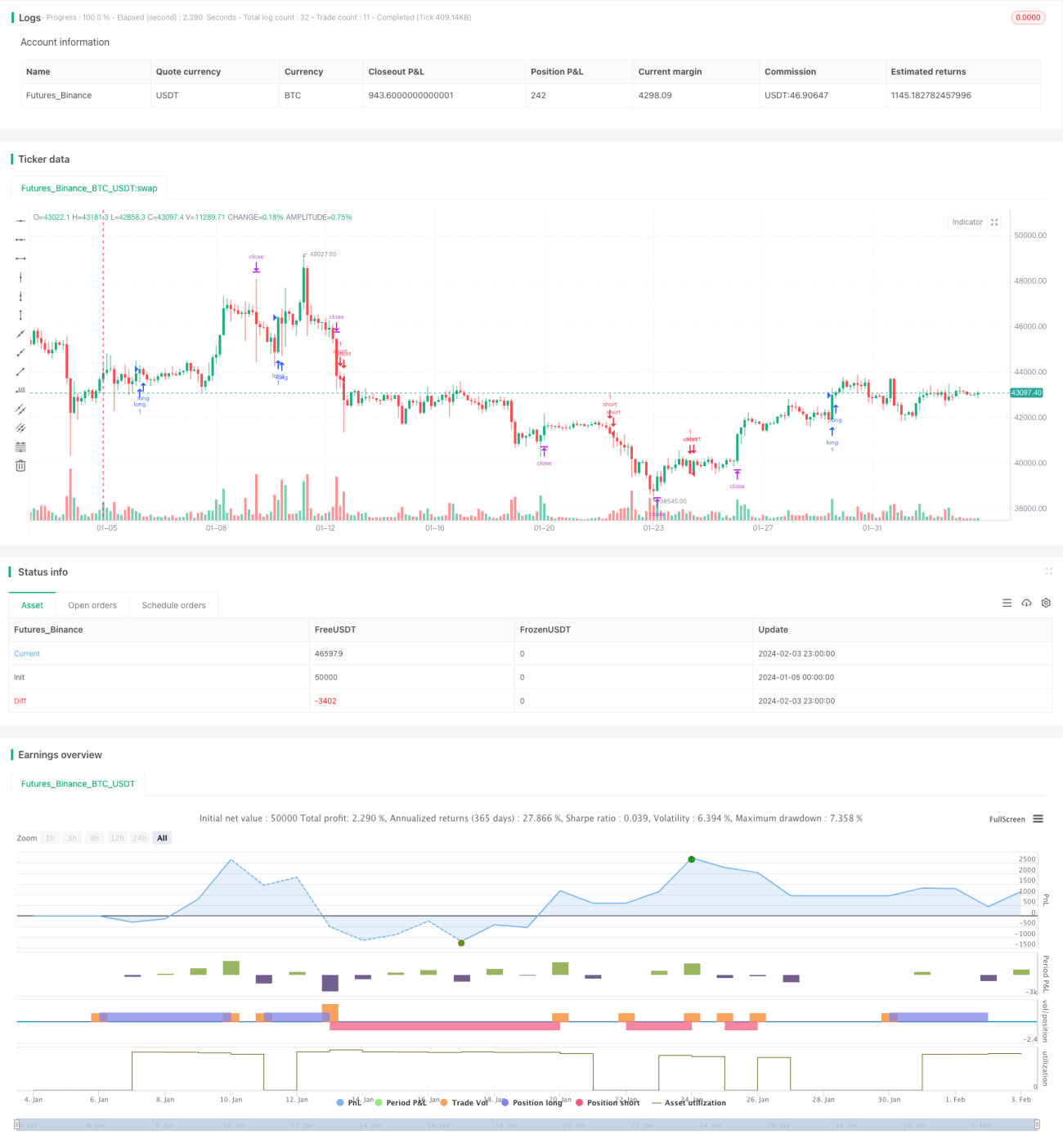
Profit rate theory volatility index quantification strategy
Overview
This strategy uses technical indicator rating methods to dynamically select entry and exit timing by comparing with moving averages. The strategy contains both long and short positions, which can be customized to enable or disable. The strategy is more friendly to low risk long term holding trading.
Strategy principle
This strategy combines multiple technical indicators in real time to evaluate market timing. The main steps are:
- Calculate various moving averages, including SMA, EMA, Hull MA and VWMA. Compare with current price to determine long/short level.
- Calculate a series of oscillators, including RSI, CCI, MACD, Williams %R, Stochastics, etc. Judge the difference between oscillator long/short status, rating long/short level.
- Technical indicator rating method consolidates above two aspects to generate final trading signal. Absolute signal value above 0.5 is strong signal, 0.1-0.5 is weak signal.
- According to final signal, the strategy can go long or go short. Also sets stop loss and take profit exit logic.
The advantage of the strategy is rating methods can more comprehensively determine market timing compared to single indicator, thus more reliability. In addition, custom parameters enable strategy customization.
Advantage analysis
- Combining multiple technical indicators, rating methods are more comprehensive and reliable in judging market timing
- Adopt dynamic stop loss and take profit, helps curb loss risk
- Customizable rating components enables customized operations
- Supports both long and short positions, adapts to more market environments
- Can choose whether to enable certain trading direction, reduces unnecessary trades
Risk analysis
- Rating methods themselves have some subjectivity
- Some oscillators are not accurate at new highs/lows
- Need assess technical indicator weight configuration in rating methods
- Massive indicators increase computation load, may affect efficiency
- Pay attention to long term P&L, prevent over-trading
The main solution is optimizing indicator weights based on historical data backtest. Reducing indicator count can also increase efficiency.
Optimization direction
The strategy can optimize from below aspects:
- Evaluate indicator validity, optimize selection in rating methods
- Adjust weights and signal strength threshold
- Optimize stop loss and take profit parameters for better risk control
- Set optimal parameters for different products
- Increase ML to assist in rating signal judgement
Through parameter optimization, the strategy can better adapt to more products with higher return.
Summary
The strategy combines technical indicator rating methods to determine market timing for long/short. Advantages include customizability, dynamic SL/TP, position direction enable/disable. Risks mainly come from rating subjectivity and invalid indicators. Future optimization space lies in parameter selection and efficiency improvement. Overall the strategy fits investors with high requiremens on market timing judgement.
/*backtest
start: 2024-01-05 00:00:00
end: 2024-02-04 00:00:00
period: 3h
basePeriod: 15m
exchanges: [{"eid":"Futures_Binance","currency":"BTC_USDT"}]
*/
//@version=4
strategy(title="Ratings", shorttitle="Ratings", default_qty_type = strategy.percent_of_equity, default_qty_value = 100, commission_value = 0.1, overlay=true)
//Settings- 1

