Type/to search

Multi-Indicator Trend Cross with ATR Dynamic Volatility Strategy

RSI
2
Follow
475
Followers

img
img

Overview

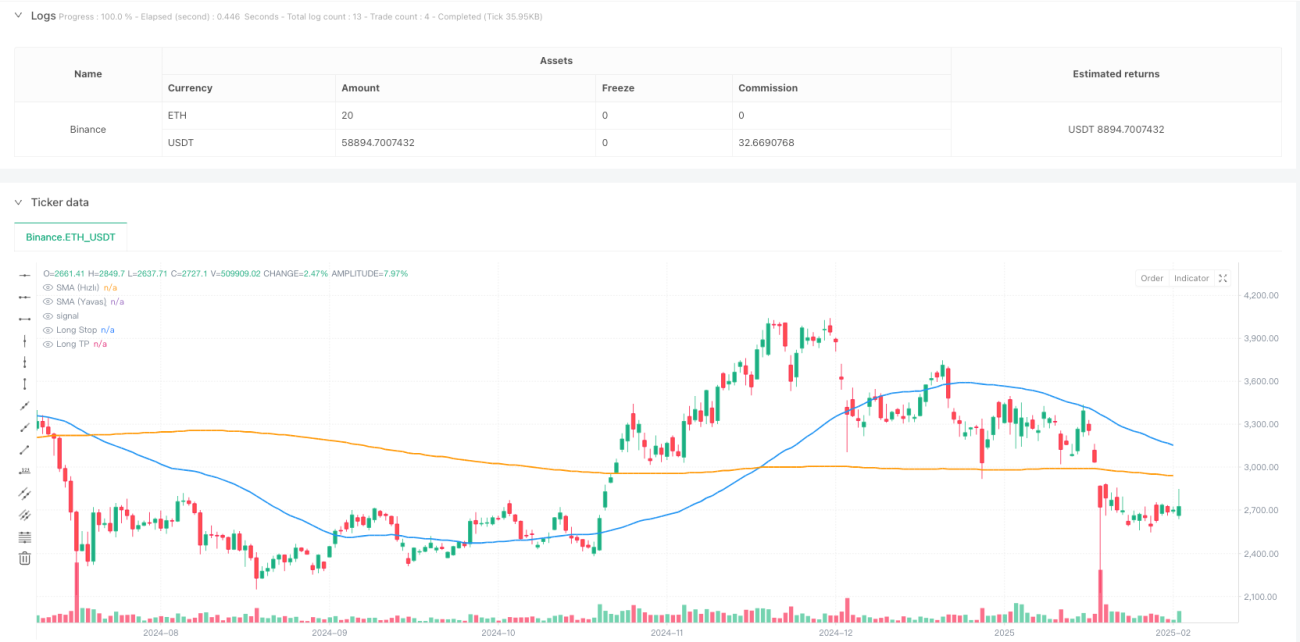
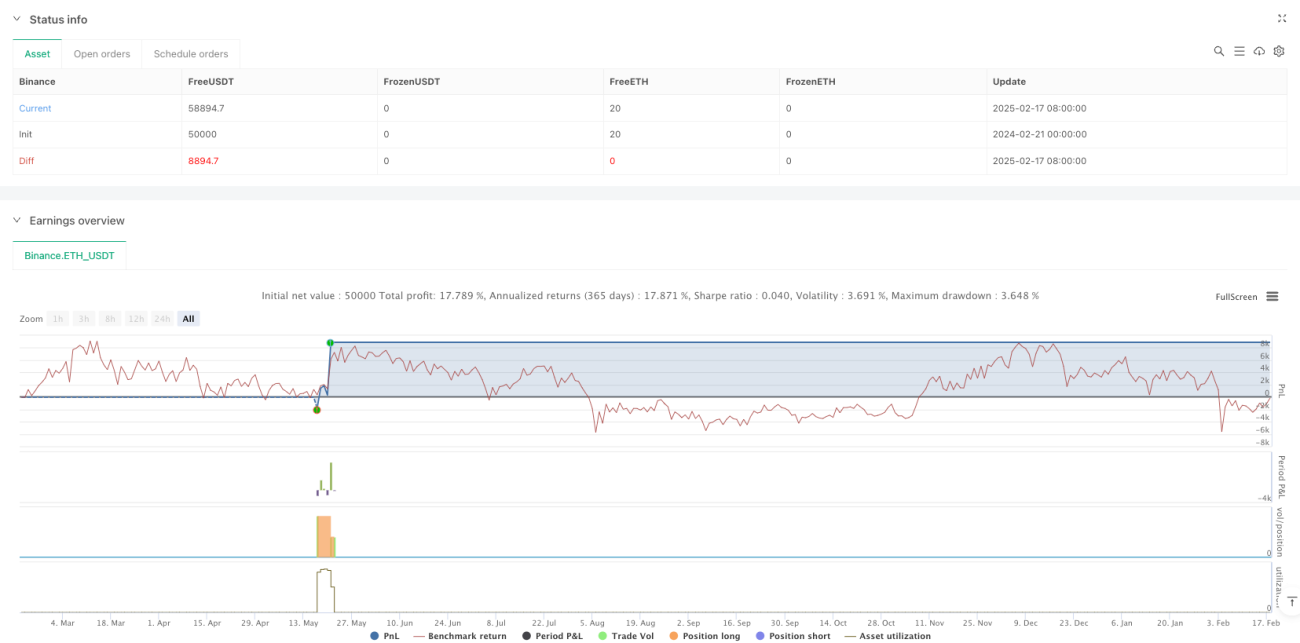
This strategy is a trend following system that combines multiple technical indicators. It primarily uses cross signals from RSI, MACD and SMA to determine trading direction, while using the ATR indicator to dynamically adjust stop-loss and take-profit levels. The strategy also incorporates a volume filter to ensure trading under sufficient market liquidity and employs partial profit-taking mechanisms to optimize money management.

Strategy Principles

The strategy employs a triple verification mechanism to confirm trading signals:

  1. Determines main trend direction through the relationship between 50 and 200-day moving averages
  2. Uses RSI crosses in overbought/oversold zones to find entry points
  3. Confirms trend momentum with MACD indicator
  4. Uses volume filter to ensure adequate market liquidity
  5. Employs ATR-based dynamic stop-loss and profit targets

The multiple verifications aim to reduce false signals and improve trading accuracy. The strategy opens positions when long conditions are met (uptrend + RSI crosses above 40 + MACD up + volume confirmation) and uses 2x ATR for stop-loss and 4x ATR for take-profit.

Strategy Advantages

  1. Multiple technical indicator cross-verification effectively reduces false signals
  2. Dynamic volatility-based stop-loss mechanism adapts to different market conditions
  3. Partial profit-taking strategy locks in profits while maintaining upside potential
  4. Volume filtering ensures sufficient market liquidity
  5. Comprehensive risk management system including fixed stops, trailing stops and partial profits

Strategy Risks

  1. Multiple indicators may cause missed trading opportunities
  2. May suffer larger drawdowns in highly volatile markets
  3. Parameter optimization may lead to overfitting
  4. Volume filtering might miss good opportunities in low liquidity markets
  5. Dynamic stops may trigger too early during high volatility periods

Optimization Directions

  1. Consider adding market volatility adaptation mechanism to dynamically adjust parameters in different volatility environments
  2. Introduce multi-timeframe analysis to improve trend determination accuracy
  3. Optimize partial profit-taking ratios, adjusting take-profit strategy in different market conditions
  4. Add trend strength filter to avoid trading in weak trend environments
  5. Consider adding seasonality analysis to optimize trading timing

Summary

This is a comprehensive trend following strategy that establishes a robust trading system through the coordinated use of multiple technical indicators. The strategy's main feature is its ability to adapt to market changes through dynamic stop-loss and profit mechanisms while maintaining safety. Although there are areas for optimization, the overall framework is sound and suitable for further refinement and live testing.

Source
Pine
/*backtest
start: 2024-02-21 00:00:00
end: 2025-02-18 08:00:00
period: 1d
basePeriod: 1d
exchanges: [{"eid":"Binance","currency":"ETH_USDT"}]
*/

//@version=5
strategy(    title="AI Trade Strategy v2 (Extended) - Fixed",    shorttitle="AI_Trade_v2",    overlay=true,    format=format.price,    initial_capital=100000,    default_qty_type=strategy.percent_of_equity,    default_qty_value=100,    pyramiding=0)

//============================================================================
Strategy parameters
Strategy parameters
RSI Period (Optional)
RSI Overbought Level (Optional)
RSI Oversold Level (Optional)
SMA Fast Period (Optional)
SMA Slow Period (Optional)
MACD Fast Period (Optional)
MACD Slow Period (Optional)
MACD Signal Period (Optional)
Use Volume Filter?
Volume MA Period (Optional)
Volume Multiplier (Volume > x * MA) (Optional)
ATR Period (Optional)
Stop Loss ATR Multiplier (Optional)
Take Profit ATR Multiplier (Optional)
Comment
All comments (0)
No data
No data
  • 1
iPhone Download
Forums
PINE Language
© 2015 - ∞ INVENTOR PTE LTD (SG)