
Overview
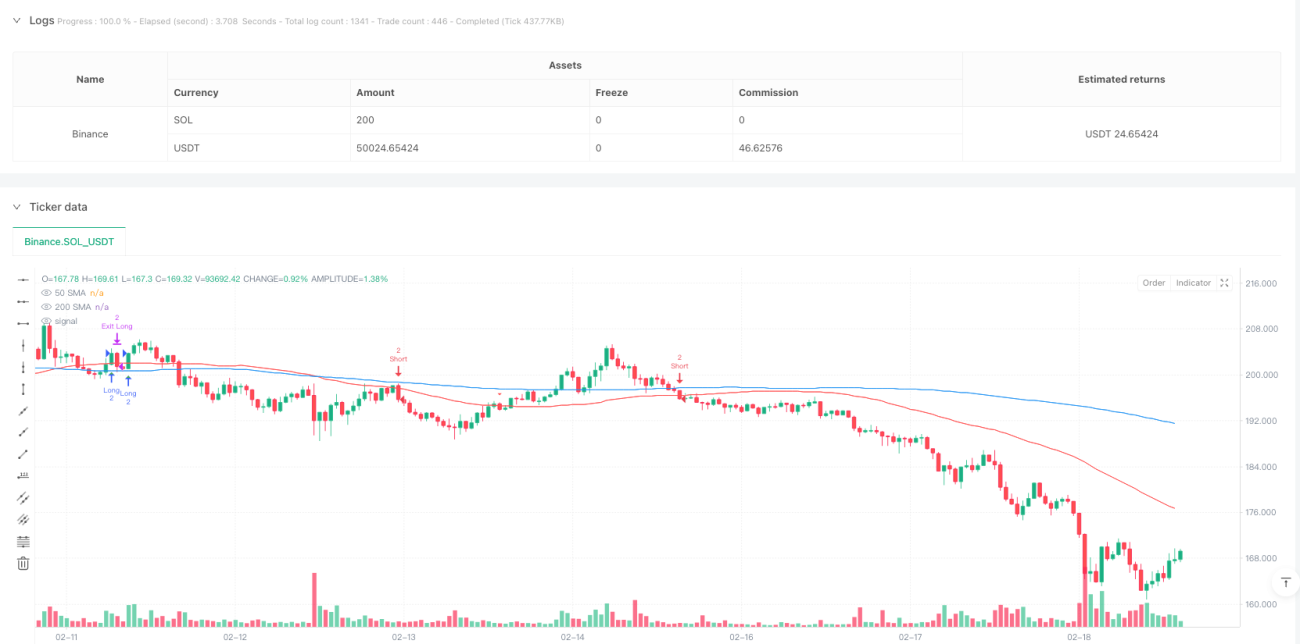
This strategy is an automated trading system based on moving average crossovers and dynamic position management. It utilizes 50-day and 200-day Simple Moving Averages (SMA) as primary indicators, combined with dynamic position sizing and trailing stop mechanisms to identify trading opportunities in market trends. The core of the strategy lies in determining market direction through price-MA relationships while employing money management and risk control to ensure trading stability.
Strategy Principles
The strategy operates on the following core principles:
- Entry signals are based on price crossovers with the 50-day MA, while using the relative position of 50-day and 200-day MAs to judge the broader trend
- Long signals are triggered when price breaks above the MA from below; short signals occur in the opposite scenario
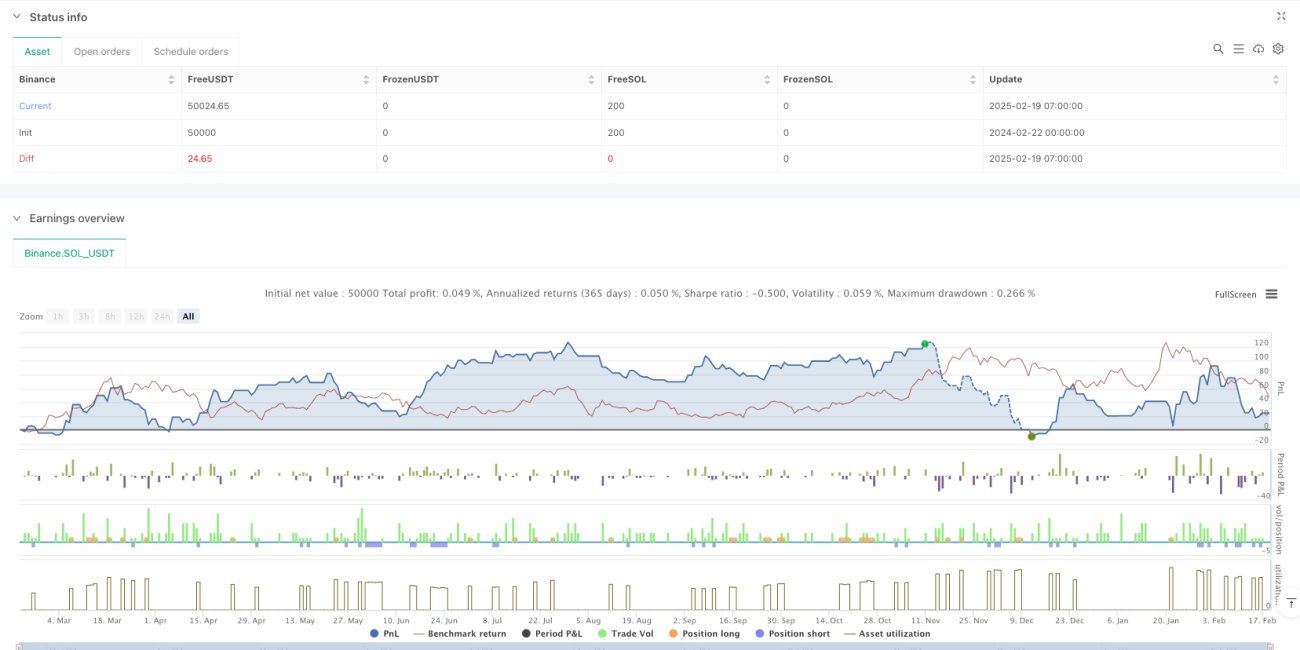
- Position management employs a dynamic adjustment mechanism, increasing position size when account profits exceed 4000
- Stop-loss uses a trailing stop mechanism, dynamically adjusting stop positions as profits increase
- Risk-reward ratio is set at 1:2.5, ensuring expected returns exceed risks for each trade
Strategy Advantages
- Clear and explicit trading logic, combining technical indicators and price action for entry timing
- Dynamic position management allows for increased trading size during profitable periods, improving capital efficiency
- Trailing stop mechanism effectively locks in profits and prevents significant drawdowns
- Includes trading session filters, operating only during major trading sessions to avoid low liquidity risks
- Comprehensive risk control mechanisms including stop-loss, profit targets, and position management
Strategy Risks
- May trigger frequent false breakout signals in ranging markets, leading to consecutive stops
- Dynamic position sizing could result in larger losses during sudden market reversals
- Reliance on moving averages may lead to delayed reactions in rapidly volatile markets
- Fixed risk-reward ratio might miss potential larger trend opportunities
- Trading time restrictions could miss important market opportunities
Strategy Optimization Directions
- Introduce volatility indicators to dynamically adjust parameters in different market conditions
- Consider adding market sentiment indicators to improve entry signal accuracy
- Optimize trailing stop parameters for better adaptation to different market environments
- Add multiple timeframe analysis to enhance system stability
- Incorporate volume analysis to improve signal reliability
Summary
The strategy builds a relatively complete trading system by combining moving average systems, dynamic position management, and trailing stop mechanisms. Its strengths lie in clear trading logic and comprehensive risk control mechanisms, though there are areas for optimization. Through continuous improvement and optimization, the strategy shows promise for better performance in actual trading.
/*backtest
start: 2024-02-22 00:00:00
end: 2025-02-19 08:00:00
period: 1h
basePeriod: 1h
exchanges: [{"eid":"Binance","currency":"SOL_USDT"}]
*/

//@version=5
strategy("15m - Rebound 50SMA with Dynamic Lots & Trailing Stop, RRR 2:1, Date Filter (Closed Bars Only)",
     overlay=true,
initial_capital=50000, - 1