অভিযোজিত কফম্যান মুভিং এভারেজ ট্রেন্ড ফলোয়িং কৌশল

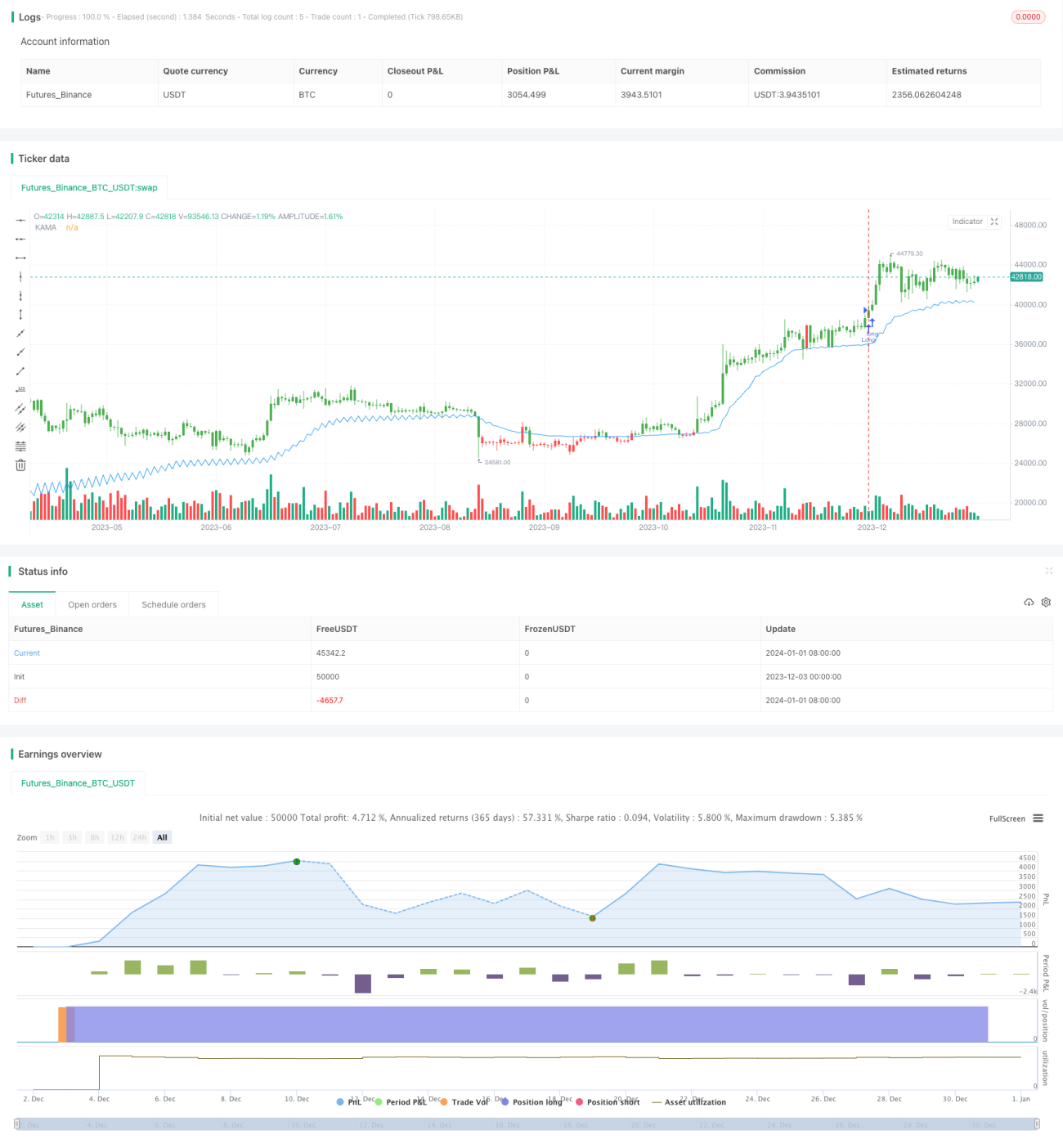
সারসংক্ষেপ
এই কৌশলটি অ্যাডাপ্টিভ মুভিং অ্যাভারেজ ইন্ডিকেটর কাউফম্যান অ্যাডাপ্টিভ মুভিং অ্যাভারেজ (KAMA) ব্যবহার করে মূল্যের ট্রেন্ড অনুসরণ করে, স্বল্পমূল্যে কিনে উচ্চমূল্যে বিক্রি করে মুনাফা অর্জন করে।
কৌশলের নীতি
কাউফম্যান অ্যাডাপ্টিভ মুভিং অ্যাভারেজ (KAMA) ইন্ডিকেটরের গণনার সূত্র হলো:
nAMA = nz(nAMA[1]) + nsmooth * (Close - nz(nAMA[1]))
যেখানে:
nsmooth = (nefratio * (nfastend - nslowend) + nslowend)^2
nefratio = nsignal / nnoise
nsignal = |Close - Close[Length]|
nnoise = sum(|Close - Close[1]|, Length)
nfastend = 0.666
nslowend = 0.0645
এই ইন্ডিকেটরটি বাজারের অস্থিরতা এবং মূল্য পরিবর্তনের প্রবণতা উভয়কেই বিবেচনায় নেয়, যার ফলে এটি দ্রুত মূল্যের ট্রেন্ড অনুসরণ করতে পারে। নির্দিষ্টভাবে:
- যখন বাজারের অস্থিরতা কম থাকে, তখন nsmooth nslowend-এর কাছাকাছি হয়, KAMA রেখা ধীরে পরিবর্তিত হয়, বাজারের গোলমাল দমন করে।
- যখন বাজারের অস্থিরতা বৃদ্ধি পায় এবং ট্রেন্ড তৈরি হয়, তখন nsmooth nfastend-এর কাছাকাছি হয়, KAMA রেখা দ্রুত পরিবর্তিত হয়ে ট্রেন্ড অনুসরণ করে।
মূল্য এবং KAMA-এর সম্পর্ক তুলনা করে মূল্যের ট্রেন্ডের দিক নির্ধারণ করা যায়, যার ভিত্তিতে লং বা শর্ট পজিশন নেওয়ার সিদ্ধান্ত নেওয়া হয়।
কৌশলের সুবিধা
এই কৌশলের সবচেয়ে বড় সুবিধা হলো অ্যাডাপ্টিভ মুভিং অ্যাভারেজ ইন্ডিকেটর ব্যবহার করে মূল্যের ট্রেন্ড পরিবর্তন অনুসরণ করা, যা কার্যকরভাবে গোলমালের প্রভাব কমাতে পারে এবং ট্রেন্ড অনুসরণের ক্ষমতা ভালো। নির্দিষ্ট সুবিধাগুলো হলো:
- KAMA ইন্ডিকেটর বাজারের গোলমাল দমন করে, অপ্রয়োজনীয় ট্রেডের সংখ্যা কমায়।
- KAMA ইন্ডিকেটর দ্রুত মূল্য পরিবর্তনের ট্রেন্ডে সাড়া দিতে পারে, ট্রেন্ড অনুসরণের ক্ষমতা ভালো।
- কৌশলের সিদ্ধান্ত নেওয়ার নিয়ম সহজ ও স্পষ্ট, বুঝতে ও বাস্তবায়ন করতে সহজ।
- বিপরীত ট্রেড করার বিকল্প আছে, বিভিন্ন বাজার পরিবেশের সাথে খাপ খাওয়ানো যায়।
কৌশলের ঝুঁকি
এই কৌশলের কিছু ঝুঁকিও রয়েছে:
- সাইডওয়ে মার্কেটে (রেঞ্জবাউন্ড) KAMA ইন্ডিকেটর ভুল সংকেত দিতে পারে। প্যারামিটার সামঞ্জস্য করে ইন্ডিকেটরের কার্যকারিতা উন্নত করা যেতে পারে।
- ট্রেন্ড অনুসরণে কিছুটা বিলম্ব থাকে, যা স্বল্পমেয়াদী মূল্য বিপরীতমুখী হতে পারে। প্রয়োজনে অন্যান্য ইন্ডিকেটরের সাথে মিলিয়ে বিশ্লেষণ করা উচিত।
- ট্রেডিং ফি এবং স্লিপেজ বিবেচনায় নেওয়া হয়নি, ফলে বাস্তব বাজারে ফলাফল ব্যাকটেস্টের তুলনায় খারাপ হতে পারে।
কৌশলের উন্নতির দিক
এই কৌশলটি নিম্নলিখিত দিক থেকে উন্নত করা যেতে পারে:
- KAMA প্যারামিটার অপ্টিমাইজ করে ইন্ডিকেটরের ট্রেন্ড অনুসরণের সংবেদনশীলতা বাড়ানো।
- স্টপ-লস মেকানিজম যোগ করে প্রতি ট্রেডের সর্বোচ্চ ক্ষতি নিয়ন্ত্রণ করা।
- অন্যান্য ইন্ডিকেটরের সাথে মিলিয়ে সংকেত ফিল্টার করে সিদ্ধান্তের নির্ভুলতা বাড়ানো।
- পুনরায় এন্ট্রি মেকানিজম যোগ করে ট্রেন্ডকে আরও ভালোভাবে অনুসরণ করা।
সারসংক্ষেপ
এই কৌশলটি কাউফম্যান অ্যাডাপ্টিভ মুভিং অ্যাভারেজ ইন্ডিকেটর ব্যবহার করে মূল্যের ট্রেন্ড অনুসরণ করে, সিদ্ধান্তের নিয়ম সহজ ও স্পষ্ট, বাস্তব ট্রেডিংয়ে প্রয়োগ করা সহজ। ইন্ডিকেটরটি গোলমাল দমন করার পাশাপাশি দ্রুত মূল্য পরিবর্তনে সাড়া দেয়, ট্রেন্ড অনুসরণের ক্ষমতা ভালো। এটি একটি সুপারিশযোগ্য ট্রেন্ড ফলোয়িং কৌশল।
/*backtest
start: 2023-12-03 00:00:00
end: 2024-01-02 00:00:00
period: 1d
basePeriod: 1h
exchanges: [{"eid":"Futures_Binance","currency":"BTC_USDT"}]
*/

//@version=2
////////////////////////////////////////////////////////////
//  Copyright by HPotter v1.0 25/08/2017
// Everyone wants a short-term, fast trading trend that works without large- 1