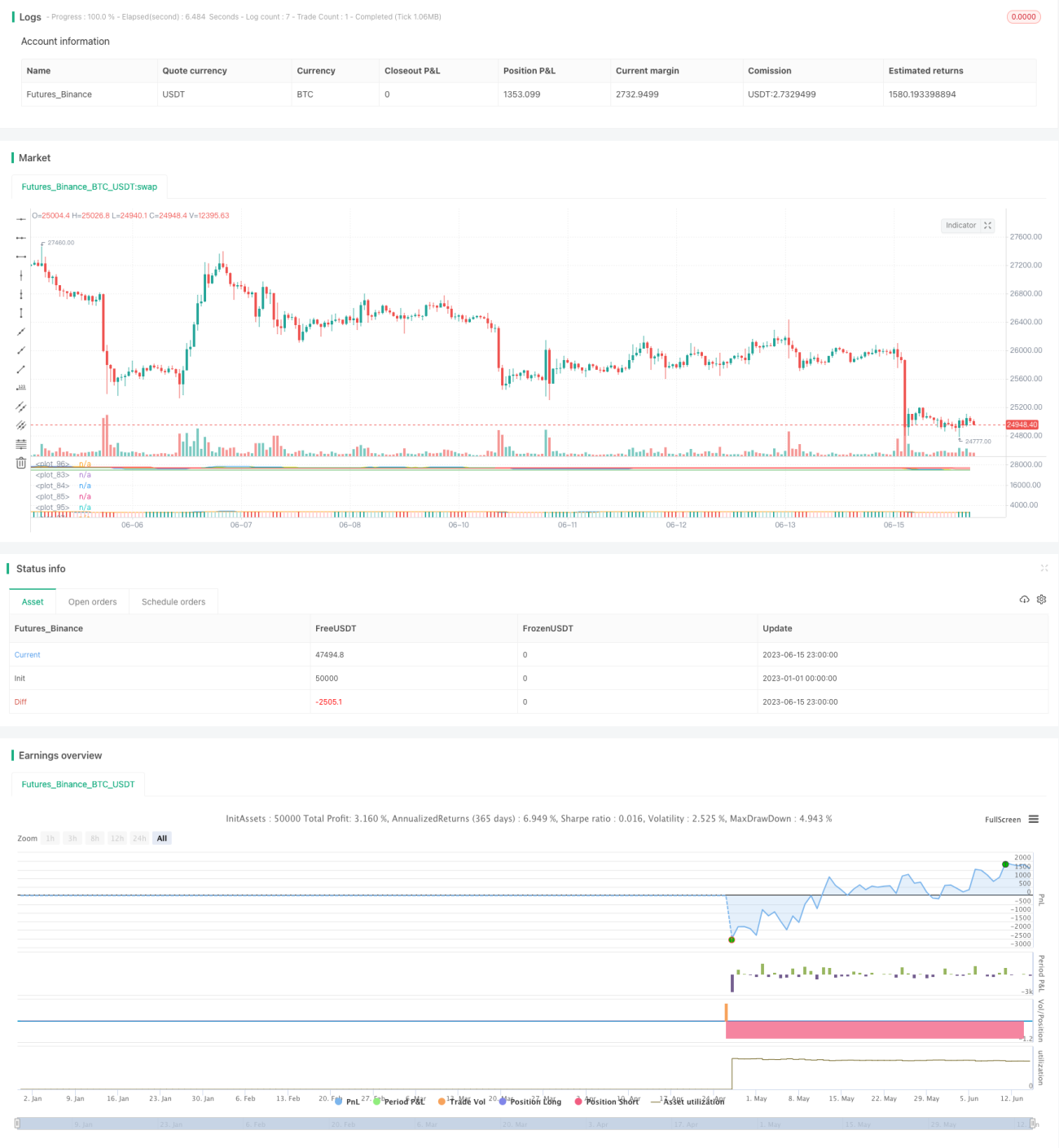
Diese Strategie kombiniert die Verwendung der MACD-Indikatoren und der Multi-Time-Frame-Gewinnlinie zu einer langen und kurzen bilateralen Handelsstrategie, die Trend- und Trendumkehrsignale kombiniert. Die Strategie kann zusätzliche Gewinne in Trendsituationen erzielen und gleichzeitig Umkehrmöglichkeiten nutzen.
Mit zwei Gruppen von EMAs mit unterschiedlichen Perioden arbeitet die EMA-Gleichliniengruppe zusammen, um die Richtung des langen Raumes zu bestimmen. 15 Minuten schnelle EMA ist höher als 1 Stunde langsame EMA ist ein nachlässiger Filter. 15 Minuten schnelle EMA ist niedriger als 1 Stunde langsame EMA ist ein nachlässiger Filter.
Bei der Beobachtung einer Abweichung der Mikrofonstahl (Abbweichung der Säulenlinie vom Preis) kann das Urteil umgekehrt werden.
Beim Start des Filters, wenn ein Bullenmarkt abweicht (Preis ist neu hoch und MACD nicht neu hoch), warten Sie, bis der MACD auf der Null-Achse durchbricht, und machen Sie mehr. Beim Start des Filters, wenn ein Bärenmarkt abweicht (Preis ist neu niedrig und MACD nicht neu niedrig), warten Sie, bis der MACD auf der Null-Achse durchbricht, und machen Sie leer.
Die Stop-Loss-Methode ist eine Stop-Loss-Methode, die auf Basis der Höchst- und Mindestpreisfluktuation berechnet wird.
Die MACD-Säulen werden in der Null-Achs-Richtung platziert.
Die EMA-Porteils in mehreren Zeitrahmen können den Trend der Grosskreislaufperiode beurteilen und widersprüchlichen Handel vermeiden.
Der MACD-Abwechsel ist geeignet, um die Chance auf eine Preisumkehr zu erfassen.
Die dynamische Verfolgung von Stop-Losses kann Gewinne sichern und verhindern, dass die Verluste sich ausdehnen.
Die erwartete Rendite wird durch die Stop-Loss-Berechnung der Stoppdistanz erzielt.
Die EMA-Gleichliniengruppe arbeitet als Filter zusammen, der in der Berechnungsphase Fehler in der Orientierung verursachen kann.
Der MACD-Wachstumsschub ist unzureichend und kann nicht profitabel sein.
Die Distanz ist falsch eingestellt und kann zu locker oder zu eng sein.
Es gibt nicht genügend Spielraum und es sind nur begrenzte Gewinne möglich.
Es ist notwendig, die richtige Zeit für den Umschlag zu nutzen, denn zu früh oder zu spät kann zu Verlusten führen.
EMAs mit unterschiedlichen Parameterkombinationen können getestet werden, um die Trends genauer zu beurteilen.
Man kann versuchen, die MACD-Parameter auf eine empfindlichere Kombination von Parametern einzustellen.
Verschiedene Stop-Loss-Stop-Ratio-Einstellungen können getestet werden.
Zusätzliche Filterbedingungen können hinzugefügt werden, um falsche Rebounds zu vermeiden. Beispielsweise kann ein höherer Zeitrahmen hinzugefügt werden, in dem die EMA die globale Tendenz beurteilt.
Es kann optimiert werden, um die Rückkehr in die Bestätigungsbedingungen zu schneiden, um sicherzustellen, dass der Trend reif genug ist.
Die Strategie nutzt Trendfilter, Trendumkehrsignale und dynamische Stop-Loss-Management-Methoden, die sowohl als Übergang als auch als Umkehrung dienen können. Durch die Anpassung der Parameter und die Optimierung der Filterbedingungen kann die Strategie an ein breiteres Marktumfeld angepasst werden, um unter Kontrolle des Risikos stabile Erträge zu erzielen. Die Strategie hat eine gewisse allgemeine Anwendbarkeit und praktische Bedeutung und ist ein typischer Vertreter für die Verwendung von mehreren Zeitrahmen und der Integration von Indikatoren.
/*backtest
start: 2023-01-01 00:00:00
end: 2023-06-16 00:00:00
period: 1h
basePeriod: 15m
exchanges: [{"eid":"Futures_Binance","currency":"BTC_USDT"}]
*/
// This source code is subject to the terms of the Mozilla Public License 2.0 at https://mozilla.org/MPL/2.0/
// © maxits
//@version=4
// MACD Divergence + Multi Time Frame EMA
// This Strategy uses 3 indicators: the Macd and two emas in different time frames
// The configuration of the strategy is:
// Macd standar configuration (12, 26, 9) in 1H resolution
// 10 periods ema, in 1H resolution
// 5 periods ema, in 15 minutes resolution
// We use the two emas to filter for long and short positions.
// If 15 minutes ema is above 1H ema, we look for long positions
// If 15 minutes ema is below 1H ema, we look for short positions
// We can use an aditional filter using a 100 days ema, so when the 15' and 1H emas are above the daily ema we take long positions
// Using this filter improves the strategy
// We wait for Macd indicator to form a divergence between histogram and price
// If we have a bullish divergence, and 15 minutes ema is above 1H ema, we wait for macd line to cross above signal line and we open a long position
// If we have a bearish divergence, and 15 minutes ema is below 1H ema, we wait for macd line to cross below signal line and we open a short position
// We close both position after a cross in the oposite direction of macd line and signal line
// Also we can configure a Take profit parameter and a trailing stop loss
// strategy("Macd + MTF EMA",
// overlay=true,
// initial_capital=1000,
// default_qty_value=20,
// default_qty_type=strategy.percent_of_equity,
// commission_value=0.1,
// pyramiding=0)
// User Inputs
i_time = input(defval = timestamp("01 Apr 2018 13:30 +0000"), title = "Start Time", type = input.time) // Starting time for backtest
f_time = input(defval = timestamp("30 Sep 2021 13:30 +0000"), title = "Finish Time", type = input.time) // Finishing time for backtest
long_pos = input(title="Show Long Positions", defval=true, type=input.bool) // Enable Long Positions
short_pos = input(title="Show Short Positions", defval=true, type=input.bool) // Enable Short Positions
src = input(close, title="Source") // Price value to calculate indicators
emas_properties = input(title="============ EMAS Properties ============", defval=false, type=input.bool) // Properties
mtf_15 = input(title="Fast EMA", type=input.resolution, defval="15") // Resolucion para MTF EMA 15 minutes
ma_15_length = input(5, title = "Fast EMA Period") // MTF EMA 15 minutes Length
mtf_60 = input(title="Slow EMA", type=input.resolution, defval="60") // Resolucion para MTF EMA 60 minutes
ma_60_length = input(10, title = "Slow EMA Period") // MTF EMA 60 minutes Length
e_new_filter = input(title="Enable a Third Ema filter?", defval=true, type=input.bool)
slowest_ema_len = input(100, title = "Fast EMA Period")
slowest_ema_res = input(title="Slowest EMA", type=input.resolution, defval="D")
macd_res = input(title="MACD TimeFrame", type=input.resolution, defval="") // MACD Time Frame
macd_properties = input(title="============ MACD Properties ============", defval="") // Properties
fast_len = input(title="Fast Length", type=input.integer, defval=12) // Fast MA Length
slow_len = input(title="Sign Length", type=input.integer, defval=26) // Sign MA Length
sign_len = input(title="Sign Length", type=input.integer, defval=9)
syst_properties = input(title="============ System Properties ============", defval="") // Properties
lookback = input(title="Lookback period", type=input.integer, defval=14, minval=1) // Candles to lookback for swing high or low
multiplier = input(title="Profit Multiplier based on Stop Loss", type=input.float, defval=6.0, minval=0.1) // Profit multiplier based on stop loss
shortStopPer = input(title="Short Stop Loss Percentage", type=input.float, defval=1.0, minval=0.0)/100
longStopPer = input(title="Long Stop Loss Percentage", type=input.float, defval=2.0, minval=0.0)/100
// Indicators
[macd, signal, hist] = security(syminfo.tickerid, macd_res, macd(src, fast_len, slow_len, sign_len))
ma_15 = security(syminfo.tickerid, mtf_15, ema(src, ma_15_length))
ma_60 = security(syminfo.tickerid, mtf_60, ema(src, ma_60_length))
ma_slo = security(syminfo.tickerid, slowest_ema_res, ema(src, slowest_ema_len))
// Macd Plot
col_grow_above = #26A69A
col_grow_below = #FFCDD2
col_fall_above = #B2DFDB
col_fall_below = #EF5350
plot(macd, color=color.new(color.blue, 0)) // Solo para visualizar que se plotea correctamente
plot(signal, color=color.new(color.orange, 0))
plot(hist, style=plot.style_columns,
color=(hist >= 0 ? (hist[1] < hist ? col_grow_above : col_fall_above) :
(hist[1] < hist ? col_grow_below : col_fall_below)))
// MTF EMA Plot
bullish_filter = e_new_filter ? ma_15 > ma_60 and ma_60 > ma_slo : ma_15 > ma_60
bearish_filter = e_new_filter ? ma_15 < ma_60 and ma_60 < ma_slo : ma_15 < ma_60
plot(ma_15, color=color.new(color.blue, 0))
plot(ma_60, color=color.new(color.yellow, 0))
plot(e_new_filter ? ma_slo : na, color = ma_60 > ma_slo ? color.new(color.green, 0) : color.new(color.red, 0))
////////////////////////////////////////////// Logic For Divergence
zero_cross = false
zero_cross := crossover(hist,0) or crossunder(hist,0) //Cruce del Histograma a la linea 0
// plot(zero_cross ? 1 : na)
// MACD DIVERGENCE TOPS (Bearish Divergence)
highest_top = 0.0
highest_top := (zero_cross == true ? 0.0 : (hist > 0 and hist > highest_top[1] ? hist : highest_top[1]))
prior_top = 0.0
prior_top := (crossunder(hist,0) ? highest_top[1] : prior_top[1]) // Búsqueda del Maximo en MACD
// plot(highest_top)
// plot(prior_top)
highest_top_close = 0.0
highest_top_close := (zero_cross == true ? 0.0 : (hist > 0 and hist > highest_top[1] ? close : highest_top_close[1]))
prior_top_close = 0.0
prior_top_close := (crossunder(hist,0) ? highest_top_close[1] : prior_top_close[1]) // Búsqueda del Maximo en pRECIO
// plot(highest_top_close)
// plot(prior_top_close)
top = false
top := highest_top[1] < prior_top[1]
and highest_top_close[1] > prior_top_close[1]
and hist < hist[1]
and crossunder(hist,0) // Bearish Divergence: top == true
// MACD DIVERGENCE BOTTOMS (Bullish Divergence)
lowest_bottom = 0.0
lowest_bottom := (zero_cross == true ? 0.0 : (hist < 0 and hist < lowest_bottom[1] ? hist : lowest_bottom[1]))
prior_bottom = 0.0
prior_bottom := (crossover(hist,0) ? lowest_bottom[1] : prior_bottom[1])
lowest_bottom_close = 0.0
lowest_bottom_close := (zero_cross == true ? 0.0 : (hist < 0 and hist < lowest_bottom[1] ? close : lowest_bottom_close[1]))
prior_bottom_close = 0.0
prior_bottom_close := (crossover(hist,0) ? lowest_bottom_close[1] : prior_bottom_close[1])
bottom = false
bottom := lowest_bottom[1] > prior_bottom[1]
and lowest_bottom_close[1] < prior_bottom_close[1]
and hist > hist[1]
and crossover(hist,0) // Bullish Divergence: bottom == true
////////////////////////////////////////////// System Conditions //////////////////////////////////////////////
inTrade = strategy.position_size != 0 // In Trade
longTrade = strategy.position_size > 0 // Long position
shortTrade = strategy.position_size < 0 // Short position
notInTrade = strategy.position_size == 0 // No trade
entryPrice = strategy.position_avg_price // Position Entry Price
////////////////////////////////////////////// Long Conditions //////////////////////////////////////////////
sl = lowest(low, lookback) // Swing Low for Long Entry
longStopLoss = 0.0 // Trailing Stop Loss calculation
longStopLoss := if (longTrade)
astopValue = sl * (1 - longStopPer)
max(longStopLoss[1], astopValue)
else
0
longTakeProf = 0.0 // Profit calculation based on stop loss
longTakeProf := if (longTrade)
profitValue = entryPrice + (entryPrice - longStopLoss) * multiplier
max(longTakeProf[1], profitValue)
else
0
// Long Entry Conditions
if bottom and notInTrade and bullish_filter and long_pos
strategy.entry(id="Go Long", long=strategy.long, comment="Long Position")
// strategy.close(id="Go Long", when=zero_cross)
if longTrade
strategy.exit("Exit Long", "Go Long", limit = longTakeProf, stop = longStopLoss)
plot(longTrade and longStopLoss ? longStopLoss : na, title="Long Stop Loss", color=color.new(color.red, 0), style=plot.style_linebr)
plot(longTrade and longTakeProf ? longTakeProf : na, title="Long Take Prof", color=color.new(color.green, 0), style=plot.style_linebr)
////////////////////////////////////////////// Short Conditions //////////////////////////////////////////////
sh = highest(high, lookback) // Swing High for Short Entry
shortStopLoss = 0.0
shortStopLoss := if (shortTrade)
bstopValue = sh * (1 + shortStopPer)
min(shortStopLoss[1], bstopValue)
else
999999
shortTakeProf = 0.0
shortTakeProf := if (shortTrade)
SprofitValue = entryPrice - (shortStopLoss - entryPrice) * multiplier
min(SprofitValue, shortTakeProf[1])
else
999999
// Short Entry
if top and notInTrade and bearish_filter and short_pos
strategy.entry(id="Go Short", long=strategy.short, comment="Short Position")
// strategy.close(id="Go Short", when=zero_cross)
if shortTrade
strategy.exit("Exit Short", "Go Short", limit = shortTakeProf, stop = shortStopLoss)
plot(shortTrade and shortStopLoss ? shortStopLoss : na, title="Short Stop Loss", color=color.new(color.red, 0), style=plot.style_linebr)
plot(shortTrade and shortTakeProf ? shortTakeProf : na, title="Short Take Prof", color=color.new(color.green, 0), style=plot.style_linebr)