Strategie des geglätteten gleitenden Durchschnitts

Überblick
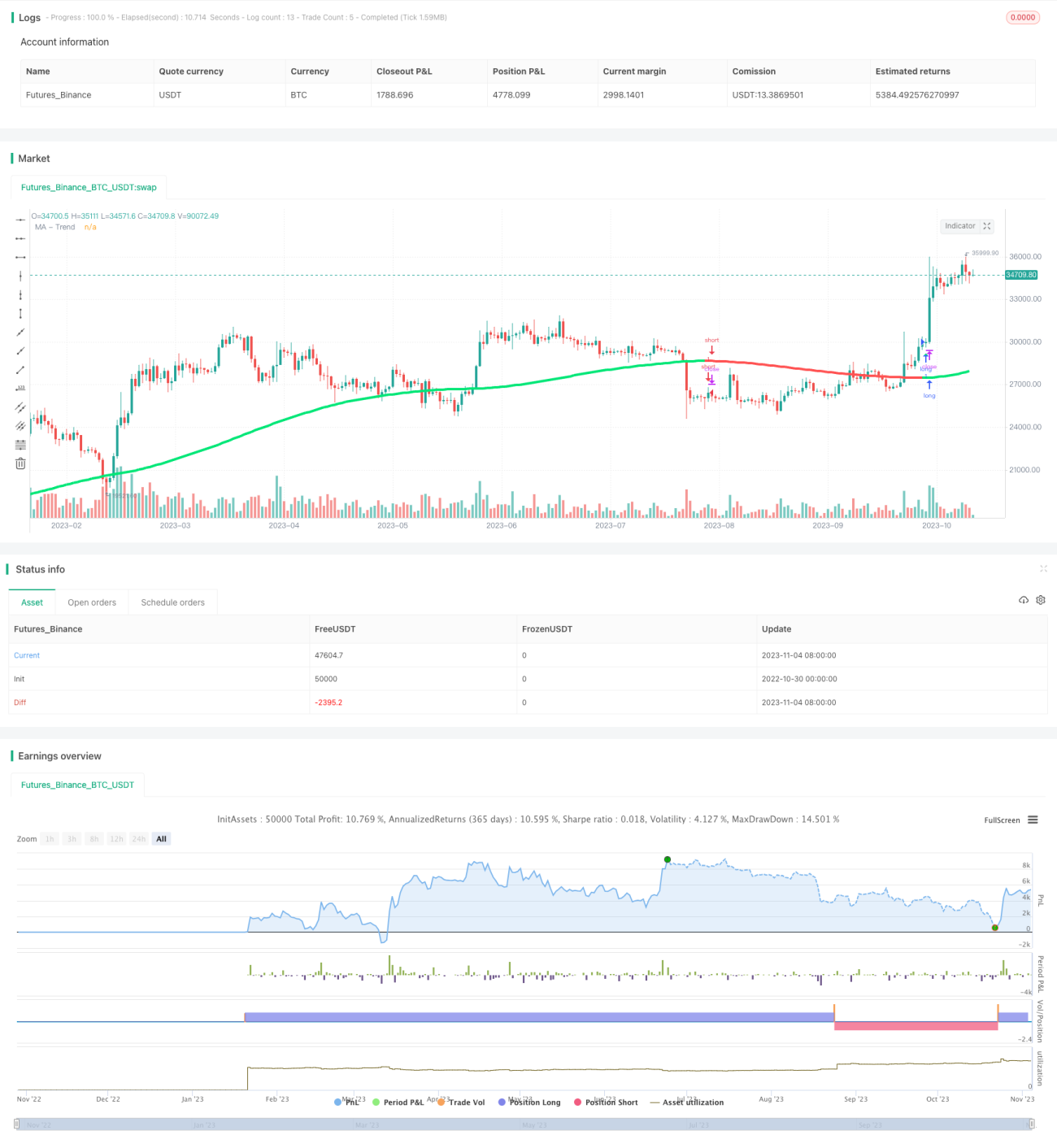
Diese Strategie kombiniert mehrere verschiedene gleitende Durchschnitte und realisiert eine einfache Trendfolgestrategie. Gleichzeitig verfügt die Strategie über eine Filterfunktion für Rauschen.
Strategieprinzip
Die Strategie glättet zunächst den Schlusskurs, wobei optional der Heiken-Ashi-Schlusskurs verwendet werden kann. Anschließend wird die Funktion smoothMA aufgerufen, die durch mehrfache Überlagerung geglättete gleitende Durchschnitte erzeugt. Die Funktion smoothMA ruft zunächst die Funktion variant auf, die verschiedene Arten von gleitenden Durchschnitten wie SMA, EMA, DEMA usw. erzeugen kann. Nachdem die variant-Funktion einen gleitenden Durchschnitt des angegebenen Typs und der Länge generiert hat, ruft smoothMA rekursiv mehrfach die variant-Funktion auf, um eine mehrfache Glättung zu erreichen. Letztendlich entsteht ein stark geglätteter gleitender Durchschnitt. Wenn der geglättete gleitende Durchschnitt steigt, wird ein Kaufsignal ausgelöst, wenn er fällt, ein Verkaufssignal.
Vorteilsanalyse
- Mehrfach überlagerte gleitende Durchschnitte können Marktrauschen effektiv herausfiltern und Trends erkennen.
- Unterstützt mehrere gleitende Durchschnittstypen wie SMA, EMA, DEMA usw., die flexibel kombiniert werden können.
- Unterstützt die Heiken-Ashi-Technik, die falsche Ausbrüche filtern kann.
- Die Strategie ist einfach und leicht umsetzbar.
- Die Länge, der Typ und die Anzahl der Glättungen der gleitenden Durchschnitte sind frei konfigurierbar, sodass Parameter für verschiedene Instrumente optimiert werden können.
Risikoanalyse
- Mehrfach überlagerte gleitende Durchschnitte erzeugen einen Verzögerungseffekt, sodass anfängliche Trendänderungen möglicherweise verpasst werden.
- Das reine System gleitender Durchschnitte kann in Seitwärtsmärkten nicht effektiv Gewinne erzielen.
- Transaktionskosten werden nicht berücksichtigt; im tatsächlichen Handel verringern sie die Rentabilität.
- Es gibt keinen Stop-Loss, sodass das Risiko von Verlustvergrößerungen besteht.
Es kann in Betracht gezogen werden, andere Indikatoren wie MACD, KDJ usw. zu kombinieren, um Trendsignale genauer zu erkennen. Optimieren Sie die Parameter der gleitenden Durchschnitte, um die Verzögerung zu verringern. Setzen Sie angemessene Stop-Loss-Niveaus, um Einzelverluste zu kontrollieren. Achten Sie außerdem darauf, die Handelsfrequenz zu kontrollieren, um Transaktionskosten zu senken.
Optimierungsrichtungen
- Unterschiedliche Kombinationen von gleitenden Durchschnitten mit verschiedenen Längen und Typen können getestet werden, um die optimalen Parameter zu finden.
- Es kann erwogen werden, andere technische Indikatoren in die Strategie einzubauen, um systematischere Ein- und Ausstiegsregeln zu schaffen.
- Handelszeiten können festgelegt werden, um den Einfluss wichtiger makroökonomischer Ereignisse auf die Strategie zu vermeiden.
- Parameter können je nach Instrumenteneigenschaften angepasst werden, um die beste Parameterkombination zu finden.
- Stop-Loss- und Take-Profit-Niveaus können festgelegt werden, um das Handelsrisiko zu kontrollieren.
Zusammenfassung
Diese Strategie verfolgt Trends durch mehrfach überlagerte gleitende Durchschnitte und kann Marktrauschen effektiv herausfiltern. Die Vorteile sind Einfachheit und flexible Parametereinstellung. Allerdings bringt das reine System gleitender Durchschnitte dennoch eine eingeschränkte Rentabilität mit sich. Es kann erwogen werden, die Strategie mit anderen technischen Indikatoren zu kombinieren, gleichzeitig das Handelsrisiko zu kontrollieren, Parameter zu optimieren und die Effizienz der Strategie zu steigern.
/*backtest
start: 2022-10-30 00:00:00
end: 2023-11-05 00:00:00
period: 1d
basePeriod: 1h
exchanges: [{"eid":"Futures_Binance","currency":"BTC_USDT"}]
*/

//@version=4
// Copyright (c) 2007-present Jurik Research and Consulting. All rights reserved.
// Copyright (c) 2018-present, Alex Orekhov (everget)
// Thanks to everget for code for more advanced moving averages- 1