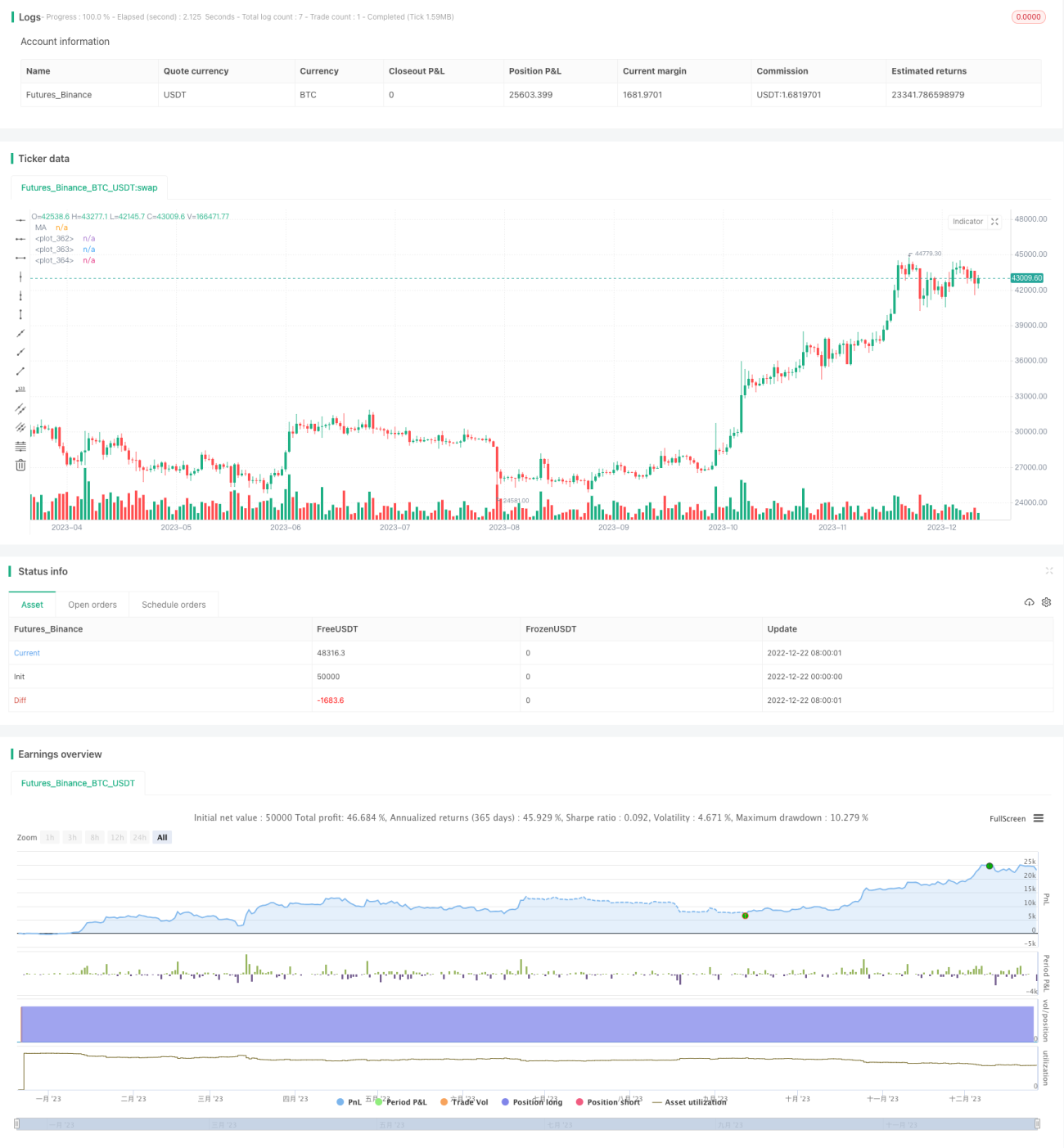
Kurzfristige Handelsstrategie basierend auf der Umkehrung des gleitenden Durchschnitts


Erstellungsdatum: 2023-12-29 11:33:04 zuletzt geändert: 2023-12-29 11:33:04
Kopie: 0 Klicks: 678
1
konzentrieren Sie sich auf
1623
Anhänger

Kurzfristige Handelsstrategie basierend auf der Umkehrung des gleitenden Durchschnitts

Überblick

Die Reverse Average Line Strategie ist eine Short-Line-Handelsstrategie, die auf der Reverse Average-Line basiert. Sie kombiniert mehrere Indikatoren wie Bollinger Bands, RSI und CCI, um Short-Line-Bewegungen in den Finanzmärkten zu erfassen und die Ziele für den Kauf und Verkauf zu erreichen.

Diese Strategie wird hauptsächlich für hochliquiditätsfähige Varianten wie Aktienindizes, Devisen und Edelmetalle angewendet. Sie strebt nach der Maximierung der Profit-Rate pro Einzelleistung und kontrolliert gleichzeitig die Risikogewinn-Rate des Gesamthandels.

Strategieprinzip

  1. Der Brin-Band wird verwendet, um die Abweichung von Preisen zu bestimmen. Berücksichtigen Sie einen Short, wenn der Preis nahe der Brin-Band ist, und einen Long, wenn der Preis nahe der Brin-Band ist.

  2. In Kombination mit dem RSI kann man überkaufen und überverkaufen.

  3. Der CCI-Indikator beurteilt Preisumkehrsignale. Der CCI-Indikator ist empfindlicher für Ausnahmesituationen und kann die Gelegenheit einer Preisumkehr effektiv erfassen.

  4. Die Position der Durchschnittslinie repräsentiert die derzeitige Hauptpreisbandbreite, wobei die Beziehung zwischen Preis und Durchschnittslinie potenzielle Trendänderungen widerspiegelt.

  5. Nach der Eintrittsbestätigung wird der Schnell-Platz-Satz für den Gewinn eingesetzt. Ein Stop-Loss-Exit wird entsprechend der Rücknahme eingestellt, um eine hohe Gewinnrate zu erzielen.

Strategische Vorteile

  1. Mehrindikator-Kombination zur Verbesserung der Signalgenauigkeit

Die Reverse-Mean-Line-Strategie verwendet mehrere Indikatoren wie die Brin-Band, den RSI und den CCI gleichzeitig. Diese Indikatoren sind sehr sensibel für Preisänderungen, und die Kombination kann die Signalgenauigkeit verbessern und falsche Signale reduzieren.

  1. Strenge Eintrittsregeln, um nicht zu verfolgen

Die Strategie erfordert, dass die Indikatorsignale und die Preise synchron erscheinen, um eine Fehleinschätzung durch einen einzelnen Indikator zu vermeiden. Gleichzeitig wird verlangt, dass die Preise deutlich umgekehrt sind, um das Risiko zu verringern.

  1. Effiziente Stop-Loss-Mechanismen, um einzelne Verluste zu kontrollieren

Unabhängig davon, wie viel man kurz macht, setzt die Strategie eine strengere Stop-Line. Sobald der Preis die Stop-Line in eine ungünstige Richtung durchbricht, wird die Strategie schnell gestoppt, um einen großen Einzelschaden zu vermeiden.

  1. Das ist die richtige Art, sich zu verhalten und zu maximieren, was man von jedem bekommt.

Die Strategie setzt zwei Stop-Loss-Ziele, um in Schritten zu profitieren. Gleichzeitig wird der Stop-Loss nach dem Stoppen in kleinen Schritten angepasst, um den Gewinnraum für jeden einzelnen Stop zu erweitern.

Risikoanalyse

  1. Die Preise schwankten stark, der Stop-Loss wurde ausgelöst.

Bei starken Preisschwankungen kann die Stop-Line durchbrochen werden, was zu unnötigen Verlusten führt. Dies geschieht in der Regel bei außergewöhnlichen Preisschwankungen, die durch wichtige Ereignisse verursacht werden.

Ein solches Risiko kann durch die Erweiterung der Stop-Loss-Marge begegnet werden, während man den Betrieb während eines großen Ereignisses vermeidet.

  1. Die Verfolgung ist zu heftig, es gibt keinen Weg zurück.

Wenn die Tendenz zu stark ist, wird der Preis oft zu schnell angeschlagen und kann nicht in der Zeit umgekehrt werden. Wenn Sie weiterhin kurz bleiben, besteht die Gefahr, dass der Kurs nachlässt.

In diesem Fall sollten Sie vorübergehend abwarten, bis der Anstieg der Preise deutlich nachlässt.

Optimierungsrichtung

  1. Optimierung der Parameter und Verbesserung der Signalgenauigkeit

Die Rückmeldung kann unter verschiedenen Parameterkombinationen getestet werden, um die besten Parameter auszuwählen. Zum Beispiel Parameter, die den RSI optimieren können, Parameter des CCI usw.

  1. Die Kombination von Quantitativ-Energie-Indikatoren, um zu beurteilen, wann es wirklich umgekehrt ist

Es kann ein Quantifikator für die Transaktionsmenge oder die Brin-Bandbreite hinzugefügt werden. Dies verhindert, dass bei nur geringfügigen Preisanpassungen ein falsches Signal erzeugt wird.

  1. Optimierung der Stop-Loss-Strategien und Erweiterung der Einzelleistungen

Verschiedene Stop-Loss-Punkte können getestet werden, um die Gewinne pro Einheit zu maximieren. Gleichzeitig müssen Sie das Risiko ausgleichen, um zu vermeiden, dass die Stop-Loss-Punkte leicht ausgelöst werden.

Zusammenfassen

Die Reverse-Even-Line-Strategie nutzt mehrere Indikatoren, um die Signalgenauigkeit, die Betriebsregeln und die Risiken zu kontrollieren. Sie ist für Sorten mit hoher Marktsensitivität und hoher Liquidität geeignet, um die Reversalchancen zwischen dem Brin-Band und der Schlüssel-Even-Line zu erfassen und die Ziele der Low-Buy-High-Trade zu erreichen.

In der Praxis muss noch auf die Optimierung der Indikatorparameter geachtet werden, wobei die Kombination von Quantität und Indikatoren den Zeitpunkt der tatsächlichen Umkehrung bestimmen kann. Darüber hinaus ist ein gutes Risikomanagement bei starken Preisschwankungen erforderlich. Die Strategie kann, wenn sie richtig angewendet wird, relativ stabile Alpha-Einnahmen erzielen.

Strategiequellcode
/*backtest
start: 2022-12-22 00:00:00
end: 2023-12-28 00:00:00
period: 1d
basePeriod: 1h
exchanges: [{"eid":"Futures_Binance","currency":"BTC_USDT"}]
*/

// This source code is subject to the terms of the Mozilla Public License 2.0 at https://mozilla.org/MPL/2.0/
// © sg1999

//@version=4


// >>>>>strategy name
strategy(title = "CCI-RSI MR", shorttitle = "CCI-RSI MR", overlay = true)

// >>>>input variables

// 1. risk per trade as % of initial capital
risk_limit = input(title="Risk Limit (%)", type=input.float, minval=0.1, defval=2.0, step=0.1)

// 2. drawdown
Draw_down = input(title="Max Drawdown (x ATR)", type=input.float, minval=0.5, maxval=10, defval=2.0, step=0.1)

// 3. type of stop loss to be used
original_sl_type  = input(title="SL Based on", defval="Close Price", options=["Close Price","Last Traded Price"])

// 4. entry signal validity for bollinger strategies
dist_from_signal= input(title="Entry distance from signal", type=input.integer, minval=1, maxval=20, defval=3, step=1)

// 5. multiple exit points
exit_1_pft_pct          = input(title="1st exit when reward is", type=input.float, minval=0.5, maxval=100, defval=1.0, step=0.1)
exit_1_qty_pct          = input(title="1st exit quantity %", type=input.float, minval=1, maxval=100, defval=100, step=5)
exit_2_pft_pct          = input(title="2nd exit when reward is", type=input.float, minval=0.5, maxval=100, defval=1.5, step=0.1)
sl_trail_pct            = input(title="Trailing SL compared to original SL", type=input.float, minval=0.5, maxval=100, defval=0.5, step=0.5)

//show signal bool
plotBB = input(title="Show BB", type=input.bool, defval=true)
plotSignals  = input(title="Show Signals", type=input.bool, defval=true)

// 6. date range to be used for backtesting
fromMonth = input(defval = 1,    title = "From Month",      type = input.integer, minval = 1, maxval = 12)
fromDay   = input(defval = 1,    title = "From Day",        type = input.integer, minval = 1, maxval = 31)
fromYear  = input(defval = 1990, title = "From Year",       type = input.integer, minval = 1970)
thruMonth = input(defval = 1,    title = "Thru Month",      type = input.integer, minval = 1, maxval = 12)
thruDay   = input(defval = 1,    title = "Thru Day",        type = input.integer, minval = 1, maxval = 31)
thruYear  = input(defval = 2022, title = "Thru Year",       type = input.integer, minval = 1970)

start     = timestamp(fromYear, fromMonth, fromDay, 00, 00)        // backtest start window
finish    = timestamp(thruYear, thruMonth, thruDay, 23, 59)        // backtest finish window
window()  => true

// >>>>>strategy variables

//input variables 
current_high = highest(high, 5)     // swing high (5 period)
current_low = lowest(low, 5)        // swing low (5 period)
current_ma = sma(close, 5)          // Simple Moving average (5 period)
atr_length = atr(20)                // ATR (20 period)  
CCI = cci(close,20)                 // CCI (20 period)
RSI = rsi(close,14)                 // RSI (14 period)
RSI_5 = sma (RSI, 5)                // Simple moving average of RSI (5 period)


// 1. for current candle

long_entry              = false 
short_entry             = false
risk_reward_ok          = false
sl_hit_flag             = false
tsl_hit_flag            = false
sl_cross                = false

// 2. across candles

var RSI_short           = false     //short signal boolean
var RSI_long            = false     //long signal boolean
var cci_sell            = false     //sellsignal crossunder boolean
var cci_buy             = false     //buy signal crossover boolean
var bar_count_long      = 0         // Number of bars after a long signal 
var bar_count_short     = 0         // Number of bars after a short signal
var candles_on_trade    = 0         
var entry_price         = 0.00
var sl_price            = 0.00
var qty                 = 0
var exit_1_qty          = 0
var exit_2_qty          = 0
var exit_1_price        = 0.0
var exit_2_price        = 0.0
var hold_high           = 0.0       // variable used to calculate Trailing sl
var hold_low            = 0.0       // variable used to calculate Trailing sl
var tsl_size            = 0.0       // Trailing Stop loss size(xR)
var sl_size             = 0.0       // Stop loss size (R)
var tsl_price           = 0.0       //Trailing stoploss price


// >>>>>strategy conditions.
// Bollinger bands (2 std)
[mBB0,uBB0,lBB0] = bb(close,20,2)
uBB0_low= lowest(uBB0,3) // lowest among upper BB of past 3 periods
lBB0_high= highest(lBB0,3) //highest among upper BB of past 3 periods


//RSI and CCI may not necessarily crossunder on the same candle
t_sell_RSI = sum( crossunder(RSI,RSI_5)? 1 : 0, 2) == 1 // checks if crossunder has happened in the last 3 candles (including the current candle)
t_sell_CCI = sum( crossunder(CCI,100)? 1 : 0, 2) == 1 //and (CCI >50)
t_buy_RSI  = sum( crossover(RSI,RSI_5)? 1 : 0, 2) == 1  //checks if crossover has happened in the last 3 candles (including the current candle)
t_buy_CCI  = sum( crossover(CCI,-100) ? 1 : 0, 2) == 1 //and (CCI<-50)

// CONDITIONS FOR A SELL signal
if t_sell_RSI and t_sell_CCI and (current_high >= uBB0_low) 
    cci_sell := true
    bar_count_short := 0
 
if  cci_sell and strategy.position_size ==0 
    bar_count_short := bar_count_short + 1
    
if  cci_sell and bar_count_short<= dist_from_signal and close <= current_ma  and strategy.position_size ==0
    RSI_short := true

//conditions for a BUY signal
if t_buy_RSI and t_buy_CCI and (current_low <= lBB0_high) // or current_low_close <= lBB01_high)
    cci_buy := true
    bar_count_long := 0

if  cci_buy and strategy.position_size ==0 
    bar_count_long := bar_count_long + 1
    
if  cci_buy and  bar_count_long<= dist_from_signal and close >= current_ma and strategy.position_size ==0
    RSI_long := true

if RSI_long and RSI_short
    RSI_long := false
    RSI_short := false


// >>>>>entry and target specifications

if strategy.position_size == 0 and RSI_short 
    short_entry         := true
    entry_price         := close
    sl_price            := current_high + syminfo.mintick // (swing high + one tick) is the stop loss
    sl_size             := abs(entry_price - sl_price)
    candles_on_trade    := 0
    tsl_size            := abs(entry_price - sl_price)*sl_trail_pct // Here sl_trail_pct is the multiple of R which is used to calculate TSL size

if strategy.position_size == 0 and RSI_long 
    long_entry          := true
    entry_price         := close
    sl_price            := current_low -  syminfo.mintick //(swing low - one tick) is the stop loss
    candles_on_trade    := 0
    sl_size             := abs(entry_price - sl_price)
    tsl_size            := abs(entry_price - sl_price)*sl_trail_pct // Here sl_trail_pct is the multiple of R which is used to calculate TSL size
    
if long_entry and short_entry
    long_entry          := false
    short_entry         := false
    
    
// >>>>risk evaluation criteria
    
//>>>>> quantity determination and exit point specifications.
    
if (long_entry or short_entry) and strategy.position_size == 0 // Based on our risk (R), no.of lots is calculated by considering a risk per trade limit formula
    qty                 := round((strategy.equity) * (risk_limit/100)/(abs(entry_price - sl_price)*syminfo.pointvalue))
    exit_1_qty          := round(qty * (exit_1_qty_pct/100))
    exit_2_qty          := qty - (exit_1_qty)
    if long_entry
        exit_1_price    := entry_price + (sl_size * exit_1_pft_pct) 
        exit_2_price    := entry_price + (sl_size * exit_2_pft_pct)
    if short_entry
        exit_1_price    := entry_price - (sl_size * exit_1_pft_pct) 
        exit_2_price    := entry_price - (sl_size * exit_2_pft_pct)
        
        
// trail SL after 1st target is hit
if abs(strategy.position_size) == 0
    hold_high   := 0
    hold_low    := 0

if strategy.position_size > 0 and high > exit_1_price
    if high > hold_high or hold_high == 0
        hold_high    := high
    tsl_price        := hold_high - tsl_size
    

if strategy.position_size < 0 and low < exit_1_price
    if low  < hold_low or hold_low == 0
        hold_low     := low
    tsl_price        := hold_low + tsl_size

    
//>>>> entry conditons

if long_entry and strategy.position_size == 0
    strategy.cancel("BUY", window())   // add another window condition which considers day time (working hours)
    strategy.order("BUY", strategy.long, qty, comment="BUY @ "+ tostring(entry_price),when=window())

if short_entry and strategy.position_size == 0
    strategy.cancel("SELL", window()) // add another window condition which considers day time (working hours)
    strategy.order("SELL", strategy.short, qty, comment="SELL @ "+ tostring(entry_price),when=window())

//>>>> exit conditons

tsl_hit_flag     := false

//exit at tsl
if strategy.position_size > 0 and close < tsl_price  and abs(strategy.position_size)!=qty 
    strategy.order("EXIT at TSL", strategy.short, abs(strategy.position_size),  comment="EXIT TSL @ "+ tostring(close))
    RSI_short                := false   
    RSI_long                 := false
    bar_count_long            := 0
    bar_count_short           := 0
    tsl_hit_flag              := true
    cci_sell := false
    cci_buy := false
    strategy.cancel("EXIT 1", true)
    strategy.cancel("EXIT 2", true)
    strategy.cancel("Exit Drawd",true)
    strategy.cancel("EXIT at SL",true)

if strategy.position_size < 0 and close > tsl_price  and abs(strategy.position_size)!=qty 
    strategy.order("EXIT at TSL", strategy.long, abs(strategy.position_size), comment="EXIT TSL @ "+ tostring(close))
    RSI_short                := false   
    RSI_long                 := false
    bar_count_long            := 0
    bar_count_short           := 0   
    tsl_hit_flag              := true
    cci_sell := false
    cci_buy := false
    strategy.cancel("EXIT 1", true)
    strategy.cancel("EXIT 2", true)
    strategy.cancel("Exit Drawd",true)
    strategy.cancel("EXIT at SL",true)

//>>>>exit at sl
    
if strategy.position_size > 0 and original_sl_type == "Close Price" and close < sl_price and abs(strategy.position_size)==qty
    strategy.cancel("EXIT at SL", true)
    strategy.order("EXIT at SL", strategy.short, abs(strategy.position_size),stop= sl_price,  comment="EXIT SL @ "+ tostring(close))
    RSI_short                := false   
    RSI_long                 := false
    bar_count_long            := 0
    bar_count_short           := 0
    cci_buy := false
    cci_sell := false
    sl_hit_flag               := true
    strategy.cancel("EXIT 1", true)
    strategy.cancel("EXIT 2", true)
    strategy.cancel("Exit Drawd",true)
    strategy.cancel("EXIT at TSL",true)
    

if strategy.position_size < 0 and original_sl_type == "Close Price" and close > sl_price and abs(strategy.position_size)==qty
    strategy.cancel("EXIT at SL", true)
    strategy.order("EXIT at SL", strategy.long, abs(strategy.position_size), stop = sl_price, comment="EXIT SL @ "+ tostring(close))
    RSI_short               := false   
    RSI_long                := false
    bar_count_long           := 0
    bar_count_short          := 0   
    cci_buy := false
    cci_sell := false
    sl_hit_flag              := true
    strategy.cancel("EXIT 1", true)
    strategy.cancel("EXIT 2", true)
    strategy.cancel("Exit Drawd",true)
    strategy.cancel("EXIT at TSL",true)


//>>>>>for ltp sl setting

if strategy.position_size > 0 and original_sl_type == "Last Traded Price" and abs(strategy.position_size) ==qty
    strategy.order("EXIT at SL", strategy.short, abs(strategy.position_size),stop= sl_price,  comment="EXIT SL @ "+ tostring(close))
    RSI_short              := false   
    RSI_long               := false
    bar_count_long          := 0
    bar_count_short         := 0
    cci_buy := false
    cci_sell := false
    strategy.cancel("EXIT 1", true)
    strategy.cancel("EXIT 2", true)
    strategy.cancel("Exit Drawd",true)
    strategy.cancel("EXIT at TSL",true)
    
if strategy.position_size < 0 and original_sl_type == "Last Traded Price" and abs(strategy.position_size) ==qty
    strategy.order("EXIT at SL", strategy.long, abs(strategy.position_size), stop = sl_price, comment="EXIT SL @ "+ tostring(close))
    RSI_short              := false   
    RSI_long               := false
    bar_count_long          := 0
    bar_count_short         := 0   
    cci_buy := false
    cci_sell := false
    strategy.cancel("EXIT 1", true)
    strategy.cancel("EXIT 2", true)
    strategy.cancel("Exit Drawd",true)
    strategy.cancel("EXIT at TSL",true)

//>>>>>exit at target

if strategy.position_size > 0 and abs(strategy.position_size) == qty and not tsl_hit_flag
    strategy.order("EXIT 1", strategy.short, exit_1_qty, limit=exit_1_price, comment="EXIT TG1 @ "+ tostring(exit_1_price))
    strategy.cancel("Exit Drawd",true)
    cci_sell := false
    cci_buy := false

if strategy.position_size > 0 and abs(strategy.position_size) < qty and abs(strategy.position_size) != qty and not tsl_hit_flag
    strategy.order("EXIT 2", strategy.short, exit_2_qty, limit=exit_2_price, comment="EXIT TG2 @ "+ tostring(exit_2_price))
    RSI_short := false   
    RSI_long  := false
    bar_count_long := 0
    bar_count_short := 0
    cci_buy := false
    cci_sell := false
    strategy.cancel("Exit Drawd",true)
    strategy.cancel("EXIT at SL", true)

if strategy.position_size < 0 and abs(strategy.position_size) == qty and not tsl_hit_flag
    strategy.order("EXIT 1", strategy.long, exit_1_qty, limit=exit_1_price, comment="EXIT TG1 @ "+ tostring(exit_1_price))
    strategy.cancel("Exit Drawd",true)
    cci_buy := false
    cci_sell := false

if strategy.position_size < 0 and abs(strategy.position_size) < qty and abs(strategy.position_size) != qty 
    strategy.order("EXIT 2", strategy.long, exit_2_qty, limit=exit_2_price, comment="EXIT TG2 @ "+ tostring(exit_2_price))
    RSI_short := false   
    RSI_long  := false
    bar_count_long := 0
    bar_count_short := 0  
    cci_buy := false
    cci_sell := false
    strategy.cancel("Exit Drawd",true)
    strategy.cancel("EXIT at SL", true)
    
//>>>>>>drawdown execution

if strategy.position_size < 0 and original_sl_type == "Close Price" and not tsl_hit_flag  
    strategy.cancel("Exit Drawd",true)
    strategy.order("Exit Drawd", strategy.long, abs(strategy.position_size), stop= (entry_price + Draw_down*atr_length)  ,comment="Drawdown exit S")
    RSI_short            := false   
    RSI_long             := false
    bar_count_long        := 0
    bar_count_short       := 0
    cci_buy := false
    cci_sell := false
   
    
if strategy.position_size > 0 and original_sl_type == "Close Price" and not tsl_hit_flag and not sl_hit_flag 
    strategy.cancel("Exit Drawd",true)
    strategy.order("Exit Drawd", strategy.short, abs(strategy.position_size), stop= (entry_price - Draw_down*atr_length)  ,comment="Drawdown exit B")
    RSI_short           := false   
    RSI_long            := false
    bar_count_long       := 0
    bar_count_short      := 0
    cci_buy := false
    cci_sell := false
    
//>>>>to add sl hit sign  

if strategy.position_size != 0 and sl_hit_flag //For symbols on chart
    sl_cross := true

//>>>>>cancel all pending orders if the trade is booked

strategy.cancel_all(strategy.position_size == 0 and not (long_entry or short_entry))

//>>>>plot indicators
p_mBB = plot(plotBB ? mBB0 : na, color=color.teal)
p_uBB = plot(plotBB ? uBB0 : na, color=color.teal, style=plot.style_stepline)
p_lBB = plot(plotBB ? lBB0 : na, color=color.teal, style=plot.style_stepline)


plot(sma(close,5), color=color.blue, title="MA")


//>>>>plot signals

plotshape(plotSignals and RSI_short, style=shape.triangledown, location=location.abovebar, color=color.red)
plotshape(plotSignals and RSI_long, style=shape.triangleup, location=location.belowbar, color=color.green)
plotshape(sl_cross, text= "Stoploss Hit",size= size.normal,style=shape.xcross , location=location.belowbar, color=color.red)

//>>>>plot signal high low
if strategy.position_size != 0
    candles_on_trade := candles_on_trade + 1

if strategy.position_size != 0 and candles_on_trade == 1
    line.new(x1=bar_index[1], y1=high[1], x2=bar_index[0], y2=high[1], color=color.black, width=2)
    line.new(x1=bar_index[1], y1=low[1],  x2=bar_index[0], y2=low[1],  color=color.black, width=2)


//>>>>end of program