Trendfolgestrategie mit zwei gleitenden Durchschnitten

Überblick
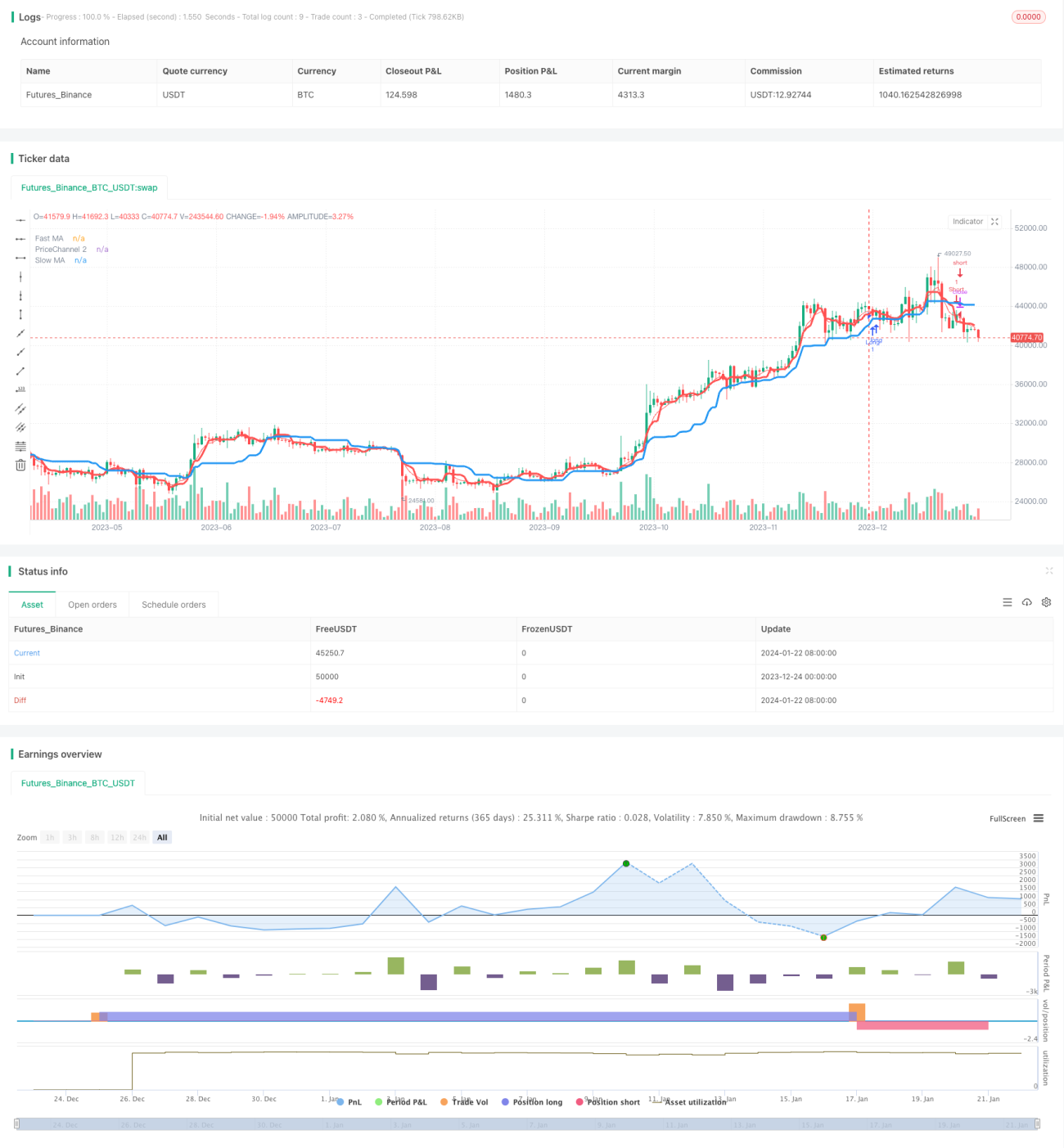
Die Dual-Gleitenden-Durchschnitte-Trendfolge-Strategie nutzt eine Kombination aus einem schnellen und einem langsamen gleitenden Durchschnitt, um Markttrends zu identifizieren und Handelssignale bei Trendwenden zu generieren. Die Strategie kombiniert gleitende Durchschnitte mit Preiskanal-Indikatoren, um Trends zu erkennen, Marktrauschen effektiv zu filtern und die Trendrichtung zu bestimmen.
Strategieprinzip
Die Dual-Gleitenden-Durchschnitte-Trendfolge-Strategie verwendet zwei gleitende Durchschnitte – einen schnellen (5 Perioden) und einen langsamen (21 Perioden). Der schnelle gleitende Durchschnitt dient zur Generierung von Handelssignalen, während der langsame zur Bestimmung der Markttrendrichtung genutzt wird. Wenn der schnelle gleitende Durchschnitt den langsamen von unten nach oben kreuzt, entsteht ein Kaufsignal; kreuzt er von oben nach unten, ein Verkaufssignal.
Zusätzlich wird ein Preiskanalindikator zur Trendbestimmung herangezogen. Der Preiskanal wird durch gleitende Durchschnitte der Höchst- und Tiefstkurse gebildet. Ein Ausbruch des Preises aus dem Kanal signalisiert eine Trendwende. Die Strategie verwendet zwei Preiskanäle: Der erste hat eine Periode von 21, der zweite eine Periode von 5, abgestimmt auf die Perioden der gleitenden Durchschnitte.
Bei der Beurteilung von Kauf- und Verkaufssignalen fordert die Strategie das aufeinanderfolgende Auftreten roter Balken (Anzahl vom Benutzer einstellbar) als zusätzlichen Filter. Dadurch werden Fehlsignale in Seitwärtsmärkten vermieden.
Zusammengefasst folgt die Logik der Trendbestimmung:
- Nutzung des Preiskanals zur Bestimmung des übergeordneten Trendverlaufs.
- Nutzung des schnellen gleitenden Durchschnitts zur Bestimmung des kurzfristigen Trends und zur Generierung von Handelssignalen.
- Kombination mit einem zusätzlichen Balkenfilter zur Vermeidung von Fehlsignalen in Seitwärtsmärkten.
Durch die mehrstufige Trendbestimmung kann Rauschen effektiv gefiltert und die Trendrichtung bestimmt werden.
Vorteilsanalyse
Die Dual-Gleitenden-Durchschnitte-Trendfolge-Strategie bietet folgende Vorteile:
- Durch das Dual-GD-System können Trends effektiv erkannt und die Haupttrendrichtung bestimmt werden.
- Der schnelle gleitende Durchschnitt generiert Handelssignale, die Trendwenden rechtzeitig erfassen.
- Der Preiskanal identifiziert den übergeordneten Trend und vermeidet Irreführung durch kurzfristiges Marktrauschen.
- Der Rot-/Grün-Balken-Filter reduziert die Wahrscheinlichkeit von Fehlsignalen in Seitwärtsmärkten.
- Die Strategieparameter sind anpassbar, um sie an verschiedene Märkte anzupassen und die Stabilität zu erhöhen.
- Eine Stop-Loss-Strategie kann hinzugefügt werden, um das Risiko pro Trade zu kontrollieren.
Zusammenfassend ist die Strategie insgesamt recht stabil und zeigt in starken Trendmärkten gute Leistungen.
Risikoanalyse
Die Dual-Gleitenden-Durchschnitte-Trendfolge-Strategie birgt auch einige Risiken, hauptsächlich:
- Bei langanhaltenden Seitwärtsmärkten können Fehlsignale entstehen, die zu kleinen, aufeinanderfolgenden Verlusten führen.
- Bei falscher Parametereinstellung können Handelssignale verzögert auftreten, sodass der optimale Einstiegszeitpunkt verpasst wird.
- Ohne effektive Stop-Loss-Strategie ist das Risiko einzelner Trades schwer kontrollierbar.
Entsprechend können die Risiken durch folgende Maßnahmen reduziert werden:
- Anpassung des Rot-/Grün-Balken-Filters, um die Handelsfrequenz in Seitwärtsmärkten zu senken.
- Optimierung der Parameter des schnellen gleitenden Durchschnitts, um zeitnahe Signale zu gewährleisten.
- Hinzufügen eines Trailing-Stop-Loss oder prozentualen Stop-Loss, um Einzelverluste streng zu begrenzen.
Optimierungsmöglichkeiten
Die Dual-Gleitenden-Durchschnitte-Trendfolge-Strategie bietet noch Raum für weitere Optimierungen, hauptsächlich:
- Integration von Volatilitätsindikatoren wie ATR zur automatischen Anpassung der Stop-Loss-Höhe.
- Einsatz maschineller Lernmethoden zur automatischen Optimierung der Strategieparameter.
- Hinzufügen eines neuronalen Netzwerkmoduls zur Trendrichtungsbestimmung.
- Kombination mehrerer Indikatoren und Filter zu einer Strategiekombination.
Diese Optimierungsrichtungen können die Stabilität, Anpassungsfähigkeit und Intelligenz der Strategie weiter verbessern.
Zusammenfassung
Die Dual-Gleitenden-Durchschnitte-Trendfolge-Strategie ist insgesamt eine recht robuste Trendfolgestrategie. Sie kombiniert gleitende Durchschnitte mit Preiskanalindikatoren zur Bestimmung von Trendrichtung und -stärke und generiert Handelssignale über den schnellen gleitenden Durchschnitt. Der zusätzliche Balkenfilter hilft, Fehlsignale zu vermeiden. Die Parameter der Strategie sind anpassbar, sodass sie sich gut an verschiedene Marktumgebungen anpassen lässt. Gleichzeitig bietet sie viel Raum für Optimierungen, um eine zuverlässige, intelligente automatisierte Handelsstrategie zu entwickeln.
/*backtest
start: 2023-12-24 00:00:00
end: 2024-01-23 00:00:00
period: 1d
basePeriod: 1h
exchanges: [{"eid":"Futures_Binance","currency":"BTC_USDT"}]
*/

//@version=2
strategy(title = "Noro's Trend MAs Strategy v1.8", shorttitle = "Trend MAs str 1.8", overlay=true, default_qty_type = strategy.percent_of_equity, default_qty_value=100.0, pyramiding=0)

//Settings- 1