Schnelle QQE-Crossover-Strategie mit Trendfilter

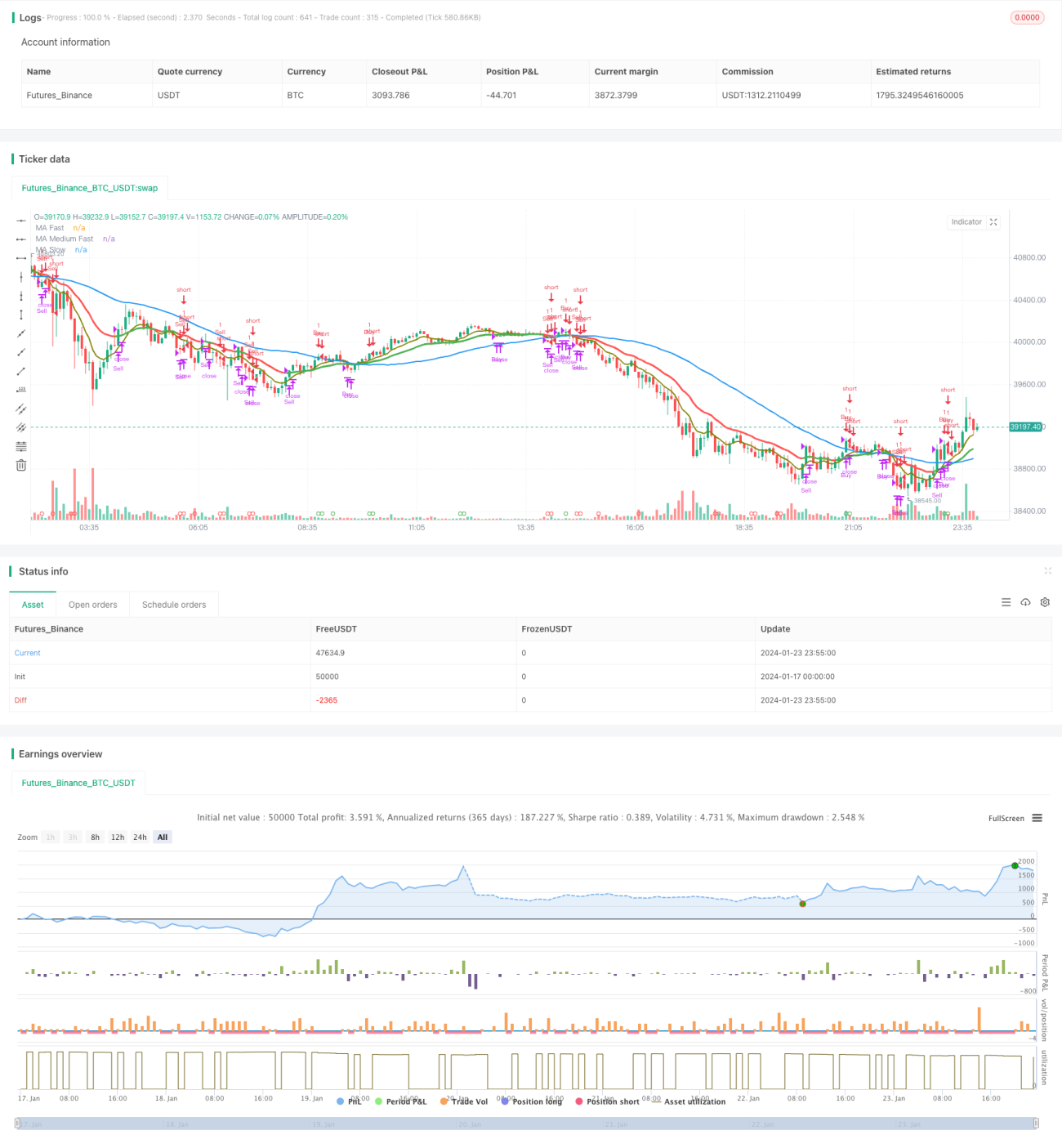
Überblick
Die auf Trendfilterung basierende schnelle QQE-Cross-Strategie ist eine trendfolgende Handelsstrategie, die schnelle QQE-Crosses zusammen mit gleitenden Durchschnitten zur Trendrichtungsfilterung verwendet. QQE (Qualitative Quantitative Estimation) basiert auf dem Relative-Stärke-Index (RSI), verwendet jedoch Glättungstechniken als zusätzliche Transformation. Es können drei Kreuzungen ausgewählt werden (standardmäßig alle ausgewählt):
- RSI-Signal kreuzt die Nulllinie (XZERO)
- RSI-Signal kreuzt die schnelle RSIatr-Linie (XQQE)
- RSI-Signal verlässt den RSI-Schwellenwertkanal (Kauf/Verkauf)
Kauf-/Verkaufssignale können optional durch gleitende Durchschnitte gefiltert werden:
- Bei Kaufsignalen muss der Schlusskurs über dem schnellen gleitenden Durchschnitt liegen und der schnelle gleitende Durchschnitt (EMA8) > der mittlere gleitende Durchschnitt (EMA20) > der langsame gleitende Durchschnitt (SMA50)
- Bei Verkaufssignalen muss der Schlusskurs unter dem schnellen gleitenden Durchschnitt liegen und der schnelle gleitende Durchschnitt (EMA8) < der mittlere gleitende Durchschnitt (EMA20) < der langsame gleitende Durchschnitt (SMA50)
Und/oder Trendrichtungsfilter:
- Bei Kaufsignalen muss der Schlusskurs über dem langsamen gleitenden Durchschnitt (SMA50) liegen und der Richtungs-gleitende Durchschnitt (EMA20) muss grün sein.
- Bei Verkaufssignalen muss der Schlusskurs unter dem langsamen gleitenden Durchschnitt (SMA50) liegen und der Richtungs-gleitende Durchschnitt (EMA20) muss rot sein.
XZERO und XQQE sind nicht in der Filterung enthalten; sie dienen zur Anzeige ausstehender Kauf-/Verkaufssignale, insbesondere XZERO.
Diese Strategie sollte auf jedem Währungspaar und in den meisten Zeitrahmen-Charts funktionieren.
Strategieprinzip
Der Kern dieser Strategie besteht darin, die Richtungskreuze des schnellen QQE-Indikators als Handelssignale zu nutzen und durch die Kombination gleitender Durchschnitte Rauschsignale herauszufiltern, um die Trendrichtung zu erfassen.
Im Detail verwendet die Strategie die folgenden Indikatoren und Signale:
Schneller QQE-Indikator: Dies ist ein auf dem RSI basierender Indikator, der zusätzlich geglättet wurde, um empfindlicher und schneller zu reagieren. Der Indikator besteht aus drei Linien: der mittleren Linie als exponentiell gleitender Durchschnitt des RSI, der oberen Linie (mittlere Linie + schneller ATR * ein Koeffizient) und der unteren Linie (mittlere Linie – schneller ATR * ein Koeffizient). Wenn der RSI die obere Linie nach oben durchbricht, ist das ein Verkaufssignal; durchbricht er die untere Linie nach unten, ist das ein Kaufsignal.
Nulllinienkreuz: Ein Signal entsteht, wenn die mittlere RSI-Linie die Nulllinie kreuzt – ein Aufwärtskreuz ist ein Kaufsignal, ein Abwärtskreuz ein Verkaufssignal. Diese Signale deuten auf bevorstehende Trendwechsel hin.
Kanalausbruch: Ein Signal entsteht, wenn die mittlere RSI-Linie in einen festgelegten Schwellenwertkanal eintritt – ein Ausbruch über den oberen Kanal ist ein Verkaufssignal, ein Ausbruch unter den unteren Kanal ein Kaufsignal. Dies sind stärkere Trendsignale.
Kombination gleitender Durchschnitte: Es werden drei Gruppen gleitender Durchschnitte verwendet: schnell (8 Perioden), mittel (20 Perioden) und langsam (50 Perioden). Wenn die drei Linien in der Reihenfolge schnell > mittel > langsam angeordnet sind, handelt es sich um einen Aufwärtstrend; bei schnell < mittel < langsam um einen Abwärtstrend. Diese Kombination dient zur Bestimmung der allgemeinen Trendrichtung.
Trendrichtungsfilter: Ein Kaufsignal wird nur generiert, wenn der Schlusskurs über dem langsamen gleitenden Durchschnitt liegt und der mittlere gleitende Durchschnitt steigt (innerhalb dieser Periode: Höchstkurs > Tiefstkurs). Ein Verkaufssignal wird nur generiert, wenn der Schlusskurs unter dem langsamen gleitenden Durchschnitt liegt und der mittlere gleitende Durchschnitt fällt. Dies filtert einige gegenläufige Fehlsignale heraus.
Durch die Kombination der Kreuzsignale des schnellen QQE-Indikators mit der Trendfilterung gleitender Durchschnitte können mittel- bis kurzfristige Wendepunkte innerhalb des Trends eines größeren Zeitrahmens erfasst werden, was ein relativ vollständiges Handelssystem ergibt. Gleichzeitig sind die Indikatorparameter empfindlich eingestellt, um Trendwenden frühzeitig zu erkennen.
Insgesamt handelt es sich um eine Strategie, die mittel- bis langfristige Trends verfolgt, durch schnelle Indikatoren kurzfristige Umkehr-Kauf-/Verkaufszeitpunkte erfasst und mithilfe gleitender Durchschnitte das Risiko von Gegentrendgeschäften reduziert, um so die Gewinne zu maximieren.
Strategievorteile
- Verwendung eines schnellen, empfindlichen Indikators (QQE) zur schnellen Erfassung von Umkehrsignalen
- Anwendung mehrerer gleitender Durchschnitte zur Bestimmung der übergeordneten Trendrichtung, Vermeidung von Gegentendengeschäften
- Enthält mehrere Kreuzsignale, die kombiniert werden können, um Gewinnchancen zu erhöhen
- Parameter anpassbar, optimierbar für verschiedene Instrumente und Zeitrahmen
- Verwendung der kanalartigen Ausbruchssignale des Indikators selbst, ohne unabhängige Kanäle zu zeichnen, wodurch Parameterabhängigkeiten vermieden werden
- Ermöglicht gute Erfassung kurzfristiger Umkehrbewegungen innerhalb eines mittel- bis langfristigen Trends
- Einfaches und klares Konzept, leicht zu verstehen und umzusetzen
Strategierisiken
Diese Strategie birgt auch einige potenzielle Risiken:
- Schnelle Indikatoren neigen zu Fehlsignalen; gleitende Durchschnitte können diese nicht vollständig herausfiltern, es besteht das Risiko, in die falsche Richtung zu handeln
- Bei Trendwenden auf größeren Zeitrahmen können leicht gegenläufige Handelssignale entstehen
- Keine Berücksichtigung von Money-Management-Faktoren, Möglichkeit von übermäßigem Handel mit Verlusten
- Kein Stop-Loss, daher hohes Risiko von Verlustausweitungen
- Overfitting-Risiko bei Backtests; die Wirksamkeit im Live-Handel muss überprüft werden
Gegenmaßnahmen und Lösungsansätze:
- Anpassung der Parameter gleitender Durchschnitte, Verwendung weiterer Perioden zur Trendbestimmung
- Hinzufügen weiterer Indikatoren als Filter, z. B. MACD, Bias usw.
- Integration einer Stop-Loss-Strategie zur Begrenzung von Einzelverlusten
- Live-Tests und Optimierung der Parameter
Optimierungsmöglichkeiten der Strategie
Die Strategie bietet weitere Optimierungspotenziale:
- Optimierung der Parameter für die schnelle/langsame Linie des QQE-Indikators, um die beste Parameterkombination zu finden
- Testen weiterer Kombinationen gleitender Durchschnitte, um die optimale Filterwirkung zu erzielen
- Hinzufügen weiterer Indikatoren wie MACD zur zusätzlichen Signalfilterung
- Anwendung von Money-Management-Strategien zur Optimierung des Positionsmanagements
- Festlegung einer Stop-Loss-Strategie zur Begrenzung des Einzelverlustrisikos
- Optimierung der Parameter für verschiedene Instrumente
- Trendbestimmung auf höheren Zeitrahmen, um durch kurzfristige Umkehrungen nicht in die Irre geführt zu werden
Durch Parameteroptimierung, Kombination weiterer Indikatoren und ergänzende, praktikable Geld- und Risikomanagementmaßnahmen kann die Live-Performance dieser Strategie verbessert werden.
Zusammenfassung
Insgesamt ist die auf Trendfilterung basierende schnelle QQE-Cross-Strategie eine sehr erwägenswerte Option. Ihr Vorteil liegt darin, schnelle Umkehrhandelsmöglichkeiten zu erfassen, während sie gleichzeitig durch mehrere gleitende Durchschnitte den übergeordneten Trend bestimmt und so weitgehend falsche Gegentendengeschäfte vermeidet. Durch Optimierung der Indikatorparameter und Filterbedingungen sowie ein strenges Money-Management kann die Strategie relativ stabile Anlageerträge erzielen.
Natürlich dürfen die Risiken nicht vernachlässigt werden; Live-Tests und kontinuierliche Optimierung sind notwendig, um die Praxistauglichkeit und Verlässlichkeit der Strategie sicherzustellen. Insgesamt lohnt es sich für Anleger, diese Strategie zu erlernen und langfristig zu verfolgen. Es ist zu erwarten, dass mit dem Fortschritt der algorithmischen Handelstechnologie solche auf schnellen Indikatoren und Trendfilterung basierenden Strategien weiter verbessert und verbreitet werden.
- 1