Doppelboden-Umkehr-MA-DCA-Gitterstrategie

Überblick
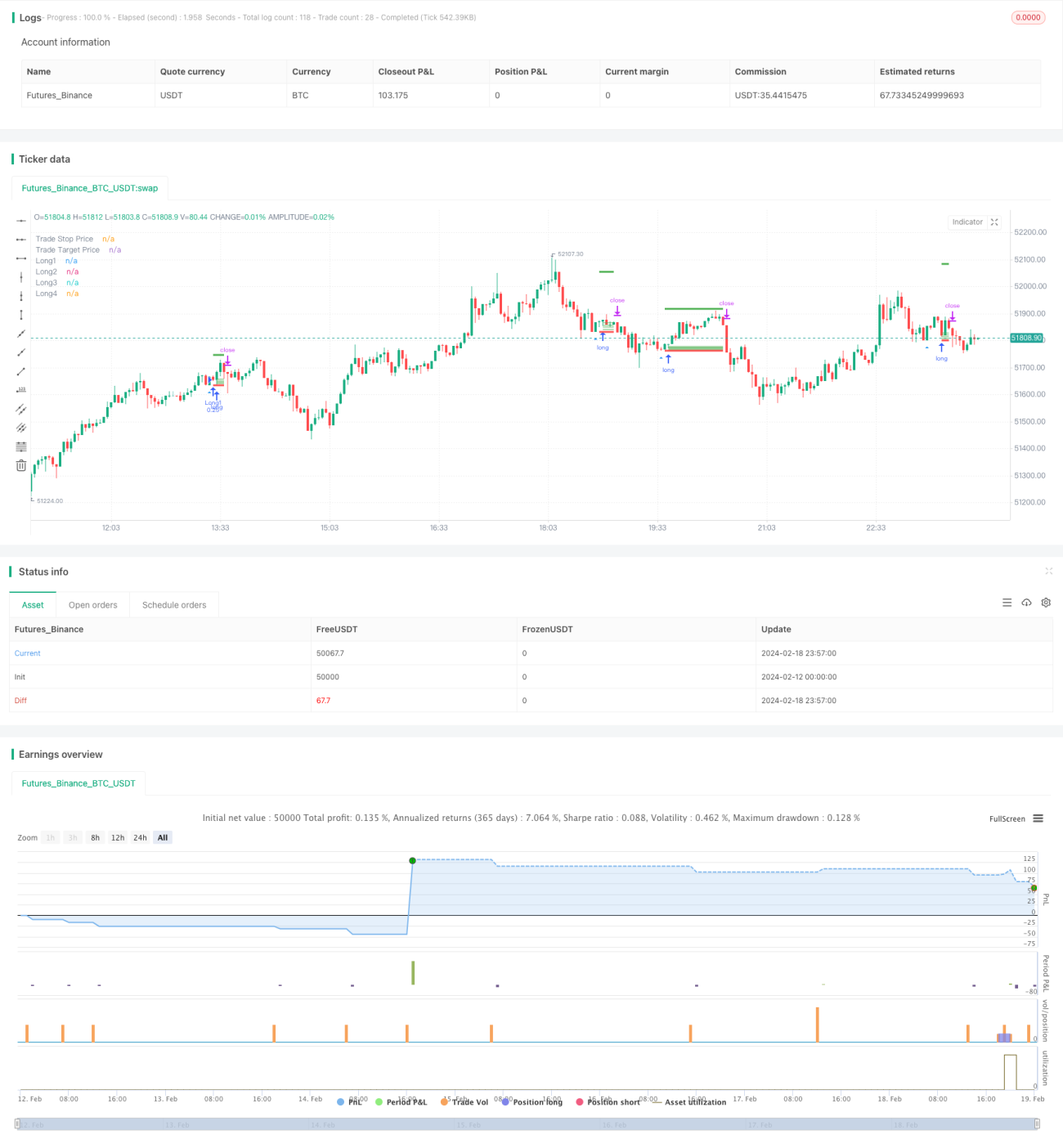
Die DCA-Grid-Strategie mit doppelten Bodenumkehr-Gleitenden Durchschnitten wendet hauptsächlich die Preisumkehr von gleitenden Durchschnitten und die DCA-Strategie an, um schrittweise Grid-Positionen aufzubauen. Sie erkennt Umkehrmöglichkeiten anhand der Formation eines doppelten Bodens. Sobald die Umkehrformation ausgelöst wird, werden mehrere Orders zu unterschiedlichen Preisen verwendet, um in Kombination mit DCA schrittweise Grid-Positionen aufzubauen.
Strategieprinzip
Die Strategie prüft zunächst, ob die Kerze zwei aufeinanderfolgende Schlusskurse auf dem gleichen Niveau aufweist, was als „doppelter Boden“ bezeichnet wird. Wird ein doppelter Boden erkannt, wird angenommen, dass eine Preisumkehr möglich ist. An diesem Punkt werden mehrere Limit-Orders in der Nähe des Bodens gesetzt, deren Preise auf Basis des ATR und der Volatilität berechnet werden und ein Grid-Intervall bilden. Dies realisiert den DCA-Effekt, sodass Händler nach der Umkehr schrittweise zu verschiedenen Preisen Positionen aufbauen können.
Im Einzelnen wird zunächst der ATR der letzten 14 Kerzen mittels ta.atr berechnet, dann die Preisvolatilität der letzten 5 Kerzen, die als Hauptparameter für die Festlegung des Grid-Intervalls dient. Das Grid-Intervall besteht aus 4 Preispunkten: Bodenpreis + Volatilität, Bodenpreis + 0,75-fache Volatilität usw. Sobald die Bedingung für den doppelten Boden erfüllt ist, werden gemäß dieser Berechnungsformel 4 Limit-Orders zu den entsprechenden Preisen gesetzt, jeweils mit gleichem Volumen. Nicht ausgeführte Orders werden nach einer bestimmten Anzahl von Kerzen automatisch storniert.
Darüber hinaus setzt die Strategie einen Stop-Loss und einen Take-Profit. Der Stop-Loss-Preis ist der niedrigste Preis des doppelten Bodens minus der kleinsten Tick-Größe, der Take-Profit-Preis ist der Einstiegspreis plus das 5-fache des ATR-Indikators. Wenn die Position nicht Null ist, werden diese beiden Preise in Echtzeit aktualisiert.
Vorteilsanalyse
Die Strategie bietet folgende Vorteile:
- Die Nutzung des doppelten Bodens zur Bestimmung des Umkehrzeitpunkts kann Fehlausbrüche effektiv vermeiden.
- Das DCA-Grid-Design ermöglicht es Händlern, schrittweise zu verschiedenen Preisen Positionen aufzubauen und die Positionskosten zu senken.
- Die ATR- und Volatilitätsparameter ermöglichen eine dynamische Anpassung des Grids und des Take-Profit-Spielraums an die Marktveränderungen.
- Der automatische Stop-Loss-Mechanismus kann Einzelverluste wirksam begrenzen.
Risikoanalyse
Hauptrisiken sind:
- Der Preis könnte sich nicht umkehren und direkt unter die Unterstützung des doppelten Bodens fallen. In diesem Fall wird der Stop-Loss ausgelöst, was zu Verlusten führt. Der Stop-Loss-Abstand kann entsprechend vergrößert werden.
- Ein falsch eingestelltes DCA-Grid-Intervall führt dazu, dass die meisten Orders nicht ausgeführt werden. Verschiedene Parameter können getestet werden, um die Ausführungsrate sicherzustellen.
- Bei stark schwankenden Märkten kann der Take-Profit häufig ausgelöst werden. Der Take-Profit-Multiplikator kann entsprechend erhöht werden.
Optimierungsmöglichkeiten
Die Strategie kann in folgenden Bereichen optimiert werden:
- Einfügen einer Trendbestimmung, sodass Umkehrgeschäfte nur im Aufwärtstrend durchgeführt werden, um große Trends nicht zu verpassen.
- Erhöhung des Volumens der ersten Order, während nachfolgende Grid-Orders schrittweise verkleinert werden, um die Kapitaleffizienz zu verbessern.
- Testen verschiedener Parameterkombinationen, um die optimalen Parameter zu finden. Auch dynamische Parameter, die sich an den Markt anpassen, können entworfen werden.
- Integration von maschinellem Lernen in fortgeschrittenen Plattformen zur automatischen Optimierung der Parameter.
Zusammenfassung
Die DCA-Grid-Strategie mit doppelten Bodenumkehr-Gleitenden Durchschnitten kombiniert verschiedene Techniken wie Preismuster, gleitende Durchschnitte und Grid-Trading. Sie bietet Vorteile wie präzise Zeitpunkterkennung, kontrollierbare Kosten und Schutz vor Drawdowns. Der Optimierungsspielraum ist groß, eine vertiefte Untersuchung und Anwendung lohnt sich. Bei geeigneter Parametereinstellung kann sie in Seitwärtsmärkten gute Ergebnisse erzielen.
- 1