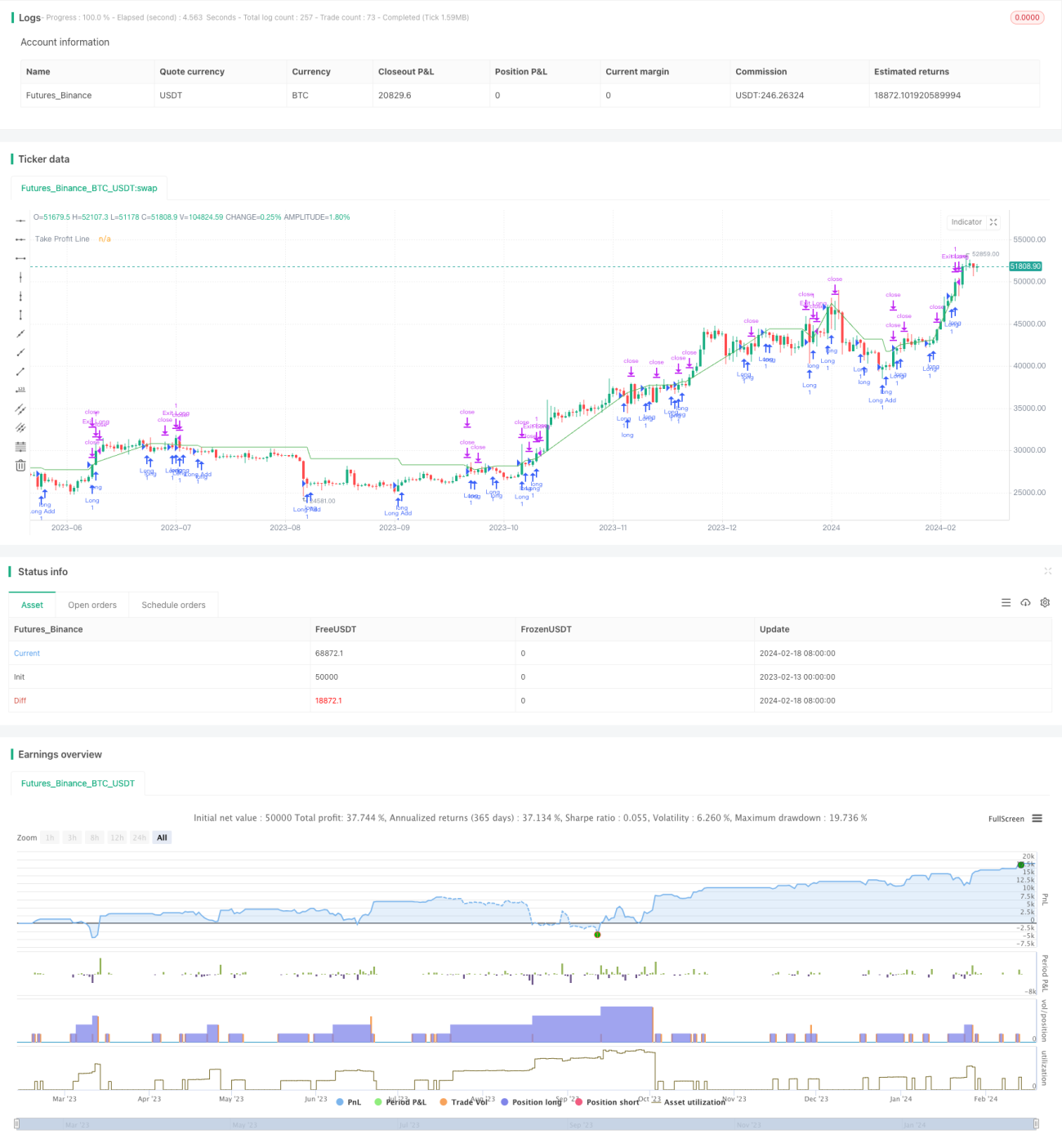
Quantitative Handelsstrategien basierend auf mehreren Faktoren


Erstellungsdatum: 2024-02-20 11:20:40 zuletzt geändert: 2024-02-20 11:20:40
Kopie: 1 Klicks: 712
1
konzentrieren Sie sich auf
1617
Anhänger

Quantitative Handelsstrategien basierend auf mehreren Faktoren

Überblick

Die Strategie verwendet mehrere technische Indikatoren wie RSI, MACD, OBV, CCI, CMF, MFI und VWMACD, um die Abweichung zwischen Preis und Volumen zu erkennen, um potenzielle Einstiegsmöglichkeiten zu identifizieren. Die Strategie kombiniert auch die Indikatoren für die Benutzerdip-Untersuchung, um ein Handelssignal zu senden, wenn die Bedingungen für hohe Volatilität und Tiefe oder VFI erfüllt werden. Die Strategie macht einfach mehr, indem sie die Stop-Loss-Verfolgung nutzt, um Positionen schrittweise zu erhöhen.

Strategieprinzip

  1. Berechnung von Indikatoren wie RSI, MACD, OBV, CCI, CMF, MFI und VWMACD und Abweichung zwischen den einzelnen Indikatoren und den historischen Preisen durch eine adaptive lineare Regression. Ein Kaufsignal wird ausgesendet, wenn der Indikator niedrig ist und der Preis nicht niedrig ist.

  2. Die Schwankungsrate- und die Tiefenprozentsatz-Schwellenwerte basieren auf den Benutzer-Eingaben und werden in Kombination mit VFI-Indikator-Filtern auf K-Linien ausgestrahlt, die den Tests für hohe Schwankungen und Tiefen entsprechen.

  3. Nach dem anfänglichen Übertritt, wenn der Preis unter einem bestimmten Prozentsatz des letzten Übertritts fällt, kann er erneut übertrieben werden.

  4. Mit Tracking-Stopp-Loss wird der Stop-Loss-Ratio der Konfiguration erreicht.

Analyse der Stärken

  1. Eine Kombination aus mehreren Faktoren, die Preise und Umsatzindikatoren kombinieren, erhöht die Zuverlässigkeit des Signals.

  2. Die Adaptive Lineare Regression-Methode erkennt Abweichungen und vermeidet die Subjektivität menschlicher Beurteilungen.

  3. Die Kombination von Schwankungsrate und Tiefe/VFI-Tests hilft bei der Suche nach Chancen für eine Umkehr.

  4. Mehrfache Auflagerungen ermöglichen die Nutzung von Preisabweichungen und die Verfolgung von Stop-Loss-Vorteilen, um Gewinne zu sichern.

Risikoanalyse

  1. Die Mehrfaktorkombination ist kompliziert, und Parameteroptimierungen und Abweichungen von der Identifizierung können die tatsächliche Leistung beeinträchtigen.

  2. Einseitige Positionen sind sehr riskant und können bei Fehleinschätzungen zu erheblichen Verlusten führen.

  3. In der Repeat-Pose-Mode werden die Verluste auch größer, und die Positionen müssen sorgfältig kontrolliert werden.

  4. Die Auswirkungen der Gebühren auf die tatsächlichen Gewinne sind zu beachten.

Optimierungsrichtung

  1. Test der Wirksamkeit verschiedener Parameterkombinationen und Indikatoren, bevorzugte Konfiguration.

  2. Die Einführung von Stop-Loss-Strategien, die die Einzahlung und den Maximalverlust kontrollieren sollen.

  3. Erwägen Sie die Möglichkeit, in zwei Richtungen zu handeln, um das Risiko zu verteilen.

  4. Automatische Optimierung von Parametern in Kombination mit maschinellen Lernmethoden.

Zusammenfassen

Die Strategie integriert mehrere technische Indikatoren, um den Einstiegspunkt zu identifizieren. Die Strategie nutzt die Benutzerdefinierten Bedingungen und die VFI-Indikatoren, um falsche Signale zu filtern. Die Strategie nutzt die Preisrückführung, um die Position zu verfolgen, um die Chancen in den Trends zu nutzen.

Strategiequellcode
/*backtest
start: 2023-02-13 00:00:00
end: 2024-02-19 00:00:00
period: 1d
basePeriod: 1h
exchanges: [{"eid":"Futures_Binance","currency":"BTC_USDT"}]
*/

// This Pine Script™ code is subject to the terms of the Mozilla Public License 2.0 at https://mozilla.org/MPL/2.0/
// © mkose81

//@version=5
strategy("RSI ve MACD Uyumsuzluğu Stratejisi (Sadece Long)", overlay=true, max_bars_back=4000,use_bar_magnifier= true,pyramiding=40)


// RSI Hesaplama
rsi = ta.rsi(close, 14)
float botRSI = na
botRSI := ta.pivotlow(5, 5)
botcRSI = 0
botcRSI := botRSI ? 5 : nz(botcRSI[1]) + 1

newbotRSI = ta.pivotlow(5, 0)
emptylRSI = true
if not na(newbotRSI) and newbotRSI < low[botcRSI]
    diffRSI = (newbotRSI - low[botcRSI]) / botcRSI
    llineRSI = newbotRSI - diffRSI
    for x = 1 to botcRSI - 1 by 1
        if close[x] < llineRSI
            emptylRSI := false
            break
        llineRSI -= diffRSI
    emptylRSI

// Pozitif Uyumsuzluk Alım Sinyali - RSI
alRSI = 0
if emptylRSI and not na(newbotRSI)
    if rsi[botcRSI] < rsi
        alRSI := 1

// MACD Hesaplama
[macd, signal, _] = ta.macd(close, 21, 55, 8)
float botMACD = na
botMACD := ta.pivotlow(5, 5)
botcMACD = 0
botcMACD := botMACD ? 5 : nz(botcMACD[1]) + 1

newbotMACD = ta.pivotlow(5, 0)
emptylMACD = true
if not na(newbotMACD) and newbotMACD < low[botcMACD]
    diffMACD = (newbotMACD - low[botcMACD]) / botcMACD
    llineMACD = newbotMACD - diffMACD
    for x = 1 to botcMACD - 1 by 1
        if close[x] < llineMACD
            emptylMACD := false
            break
        llineMACD -= diffMACD
    emptylMACD

// Pozitif Uyumsuzluk Alım Sinyali - MACD
alMACD = 0
if emptylMACD and not na(newbotMACD)
    if macd[botcMACD] < macd
        alMACD := 1
// OBV Hesaplama ve Uyumsuzluk Tespiti
obv = ta.cum(ta.change(close) > 0 ? volume : ta.change(close) < 0 ? -volume : 0)
float botOBV = na
botOBV := ta.pivotlow(5, 5)
botcOBV = 0
botcOBV := botOBV ? 5 : nz(botcOBV[1]) + 1

newbotOBV = ta.pivotlow(5, 0)
emptylOBV = true
if not na(newbotOBV) and newbotOBV < obv[botcOBV]
    diffOBV = (newbotOBV - obv[botcOBV]) / botcOBV
    llineOBV = newbotOBV - diffOBV
    for x = 1 to botcOBV - 1 by 1
        if obv[x] < llineOBV
            emptylOBV := false
            break
        llineOBV -= diffOBV
    emptylOBV

// Pozitif Uyumsuzluk Alım Sinyali - OBV
alOBV = 0
if emptylOBV and not na(newbotOBV)
    if obv[botcOBV] < obv
        alOBV := 1

// CCI Hesaplama ve Uyumsuzluk Tespiti
cci = ta.cci(close, 20)
float botCCI = na
botCCI := ta.pivotlow(5, 5)
botcCCI = 0
botcCCI := botCCI ? 5 : nz(botcCCI[1]) + 1

newbotCCI = ta.pivotlow(5, 0)
emptylCCI = true
if not na(newbotCCI) and newbotCCI < cci[botcCCI]
    diffCCI = (newbotCCI - cci[botcCCI]) / botcCCI
    llineCCI = newbotCCI - diffCCI
    for x = 1 to botcCCI - 1 by 1
        if cci[x] < llineCCI
            emptylCCI := false
            break
        llineCCI -= diffCCI
    emptylCCI

// Pozitif Uyumsuzluk Alım Sinyali - CCI
alCCI = 0
if emptylCCI and not na(newbotCCI)
    if cci[botcCCI] < cci
        alCCI := 1

// CMF Hesaplama
length = 20
mfm = ((close - low) - (high - close)) / (high - low)
mfv = mfm * volume
cmf = ta.sma(mfv, length) / ta.sma(volume, length)

float botCMF = na
botCMF := ta.pivotlow(5, 5)
botcCMF = 0
botcCMF := botCMF ? 5 : nz(botcCMF[1]) + 1

newbotCMF = ta.pivotlow(5, 0)
emptylCMF = true
if not na(newbotCMF) and newbotCMF < cmf[botcCMF]
    diffCMF = (newbotCMF - cmf[botcCMF]) / botcCMF
    llineCMF = newbotCMF - diffCMF
    for x = 1 to botcCMF - 1 by 1
        if cmf[x] < llineCMF
            emptylCMF := false
            break
        llineCMF -= diffCMF
    emptylCMF

// Pozitif Uyumsuzluk Alım Sinyali - CMF
alCMF = 0
if emptylCMF and not na(newbotCMF)
    if cmf[botcCMF] < cmf
        alCMF := 1

// MFI Hesaplama
lengthMFI = 14
mfi = ta.mfi(close, lengthMFI)

float botMFI = na
botMFI := ta.pivotlow(mfi, 5, 5)
botcMFI = 0
botcMFI := botMFI ? 5 : nz(botcMFI[1]) + 1

newbotMFI = ta.pivotlow(mfi, 5, 0)
emptylMFI = true
if not na(newbotMFI) and newbotMFI < mfi[botcMFI]
    diffMFI = (newbotMFI - mfi[botcMFI]) / botcMFI
    llineMFI = newbotMFI - diffMFI
    for x = 1 to botcMFI - 1 by 1
        if mfi[x] < llineMFI
            emptylMFI := false
            break
        llineMFI -= diffMFI
    emptylMFI

// Pozitif Uyumsuzluk Alım Sinyali - MFI
alMFI = 0
if emptylMFI and not na(newbotMFI)
    if mfi[botcMFI] < mfi
        alMFI := 1

// VWMACD Hesaplama
fastLength = 12
slowLength = 26
signalSmoothing = 9
vwmacd = ta.ema(close, fastLength) - ta.ema(close, slowLength)
signalLine = ta.ema(vwmacd, signalSmoothing)
histogram = vwmacd - signalLine
// VWMACD Uyumsuzluk Tespiti
float botVWMACD = na
botVWMACD := ta.pivotlow(histogram, 5, 5)
botcVWMACD = 0
botcVWMACD := botVWMACD ? 5 : nz(botcVWMACD[1]) + 1

newbotVWMACD = ta.pivotlow(histogram, 5, 0)
emptylVWMACD = true
if not na(newbotVWMACD) and newbotVWMACD < histogram[botcVWMACD]
    diffVWMACD = (newbotVWMACD - histogram[botcVWMACD]) / botcVWMACD
    llineVWMACD = newbotVWMACD - diffVWMACD
    for x = 1 to botcVWMACD - 1 by 1
        if histogram[x] < llineVWMACD
            emptylVWMACD := false
            break
        llineVWMACD -= diffVWMACD
    emptylVWMACD

// Pozitif Uyumsuzluk Alım Sinyali - VWMACD
alVWMACD = 0
if emptylVWMACD and not na(newbotVWMACD)
    if histogram[botcVWMACD] < histogram
        alVWMACD := 1
//Dipci indikator
lengthd= 130
coef = 0.2
vcoef = 2.5
signalLength = 5
smoothVFI = false

ma(x, y) =>
    smoothVFI ? ta.sma(x, y) : x

typical = hlc3
inter = math.log(typical) - math.log(typical[1])
vinter = ta.stdev(inter, 30)
cutoff = coef * vinter * close
vave = ta.sma(volume, lengthd)[1]
vmax = vave * vcoef
vc = volume < vmax ? volume : vmax  //min( volume, vmax )
mf = typical - typical[1]
iff_4 = mf < -cutoff ? -vc : 0
vcp = mf > cutoff ? vc : iff_4

vfi = ma(math.sum(vcp, lengthd) / vave, 3)
vfima = ta.ema(vfi, signalLength)
d = vfi - vfima

// Kullanıcı girdileri
volatilityThreshold = input.float(1.005, title="Volume Percentage Threshold")
pinThreshold = input.float(1.005, title="Deep Percentage Threshold")
// Hesaplamalar
volatilityPercentage = (high - low) / open
pinPercentage = close > open ? (high - close) / open : (close - low) / open
// Volatilite koşulu ve VFI ile filtreleme
voldip = volatilityPercentage >= volatilityThreshold or pinPercentage >= pinThreshold
volCondition = voldip and vfi< 0  // VFI değeri 0'dan küçükse volCondition aktif olacak


threeCommasEntryComment = input.string(title="3Commas Entry Comment", defval="")
threeCommasExitComment = input.string(title="3Commas Exit Comment", defval="")


takeProfitPerc = input.float(1, title="Take Profit Percentage (%)") / 100
fallPerc = input.float(5, title="Percentage for Additional Buy (%)") / 100
// Değişkenlerin tanımlanması
var float lastBuyPrice = na
var float tpPrice = na
var int lastTpBar = na

// Alım koşulları
longCondition = alRSI or alMACD or alOBV or alCCI or alCMF or alMFI or alVWMACD or volCondition
// Son alım fiyatını saklamak için değişken

// İlk alım stratejisi
if (longCondition and strategy.position_size == 0)
    strategy.entry("Long", strategy.long,comment=threeCommasEntryComment)
    lastBuyPrice := open


// İkinci ve sonraki alım koşulları (son alım fiyatının belirlenen yüzde altında)
if (open < lastBuyPrice * (1 - fallPerc) and strategy.position_size > 0)
    strategy.entry("Long Add", strategy.long,comment=threeCommasEntryComment)
    lastBuyPrice := open
   

// Kar alma fiyatını hesaplama ve strateji çıkışı
tp_price = strategy.position_avg_price * (1 + takeProfitPerc)
if strategy.position_size > 0
    strategy.exit("Exit Long", "Long", limit=tp_price,comment=threeCommasExitComment)
    strategy.exit("Exit Long Add", "Long Add", limit=tp_price,comment=threeCommasExitComment)
    tpPrice := na // Pozisyon kapandığında TP çizgisini sıfırla

// Kar alma seviyesi çizgisi çizme
plot(strategy.position_size > 0 ? tp_price : na, color=color.green, title="Take Profit Line")