Strategie der historischen Kursverlaufsinduktion

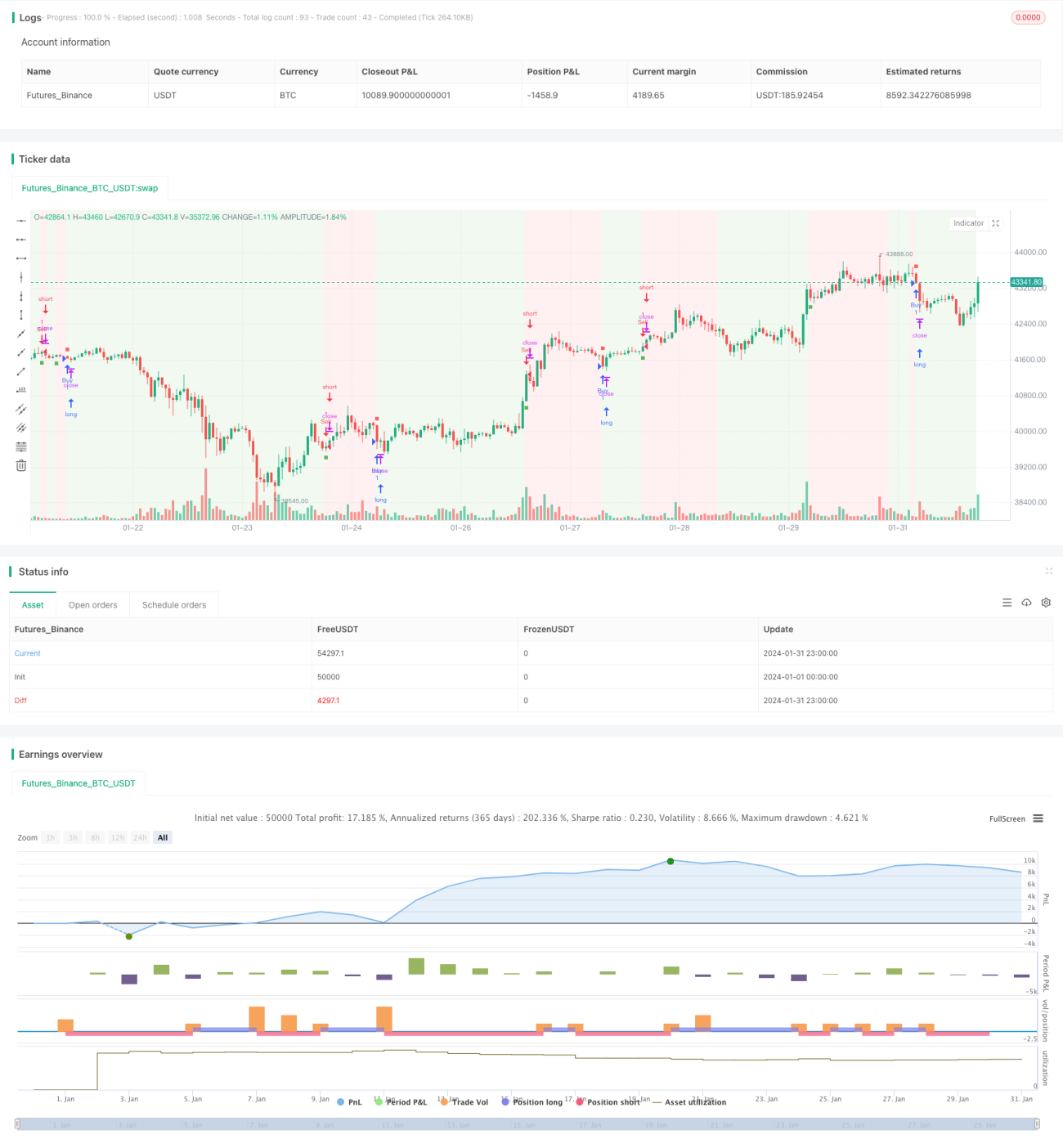
Übersicht
Die Strategie der historischen Trendmutation nutzt den Vortex-Indikator, um Trendumkehrpunkte im Markt zu identifizieren, und kombiniert ihn mit exponentiellen gleitenden Durchschnitten, um Handelssignale zu generieren. Ziel ist es, günstige Kursbewegungen einzufangen. Die geschickte Kombination der Stärken des Vortex-Indikators und des gleitenden Durchschnitts ermöglicht eine effektive Beurteilung der Marktrichtung und liefert Handlungsanleitungen.
Prinzipienerklärung
-
Vortex-Indikator – Analysiert die positive und negative Bewegung des Kurses, um Richtung und Stärke des Trends zu bestimmen. Zu den wichtigsten Parametern gehören Periodenlänge, Multiplikator und Schwellenwert.
-
Exponentieller gleitender Durchschnitt (EMA) – Glättet den Schlusskurs exponentiell und bietet eine flüssigere Trendbewertung. Je länger die Periode des gleitenden Durchschnitts, desto stabiler ist die Trendaussage.
Die Strategie verwendet den Vortex-Indikator, um die Haupttrendrichtung zu bestimmen. Sobald die Indikatorlinie den Schwellenwert kreuzt, wird ein Handelssignal generiert. Der gleitende Durchschnitt dient als Filter, um Fehlsignale zu vermeiden. Konkret: Ein Kaufsignal entsteht, wenn der Vortex-Indikator den Schwellenwert nach oben durchbricht und der Kurs über dem gleitenden Durchschnitt liegt; ein Verkaufssignal entsteht, wenn der Vortex-Indikator den Schwellenwert nach unten durchbricht und der Kurs unter dem gleitenden Durchschnitt liegt.
Vorteile
- Die Fähigkeit des Vortex-Indikators, Umkehrungen zu erkennen, ermöglicht ein rechtzeitiges Aufspüren potenzieller Trendwenden.
- Die Signalfilterung durch den gleitenden Durchschnitt vermeidet Fehltrades in Seitwärtsmärkten.
- Durch Parametereinstellungen kann die Sensitivität der Strategie an verschiedene Marktbedingungen angepasst werden.
- Intuitive Oberfläche und klare Handelssignale erleichtern die Umsetzung im Live-Handel.
Risiken
- Systemrisiken durch unerwartete Ereignisse, die den Indikator unwirksam machen, sind zu beachten.
- In Seitwärtsmärkten können vermehrt Fehlsignale auftreten.
- Unsachgemäße Parametereinstellungen können zu übermäßig aggressivem oder konservativem Verhalten führen.
- Ein angemessener Stop-Loss ist erforderlich, um Einzelverluste zu begrenzen.
Zur Risikobewältigung können zusätzliche Filter, die Kombination mehrerer Indikatoren, optimierte Parametereinstellungen und passende Stop-Losses eingesetzt werden.
Optimierungsmöglichkeiten
- Verschiedene Arten gleitender Durchschnitte testen, um die beste Kombination zu finden.
- Parameter des Vortex-Indikators und des gleitenden Durchschnitts anpassen, um die optimale Rendite zu erzielen.
- Stabilität der Strategie in mehreren Zeitrahmen überprüfen.
- Zusätzliche Indikatoren wie Bollinger-Bänder zur Signalfilterung hinzufügen.
- Feinabstimmung der Parameter für bestimmte Instrumente.
Zusammenfassung
Die Strategie der historischen Trendmutation ist insgesamt recht robust: Sie erfasst potenzielle Trendumkehrungen und bietet gleichzeitig eine gewisse Filterfähigkeit. Mit Hilfe von Parameteroptimierung und Risikomanagement kann die Strategie beachtliche Renditen erzielen. Händlern wird empfohlen, sie umfassend im Simulated Trading zu testen und auf dieser Basis innovative Erweiterungen zu entwickeln.
/*backtest
start: 2024-01-01 00:00:00
end: 2024-01-31 23:59:59
period: 1h
basePeriod: 15m
exchanges: [{"eid":"Futures_Binance","currency":"BTC_USDT"}]
*/

// This work is licensed under a Attribution-NonCommercial-ShareAlike 4.0 International (CC BY-NC-SA 4.0) https://creativecommons.org/licenses/by-nc-sa/4.0/
// © AstroHub

//@version=5- 1