
Überblick
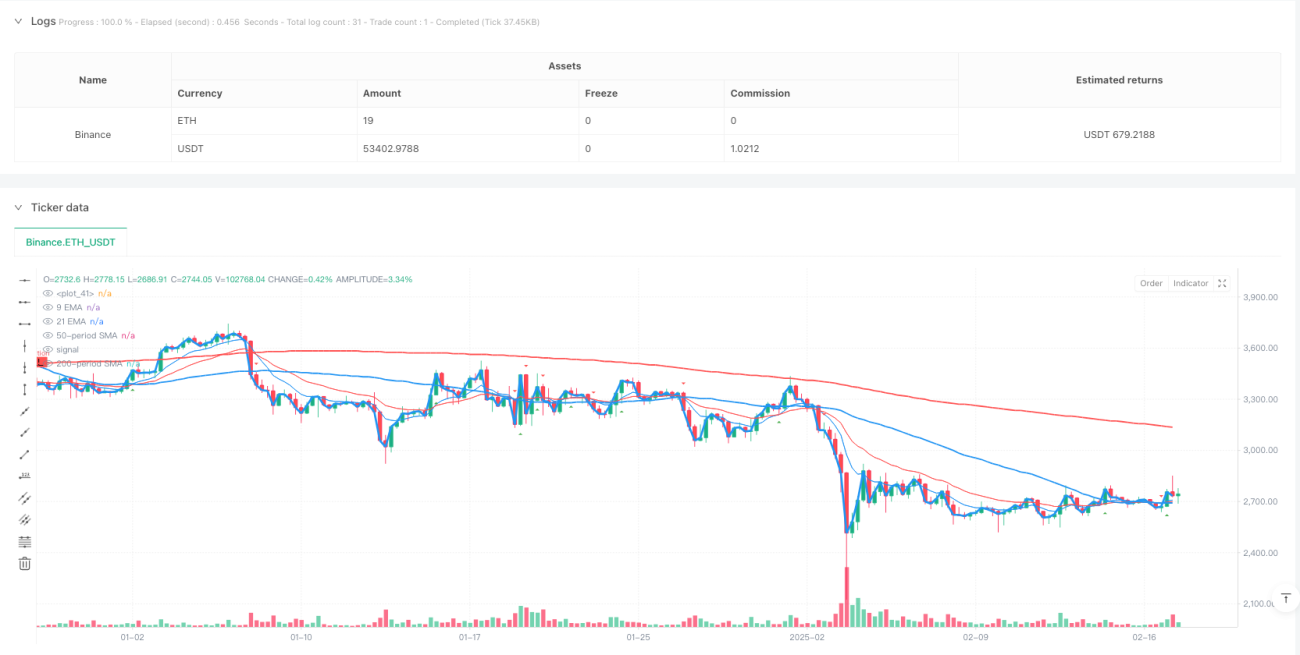
Diese Strategie ist ein Trendumkehr-Handelssystem auf Basis einer Kombination mehrerer gleitender Durchschnitte. Es nutzt die 9-, 21-, 50- und 200-Perioden-Gleitenden Durchschnitte, um durch die Identifizierung von Kreuzungssignalen der Durchschnitte Wendepunkte des Markttrends zu erfassen. Die Strategie vereint die Vorteile kurzfristiger und langfristiger Durchschnitte, sodass sie sowohl Marktdynamikänderungen rechtzeitig erkennen als auch Fehlsignale effektiv ausfiltern kann.
Funktionsweise
Das Kernlogik der Strategie basiert auf einem Kreuzungssystem gleitender Durchschnitte mehrerer Zeitrahmen. Im Einzelnen:
- Verwendung der einfachen gleitenden Durchschnitte (SMA) mit 50 und 200 Perioden als Hauptindikator für die Trendbestimmung
- Einsatz der exponentiell gleitenden Durchschnitte (EMA) mit 9 und 21 Perioden als kurzfristige Signalbestätigung
- Optimierung der Signalqualität durch Festlegung eines Lookback-Zeitraums und eines Schwellenwert-Parameters
- Kombination mit der Bestimmung von Unterstützungs- und Widerstandsniveaus auf Schlüsselkursebenen, wobei wichtige Preisniveaus durch einen Datenpivot-Algorithmus identifiziert werden
Wenn der kurzfristige gleitende Durchschnitt den langfristigen von unten nach oben kreuzt, wird ein Long-Signal ausgegeben; im umgekehrten Fall ein Short-Signal.
Vorteile der Strategie
- Zuverlässigkeit des Signalsystems: Durch die Bestätigung mehrerer Kreuzungen gleitender Durchschnitte wird das Risiko von Fehlsignalen deutlich reduziert
- Rechtzeitige Trenderkennung: Die Einbeziehung kurzfristiger Durchschnitte ermöglicht eine schnelle Reaktion auf Marktveränderungen
- Umfassendes Risikomanagement: Die Identifizierung von Unterstützungs- und Widerstandsniveaus erleichtert die sinnvolle Platzierung von Stop-Loss und Take-Profit
- Flexible Parameteroptimierung: Lookback-Zeiträume und Schwellenwerte können je nach Marktumfeld angepasst werden
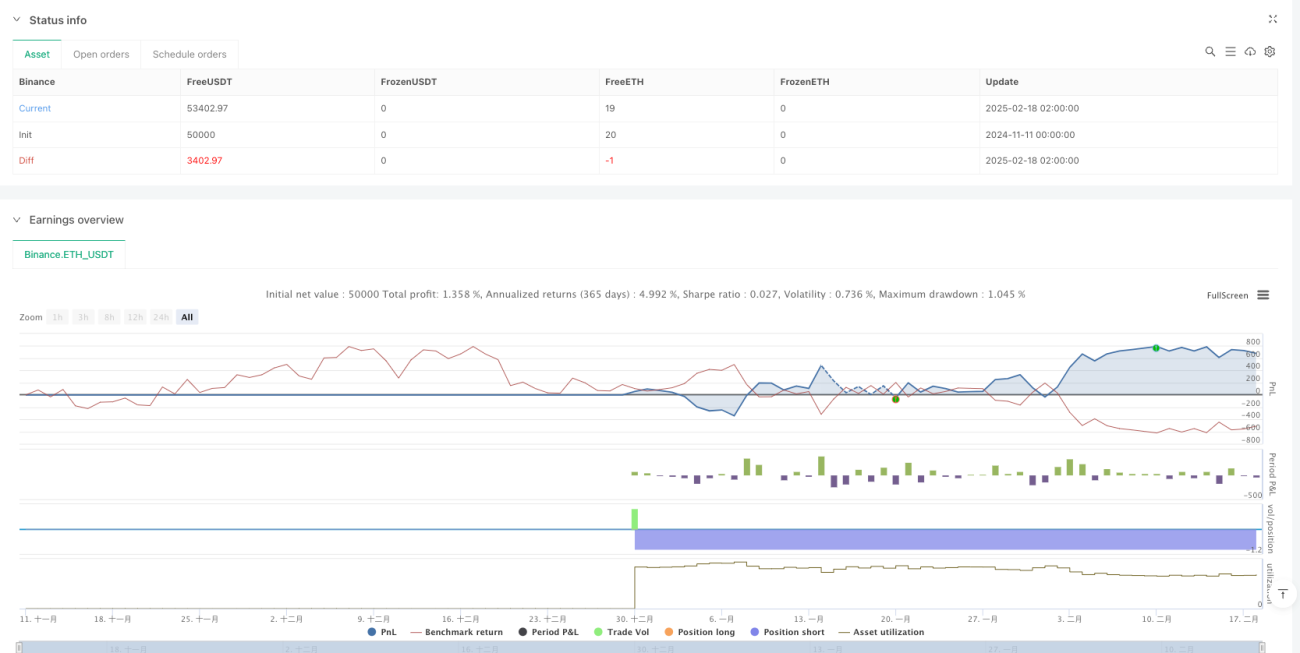
- Anschauliche Visualisierung: Das System bietet eine klare grafische Oberfläche zur Unterstützung von Handelsentscheidungen
Risiken der Strategie
- Seitwärtsmarktrisiko: In Phasen seitwärtiger Konsolidierung können häufige Fehlsignale auftreten
- Verzögerungsrisiko: Gleitende Durchschnitte sind inhärent nachlaufende Indikatoren und können den optimalen Einstiegszeitpunkt verpassen
- Parameterempfindlichkeit: Unterschiedliche Parameterkombinationen können zu stark abweichenden Strategieleistungen führen
- Abhängigkeit vom Marktumfeld: Die Strategie funktioniert besser in trendstarken Märkten und kann in Phasen starker Volatilität schwächer abschneiden
Optimierungsrichtungen
- Einführung von Volumenindikatoren: Handelsvolumen als zusätzliches Bestätigungssignal verwenden
- Verbesserte Signalfilterung: Strengere Signalbestätigungsmechanismen, z. B. eine gewisse Mindestdauer des Signals
- Dynamische Parameteranpassung: Entwicklung eines adaptiven Parametersystems, das Parameter automatisch an den Marktzustand anpasst
- Verbessertes Risikomanagement: Hinzufügung eines dynamischen Stop-Loss-Mechanismus zum Schutz bestehender Gewinne
- Integration von Marktumfeldbewertung: Volatilitätsindikatoren nutzen, um unterschiedliche Parametereinstellungen je nach Marktphase anzuwenden
Zusammenfassung
Die Strategie realisiert durch das Zusammenwirken mehrerer gleitender Durchschnitte eine effektive Erkennung von Trendwendepunkten. Das Design legt Wert auf Praktikabilität und Umsetzbarkeit; durch flexible Parameteranpassung kann es an verschiedene Marktumfelder angepasst werden. Trotz gewisser Einschränkungen besitzt die Gesamtperformance der Strategie durch kontinuierliche Optimierung und Verbesserung ein gutes Entwicklungspotenzial.
- 1