
Überblick
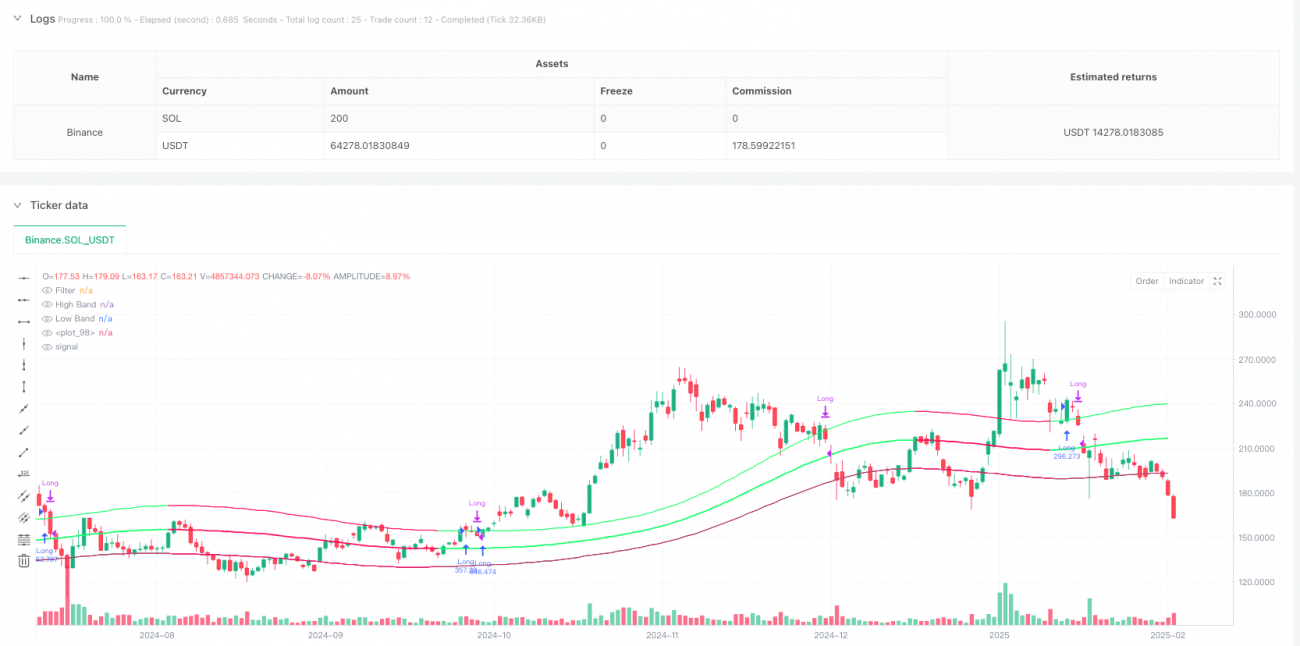
Diese Strategie ist ein umfassendes Handelssystem, das einen Gauß-Kanal-Filter mit dem Stochastic-RSI-Indikator kombiniert. Handelsmöglichkeiten werden anhand der Richtungsänderungen und der Position des Preises innerhalb des Gauß-Kanals sowie der überkauften/überverkauften Signale des Stochastic-RSI ermittelt. Die Strategie verwendet ein komplexes mathematisches Modell zur Konstruktion eines adaptiven Kanals, der Marktrauschen effektiv filtert und wichtige Preisbewegungen erfasst.
Strategieprinzip
Die Kernlogik der Strategie basiert auf den folgenden Schlüsselkomponenten:
- Berechnung des Gauß-Kanals: Verwendung eines mehrpoligen Gauß-Filters zur Verarbeitung der HLC3-Preisdaten, um einen adaptiven Kanal zu erstellen. Die Filterwirkung wird durch Beta- und Alpha-Parameter optimiert, optional mit reduzierter Verzögerung.
- Anpassung der Kanalbreite: Dynamische Anpassung der Kanalbreite basierend auf der True Range (TR) mit einem Standardmultiplikator von 1,414.
- Stochastic-RSI-Signal: Kombination eines 14-Perioden-RSI mit einem Stochastic-Indikator, der Signale über 80 oder unter 20 erzeugt.
- Einstiegsbedingungen: Gleichzeitiges Erfüllen von drei Bedingungen: Gauß-Kanal steigt, Preis durchbricht die obere Kanalgrenze und Stochastic-RSI löst ein Signal aus.
- Ausstiegslogik: Glattstellung, sobald der Preis die obere Grenze des Gauß-Kanals unterschreitet.
Strategievorteile
- Signalzuverlässigkeit: Der Multi-Indikator-Bestätigungsmechanismus erhöht die Zuverlässigkeit der Handelssignale erheblich.
- Hohe Anpassungsfähigkeit: Der Gauß-Kanal passt seine Breite automatisch an die Marktvolatilität an.
- Rauschfilterung: Der Gauß-Filter reduziert effektiv den Einfluss von Marktrauschen.
- Hohe Flexibilität: Mehrere einstellbare Parameter, einschließlich Kanalperiode, Polanzahl und RSI-Parametern.
- Visuelle Klarheit: Durch Farbänderungen werden Trendrichtung und Handelssignale intuitiv dargestellt.
Strategierisiken
- Parameterempfindlichkeit: Die Anzahl der Pole und die Abtastperiode des Gauß-Kanals haben einen großen Einfluss auf die Strategieleistung.
- Verzögerungsrisiko: Obwohl Optionen zur Verringerung der Verzögerung vorhanden sind, bleibt der Indikator selbst zeitverzögert.
- Fehldurchbruchsrisiko: In Seitwärtsmärkten können häufige Fehldurchbrüche auftreten.
- Unzureichendes Risikomanagement: Die aktuelle Version verfügt über keinen detaillierten Positionsgrößenmechanismus.
Optimierungsmöglichkeiten
- Marktumfeld-Erkennung: Hinzufügen eines Trendstärkeindikators, um Strategieparameter an verschiedene Marktumgebungen anzupassen.
- Dynamische Parameteroptimierung: Automatische Anpassung der Gauß-Kanal-Parameter basierend auf der Marktvolatilität.
- Verbesserung des Positionsmanagements: Einführung eines volatilitätsbasierten dynamischen Positionsgrößensystems.
- Erweiterter Ausstiegsmechanismus: Hinzufügen eines Trailing-Stops und teilweiser Gewinnmitnahmen.
- Zeitrahmenoptimierung: Signale auf mehreren Zeitrahmen validieren, um die Handelsstabilität zu erhöhen.
Zusammenfassung
Diese Strategie konstruiert durch die Kombination eines Gauß-Kanal-Filters mit dem Stochastic-RSI-Indikator ein Handelssystem mit starker Anpassungsfähigkeit. Die mathematische Grundlage des Gauß-Kanals gewährleistet die Glattheit und Zuverlässigkeit der Signale, während die Ergänzung durch den Stochastic-RSI die Genauigkeit der Einstiegszeitpunkte weiter erhöht. Der Hauptvorteil der Strategie liegt in der effektiven Filterung von Marktrauschen und der präzisen Erfassung von Trendbewegungen. Gleichzeitig muss jedoch auf die Parameteroptimierung und das Risikomanagement geachtet werden. Durch die vorgeschlagenen Optimierungsrichtungen besteht weiteres Potenzial zur Steigerung der Gesamtperformance.
/*backtest
start: 2024-02-22 00:00:00
end: 2025-02-19 08:00:00
period: 1d
basePeriod: 1d
exchanges: [{"eid":"Binance","currency":"SOL_USDT"}]
*/

//@version=5
strategy(title="Gaussian Channel Strategy v3.0", overlay=true, calc_on_every_tick=false, initial_capital=1000, default_qty_type=strategy.percent_of_equity, default_qty_value=100, commission_type=strategy.commission.percent, commission_value=0.1, slippage=0, fill_orders_on_standard_ohlc=true)

//------------------------------------------------------------------------------------------------------------------------------------------------------------------ 1