Dynamische Position Trailing Stop Loss SMA Crossover Retracement Strategie

SMA MA RRR TP SL
Erstellungsdatum: 2025-02-21 13:51:50 zuletzt geändert: 2025-02-21 13:51:50
Kopie: 0 Klicks: 338
2
konzentrieren Sie sich auf
319
Anhänger

Dynamische Position Trailing Stop Loss SMA Crossover Retracement Strategie Dynamische Position Trailing Stop Loss SMA Crossover Retracement Strategie

Überblick

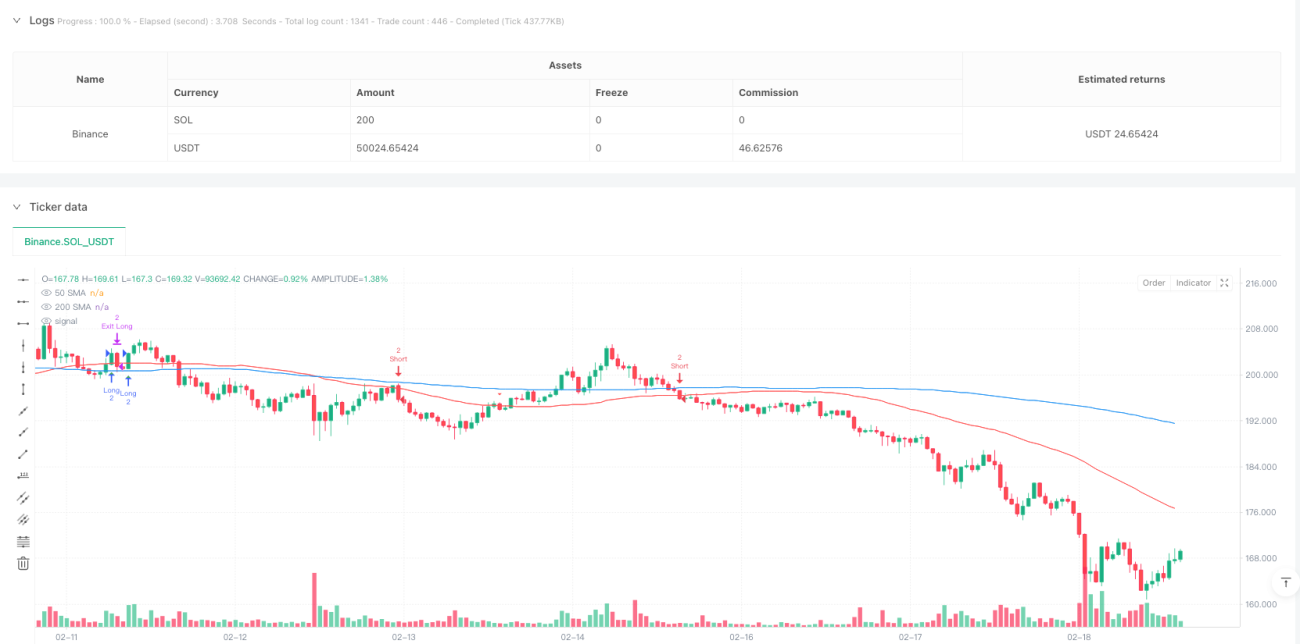
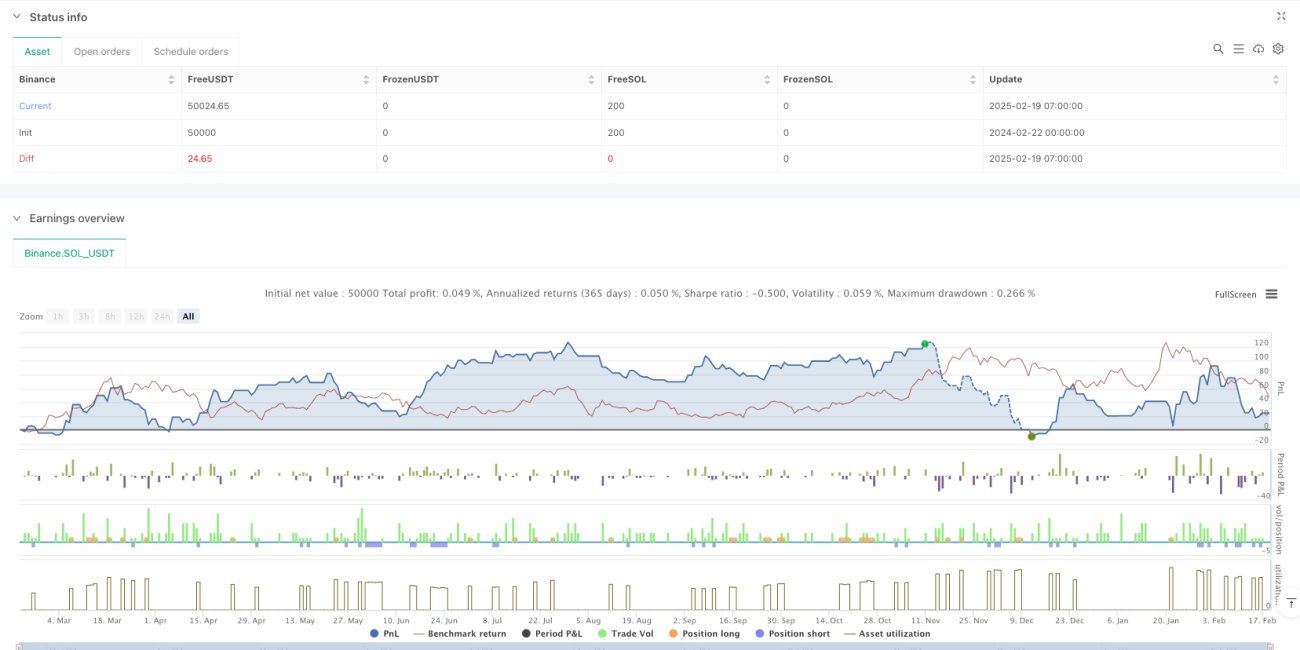
Die Strategie ist ein automatisiertes Handelssystem, das auf der Basis von Linear-Cross- und Dynamischen Positionsmanagement basiert. Es nutzt den 50- und 200-Tage-Simple Moving Average (SMA) als Hauptindikator, kombiniert mit einer dynamischen Positionsanpassung und einem Stop-Loss-Mechanismus, um nach Handelsmöglichkeiten in Markttrends zu suchen. Der Kern der Strategie ist die Bestimmung der Marktrichtung durch die Beziehung zwischen Preis und Linear, während Kapitalmanagement und Risikokontrolle angewendet werden, um die Stabilität des Handels sicherzustellen.

Strategieprinzip

Die Strategie basiert auf folgenden Kernprinzipien:

  1. Eintrittssignale basieren auf der Kreuzung von Preisen mit der 50-Tage-Mittellinie und beziehen sich auf die relative Position der 50-Tage-Mittellinie gegenüber der 200-Tage-Mittellinie, um einen Trend zu bestimmen
  2. Wenn der Preis unterhalb der Durchschnittslinie durchbricht, wird ein Mehrsignal ausgelöst; umgekehrt wird ein Leersignal ausgelöst
  3. Positionsmanagement mit dynamischen Anpassungsmechanismen, die die Anzahl der Positionen erhöhen, wenn die Kontoerträge über 4000 liegen
  4. Stop-Loss mit einem Tracking-Stop-Mechanismus, der die Stop-Loss-Position dynamisch anpasst, wenn der Gewinn steigt
  5. Das Risiko-Gewinn-Verhältnis wird auf 1: 2.5 festgelegt, um sicherzustellen, dass die erwarteten Gewinne pro Handel größer sind als das Risiko

Strategische Vorteile

  1. Die Logik des Handels ist klar und die Zeit des Eintritts wird in Kombination mit technischen Indikatoren und Preisverhaltens beurteilt.
  2. Dynamisches Positionsmanagement, um die Größe der Geschäfte zu erhöhen und die Effizienz der Kapitalnutzung zu erhöhen, wenn sie profitabel sind
  3. Ein Tracking Stop-Loss-Mechanismus, der die Gewinne effektiv sperrt und einen starken Rückzug verhindert.
  4. Ein Handelszeitfilter, der nur während der Haupthandelszeiten betrieben wird, um Risiken in Zeiten mit geringer Liquidität zu vermeiden
  5. Risikokontrollmechanismen, einschließlich Stop-Loss, Gewinnziel und Positionsmanagement

Strategisches Risiko

  1. Falsche Durchbruchsignale, die in einem wackligen Markt häufig ausgelöst werden können, führen zu einem kontinuierlichen Stopp
  2. Dynamisches Positionsmanagement kann bei plötzlichen Marktbewegungen zu größeren Verlusten führen
  3. Die Abhängigkeit von einheitlichen Linearsystemen kann in schnell schwankenden Märkten nachlassen.
  4. Das Risiko-Gewinn-Verhältnis kann einige potenzielle große Trendchancen verpassen
  5. Die Zeitbeschränkungen könnten wichtige Marktchancen verpassen.

Richtung der Strategieoptimierung

  1. Die Einführung von Volatilitätsindikatoren, die die Parameter dynamisch für unterschiedliche Marktumstände anpassen können
  2. Erwägen Sie die Hinzufügung von Marktstimmungskennzahlen, um die Genauigkeit der Einstiegssignale zu verbessern
  3. Optimierung der Tracking-Stop-Loss-Parameter, um sie besser an unterschiedliche Marktumgebungen anzupassen
  4. Mehrfache Zeitzyklusanalysen zur Steigerung der Stabilität des Handelssystems
  5. Einführung von Traffic Analysis zur Verbesserung der Signalsicherheit

Zusammenfassen

Die Strategie baut ein relativ vollständiges Handelssystem auf, indem sie ein Gleichgewichtssystem, dynamisches Positionsmanagement und eine Stop-Loss-Verfolgungsmechanik kombiniert. Die Strategie hat den Vorteil, dass sie über eine klare Handelslogik und einen ausgefeilten Risikokontrollmechanismus verfügt, aber es gibt auch einige Optimierungsmöglichkeiten. Durch kontinuierliche Verbesserung und Optimierung wird die Strategie in der Lage sein, besser in der Praxis zu handeln.

Strategiequellcode
/*backtest
start: 2024-02-22 00:00:00
end: 2025-02-19 08:00:00
period: 1h
basePeriod: 1h
exchanges: [{"eid":"Binance","currency":"SOL_USDT"}]
*/

//@version=5
strategy("15m - Rebound 50SMA with Dynamic Lots & Trailing Stop, RRR 2:1, Date Filter (Closed Bars Only)", 
     overlay=true, 
     initial_capital=50000, 
     default_qty_type=strategy.fixed, 
     default_qty_value=1, 
     pyramiding=0, 
     calc_on_order_fills=true)

// ===== INPUTS =====
sma50Period  = input.int(50, "50 SMA Period", minval=1)
sma200Period = input.int(200, "200 SMA Period", minval=1)

// ===== CALCULATE SMAs =====
sma50  = ta.sma(close, sma50Period)
sma200 = ta.sma(close, sma200Period)

// ===== PLOT SMAs =====
plot(sma50, color=color.red, title="50 SMA")
plot(sma200, color=color.blue, title="200 SMA")

// ===== DEFINE TRADING SESSIONS =====
// Trading is allowed 15 minutes after market open:
//   - New York: 09:45–16:00 (America/New_York)
//   - London:   08:15–16:00 (Europe/London)
nySession     = not na(time("15", "0945-1600", "America/New_York"))
londonSession = not na(time("15", "0815-1600", "Europe/London"))
inSession     = nySession or londonSession

// ===== DEFINE DATE RANGE =====
// Only allow orders on or after January 1, 2024.
// (We include seconds in the timestamp for proper parsing.)
startDate   = timestamp("UTC", 2024, 1, 1, 0, 0, 0)
inDateRange = time >= startDate

// ===== DEFINE ENTRY CONDITIONS =====
// ----- LONG ENTRY CONDITION -----
// A long entry is triggered when:
//   - The previous candle closed below the 50 SMA and the current candle closes above it,
//   - And the 50 SMA is above the 200 SMA.
longCondition = (close[1] < sma50[1]) and (close > sma50) and (sma50 > sma200)

// ----- SHORT ENTRY CONDITION -----
// A short entry is triggered when:
//   - The previous candle closed above the 50 SMA and the current candle closes below it,
//   - And the 50 SMA is below the 200 SMA.
shortCondition = (close[1] > sma50[1]) and (close < sma50) and (sma50 < sma200)

// ===== DEBUG PLOTS =====
plotshape(longCondition and barstate.isconfirmed, title="Long Signal", location=location.belowbar, color=color.green, style=shape.triangleup, size=size.tiny)
plotshape(shortCondition and barstate.isconfirmed, title="Short Signal", location=location.abovebar, color=color.red, style=shape.triangledown, size=size.tiny)

// ===== VARIABLES FOR STOP LOSS MANAGEMENT =====
// For long positions.
var float initialLongStop = na   // Set at entry: low of the rebound candle.
var float trailStopLong   = na   // Updated trailing stop for long.
// For short positions.
var float initialShortStop = na  // Set at entry: high of the rebound candle.
var float trailStopShort   = na  // Updated trailing stop for short.

// ===== DYNAMIC LOT SIZE =====
// If current profit (strategy.equity - 50000) exceeds 4000, lot size becomes 3; otherwise, 2.
lotSize = (strategy.equity - 50000 > 4000) ? 3 : 2

// ===== ENTRY LOGIC (EXECUTED ON CONFIRMED BARS) =====
if barstate.isconfirmed and inSession and inDateRange and longCondition and strategy.position_size <= 0
    initialLongStop := low
    trailStopLong   := initialLongStop
    if strategy.position_size < 0
        strategy.close("Short", comment="Close Short before Long")
    // Submit a market order entry (no offset).
    strategy.entry("Long", strategy.long, qty=lotSize, comment="Enter Long")
    
if barstate.isconfirmed and inSession and inDateRange and shortCondition and strategy.position_size >= 0
    initialShortStop := high
    trailStopShort   := initialShortStop
    if strategy.position_size > 0
        strategy.close("Long", comment="Close Long before Short")
    // Submit a market order entry (no offset).
    strategy.entry("Short", strategy.short, qty=lotSize, comment="Enter Short")
    
// ===== TRAILING STOP LOGIC & EXIT ORDERS (ON CLOSED BARS) =====

if barstate.isconfirmed and strategy.position_size > 0
    // For Long Positions:
    floatingProfitLong = (close - strategy.position_avg_price) / syminfo.mintick
    newTrailLong = trailStopLong  // Default: no change.
    if floatingProfitLong >= 20 and floatingProfitLong < 30
        newTrailLong := initialLongStop + 5 * syminfo.mintick
    else if floatingProfitLong >= 31 and floatingProfitLong < 40
        newTrailLong := initialLongStop + 10 * syminfo.mintick
    else if floatingProfitLong >= 41 and floatingProfitLong < 50
        newTrailLong := initialLongStop + 15 * syminfo.mintick
    // Update trailing stop only if the new value is more favorable.
    trailStopLong := math.max(trailStopLong, newTrailLong)
    
    longRisk = strategy.position_avg_price - trailStopLong
    tpLong   = strategy.position_avg_price + 2.5 * longRisk
    strategy.exit("Exit Long", from_entry="Long", stop=trailStopLong, limit=tpLong)

if barstate.isconfirmed and strategy.position_size < 0
    // For Short Positions:
    floatingProfitShort = (strategy.position_avg_price - close) / syminfo.mintick
    newTrailShort = trailStopShort  // Default: no change.
    if floatingProfitShort >= 20 and floatingProfitShort < 30
        newTrailShort := initialShortStop - 5 * syminfo.mintick
    else if floatingProfitShort >= 31 and floatingProfitShort < 40
        newTrailShort := initialShortStop - 10 * syminfo.mintick
    else if floatingProfitShort >= 41 and floatingProfitShort < 50
        newTrailShort := initialShortStop - 15 * syminfo.mintick
    // Update trailing stop only if the new value is more favorable.
    trailStopShort := math.min(trailStopShort, newTrailShort)
    
    shortRisk = trailStopShort - strategy.position_avg_price
    tpShort = strategy.position_avg_price - 2.5 * shortRisk
    strategy.exit("Exit Short", from_entry="Short", stop=trailStopShort, limit=tpShort)