
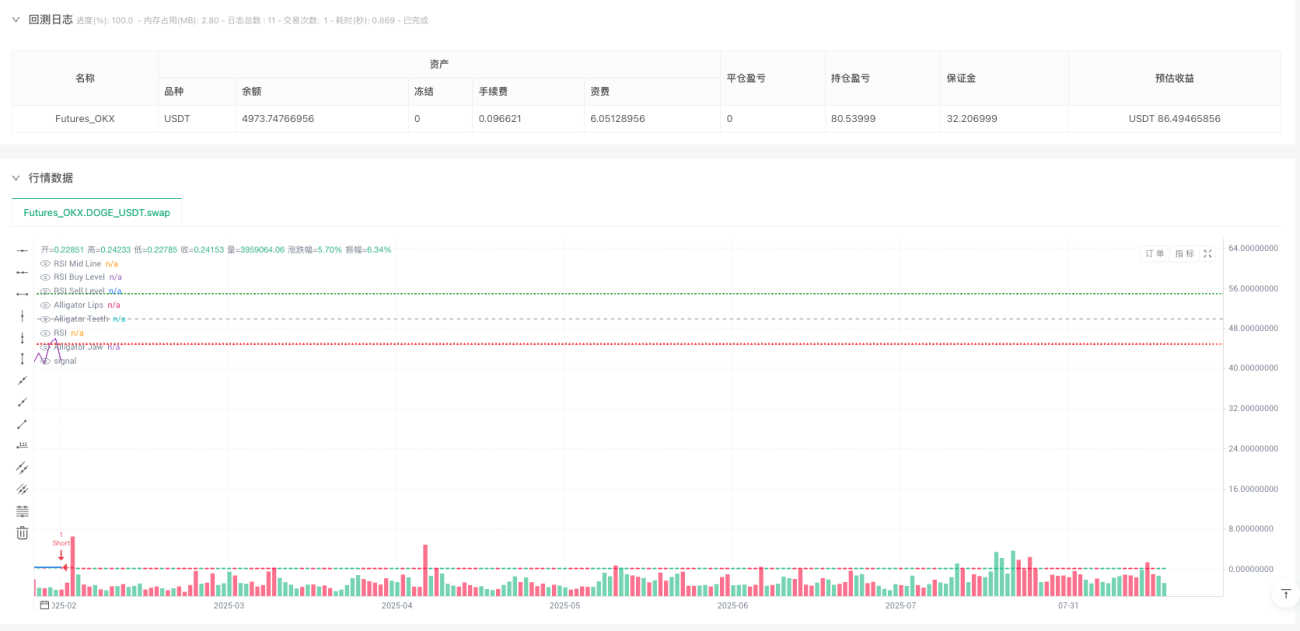
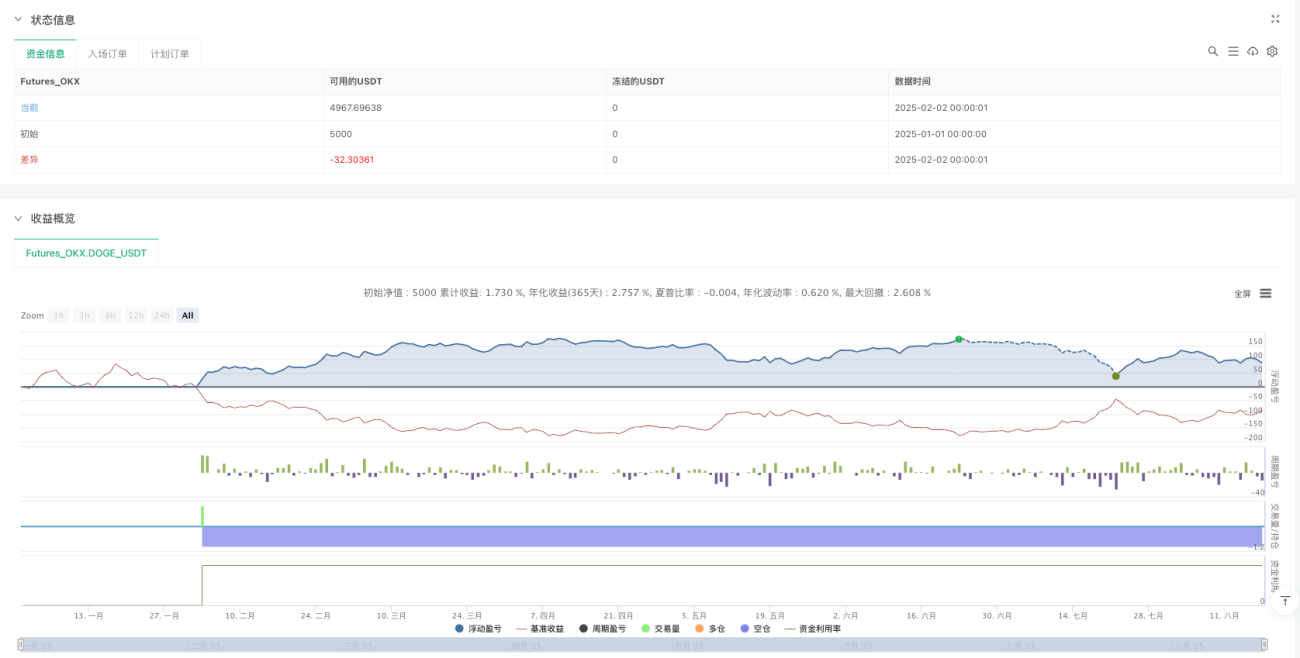
Übersicht
Die Williams-Alligator-RSI-Momentum-Breakout-Strategie ist ein umfassendes quantitatives Handelssystem, das den Williams-Alligator-Indikator mit dem Relative-Stärke-Index (RSI) über mehrere Zeitrahmen kombiniert. Die Strategie arbeitet auf einem 15-Minuten-Kerzenintervall und nutzt die drei gleitenden Durchschnittslinien des Alligator-Indikators (Lippen, Zähne, Kiefer) zur Bestimmung der Markttrendrichtung, während der RSI zur Bestätigung der Momentumstärke eingesetzt wird. Dies ergibt ein vollständiges Ein- und Ausstiegssignal-System. Die Strategie verfügt über klare Stop-Loss- und Take-Profit-Mechanismen mit mehrfacher Bedingungsfilterung, um die Zuverlässigkeit der Signale zu gewährleisten. Sie eignet sich besonders für Märkte mit ausgeprägten Trendmerkmalen.
Strategie-Logik
Das Kernprinzip der Strategie basiert auf der Trendidentifikationsfähigkeit des Williams-Alligator-Indikators und der Momentum-Bestätigungsfunktion des RSI. Der Williams-Alligator besteht aus drei gleitenden Durchschnitten unterschiedlicher Perioden: Kiefer (13 Perioden, Versatz 8), Zähne (8 Perioden, Versatz 5) und Lippen (5 Perioden, Versatz 3). Wenn diese drei Linien in der Reihenfolge Lippen > Zähne > Kiefer angeordnet sind, zeigt dies einen Aufwärtstrend an; das Gegenteil deutet auf einen Abwärtstrend hin.
Kaufsignale erfordern vier gleichzeitige Bedingungen: Schlusskurs über den Lippen, Lippen über den Zähnen, Zähne über dem Kiefer und RSI über 55. Dieser mehrstufige Filtermechanismus stellt sicher, dass Positionen nur eröffnet werden, wenn sowohl eine klare Trendrichtung als auch ausreichend Momentum vorhanden sind. Verkaufssignale funktionieren umgekehrt: Schlusskurs unter den Lippen, Lippen unter den Zähnen, Zähne unter dem Kiefer und RSI unter 45.
Der Stop-Loss-Mechanismus ist dreifach abgesichert: RSI fällt unter 50, Preis fällt unter die Zähne oder Lippen fallen unter die Zähne. Der Take-Profit ist als fester Betrag (25 Rupien) festgelegt, was eine klare Kontrolle des Risiko-Ertrags-Verhältnisses ermöglicht.
Strategievorteile
Erstens bietet die Kombination mehrerer Indikatoren eine höhere Signalgenauigkeit. Der Williams-Alligator ist hervorragend geeignet, um Beginn und Ende von Trends zu erkennen, während der RSI die Kursdynamik effektiv misst. Die Kombination beider reduziert die Wahrscheinlichkeit von Fehlsignalen erheblich. Zweitens verwendet die Strategie eine schrittweise Bedingungsvalidierung; ein Handelssignal wird nur dann generiert, wenn alle Bedingungen gleichzeitig erfüllt sind, was die Erfolgsquote deutlich erhöht.
Die Strategie ist gut anpassbar: Durch Parameteränderungen kann sie an verschiedene Marktbedingungen und Handelsinstrumente angepasst werden. Der 15-Minuten-Zeitrahmen erfasst sowohl mittel- als auch kurzfristige Kursbewegungen, ohne übermäßig häufige Trades zu verursachen. Der feste Take-Profit vereinfacht den Entscheidungsprozess und fördert die Handelsdisziplin.
Die Strategie verfügt außerdem über ein ausgefeiltes Risikomanagement: Die dreifachen Stop-Loss-Bedingungen gewährleisten einen rechtzeitigen Ausstieg bei ungünstigen Entwicklungen und begrenzen den maximalen Verlust pro Trade effektiv. Die visuelle Darstellung der Handelssignale macht die Umsetzung der Strategie intuitiv und bequem.
Strategierisiken
Zu den Hauptrisiken der Strategie gehört das Trendumkehrrisiko. Bei starken Marktumkehrungen können mehrere Indikatoren gleichzeitig versagen, was zu größeren Verlusten führt. Insbesondere in Seitwärtsmärkten kann der Alligator-Indikator häufige Fehlsignale erzeugen, während der RSI in Konsolidierungsphasen ebenfalls irreführende Ablesungen liefern kann.
Der feste Take-Profit vereinfacht zwar die Bedienung, kann aber das Gewinnpotenzial bei starken Trends begrenzen. Bei anhaltenden einseitigen Marktbewegungen könnte ein zu früher Take-Profit größere Gewinnchancen verpassen lassen. Ein weiterer zu beachtender Punkt ist die Verzögerung: Da der Williams-Alligator auf gleitenden Durchschnitten basiert, hat er eine inhärente Verzögerung, was zu einem nicht optimalen Einstiegszeitpunkt führen kann.
Die Parameterempfindlichkeit stellt ein weiteres Risiko dar. Die kritischen RSI-Werte (55 und 45) sowie die Periodenparameter des Alligator-Indikators müssen je nach Marktumfeld angepasst werden; feste Parameter sind möglicherweise nicht für alle Marktbedingungen geeignet. Zudem ist die Strategie empfindlich gegenüber Transaktionskosten; häufige Ein- und Ausstiege können durch Gebühren und Slippage die Rendite schmälern.
Optimierungsmöglichkeiten
Die dynamische Parametereinstellung ist ein wichtiger Optimierungsansatz. Es kann ein adaptiver Mechanismus eingeführt werden, der die RSI-Schwellenwerte und die Alligator-Parameter automatisch an die Marktvolatilität anpasst. Beispielsweise könnte der RSI-Schwellenwert in einem Umfeld hoher Volatilität angehoben und bei niedriger Volatilität gesenkt werden, um sich verschiedenen Marktbedingungen anzupassen.
Der Take-Profit-Mechanismus kann von einem festen Betrag auf einen dynamischen Take-Profit umgestellt werden, z. B. als Vielfaches des ATR (Average True Range), um besser an die Volatilität des Marktes angepasst zu sein. Auch ein nachlaufender Take-Profit (Trailing Stop) könnte implementiert werden, der nach Erreichen eines bestimmten Gewinnniveaus aktiviert wird, um größere Trendgewinne zu erzielen.
Die Hinzufügung eines Marktumfeld-Filters ist eine weitere Optimierungsmöglichkeit. Es kann ein Marktstärke- oder Volatilitätsindikator eingeführt werden, um zu beurteilen, ob der aktuelle Markt für die Strategie geeignet ist. In ungünstigen Marktphasen würde der Handel ausgesetzt. Ein Zeitfilter ist ebenfalls wichtig, um Trades in Phasen geringer Liquidität zu vermeiden.
Der Signalbestätigungsmechanismus kann weiter gestärkt werden. Eine Volumenbestätigung könnte hinzugefügt werden, sodass Signale nur bei erhöhtem Volumen als gültig gelten. Auch eine Multi-Timeframe-Analyse ist denkbar: Nach Bestätigung der Trendrichtung in einem höheren Zeitrahmen werden konkrete Einstiegspunkte in einem niedrigeren Zeitrahmen gesucht.
Zusammenfassung
Die Williams-Alligator-RSI-Momentum-Breakout-Strategie ist ein relativ ausgereiftes quantitatives Handelssystem. Durch die Kombination mehrerer Indikatoren und strenge Bedingungsfilterung zeigt sie in Trendmärkten eine gute Leistungsfähigkeit. Die Hauptvorteile der Strategie liegen im systematischen Risikomanagement und der klaren Signalerzeugung, was Händlern einen stabilen Handelsrahmen bietet.
Allerdings hat die Strategie auch einige Einschränkungen, insbesondere in Seitwärtsmärkten, wo die Performance möglicherweise nicht optimal ist. Die festen Parametereinstellungen können sich nicht an alle Marktbedingungen anpassen. Durch die Einführung dynamischer Parameter, die Verbesserung des Take-Profit-Mechanismus und die Integration eines Marktumfeld-Filters kann die Anpassungsfähigkeit und Rentabilität der Strategie weiter gesteigert werden.
Für Händler, die diese Strategie einsetzen, wird empfohlen, sie in verschiedenen Marktumgebungen gründlich zu backtesten und im Live-Handel zu validieren sowie die Parameter entsprechend der tatsächlichen Performance anzupassen. Ein solides Kapitalmanagement und Handelsdisziplin sind entscheidende Faktoren für die erfolgreiche Umsetzung der Strategie.
Zunächst bietet die Multi-Indikator-Fusion eine verbesserte Signalschärfe. Der Williams Alligator eignet sich hervorragend zur Identifizierung von Trendanfängen und -enden, während der RSI effektiv die Preisdynamik misst; ihre Kombination reduziert die Wahrscheinlichkeit von Fehlsignalen erheblich. Zweitens verwendet die Strategie eine progressive Bedingungsprüfung, die nur dann Handelssignale generiert, wenn alle Bedingungen gleichzeitig erfüllt sind, was die Erfolgsquote der Trades deutlich verbessert.
Die Strategie zeigt eine gute Anpassungsfähigkeit, da Parameteranpassungen an unterschiedliche Marktumgebungen und Handelsinstrumente vorgenommen werden können. Der 15-Minuten-Zeitrahmen erfasst mittelfristige Preisschwankungen und vermeidet gleichzeitig eine übermäßige Handelsfrequenz. Der feste Take-Profit-Mechanismus vereinfacht Handelsentscheidungen und hilft, die Handelsdisziplin aufrechtzuerhalten.
Die Strategie verfügt außerdem über ein umfassendes Risikomanagementsystem, bei dem dreifache Stop-Loss-Bedingungen einen rechtzeitigen Ausstieg in ungünstigen Situationen gewährleisten und den maximalen Verlust pro Trade effektiv begrenzen. Die visuelle Identifizierung von Handelssignalen macht die Strategieumsetzung intuitiver und bequemer.
Strategierisiken
Zu den Hauptrisiken gehört das Trendumkehrrisiko. Bei starken Marktumkehrungen können mehrere Indikatoren gleichzeitig versagen, was zu erheblichen Verlusten führt. Insbesondere in Seitwärtsmärkten kann der Alligator-Indikator häufige Fehlsignale erzeugen, während der RSI in Seitwärtskonsolidierungsphasen irreführende Werte liefern kann.
Während der feste Take-Profit-Mechanismus die Abläufe vereinfacht, kann er in starken Trendphasen das Gewinnpotenzial begrenzen. In anhaltenden Trendmärkten kann eine vorzeitige Gewinnmitnahme dazu führen, dass größere Gewinnmöglichkeiten verpasst werden. Auch die Verzögerung ist ein Problem, da die gleitende Durchschnittsbasis des Williams Alligator eine natürliche Verzögerung aufweist, was zu suboptimalen Einstiegszeitpunkten führen kann.
Die Parametersensitivität stellt ein weiteres Risiko dar. Die RSI-Schwellenwerte (55 und 45) sowie die Alligator-Periodenparameter müssen an verschiedene Marktumgebungen angepasst werden; feste Parameter sind möglicherweise nicht für alle Marktbedingungen geeignet. Darüber hinaus ist die Strategie empfindlich gegenüber Transaktionskosten, da häufige Ein- und Ausstiege durch Provisionen und Slippage die Rendite schmälern können.
Optimierungsrichtungen
Die dynamische Parameteranpassung stellt eine wichtige Optimierungsrichtung dar. Die Implementierung adaptiver Mechanismen zur automatischen Anpassung der RSI-Schwellenwerte und Alligator-Parameter basierend auf der Marktvolatilität könnte die Leistung verbessern. Beispielsweise könnten die RSI-Schwellenwerte in Umgebungen mit hoher Volatilität erhöht und in Umgebungen mit niedriger Volatilität gesenkt werden, um sich besser an unterschiedliche Marktbedingungen anzupassen.
Der Take-Profit-Mechanismus könnte von festen Beträgen zu dynamischen Zielen weiterentwickelt werden, z. B. durch die Verwendung von ATR-Vielfachen (Average True Range) als Gewinnziele, um die Volatilitätseigenschaften des Marktes besser zu berücksichtigen. Es könnte auch die Implementierung eines nachlaufenden Take-Profits in Betracht gezogen werden, der nach Erreichen bestimmter Gewinnniveaus aktiviert wird, um größere Trendgewinne zu erzielen.
Das Hinzufügen von Marktumgebungsfiltern ist ein weiterer Optimierungsansatz. Die Einführung von Marktstärkeindikatoren oder Volatilitätsmaßen zur Bewertung, ob der aktuelle Markt für die Strategie geeignet ist, könnte den Handel in ungünstigen Bedingungen pausieren. Zeitfilter sind ebenfalls wichtig, um den Handel in Phasen geringer Liquidität zu vermeiden.
Die Signalbestätigungsmechanismen sollten weiter gestärkt werden. Eine Volumenbestätigung könnte hinzugefügt werden, die Signale nur bei Volumenausweitung validiert. Auch eine Multi-Timeframe-Analyse könnte in Betracht gezogen werden, um die Trendrichtung auf höheren Zeitrahmen zu bestätigen, bevor auf niedrigeren Zeitrahmen nach spezifischen Einstiegspunkten gesucht wird.
Zusammenfassung
Die Williams-Alligator-RSI-Momentum-Ausbruchsstrategie ist ein relativ gut durchdachtes quantitatives Handelssystem, das durch die Integration mehrerer Indikatoren und strenge Bedingungsfilter in trendstarken Märkten gute Leistungspotenziale zeigt. Die Hauptvorteile der Strategie liegen in ihrem systematischen Risikomanagement und den klaren Signalerzeugungsmechanismen, die Händlern einen relativ stabilen Handelsrahmen bieten.
Allerdings hat die Strategie auch Einschränkungen, insbesondere eine potenziell schwächere Performance in Seitwärtsmärkten, wo feste Parametereinstellungen möglicherweise nicht an alle Marktumgebungen angepasst sind. Durch dynamische Parameteranpassung, verbesserte Take-Profit-Mechanismen und zusätzliche Filterung der Marktumgebung können Anpassungsfähigkeit und Rentabilität der Strategie weiter gesteigert werden.
Für Händler, die diese Strategie umsetzen, wird eine gründliche Backtest- und Live-Handelsverifikation in verschiedenen Marktumgebungen empfohlen, mit entsprechenden Parameteranpassungen basierend auf der tatsächlichen Performance. Ein angemessenes Money-Management und Handelsdisziplin bleiben entscheidend für die erfolgreiche Umsetzung der Strategie.[/trans]```
- 1