Als Quant-Trader wird mir oft die Frage gestellt, warum Strategien, die in einem Trendmarkt gut abschneiden, bei einem Schock stark rückgängig werden.
Die Antwort ist ganz einfach: Die meisten Trend-Tracking-Strategien leiden an “Trend-Obsessivität” und versuchen immer, in jedem Marktumfeld hochfrequenten Handel zu halten, ohne dabei eine grundlegende Tatsache zu beachten:Der Markt ist 70 Prozent der Zeit in einem Zustand von Querwellen.。
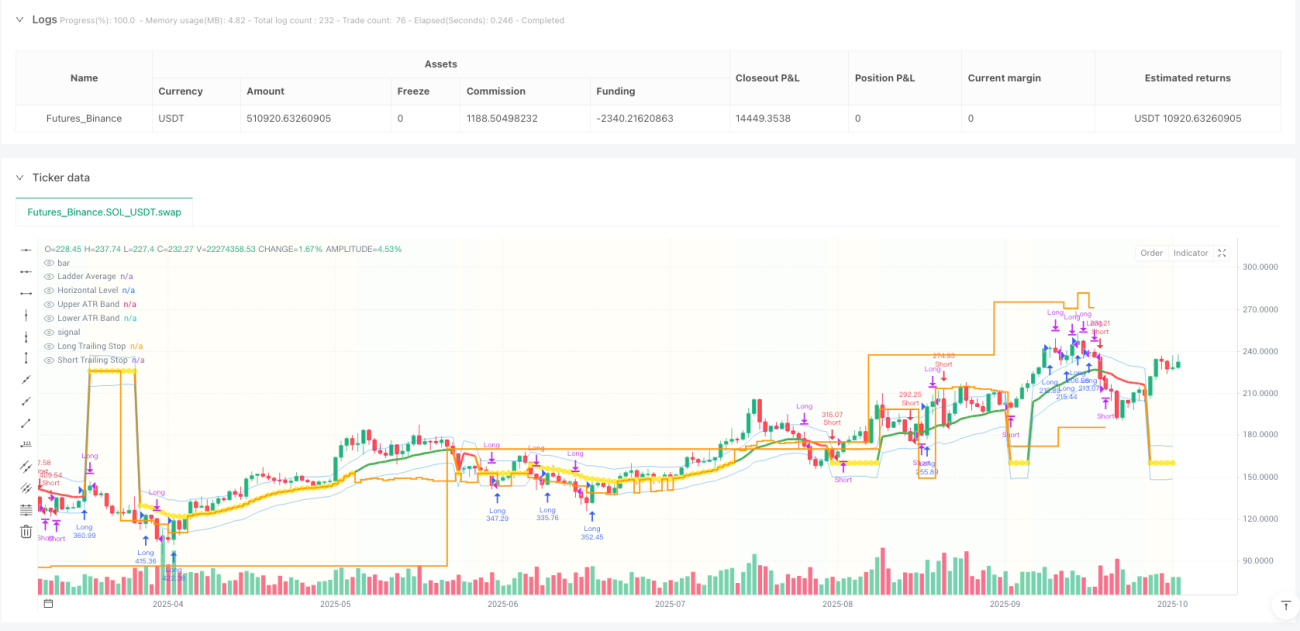
Die heute analysierte Trendschiefer-Durchschnittsstrategie bietet eine interessante Lösung für genau diese Schmerzen:Aktiv im Trendmarkt, elegant im Schwankenmarkt。
Traditionelle Moving Average Strategien haben einen tödlichen Fehler: Sie ändern sich ständig. Ob es sich um einen starken Trend oder eine Querfluktuation handelt, die Durchschnittslinie passt sich ständig an die Preisschwankungen an, was zu einer großen Anzahl von falschen Signalen führt.
Die Idee des “Ladder Average” lautet:Die Gleichung wird unter bestimmten Bedingungen “gefriert”.。
Die Implementierungslogik lautet wie folgt:
Trend-Status-ErfassungDie ADX-Indikatoren zeigen, wie stark die Markttrends sind.
Dynamische Gleichschaltung:
Das Schöne an diesem Design ist:Es lässt Strategien in verschiedenen Marktumgebungen unterschiedliche “Charakteren” zeigen.Das ist eine sehr schwierige Aufgabe, aber es ist eine sehr wichtige Aufgabe.
Neben der grundlegenden Treppenmittelmechanik integriert die Strategie auch ein “Trend-Capture”-Modul, das ich für das innovativste halte:
Schnelle Umkehrung:
Das Design löst ein wichtiges Problem der traditionellen Strategie:Wie man sich schnell anpasst, wenn sich ein Trend umkehrt。
Stellen Sie sich eine Situation vor: Sie haben gerade mehrere Positionen wegen Stop-Losses abgewickelt, und die Märkte zeigen sofort einen starken Abwärtstrend. Die herkömmliche Strategie kann auf eine Bestätigung neuer Signale warten, aber dieses “Trend-Capture” -System kann innerhalb von 3 Zyklen schnell leere Positionen aufbauen.
Das Beste, was man von dieser Strategie lernen kann, ist ihreDifferenzierte Risikomanagementmechanismen:
Risikokontrollen im OTC-Markt:
Risikokontrollen in Trendmärkten:
Das Design zeigt eine wichtige Handelsphilosophie:Unterschiedliche Marktumgebungen erfordern unterschiedliche Risikopräferenzen│Im Quermarkt sollten wir vorsichtiger sein; im Trendmarkt müssen wir den Gewinnen mehr Spielraum geben│
Traditionelle mobile Stop-Losses sind oft zu mechanisch, entweder zu eng, was zu vorzeitigen Ausstiegs führt, oder zu nachlässig, um die Gewinne nicht effektiv zu schützen. Die geradesteckten mobile Stop-Losses dieser Strategie bieten eine intelligentere Lösung:
Logik der Leiterstellung:
Die Vorzüge dieses Designs sind:Es ist möglich, Trends genügend Raum zu geben, während sie ihre Profite schützen.。
In meiner Praxis sind bei der Anwendung solcher Strategien folgende Punkte zu beachten:
Fallen der ParameteroptimierungDie ADX-Termine sollten nicht übertrieben optimiert werden, da die Werte zwischen 25 und 30 in den meisten Märkten stabil sind.
MarktanpassungsfähigkeitDie Strategie ist besser geeignet für volatile mittlere Märkte, die unter extremen Schwankungen möglicherweise die ATR-Multiplikatoren anpassen müssen.
VermögensverwaltungEs wird empfohlen, dass die Einzelleistung nicht mehr als 10% des Gesamtkapitals beträgt, insbesondere wenn die Trend-Capture-Funktion aktiviert ist.
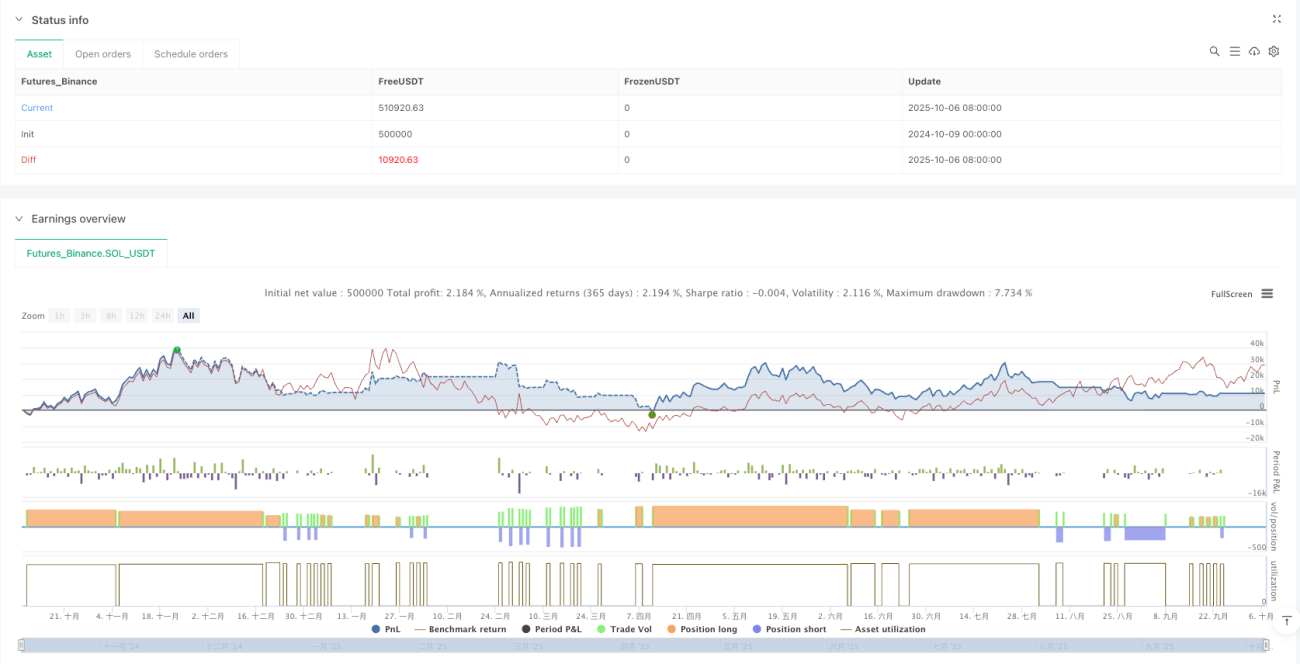
RückmeldungspfadVorsicht bei der Auswirkung von Slippage und Gebühren, insbesondere bei häufigen Transaktionen in einem unsicheren Markt
Die Strategie stellt eine wichtige Evolutionsrichtung dar, wenn man sie aus der Sicht der Entwicklung von Quantitative Strategien betrachtet:Übergang von Einzellogik zu Mehrzustandsanpassungen。
Traditionelle Strategien versuchen oft, mit einem festen Satz von Logiken auf alle Marktsituationen zu reagieren, aber diese Strategie zeigt die Weisheit des “Geographical Fit”:
Diese Konzeption ist für Strategieentwickler von entscheidender Bedeutung:Wir sollten Strategien mit “Marktempfindung” ausstatten, anstatt sie blind an einer festen Logik zu halten.。
Schließlich ist es wichtig zu betonen, dass keine Strategie ein Allrounder ist. Diese Treppenmittelstrategie ist zwar theoretisch elegant, muss jedoch in der Praxis an die spezifischen Marktbedingungen und die persönlichen Risikopräferenzen angepasst werden.Die beste Strategie ist immer die, die am besten zu dir passt.。
/*backtest
start: 2024-10-09 00:00:00
end: 2025-10-07 08:00:00
period: 1d
basePeriod: 1d
exchanges: [{"eid":"Futures_Binance","currency":"SOL_USDT","balance":500000}]
*/
//@version=5
strategy("Trend Following Ladder Average Strategy", overlay=true, default_qty_type=strategy.percent_of_equity, default_qty_value=10)
// ═══════════════════════════════════════════════════════════════════════════════
// SETTINGS AND PARAMETERS
// ═══════════════════════════════════════════════════════════════════════════════
// Ladder Average Settings
ma_length = input.int(title="Average Period", defval=21, minval=5)
ma_type = input.string(title="Average Type", defval="EMA", options=["SMA", "EMA", "WMA"])
// Trend Strength Settings
adx_length = input.int(title="Trend Strength Period (ADX)", defval=14, minval=5)
trend_threshold = input.float(title="Trend Strength Threshold", defval=25.0, minval=10.0, step=5.0)
sideways_slope_threshold = input.float(title="Sideways Market Slope Threshold", defval=0.3, minval=0.1, step=0.1)
// Trend Catching Settings
enable_trend_catch = input.bool(title="Trend Catching System", defval=true)
trend_catch_adx_threshold = input.float(title="Trend Catch ADX Threshold", defval=30.0, minval=20.0, step=5.0)
trend_catch_di_diff = input.float(title="DI+ DI- Difference Threshold", defval=10.0, minval=5.0, step=2.5)
quick_entry_bars = input.int(title="Quick Entry Waiting Bars", defval=3, minval=1, maxval=10)
// ATR and Volatility Settings
atr_length = input.int(title="ATR Period", defval=14, minval=1)
atr_multiplier = input.float(title="ATR Multiplier", defval=2.0, minval=0.1, step=0.1)
// Ladder Trailing Stop Settings
ladder_step = input.float(title="Ladder Step Size (%)", defval=1.0, minval=0.1, step=0.1)
max_ladders = input.int(title="Maximum Ladder Count", defval=5, minval=2, maxval=10)
// Stop Loss and Take Profit Settings
use_stop_loss = input.bool(title="Use Stop Loss", defval=false)
use_take_profit = input.bool(title="Use Take Profit", defval=false)
use_trailing_stop = input.bool(title="Use Trailing Stop", defval=true)
sl_type = input.string(title="Stop Loss Type", defval="ATR", options=["ATR", "Percent", "Points"])
sl_atr_multiplier = input.float(title="SL ATR Multiplier", defval=2.0, minval=0.5, step=0.1)
sl_percent = input.float(title="SL Percent (%)", defval=2.0, minval=0.1, step=0.1)
sl_points = input.float(title="SL Points", defval=100, minval=1)
tp_type = input.string(title="Take Profit Type", defval="ATR", options=["ATR", "Percent", "Points", "Risk/Reward"])
tp_atr_multiplier = input.float(title="TP ATR Multiplier", defval=3.0, minval=0.5, step=0.1)
tp_percent = input.float(title="TP Percent (%)", defval=3.0, minval=0.1, step=0.1)
tp_points = input.float(title="TP Points", defval=150, minval=1)
tp_risk_reward = input.float(title="Risk/Reward Ratio", defval=2.0, minval=0.5, step=0.1)
// Horizontal Level Settings
horizontal_lookback = input.int(title="Horizontal Level Stabilization Period", defval=10, minval=3)
// ═══════════════════════════════════════════════════════════════════════════════
// INDICATORS AND CALCULATIONS
// ═══════════════════════════════════════════════════════════════════════════════
// ATR calculation
atr_value = ta.atr(atr_length)
// Moving Average calculation
ma_value = ma_type == "SMA" ? ta.sma(close, ma_length) : ma_type == "EMA" ? ta.ema(close, ma_length) : ma_type == "WMA" ? ta.wma(close, ma_length) : ta.ema(close, ma_length)
// ADX (Trend Strength) calculation - Manual calculation
tr = math.max(high - low, math.max(math.abs(high - close[1]), math.abs(low - close[1])))
plus_dm = high - high[1] > low[1] - low ? math.max(high - high[1], 0) : 0
minus_dm = low[1] - low > high - high[1] ? math.max(low[1] - low, 0) : 0
plus_di = 100 * ta.rma(plus_dm, adx_length) / ta.rma(tr, adx_length)
minus_di = 100 * ta.rma(minus_dm, adx_length) / ta.rma(tr, adx_length)
adx_value = 100 * ta.rma(math.abs(plus_di - minus_di) / (plus_di + minus_di), adx_length)
// MA slope calculation (for sideways market detection)
ma_slope = (ma_value - ma_value[5]) / ma_value[5] * 100
// Trend state detection
is_strong_trend = adx_value > trend_threshold
is_sideways_by_slope = math.abs(ma_slope) < sideways_slope_threshold
is_sideways = not is_strong_trend or is_sideways_by_slope
// Trend direction detection (DI+ vs DI-)
is_uptrend = plus_di > minus_di
is_downtrend = minus_di > plus_di
di_difference = math.abs(plus_di - minus_di)
// Strong trend momentum detection
strong_uptrend = adx_value > trend_catch_adx_threshold and plus_di > minus_di and di_difference > trend_catch_di_diff
strong_downtrend = adx_value > trend_catch_adx_threshold and minus_di > plus_di and di_difference > trend_catch_di_diff
// Position tracking system
var bool just_closed_long = false
var bool just_closed_short = false
var int bars_since_close = 0
// Position closure tracking - Fixed
if strategy.position_size == 0 and strategy.position_size[1] != 0
if strategy.position_size[1] > 0
just_closed_long := true
just_closed_short := false
else
just_closed_short := true
just_closed_long := false
bars_since_close := 0
else if strategy.position_size == 0
bars_since_close += 1
if bars_since_close > quick_entry_bars
just_closed_long := false
just_closed_short := false
else
just_closed_long := false
just_closed_short := false
bars_since_close := 0
// Ladder Average System
var float ladder_ma = na
var float horizontal_level = na
var int sideways_count = 0
// Trend-following ladder average
if is_strong_trend and not is_sideways_by_slope
// Normal MA tracking in strong trend
ladder_ma := ma_value
sideways_count := 0
else
// When trend weakens or in sideways market
sideways_count += 1
if sideways_count >= horizontal_lookback or na(horizontal_level)
horizontal_level := ma_value
ladder_ma := horizontal_level
// Market state
market_state = is_strong_trend and not is_sideways_by_slope ? "TREND" : "SIDEWAYS"
// Volatility measurement
volatility = atr_value / close * 100
// ═══════════════════════════════════════════════════════════════════════════════
// STOP LOSS AND TAKE PROFIT CALCULATIONS
// ═══════════════════════════════════════════════════════════════════════════════
// Stop Loss calculation function
calculate_stop_loss(entry_price_val, is_long) =>
sl_value = sl_type == "ATR" ? (is_long ? entry_price_val - (atr_value * sl_atr_multiplier) : entry_price_val + (atr_value * sl_atr_multiplier)) : sl_type == "Percent" ? (is_long ? entry_price_val * (1 - sl_percent / 100) : entry_price_val * (1 + sl_percent / 100)) : sl_type == "Points" ? (is_long ? entry_price_val - sl_points : entry_price_val + sl_points) : (is_long ? entry_price_val - (atr_value * sl_atr_multiplier) : entry_price_val + (atr_value * sl_atr_multiplier))
sl_adjusted = if is_sideways
is_long ? math.min(sl_value, ladder_ma - atr_value * 0.5) : math.max(sl_value, ladder_ma + atr_value * 0.5)
else
sl_value
sl_adjusted
// Take Profit calculation function
calculate_take_profit(entry_price_val, stop_loss_val, is_long) =>
tp_value = tp_type == "ATR" ? (is_long ? entry_price_val + (atr_value * tp_atr_multiplier) : entry_price_val - (atr_value * tp_atr_multiplier)) : tp_type == "Percent" ? (is_long ? entry_price_val * (1 + tp_percent / 100) : entry_price_val * (1 - tp_percent / 100)) : tp_type == "Points" ? (is_long ? entry_price_val + tp_points : entry_price_val - tp_points) : tp_type == "Risk/Reward" ? (is_long ? entry_price_val + (math.abs(entry_price_val - stop_loss_val) * tp_risk_reward) : entry_price_val - (math.abs(entry_price_val - stop_loss_val) * tp_risk_reward)) : (is_long ? entry_price_val + (atr_value * tp_atr_multiplier) : entry_price_val - (atr_value * tp_atr_multiplier))
tp_adjusted = if is_sideways
is_long ? math.max(tp_value, ladder_ma + atr_value * 1.5) : math.min(tp_value, ladder_ma - atr_value * 1.5)
else
tp_value
tp_adjusted
var float current_sl = na
var float current_tp = na
// ═══════════════════════════════════════════════════════════════════════════════
// ENTRY SIGNALS
// ═══════════════════════════════════════════════════════════════════════════════
// Normal entry conditions
normal_long = strategy.position_size == 0 and ((is_strong_trend and close > ladder_ma and close[1] <= ladder_ma[1]) or (is_sideways and close < ladder_ma and close > ladder_ma - atr_value))
normal_short = strategy.position_size == 0 and ((is_strong_trend and close < ladder_ma and close[1] >= ladder_ma[1]) or (is_sideways and close > ladder_ma and close < ladder_ma + atr_value))
// Trend catching entry conditions
trend_catch_long = enable_trend_catch and strategy.position_size == 0 and just_closed_short and bars_since_close <= quick_entry_bars and strong_uptrend and close > close[1] and close > ladder_ma
trend_catch_short = enable_trend_catch and strategy.position_size == 0 and just_closed_long and bars_since_close <= quick_entry_bars and strong_downtrend and close < close[1] and close < ladder_ma
// Strong momentum entry conditions (even if no position closed, but strong trend exists)
momentum_long = enable_trend_catch and strategy.position_size == 0 and strong_uptrend and close > ladder_ma and close > close[1] and close > open
momentum_short = enable_trend_catch and strategy.position_size == 0 and strong_downtrend and close < ladder_ma and close < close[1] and close < open
// Combined entry conditions
long_condition = normal_long or trend_catch_long or momentum_long
short_condition = normal_short or trend_catch_short or momentum_short
// Entry type determination
entry_type = if trend_catch_long or trend_catch_short
"TREND_CATCH"
else if momentum_long or momentum_short
"MOMENTUM"
else
market_state
// ═══════════════════════════════════════════════════════════════════════════════
// LADDER TRAILING STOP SYSTEM
// ═══════════════════════════════════════════════════════════════════════════════
var float[] ladder_levels = array.new<float>()
var float current_trailing_stop = na
var float entry_price = na
// Calculate ladder levels function
calculate_ladder_levels(entry_price_val, is_long) =>
ladder_array = array.new<float>()
base_level = ladder_ma
for i = 1 to max_ladders
level_value = if is_long
base_level + (atr_value * atr_multiplier * i * ladder_step / 100)
else
base_level - (atr_value * atr_multiplier * i * ladder_step / 100)
array.push(ladder_array, level_value)
ladder_array
// Trailing stop update function
update_trailing_stop(entry_price_val, current_price, is_long) =>
stop_level = if is_long
initial_stop = is_sideways ? ladder_ma - atr_value : entry_price_val - (atr_value * atr_multiplier)
new_stop = initial_stop
if array.size(ladder_levels) > 0
for i = 0 to array.size(ladder_levels) - 1
level_value = array.get(ladder_levels, i)
if current_price >= level_value
adjusted_stop = is_sideways ? ladder_ma : entry_price_val + (atr_value * atr_multiplier * (i + 1) * 0.3)
if adjusted_stop > new_stop
new_stop := adjusted_stop
new_stop
else
initial_stop = is_sideways ? ladder_ma + atr_value : entry_price_val + (atr_value * atr_multiplier)
new_stop = initial_stop
if array.size(ladder_levels) > 0
for i = 0 to array.size(ladder_levels) - 1
level_value = array.get(ladder_levels, i)
if current_price <= level_value
adjusted_stop = is_sideways ? ladder_ma : entry_price_val - (atr_value * atr_multiplier * (i + 1) * 0.3)
if adjusted_stop < new_stop
new_stop := adjusted_stop
new_stop
stop_level
// ═══════════════════════════════════════════════════════════════════════════════
// POSITION MANAGEMENT
// ═══════════════════════════════════════════════════════════════════════════════
// Long position entry
if long_condition
strategy.entry("Long", strategy.long, comment="Long: " + market_state)
entry_price := close
ladder_levels := calculate_ladder_levels(close, true)
// Stop Loss calculation (only if active)
if use_stop_loss
current_sl := calculate_stop_loss(close, true)
// Take Profit calculation (only if active)
if use_take_profit
temp_sl = use_stop_loss ? current_sl : close - (atr_value * sl_atr_multiplier)
current_tp := calculate_take_profit(close, temp_sl, true)
// Trailing stop initialization (only if active)
if use_trailing_stop
current_trailing_stop := is_sideways ? ladder_ma - atr_value : close - (atr_value * atr_multiplier)
// Short position entry
if short_condition
strategy.entry("Short", strategy.short, comment="Short: " + market_state)
entry_price := close
ladder_levels := calculate_ladder_levels(close, false)
// Stop Loss calculation (only if active)
if use_stop_loss
current_sl := calculate_stop_loss(close, false)
// Take Profit calculation (only if active)
if use_take_profit
temp_sl = use_stop_loss ? current_sl : close + (atr_value * sl_atr_multiplier)
current_tp := calculate_take_profit(close, temp_sl, false)
// Trailing stop initialization (only if active)
if use_trailing_stop
current_trailing_stop := is_sideways ? ladder_ma + atr_value : close + (atr_value * atr_multiplier)
// Position exit management
if strategy.position_size > 0 // Long position
// If using fixed SL/TP
if use_stop_loss and use_take_profit
strategy.exit("Long Exit", "Long", stop=current_sl, limit=current_tp, comment="SL/TP")
else if use_stop_loss and not use_take_profit
strategy.exit("Long Exit", "Long", stop=current_sl, comment="SL Only")
else if not use_stop_loss and use_take_profit
strategy.exit("Long Exit", "Long", limit=current_tp, comment="TP Only")
// If using trailing stop (optional)
if use_trailing_stop
current_trailing_stop := update_trailing_stop(entry_price, close, true)
if close <= current_trailing_stop
strategy.close("Long", comment="Trailing Stop")
if strategy.position_size < 0 // Short position
// If using fixed SL/TP
if use_stop_loss and use_take_profit
strategy.exit("Short Exit", "Short", stop=current_sl, limit=current_tp, comment="SL/TP")
else if use_stop_loss and not use_take_profit
strategy.exit("Short Exit", "Short", stop=current_sl, comment="SL Only")
else if not use_stop_loss and use_take_profit
strategy.exit("Short Exit", "Short", limit=current_tp, comment="TP Only")
// If using trailing stop (optional)
if use_trailing_stop
current_trailing_stop := update_trailing_stop(entry_price, close, false)
if close >= current_trailing_stop
strategy.close("Short", comment="Trailing Stop")
// ═══════════════════════════════════════════════════════════════════════════════
// VISUALIZATION
// ═══════════════════════════════════════════════════════════════════════════════
// Ladder Average plot
plot(ladder_ma, color=is_sideways ? color.orange : (ma_slope > 0 ? color.green : color.red), linewidth=3, title="Ladder Average")
// Horizontal level plot
plot(is_sideways ? horizontal_level : na, color=color.yellow, style=plot.style_circles, linewidth=2, title="Horizontal Level")
// ATR-based bands
upper_band = ladder_ma + atr_value
lower_band = ladder_ma - atr_value
plot(upper_band, color=color.new(color.blue, 70), title="Upper ATR Band")
plot(lower_band, color=color.new(color.blue, 70), title="Lower ATR Band")
// Stop Loss and Take Profit plots (only if active)
plot(strategy.position_size != 0 and use_stop_loss ? current_sl : na, color=color.red, style=plot.style_circles, linewidth=2, title="Stop Loss")
plot(strategy.position_size != 0 and use_take_profit ? current_tp : na, color=color.green, style=plot.style_circles, linewidth=2, title="Take Profit")
// Trailing stop plot (only if active)
plot(strategy.position_size > 0 and use_trailing_stop ? current_trailing_stop : na, color=color.orange, style=plot.style_stepline, linewidth=2, title="Long Trailing Stop")
plot(strategy.position_size < 0 and use_trailing_stop ? current_trailing_stop : na, color=color.orange, style=plot.style_stepline, linewidth=2, title="Short Trailing Stop")
// Market state background color
bgcolor(is_sideways ? color.new(color.yellow, 95) : (is_strong_trend ? color.new(color.green, 98) : color.new(color.gray, 98)), title="Market State")