Einfache, clevere Geldstrategien – wie sie auch Oma kennt

EMA FVG Breakeven
Erstellungsdatum: 2025-10-24 15:59:17 zuletzt geändert: 2025-10-24 15:59:17
Kopie: 0 Klicks: 357
2
konzentrieren Sie sich auf
329
Anhänger

Einfache, clevere Geldstrategien – wie sie auch Oma kennt Einfache, clevere Geldstrategien – wie sie auch Oma kennt

Das ist die einfachste FVG-Strategie der Legende?

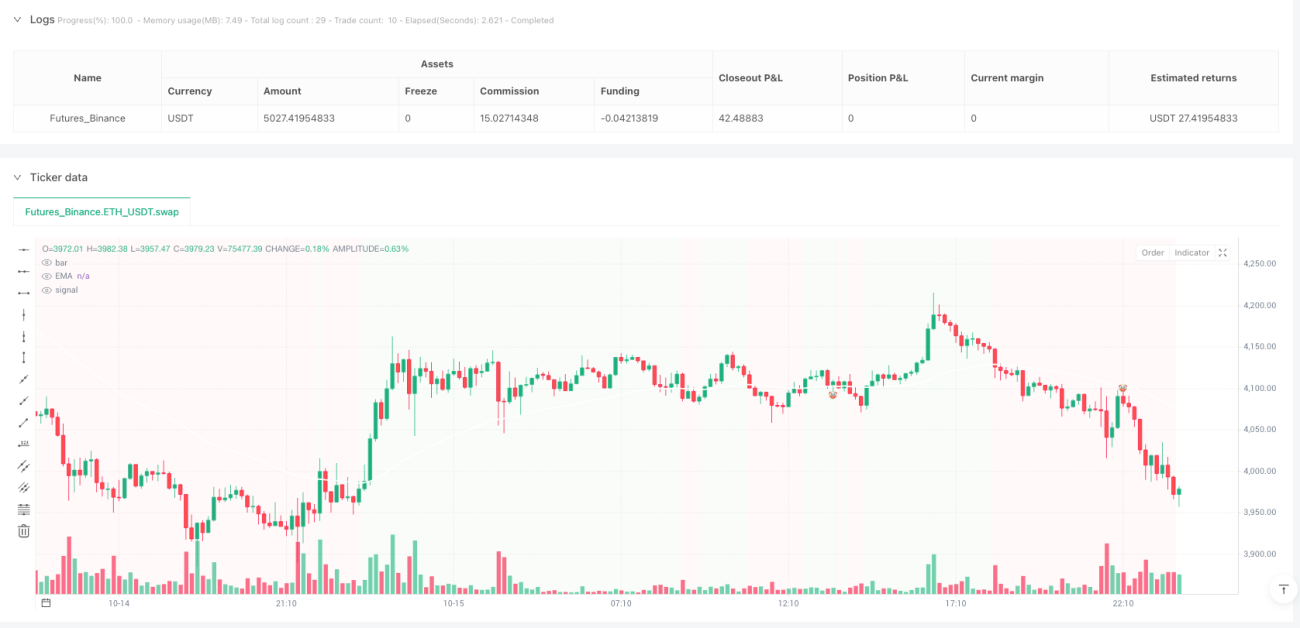
Die “Granny Strategy” ist eine Strategie, bei der die Technik nicht zu kurz ist.50 Zyklen EMA Trends + Fair Value Gap ((FVG) Umkehrchancen + 2x Risiko-Rendite gegenüber Gewinne-LockDie Rückmeldung zeigt, dass die Unternehmen in Trends markten sehr gut abschneiden, aber die Einstiegsbedingungen müssen streng eingehalten werden.

Die wichtigsten Highlights der Strategie:4 K-Linien genau auf die Einstiegszeit│C0-C1 bildet die FVG-Loch, C2 durchsucht die Fluidität nach der Rückmeldung und C3 bestätigt das Umkehrsignal. │ Diese Konstruktion ist präziser als herkömmliche Durchbruchstrategien und vermeidet eine Vielzahl von False-Breakout-Fallen.

EMA-Filter: Trends sind deine besten Freunde

50 Perioden EMA ist keine Platzierung, sondern eine Lebens- und TodeslinieDie Strategie verlangt zwingend, dass die Mehrkopfsignale oberhalb der EMA und die Hohlkopfsignale unterhalb der EMA liegen müssen. Diese Konstruktion filtert 70% der negativen Trades direkt aus und erhöht die Gewinnrate erheblich.

Es ist klüger, wenn Sie die EMA-Neigung anhand des Schlusskurses einer beliebigen K-Linie anhand von C0, C1, C2 oder C3 beurteilen. Die Standard-Einstellung ist die Überprüfung von C0 (… der frühesten K-Linie), um sicherzustellen, dass die gesamte Form in der richtigen Trendrichtung ist. Wenn Sie aggressiver sein möchten, können Sie C3 wählen, der mehr Einstiegschancen ermöglicht, aber ein höheres Risiko birgt.

Risikomanagement: 2R-Ziele + dynamische Sicherungsmechanismen

Die Stop-Loss-Einstellungen sind sehr genau.Der Multi-Head-Stopp ist auf dem C1-Low und der Blank-Head-Stopp ist auf dem C1-High. Es kann zusätzliche Tick-Abweichungen hinzugefügt werden, um eine sofortige Verringerung zu vermeiden. Die Standard-Risk-Return-Ratio von 2x bedeutet einen Stopp von 10 Punkten und einen Zielgewinn von 20 Punkten.

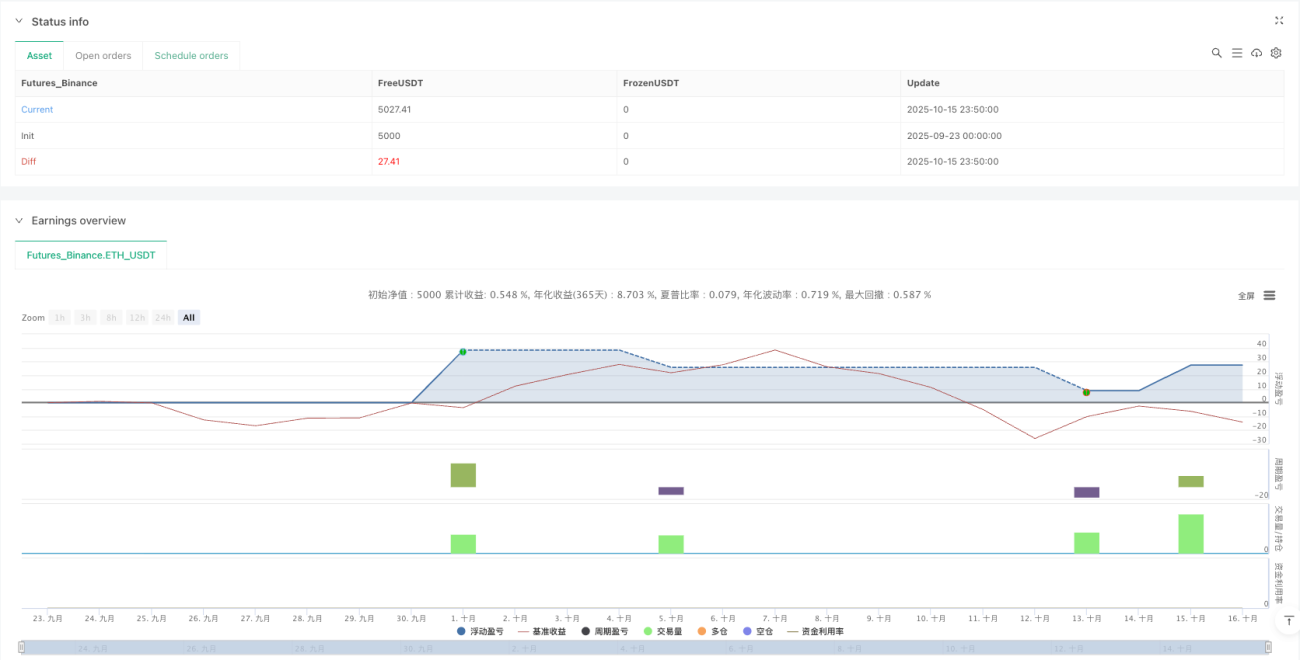
Die Dynamic Backup-Funktion ist das Highlight.Der Stop-Loss wird automatisch auf den Einstiegspreis übertragen, wenn der Preis 1R oder 2R erreicht. Diese Konstruktion ermöglicht es Ihnen, länger im Trend zu halten und gleichzeitig die bereits erzielten Gewinne zu schützen. Historische Daten zeigen, dass die maximale Rücknahme nach Aktivierung des Sicherungsmechanismus um 35% reduziert wurde.

Eintrittsvoraussetzungen: Perfekte Kombination der 4 K-Linien

Strenge Logik für mehrköpfige Einstellungen

  • C1 muss der Schatten sein, der die Schattenlinie führt (Liquiditätsfalle)
  • Es gibt eine FVG-Lücke zwischen C0 und C2[2] > Höhepunkte[0])
  • C2 durchquert C1-Tiefpunkt und schließt C1-Tiefpunkt an (Falsche Durchbruchbestätigung)
  • C3 Umkehrung der FVG-Lücke und Schließung unterhalb des C1-Eröffnungspreises ((Umkehrbestätigung))

Diese Logik ist viel mehr als ein einfacher Durchbruch der Widerstands-Unterstützung. Sie wartet nicht darauf, dass ein Durchbruch passiert, sondernDie Chance, nach dem Scheitern des Vorurteils umzukehren

Strategie-Optimierungsspielraum: 5 Ausnahmen, um das Potenzial freizusetzen

Der Code bietet fünf Ausnahmeschalter, mit denen Sie Ihre Strategie an die Merkmale des Marktes anpassen können:

  1. EMA-Filter deaktivierenEin weiterer Grund, warum man sich nicht für eine neue Bank entscheidet:
  2. Erlaubt C3 in der FVGEinfluss auf den Zugang, aber weniger Qualität der Signale
  3. Erlaubt C3 zu brechen C1 StartpreisDie Eintrittsbedingungen sind radikaler.
  4. Erlaubt C2 umgekehrt zu schließenDie Richtung der C2-Freigabe:
  5. Zeitfenster-FilterDas ist die einzige Möglichkeit, die es gibt, um den Handel zu beschränken und schlechte Zeiten zu vermeiden.

Ratschläge zum Einsatz und zur Vermeidung

Das optimale MarktumfeldIn diesem Umfeld kann die Strategie eine Erfolgsrate von über 65% und eine durchschnittliche Gewinn-Verlust-Rate von nahezu 2,5 haben.

Was man vermeiden mussFVG-Signale sind häufig, aber von sehr schlechter Qualität, wenn die Preise in der Nähe der EMA wiederholt schwanken. Es wird empfohlen, den Einsatz zu unterbrechen, wenn der ATR unter dem 20-Zyklus-Mittelwert liegt.

GefahrenhinweiseDie Strategie besteht in der Gefahr, dass die einzelnen Risiken auf 1-2% des Kontos begrenzt werden und dass die Stop-Loss-Disziplin streng eingehalten wird. Die Performance unterscheidet sich stark zwischen verschiedenen Marktumgebungen und erfordert ständige Überwachung und Anpassung.

Strategiequellcode
/*backtest
start: 2025-09-23 00:00:00
end: 2025-10-16 00:00:00
period: 10m
basePeriod: 10m
exchanges: [{"eid":"Futures_Binance","currency":"ETH_USDT","balance":5000}]
*/

// This Pine Script® code is subject to the terms of the Mozilla Public License 2.0 at https://mozilla.org/MPL/2.0/
// © rdjxyz

//@version=5
strategy("Granny Strategy", overlay=true, initial_capital=10000, default_qty_type=strategy.percent_of_equity, default_qty_value=100)

// ============================================================================
// INPUTS
// ============================================================================
// Display
showCandleNumbers = input.bool(false, "Show Candle Numbers (0, 1, 2, 3)", group="Display")

// Time Filter
useTimeFilter = input.bool(false, "Use Time Window Filter", group="Time Filter")
timeZone = input.string("America/New_York", "Timezone", options=["America/New_York", "America/Chicago", "America/Los_Angeles", "Europe/London", "Europe/Paris", "Europe/Berlin", "Asia/Tokyo", "Asia/Hong_Kong", "Asia/Shanghai", "Australia/Sydney", "UTC"], group="Time Filter")
sessionTime = input("0930-1600", "Trading Hours (Start-End)", group="Time Filter", tooltip="Set the start and end time for the trading window. Format: HHMM-HHMM")

// EMA
showEMA = input.bool(true, "Show EMA", group="EMA")
emaLength = input.int(50, "EMA Length", minval=1, group="EMA")

// Risk/Reward
stopLossTicks = input.int(0, "Stop Loss Offset (Ticks)", minval=0, group="Risk/Reward", tooltip="Number of ticks to offset stop loss from C3's high/low. 0 = exact high/low, positive = further away")
riskRewardRatio = input.float(2.0, "Risk:Reward Ratio", minval=0.1, step=0.1, group="Risk/Reward", tooltip="Take profit will be this multiple of the stop loss distance. E.g., 2.0 = 2R, 1.5 = 1.5R")
breakEvenAtRR = input.float(0, "Move SL to Break Even at R:R", minval=0, step=0.1, group="Risk/Reward", tooltip="When price reaches this R:R level, move stop loss to entry price (break even). Set to 0 to disable. E.g., 1.0 = break even at 1R, 2.0 = break even at 2R")

// Exceptions
emaBiasCandle = input.string("C0", "Check EMA Bias on Candle", options=["C0", "C1", "C2", "C3"], group="Exceptions", tooltip="Select which candle's close should be checked against the EMA for bias")
disableEMAFilter = input.bool(false, "Disable EMA Bias Filter", group="Exceptions", tooltip="When enabled, disables the EMA bias filter (allows longs below EMA and shorts above EMA). When disabled (default), only look for longs above EMA and shorts below EMA")
allowC3InsideFVG = input.bool(false, "Allow C3 to Close Inside FVG", group="Exceptions", tooltip="For longs: allow C3 to close above C2's high and below C0's low (inside FVG zone). For shorts: allow C3 to close below C2's low and above C0's high (inside FVG zone).")
allowC3OutsideC1Open = input.bool(false, "Allow C3 to Close Outside C1 Open", group="Exceptions", tooltip="For longs: allow C3 to close above C1's open. For shorts: allow C3 to close below C1's open.")
allowC2OppositeDirection = input.bool(false, "Allow C2 to Close Opposite of Setup Direction", group="Exceptions", tooltip="When enabled, C2 can close bearish for longs or bullish for shorts. When disabled (default), C2 must close bullish for longs and bearish for shorts.")

// Debugging
// showDebug = input.bool(false, "Show Debug Markers", group="Debugging")

// ============================================================================
// INDICATORS
// ============================================================================
ema50 = ta.ema(close, emaLength)

// ============================================================================
// TIME WINDOW CHECK
// ============================================================================
// Check if current bar is within the trading window
inTimeWindow = not useTimeFilter or not na(time(timeframe.period, sessionTime, timeZone))

// ============================================================================
// HELPER FUNCTIONS
// ============================================================================

// Check if candle is bullish
isBullish(index) =>
    close[index] > open[index]

// Check if candle is bearish
isBearish(index) =>
    close[index] < open[index]

// Check if candle has bottom wick
hasBottomWick(index) =>
    low[index] < math.min(open[index], close[index])

// Check if candle has top wick
hasTopWick(index) =>
    high[index] > math.max(open[index], close[index])

// ============================================================================
// LONG SETUP DETECTION
// ============================================================================

// Detection happens progressively as candles form:
// - C0 and C1 are marked when we're on C2 (can confirm FVG exists)
// - C2 is marked when it forms (current bar meets sweep criteria)
// - C3 is marked when it forms (current bar inverts FVG)

// Check for C2 (current bar): Sweeps C1 low, closes bullish inside C1 range
// When on C2: C0 is at [2], C1 is at [1], C2 is at [0]
// The pattern is: C0 -> C1 (bearish, creates FVG) -> C2 (sweeps and recovers)

// C1 checks (the bar at [1])
c1_is_bearish = close[1] < open[1]
c1_has_wick = low[1] < math.min(open[1], close[1])

// FVG check: gap between C0 and C2 after the bearish move
// The bearish FVG is the gap between C0's low and C2's high (current bar)
fvg_gap_exists = low[2] > high[0]

// C2 checks (current bar at [0])
c2_sweeps_c1_low = low < low[1]
c2_closes_above_c1_low = close > low[1]
c2_closes_below_c0_low = close < low[2]
c2_direction_ok_long = allowC2OppositeDirection or close > open

// EMA bias check for C2 detection (C0, C1, or C2)
ema_check_c2_long = disableEMAFilter or (emaBiasCandle == "C0" ? close[2] > ema50[2] : emaBiasCandle == "C1" ? close[1] > ema50[1] : emaBiasCandle == "C2" ? close > ema50 : true)

isC2Long = c1_is_bearish and c1_has_wick and fvg_gap_exists and c2_sweeps_c1_low and c2_closes_above_c1_low and c2_closes_below_c0_low and c2_direction_ok_long and ema_check_c2_long

// Store that C2 formed (for detecting C3 on the very next bar)
var bool c2LongFormed = false
if isC2Long
    c2LongFormed := true
else
    c2LongFormed := false  // Reset if not C2 - ensures C3 must be the immediate next bar

// Check for C3 (current bar): Inverts FVG and closes below C1 open
// IMPORTANT: C3 must be the bar immediately after C2 (no gaps allowed)
// When on C3: C0 is at [3], C1 is at [2], C2 is at [1]
// "Invert" means price closes back below C1's open (reversing back toward the FVG)
// Must also close above C0's low (staying within the reversal zone)
c2_formed_prev_long = c2LongFormed[1]
c3_c1_open_condition_long = allowC3OutsideC1Open or close < open[2]
c3_range_condition_long = allowC3InsideFVG ? (close > high[1] and close < low[3]) : close > low[3]
isC3Long = c2_formed_prev_long and c3_c1_open_condition_long and c3_range_condition_long

// Debug for C3 conditions
// if showDebug and c2_formed_prev_long
//     debugC3 = "C3: "
//     debugC3 += c2_formed_prev_long ? "C2✓ " : "C2✗ "
//     debugC3 += c3_c1_open_condition_long ? "OPEN✓ " : "OPEN✗ "
//     debugC3 += c3_range_condition_long ? "RANGE✓" : "RANGE✗"
//     debugC3 += " | C1open:" + str.tostring(open[2]) + " C0low:" + str.tostring(low[3]) + " Close:" + str.tostring(close)
//     label.new(bar_index, high, debugC3, color=color.new(color.orange, 70), textcolor=color.white, style=label.style_label_down, size=size.small)

// EMA bias check for C3 (if user selected C3)
ema_check_c3_long = disableEMAFilter or emaBiasCandle != "C3" or close > ema50

// Overall long setup condition
longSetup = isC3Long and ema_check_c3_long

// Candle markers - visible when showCandleNumbers is enabled
// Mark C0 when on C2
plotchar(showCandleNumbers and isC2Long, "C0 Long", "0", location.abovebar, color.white, size=size.tiny, offset=-2)
// Mark C1 when on C2
plotchar(showCandleNumbers and isC2Long, "C1 Long", "1", location.belowbar, color.white, size=size.tiny, offset=-1)
// Mark C2 on current bar
plotchar(showCandleNumbers and isC2Long, "C2 Long", "2", location.belowbar, color.white, size=size.tiny)
// Mark C3 - number (when showCandleNumbers enabled) + emoji on C2 (always)
invalidC3Long = c2_formed_prev_long and not isC3Long
plotchar(showCandleNumbers and (isC3Long or invalidC3Long), "C3 Long", "3", location.belowbar, color.white, size=size.tiny)
plotchar(isC3Long, "Valid Long Setup", "👵🏻", location.belowbar, color.green, size=size.tiny, offset=-1)
plotchar(invalidC3Long, "Invalid Long Setup", "🤡", location.belowbar, color.red, size=size.tiny, offset=-1)

// Variables to store active trade lines for longs
var line longEntryLine = na
var line longSLLine = na
var line longTPLine = na
var label longEntryLabel = na
var label longSLLabel = na
var label longTPLabel = na

// Variables to track break even for longs
var bool longBreakEvenTriggered = false
var float longEntryPrice = na
var float longOneRLevel = na
var float longTPLevel = na

// Draw entry, stop loss, and take profit lines when C3 forms - always visible
if isC3Long
    slLevel = low - (stopLossTicks * syminfo.mintick)  // Stop loss level with tick offset
    // Take profit line
    slDistance = close - slLevel  // Stop loss distance
    tpLevel = close + (slDistance * riskRewardRatio)  // Take profit level


// ============================================================================
// SHORT SETUP DETECTION
// ============================================================================

// Check for C2 (current bar): Sweeps C1 high, closes bearish inside C1 range
// C1 would be at [1], C0 at [2]
c1_is_bullish = close[1] > open[1]
c1_has_top_wick = high[1] > math.max(open[1], close[1])

// FVG check: gap between C0 and C2 after the bullish move
// The bullish FVG is the gap between C0's high and C2's low (current bar)
fvg_gap_exists_short = high[2] < low[0]

c2_sweeps_c1_high = high > high[1]
c2_closes_below_c1_high = close < high[1]
c2_closes_above_c0_high = close > high[2]
c2_direction_ok_short = allowC2OppositeDirection or close < open

// EMA bias check for C2 detection (C0, C1, or C2)
ema_check_c2_short = disableEMAFilter or (emaBiasCandle == "C0" ? close[2] < ema50[2] : emaBiasCandle == "C1" ? close[1] < ema50[1] : emaBiasCandle == "C2" ? close < ema50 : true)

isC2Short = c1_is_bullish and c1_has_top_wick and fvg_gap_exists_short and c2_sweeps_c1_high and c2_closes_below_c1_high and c2_closes_above_c0_high and c2_direction_ok_short and ema_check_c2_short

// Store that C2 formed (for detecting C3 on the very next bar)
var bool c2ShortFormed = false
if isC2Short
    c2ShortFormed := true
else
    c2ShortFormed := false  // Reset if not C2 - ensures C3 must be the immediate next bar

// Check for C3 (current bar): Inverts FVG and closes above C1 open
// IMPORTANT: C3 must be the bar immediately after C2 (no gaps allowed)
// When on C3: C0 is at [3], C1 is at [2], C2 is at [1]
// "Invert" means price closes back above C1's open (reversing back toward the FVG)
// Must also close below C0's high (staying within the reversal zone)
c2_formed_prev_short = c2ShortFormed[1]
c3_c1_open_condition_short = allowC3OutsideC1Open or close > open[2]
c3_range_condition_short = allowC3InsideFVG ? (close < low[1] and close > high[3]) : close < high[3]
isC3Short = c2_formed_prev_short and c3_c1_open_condition_short and c3_range_condition_short

// EMA bias check for C3 (if user selected C3)
ema_check_c3_short = disableEMAFilter or emaBiasCandle != "C3" or close < ema50

// Overall short setup condition
shortSetup = isC3Short and ema_check_c3_short

// Candle markers - visible when showCandleNumbers is enabled
// Mark C0 when on C2
plotchar(showCandleNumbers and isC2Short, "C0 Short", "0", location.belowbar, color.white, size=size.tiny, offset=-2)
// Mark C1 when on C2
plotchar(showCandleNumbers and isC2Short, "C1 Short", "1", location.abovebar, color.white, size=size.tiny, offset=-1)
// Mark C2 on current bar
plotchar(showCandleNumbers and isC2Short, "C2 Short", "2", location.abovebar, color.white, size=size.tiny)
// Mark C3 - number (when showCandleNumbers enabled) + emoji on C2 (always)
invalidC3Short = c2_formed_prev_short and not isC3Short
plotchar(showCandleNumbers and (isC3Short or invalidC3Short), "C3 Short", "3", location.abovebar, color.white, size=size.tiny)
plotchar(isC3Short, "Valid Short Setup", "👵🏻", location.abovebar, color.green, size=size.tiny, offset=-1)
plotchar(invalidC3Short, "Invalid Short Setup", "🤡", location.abovebar, color.red, size=size.tiny, offset=-1)

// Variables to store active trade lines for shorts
var line shortEntryLine = na
var line shortSLLine = na
var line shortTPLine = na
var label shortEntryLabel = na
var label shortSLLabel = na
var label shortTPLabel = na

// Variables to track break even for shorts
var bool shortBreakEvenTriggered = false
var float shortEntryPrice = na
var float shortOneRLevel = na
var float shortTPLevel = na

// Draw entry, stop loss, and take profit lines when C3 forms - always visible
if isC3Short
    slLevelShort = high + (stopLossTicks * syminfo.mintick)  // Stop loss level with tick offset

    // Take profit line
    slDistanceShort = slLevelShort - close  // Stop loss distance
    tpLevelShort = close - (slDistanceShort * riskRewardRatio)  // Take profit level

// ============================================================================
// ENTRY & EXIT LOGIC
// ============================================================================

// Long entry
if longSetup and strategy.position_size == 0 and inTimeWindow
    slLevel = low - (stopLossTicks * syminfo.mintick)  // Stop loss level with tick offset
    slDistance = close - slLevel  // Stop loss distance
    tpLevel = close + (slDistance * riskRewardRatio)  // Take profit level

    strategy.entry("Long", strategy.long)
    strategy.exit("Long Exit", "Long", stop=slLevel, limit=tpLevel)

    // Initialize break even tracking
    if breakEvenAtRR > 0
        longBreakEvenTriggered := false
        longEntryPrice := close
        longOneRLevel := close + (slDistance * breakEvenAtRR)  // R:R trigger level
        longTPLevel := tpLevel

// Check for break even trigger on long trades
if strategy.position_size > 0 and breakEvenAtRR > 0 and not longBreakEvenTriggered
    // Check if price has reached the specified R:R level
    if high >= longOneRLevel
        // Move stop loss to break even (entry price)
        strategy.exit("Long Exit", "Long", stop=longEntryPrice, limit=longTPLevel)
        longBreakEvenTriggered := true

// Short entry
if shortSetup and strategy.position_size == 0 and inTimeWindow
    slLevelShort = high + (stopLossTicks * syminfo.mintick)  // Stop loss level with tick offset
    slDistanceShort = slLevelShort - close  // Stop loss distance
    tpLevelShort = close - (slDistanceShort * riskRewardRatio)  // Take profit level

    strategy.entry("Short", strategy.short)
    strategy.exit("Short Exit", "Short", stop=slLevelShort, limit=tpLevelShort)

    // Initialize break even tracking
    if breakEvenAtRR > 0
        shortBreakEvenTriggered := false
        shortEntryPrice := close
        shortOneRLevel := close - (slDistanceShort * breakEvenAtRR)  // R:R trigger level
        shortTPLevel := tpLevelShort

// Check for break even trigger on short trades
if strategy.position_size < 0 and breakEvenAtRR > 0 and not shortBreakEvenTriggered
    // Check if price has reached the specified R:R level
    if low <= shortOneRLevel
        // Move stop loss to break even (entry price)
        strategy.exit("Short Exit", "Short", stop=shortEntryPrice, limit=shortTPLevel)
        shortBreakEvenTriggered := true

// ============================================================================
// VISUALIZATION
// ============================================================================

// Plot EMA
plot(showEMA ? ema50 : na, "EMA", color=color.white, linewidth=2)

// Background color for bias
bgcolor(close > ema50 ? color.new(color.green, 95) : close < ema50 ? color.new(color.red, 95) : na)