Multi-Timeframe Moving Average System Trading Strategy

Overview
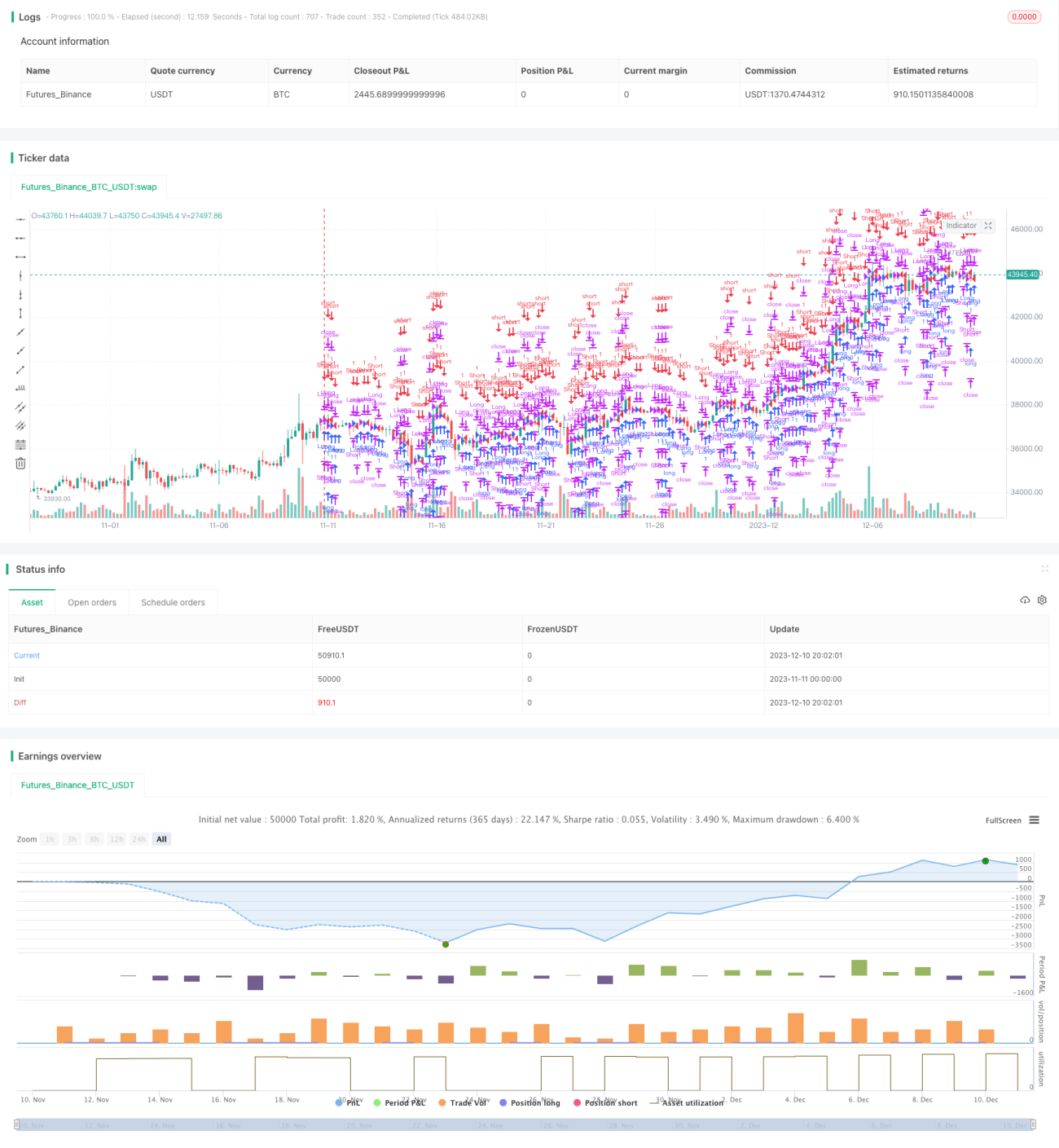
This strategy adopts a multi-timeframe moving average system, combined with RSI and other technical indicators, to achieve automatic switching between long and short positions. The strategy name is “Multi-Timeframe Moving Average System Trading Strategy”. The main idea is to generate more reliable trading signals by comparing price trends over different time periods.
Principles
The core indicators of this strategy are the moving average system. The strategy uses multiple moving average indicators such as JMA, TEMA, DEMA to calculate price trends over different periods like 15min, 30min, 60min. For example, the MA trend calculated by JMA in the 15min timeframe represents the price trend judgement within that timeframe. Then the strategy compares price trends between different timeframes to identify divergences between longer and shorter trends. If significant divergences are detected, trading signals will be generated. In addition, the strategy also incorporates other indicators like RSI and Wave Trend to ensure reliability of trading signals.
Specifically, the trend, trend2 and trend3 variables in the strategy represent price trends of the 15min, 30min and 60min timeframes respectively. If there is a 15min price reversal, while 30min and 60min has not reversed yet, it is judged as a divergence between shorter and longer trends, hence producing a trading signal. No signals will be generated if trends of all timeframes are consistent.
By comparing relationships between multiple timeframes and filtering out some false signals, more reliable trading signals can be generated – this is the core idea of the strategy.
Advantage Analysis
The main advantages of this strategy are:
- Improved signal reliability through multi-timeframe analysis and filtering of false signals;
- Avoiding issues with single indicators by combining multiple indicators for comprehensive judgements;
- Automatic switching between long and short positions without manual interventions, reducing operational difficulty.
Risk Analysis
Some risks also exist with this strategy:
- Multi-timeframe analysis introduces uncertainty around trade entry timing which may cause missing of best entry prices;
- Inappropriate parameter settings when combining multiple indicators could lead to deteriorating trading signal quality;
- Automatic position switching risks over-optimization and weaker real-trading performance versus backtests.
We can take the following measures to mitigate the above risks:
- Fine-tune timeframe parameters to ensure capturing short-term signals for timely entry;
- Extensive backtesting to continuously optimize indicator parameters;
- Reasonable interventions in real trading to prevent blind trading by automated systems.
Optimization Directions
There is room for further optimization of this strategy:
- Introduce machine learning algorithms to auto-optimize parameters across multiple indicators through model training;
- Add adaptive slippage settings based on market volatility levels to improve real-trading performance;
- Incorporate price-volume confirmation mechanisms to avoid losses from rapid trend reversals.
Conclusion
This strategy compares multi-timeframe price trends to identify longer versus shorter term relationships, and generates trading signals through analyzing multiple indicators – achieving automatic switching between longs and shorts with good backtest results. We also identified some areas of improvement via methods like machine learning, adaptive slippage and volume confirmation to further enhance real-trading performance.
- 1