RSI and EMA Based Trend Following Strategy

Overview
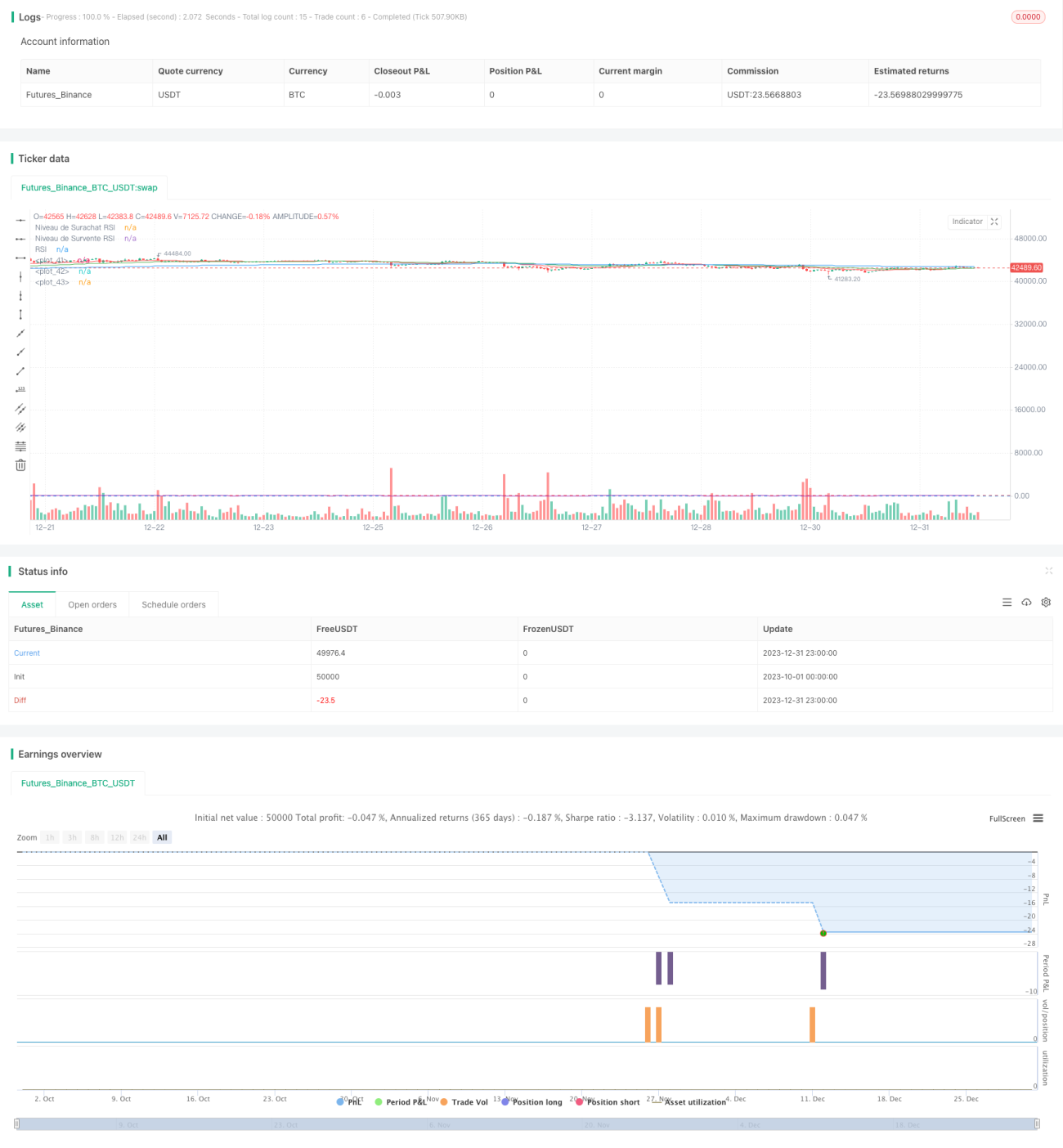
This strategy combines the Relative Strength Index (RSI) and Exponential Moving Average (EMA) technical indicators to implement a quantitative trading strategy based on trend following. It is mainly suitable for trending markets, entering when price reversals are identified to profit from the trend.
Strategy Logic
Indicator Selection
- EMA to determine current trend direction. The strategy uses 20-day, 50-day and 200-day EMA. When price is above these EMAs, an uptrend is identified.
- RSI to identify overbought/oversold levels. A standard 14-period RSI, with overbought threshold at 70 and oversold threshold at 30.
Entry Rules
Long entry signal:
- RSI below 30 level, indicating oversold conditions where price may rebound
- Price above either 20-day, 50-day or 200-day EMA, showing an upward trending market
When both criteria are met, a long position is entered.
Risk Management
Maximum loss for each trade is limited to 3% of total account value. Stop loss placement needs to consider market characteristics.
Position sizing at entry: Max Loss / (Entry Price - Stop Loss Price) = Position Size
This effectively controls per trade risk.
Exit Rules
Main exit signals:
- RSI rises above 70 level, price may fall due to overbought conditions
- Price drops below either 20-day, 50-day or 200-day EMA, trend reversal
When either signal occurs, the position is closed.
Advantage Analysis
The strategy combines the advantages of trend following and mean reversion. The EMA determines overall trend, then entry signals happen at potential reversal zones, benefiting from both trend and reversals for stability. RSI parameters can also be optimized for different markets, making the strategy robust.
The fixed max loss per trade protects capital by directly controlling trade risk level.
Risk Analysis
The strategy works well in obvious trending markets. In complex and volatile environments, using EMA for trend may have limitations. Also RSI has some lagging effect, needing confirmation from actual price action.
Stop loss placement is critical to PnL, needing careful testing for different markets. If too wide, single loss can expand; if too tight, noise may trigger unwanted stops. Live testing is required for ongoing optimization.
Optimization Directions
Testing different RSI parameters to fit more markets. Finding optimal trade size ratios. Adding other technical indicators to build more robust entry/exit systems. These are all options worth exploring.
Conclusion
The strategy integrates the strengths of trend following and mean reversion strategies. Entry happens on potential reversal while identifying the bigger trend. RSI optimization adapts it to more market regimes. The fixed trade risk level keeps operation stable over the medium to long term. Further improvements are possible through adjustments and robustness testing using different markets and styles.
- 1