Parabolic SAR Trend Tracking Stop Loss Reversal Strategy

Overview
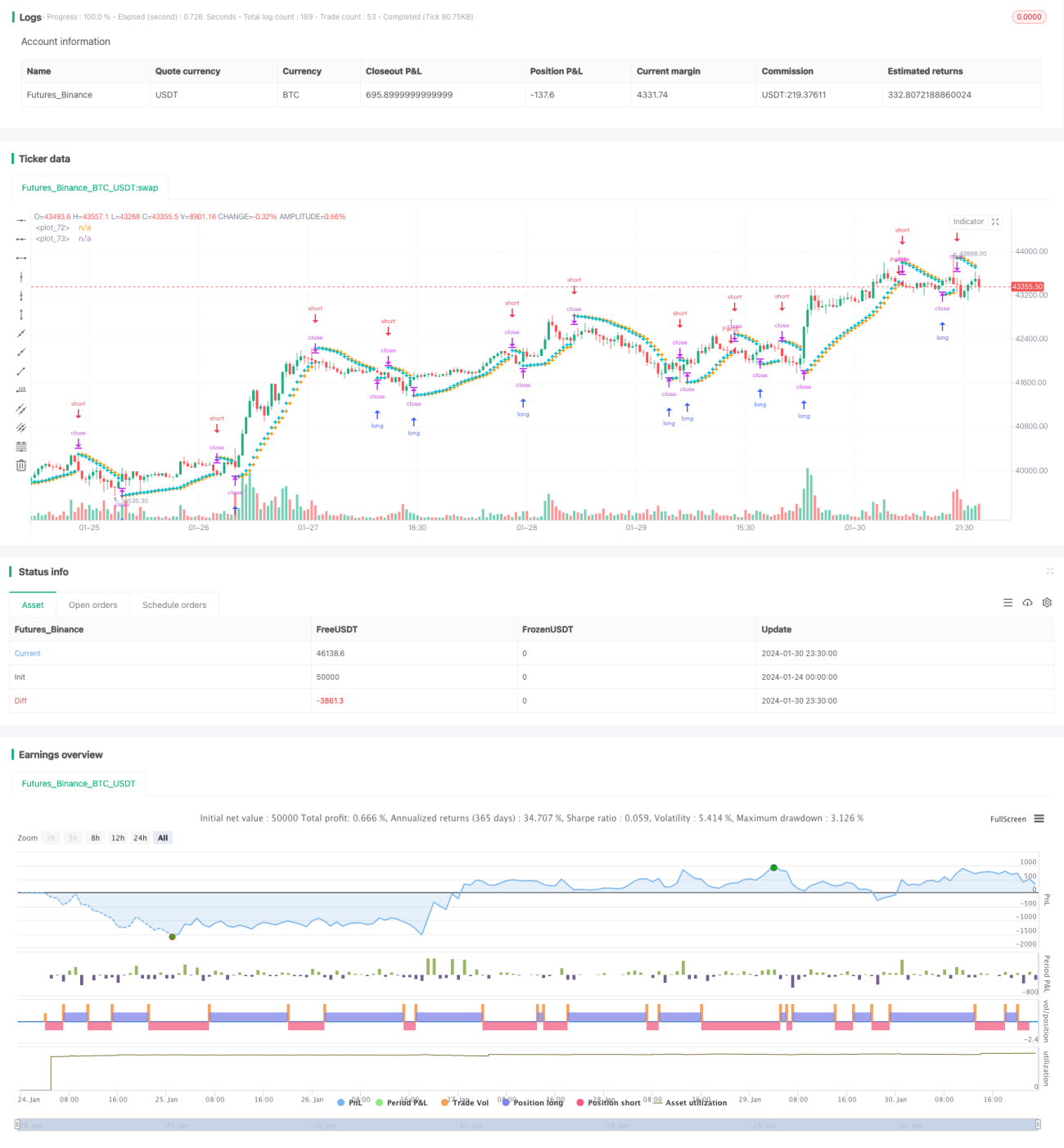
The Parabolic SAR Trend Tracking Stop Loss Reversal Strategy is a strategy that uses the Parabolic SAR indicator to identify trends and enter counter trend positions when the trend reverses. The strategy also incorporates stop loss and take profit mechanisms to control risk.
Strategy Logic
The strategy uses the Parabolic SAR indicator to judge the current market trend. Parabolic SAR stands for "Parabolic Stop and Reverse". Its indicator lines form a series of parabolas on the price chart, and these parabola points represent potential reversal points.
When the SAR points are falling and below the price, it represents a bullish trend; when the SAR points are rising and above the price, it represents a bearish trend. The strategy judges the current trend direction based on the SAR points' location.
Specifically, when SAR points show an uptrend and are above prices, the strategy will go short; when SAR points show a downtrend and are below prices, the strategy will go long. That is entering counter trend positions when SAR points indicate trend reversal.
In addition, the strategy also sets stop loss and take profit mechanisms. When going long, it may set a stop loss price to limit losses; at the same time, it may set a take profit price to close positions after reaching a certain target profit. Going short is similar.
Advantage Analysis
The main advantages combining the trend indicator and stop loss/take profit mechanisms are:
- Timely capture reverse trend opportunities for counter trend trading.
- Actively control risks and profits by setting stop loss and take profit.
- Parabolic SAR is a widely used and effective reverse indicator.
- Simple and clear strategy rules, easy to understand and implement.
Risk Analysis
There are also some risks to note for the strategy:
- Parabolic SAR indicator is not perfect, sometimes it generates wrong signals.
- The stop loss and take profit prices need to be set reasonably, otherwise it may stop out or take profit prematurely.
- Trading commissions also affect total profits.
- The new trend after reversal may be short-lived.
These risks can be solved by parameter optimization, using other filter indicators etc.
Optimization Directions
The strategy can be optimized in the following aspects:
- Optimize the Parabolic SAR parameters to find the best combination.
- Try different stop loss and take profit strategies like trailing stop loss.
- Add indicators or conditions to filter reverse trading signals.
- Add position control based on market conditions.
- Adjust parameters for different trading instruments.
Conclusion
In general, this is a rather classical trend tracking stop loss reversal strategy. It identifies trend reversals and also controls risks with stop loss and take profit means. After optimizations it can become a worthwhile strategy for live trading.
- 1