Multi-Indicator Integration and Intelligent Risk Control Quantitative Trading System

Overview
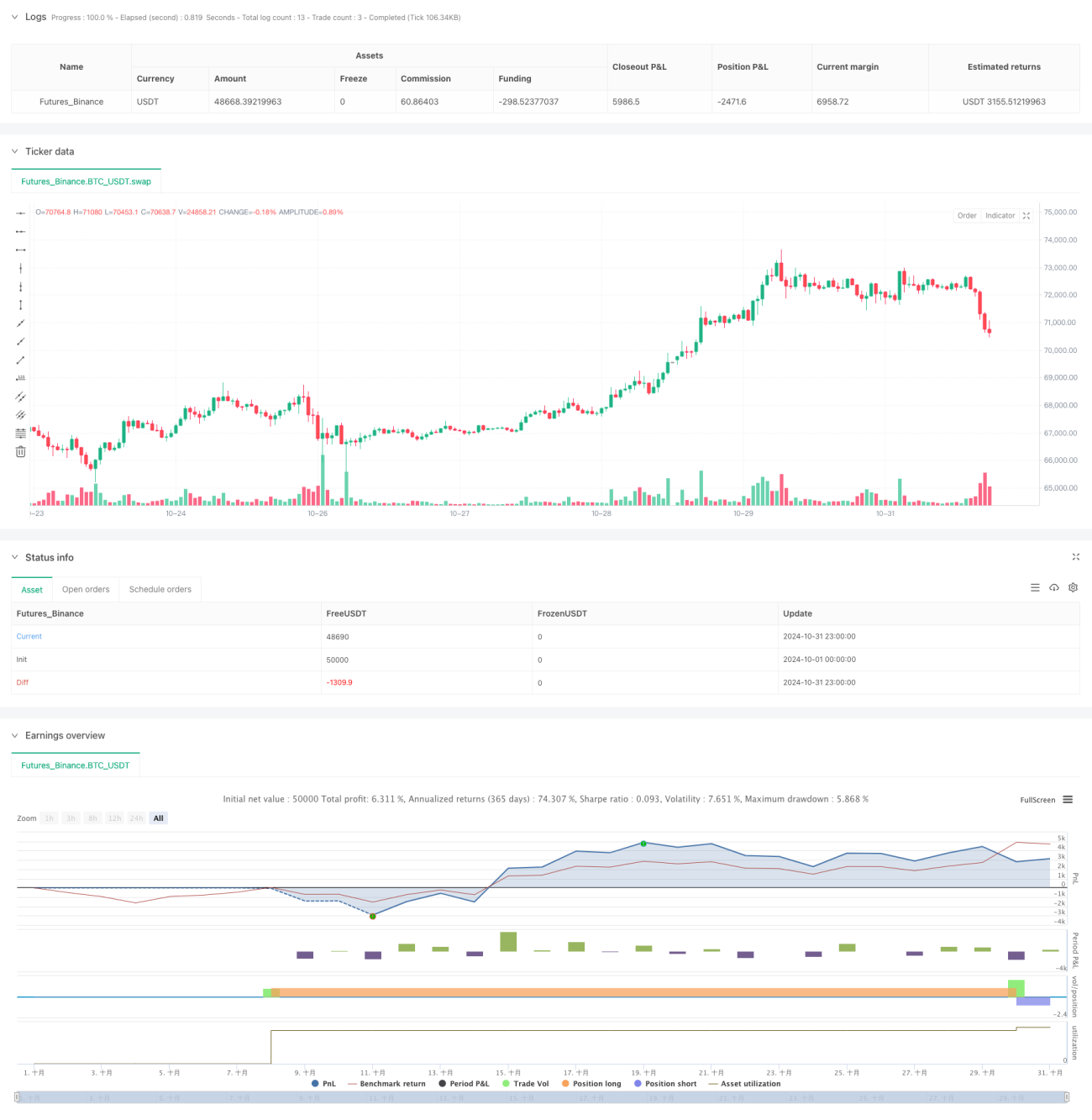
This strategy is a quantitative trading system that combines technical analysis indicators with simulated artificial intelligence. It integrates traditional technical indicators such as EMA and RVI, while incorporating simulated AI signals for trading decisions. The strategy also includes a comprehensive money management and risk control system, protecting capital through stop-loss and take-profit mechanisms.
Strategy Principle
The strategy is built on several core components:
- Uses 20-day and 200-day Exponential Moving Averages (EMA) to determine market trends
- Employs Relative Volatility Index (RVI) to evaluate market volatility
- Incorporates simulated AI signals for decision support
- Implements fixed capital allocation with 200 units per trade
- Sets 2% stop-loss and 4% take-profit for risk control
Buy signals are generated when EMA20 crosses above EMA200 with positive RVI; sell signals occur when EMA20 crosses below EMA200 with negative RVI.
Strategy Advantages
- Multi-dimensional signal confirmation improves trading accuracy
- Comprehensive risk control system effectively manages drawdowns
- Fixed capital allocation plan facilitates money management
- Integration of AI simulation signals enhances strategy adaptability
- Adjustable parameters provide good flexibility
Strategy Risks
- EMA indicators may generate false signals in ranging markets
- Fixed stop-loss percentage may not suit all market conditions
- Random nature of simulated AI signals may affect strategy stability
- Fixed capital allocation might miss opportunities in strong trends
Optimization Directions
- Introduce additional technical indicators for signal filtering
- Develop adaptive stop-loss and take-profit mechanisms
- Optimize money management with dynamic position sizing
- Improve AI simulation algorithm for better signal quality
- Add market condition recognition mechanisms
Summary
The strategy constructs a relatively complete trading system by combining traditional technical analysis with modern quantitative methods. While certain risks exist, continuous optimization and improvement should lead to better trading results. Thorough backtesting is recommended before live trading.
- 1