
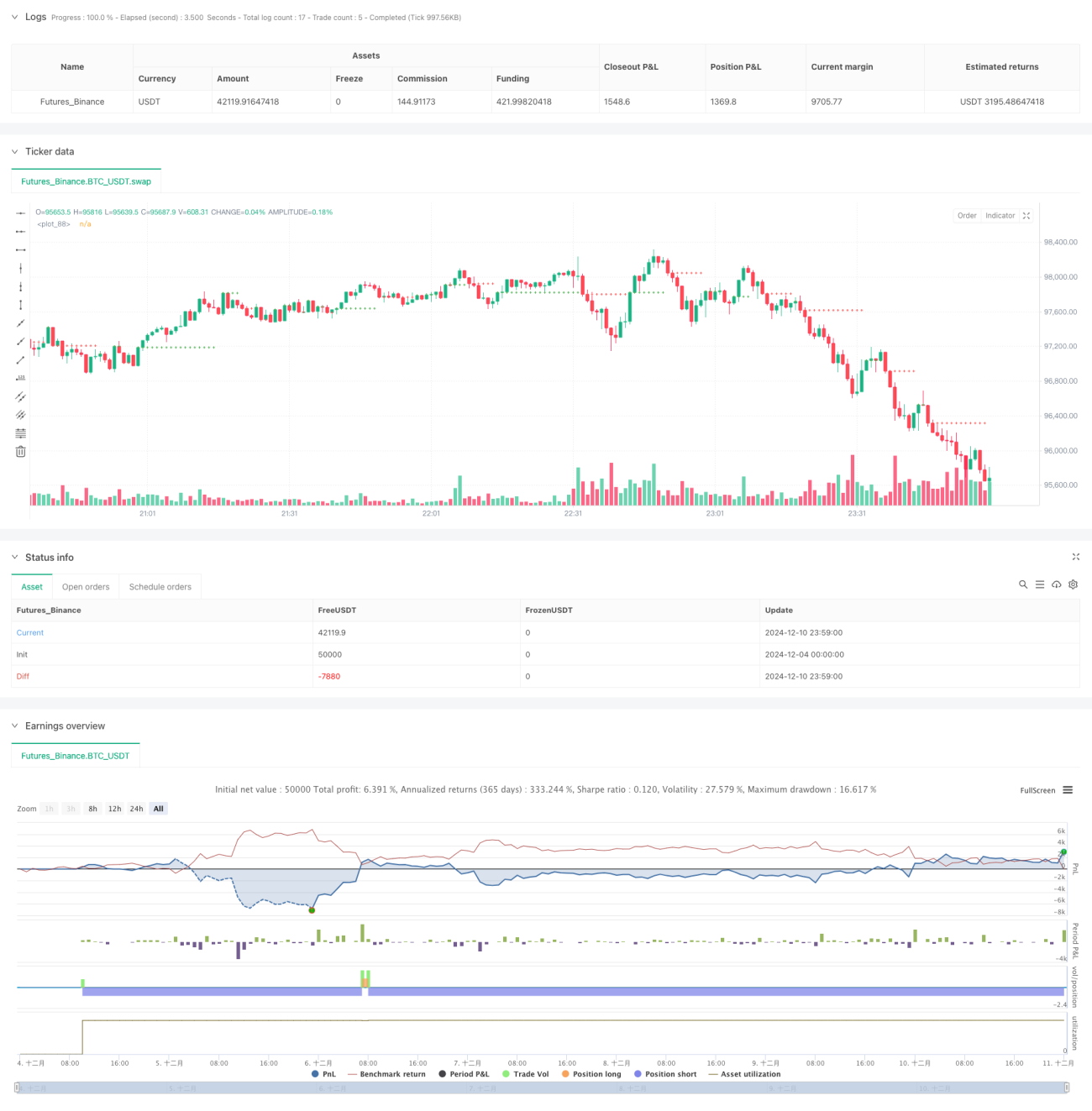
Overview
This strategy is a dynamic grid trading system based on the TTM indicator, which determines market trend direction by calculating exponential moving averages (EMAs) of highs and lows, and deploys a grid trading system around a dynamically updated base price. The grid's direction and price levels adjust according to the trend, executing trades when price crosses predefined grid levels, with each trade risking a fixed percentage of account equity.
Strategy Principles
The core logic lies in TTM state calculation, implemented through the following steps:
- Calculate two EMAs based on ttmPeriod parameter: EMA of lows (lowMA) and highs (highMA)
- Define two threshold levels between highMA and lowMA:
- lowThird: 1/3 position from bottom
- highThird: 2/3 position from bottom
- Determine TTM state based on closing price position relative to these thresholds:
- Returns 1 (uptrend) when close is above highThird
- Returns 0 (downtrend) when close is below lowThird
- Returns -1 (neutral state) when close is between lowThird and highThird
The grid trading system adjusts dynamically based on TTM state:
- Updates grid base price and direction when TTM state changes
- Calculates buy/sell price levels based on grid direction and spacing
- Executes corresponding buy or sell operations when price breaks through grid levels
Strategy Advantages
- Strong Dynamic Adaptability: Strategy can dynamically adjust grid direction and price levels based on market trends, improving adaptability and profitability
- Robust Risk Control: Uses fixed percentage position sizing, effectively controlling risk exposure per trade
- Good Parameter Adjustability: Key parameters like TTM period, grid levels, and spacing can be optimized for different market conditions
- Clear Execution Mechanism: Trading signals are clear, execution logic is simple and intuitive, facilitating backtesting and live trading
Strategy Risks
- Trend Detection Delay: EMA-based TTM indicator has inherent lag, potentially causing delayed signals at trend turning points
- Sideways Market Risk: Frequent grid direction switches in ranging markets may lead to overtrading and excessive fees
- Capital Management Pressure: Running multiple grid levels simultaneously requires substantial capital, potentially affecting strategy feasibility
- Slippage Impact: High-frequency grid trading may face significant slippage in low liquidity conditions, affecting strategy performance
Strategy Optimization Directions
- Trend Detection Optimization:
- Incorporate multiple timeframe analysis to improve trend detection accuracy
- Combine with other technical indicators like RSI, MACD for trend confirmation
- Grid Parameter Optimization:
- Dynamically adjust grid spacing based on volatility
- Implement adaptive grid level adjustment mechanism
- Capital Management Improvement:
- Implement dynamic position allocation
- Add risk parity mechanism
- Execution Mechanism Enhancement:
- Add stop-loss and take-profit mechanisms
- Optimize order execution timing
Summary
This strategy combines TTM trend detection with dynamic grid trading to create an adaptive, risk-controlled trading system. Through dynamic adjustment of grid direction and price levels, the strategy can effectively adapt to different market environments. While inherent risks exist, through appropriate parameter settings and optimization measures, the strategy demonstrates good practical value and development potential.
- 1