Multi-level ATH Dynamic Tracking Triple-Entry Strategy

Overview
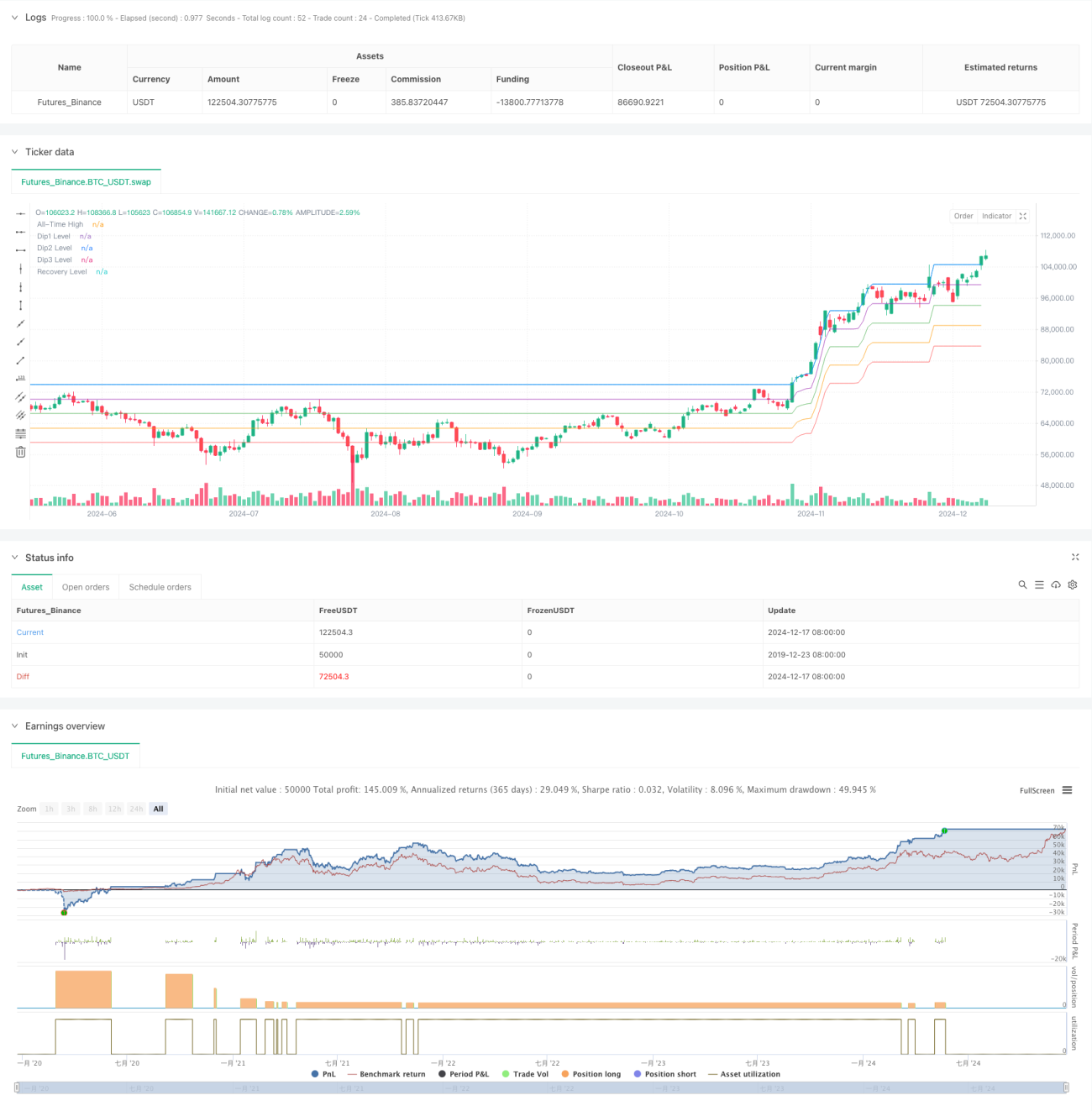
This is a multi-level entry strategy based on dynamic All-Time High (ATH) tracking. The strategy monitors price retracements from ATH, implements batch purchases at different decline levels, and sells all positions when the price approaches ATH. It effectively utilizes market volatility through systematic position building to reduce overall holding costs.
Strategy Principles
The core logic includes the following key elements:
- Dynamic ATH Tracking: Continuously updates historical highs and resets buy markers when new highs are broken
- Three-level Decline Triggers: Sets entry points at 10%, 15%, and 20% retracements
- Fixed Capital Management: Uses the same amount ($1000) for each purchase
- Recovery Exit Mechanism: Closes all positions when price recovers to within 5% of ATH
The strategy uses this progressive position building approach to gradually lower average holding costs during declines and locks in profits through unified exits during market rebounds.
Strategy Advantages
- Risk Diversification: Reduces timing risk through batch position building
- Cost Optimization: Uses larger pullbacks to lower average holding costs
- Trend Following: Dynamic ATH updates ensure operation in uptrends
- Capital Efficiency: Fixed capital allocation ensures controllable fund usage
- Automated Execution: Clear entry/exit conditions facilitate systematic operation
Strategy Risks
- Trend Reversal Risk: May result in consecutive trapped positions in long-term downtrends
- Capital Depletion Risk: May rapidly consume available funds in volatile markets
- Missed Opportunity Risk: Strict entry conditions may cause missing good opportunities
- Exit Timing Risk: Unified exit conditions may not suit all market environments
Recommend managing these risks through maximum drawdown limits and overall position control.
Optimization Directions
- Introduce Trend Filters: Add moving averages or momentum indicators to confirm overall trend
- Optimize Capital Management: Dynamically adjust entry amounts based on volatility
- Improve Exit Mechanism: Add partial exit options to avoid single-price exit risks
- Add Stop-Loss Mechanism: Set absolute stop-loss levels to control maximum risk
- Dynamic Parameter Optimization: Automatically adjust entry levels based on different market cycles
Summary
This strategy effectively utilizes market volatility through systematic batch position building and unified exit mechanisms. Successful strategy operation depends on sufficient market volatility and ultimate upward trends. Through proper risk control and parameter optimization, the strategy can maintain stable performance across different market environments.
- 1