
Overview
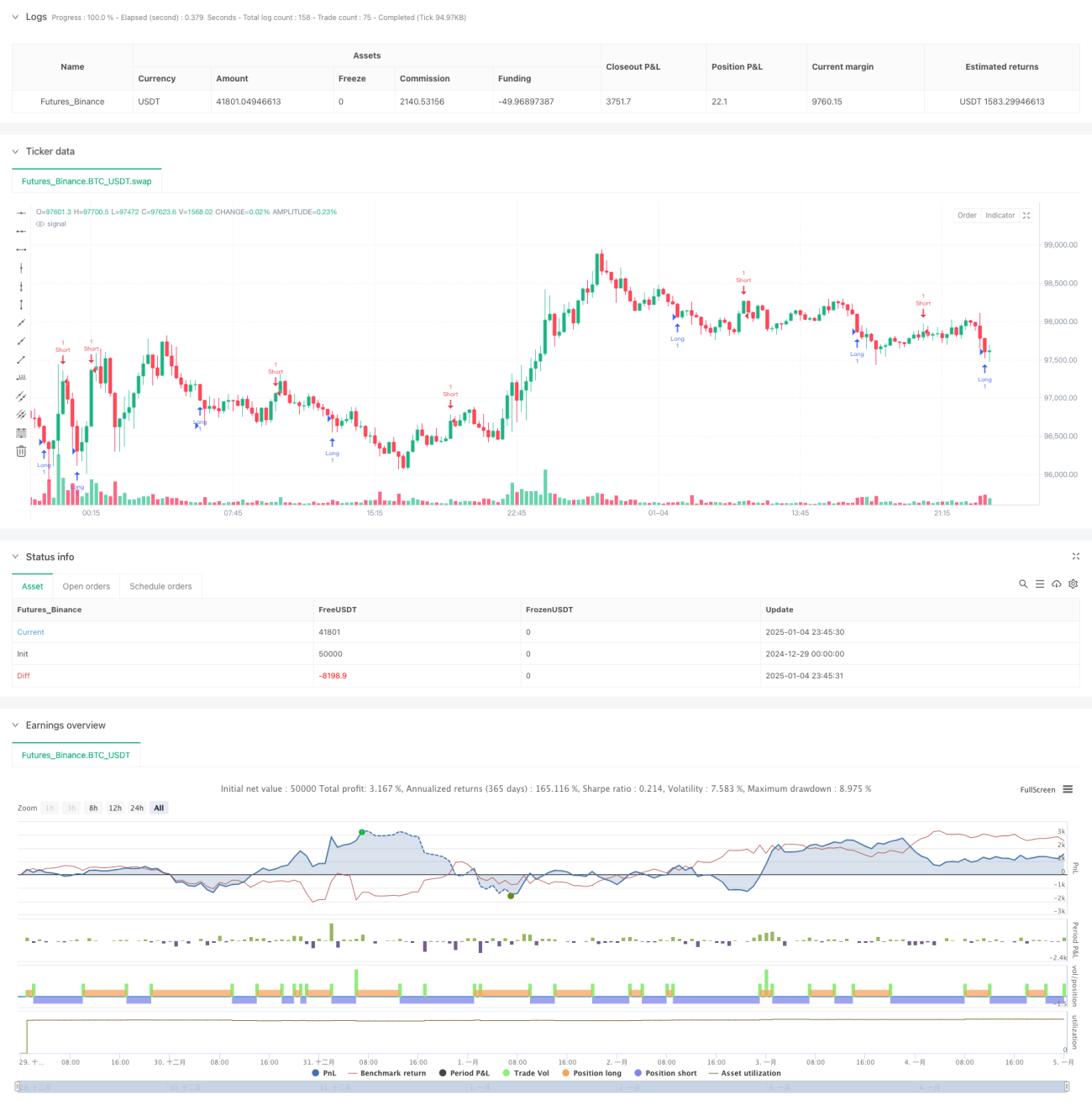
This strategy is a quantitative trading system based on linear signals and Z-score normalization. It constructs standardized trading signals by combining exogenous variables like RSI with price data and triggers trades using thresholds. The strategy is suitable for intraday and high-frequency trading scenarios, offering strong adaptability and configurability.
Strategy Principle
The core principles include several key steps:
- Linear Signal Construction: Uses configurable weights (signal_alpha) to linearly combine RSI indicator with price data to form initial signals.
- Z-Score Normalization: Calculates mean and standard deviation of linear signals based on a lookback period, normalizing signals into Z-scores.
- Threshold Trigger Mechanism: Opens long positions when Z-score falls below negative threshold and short positions when above positive threshold, controlled by risk_adjustment_factor.
- Risk Management: Sets stop-loss and take-profit levels for each trade, with flexible risk-reward ratio adjustment through percentage parameters.
Strategy Advantages
- Signal Standardization: Z-score transformation provides good statistical properties, facilitating universal threshold settings.
- High Flexibility: Can balance influence of exogenous variables and price through signal_alpha adjustment.
- Controlled Risk: Complete stop-loss and take-profit mechanism, configurable based on market characteristics.
- Good Adaptability: Applicable to multiple timeframes, expandable to other highly liquid trading instruments.
Strategy Risks
- Parameter Sensitivity: Strategy performance is sensitive to parameter selection, requiring thorough backtesting.
- Market Environment Dependency: May generate frequent trades in range-bound markets with weak trends.
- Signal Lag: Moving average calculations can introduce lag affecting entry timing.
- Liquidity Risk: High-frequency trading may face slippage losses during low liquidity periods.
Strategy Optimization Directions
- Dynamic Parameter Adjustment: Introduce adaptive mechanisms to dynamically adjust thresholds and stop-loss positions based on market volatility.
- Multiple Signal Confirmation: Add other technical indicators as filtering conditions to improve signal reliability.
- Position Management Optimization: Design dynamic position management system based on volatility and signal strength.
- Transaction Cost Control: Optimize entry and exit logic to reduce costs from frequent trading.
Summary
This is a well-structured and logically rigorous quantitative trading strategy. It builds a robust trading signal system through linear combination and standardization processing. The strategy offers strong configurability and comprehensive risk management but requires attention to parameter optimization and market adaptability. Through the suggested optimization directions, the strategy's stability and profitability can be further enhanced.
- 1