Dynamic Stop-Loss Adjustment Elephant Bar Trend Following Strategy

Overview
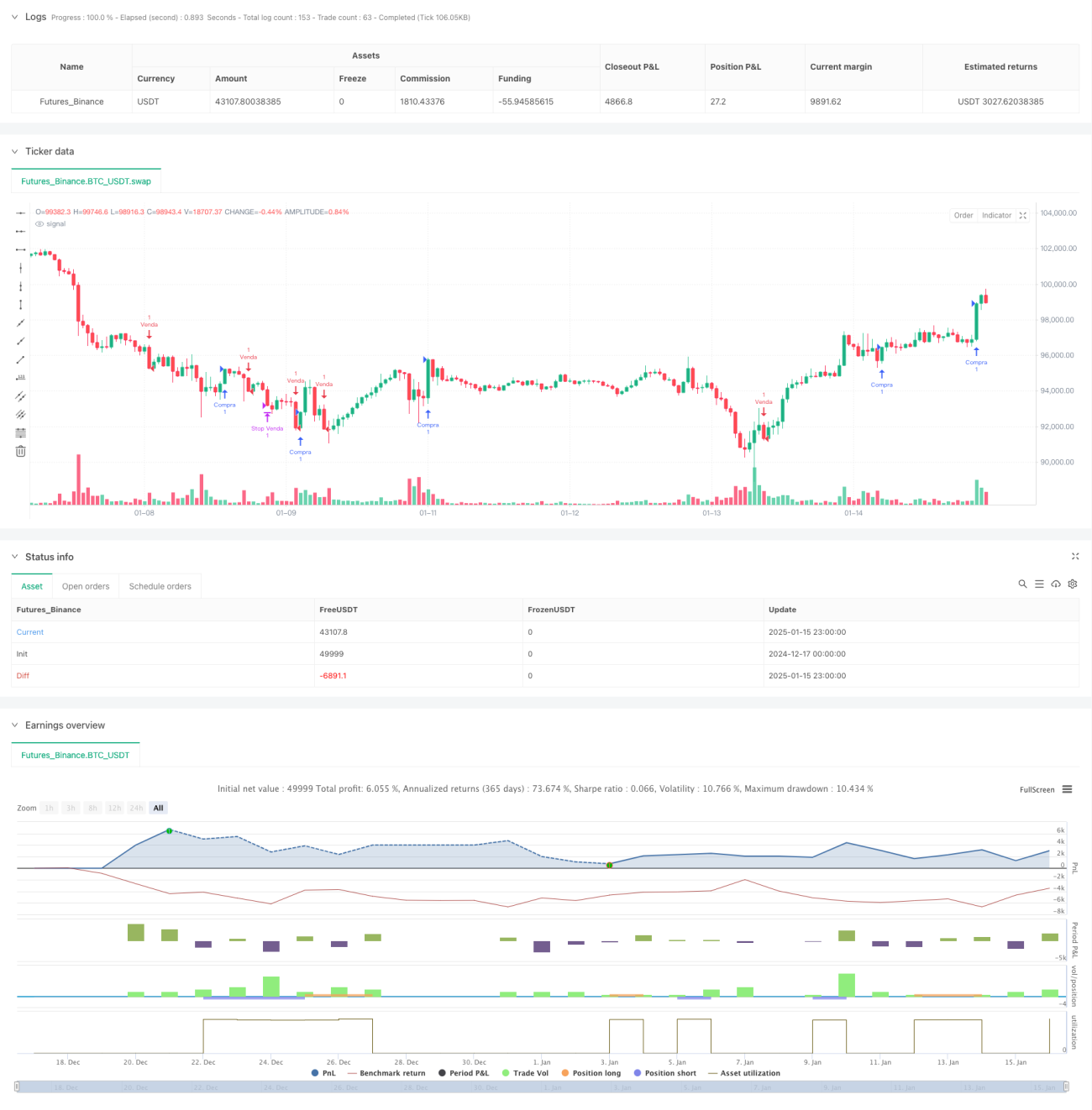
This strategy is a trend following system based on bar pattern recognition, primarily identifying "elephant bars" (price bars significantly larger than average) to capture potential trend initiation points. The strategy's key feature is its dynamic stop-loss adjustment scheme, which adaptively modifies stop-loss positions based on price movement progress, both protecting profits and allowing sufficient price flexibility.
Strategy Principles
The strategy operates based on the following key steps:
- Calculate the average bar size over a specific period as a benchmark
- Identify if the current bar meets "elephant bar" characteristics:
- Bar size significantly exceeds average (configurable multiplier)
- Closing price within specific percentage range of high/low
- Or matches hammer/inverted hammer patterns
- Determine trade direction based on elephant bar direction
- Set initial stop-loss and profit targets
- Dynamically adjust stop-loss as price moves favorably:
- Move stop-loss above cost when reaching 60% target
- Further tighten stop-loss at 80% target
- Significantly tighten stop-loss and adjust profit target at 90% target
Strategy Advantages
- Dynamic risk management: Protects profits while allowing trends to develop through dynamic stop-loss adjustment
- Pattern recognition flexibility: Includes special patterns like hammer lines beyond traditional elephant bars
- Strong parameter adaptability: Key parameters like bar size multiplier and target percentages can be adjusted to market characteristics
- Reasonable risk-reward ratio: Conservative initial stop-loss with dynamic adjustment for larger gains as trends develop
Strategy Risks
- False breakout risk: Elephant bar patterns may produce false breakouts requiring proper filtering conditions
- Ranging market risk: Frequent stop-losses may be triggered in sideways markets
- Stop adjustment risk: Aggressive stop-loss adjustments may lead to premature exits
- Parameter sensitivity: Strategy effectiveness is sensitive to parameter settings, requiring thorough testing
Optimization Directions
- Enhanced market environment filtering:
- Add trend indicators to identify current market conditions
- Apply different parameter settings in different market environments
- Improved stop-loss mechanism:
- Incorporate trailing stops
- Dynamically adjust stop distances based on volatility
- Optimized entry timing:
- Integrate volume indicators
- Add reversal confirmation signals
- Enhanced profit-taking approach:
- Implement partial profit exits
- Dynamically adjust profit targets based on market structure
Summary
The strategy effectively tracks trends through key price pattern identification and dynamic risk management. Its core advantage lies in the adaptive stop-loss management mechanism, which protects profits while maximizing trend opportunities. Further optimization of market environment recognition and risk management mechanisms shows promise for consistent performance across different market conditions.
- 1