Adaptive Trend Following Strategy with Dynamic Take-Profit Using Multiple Technical Indicators

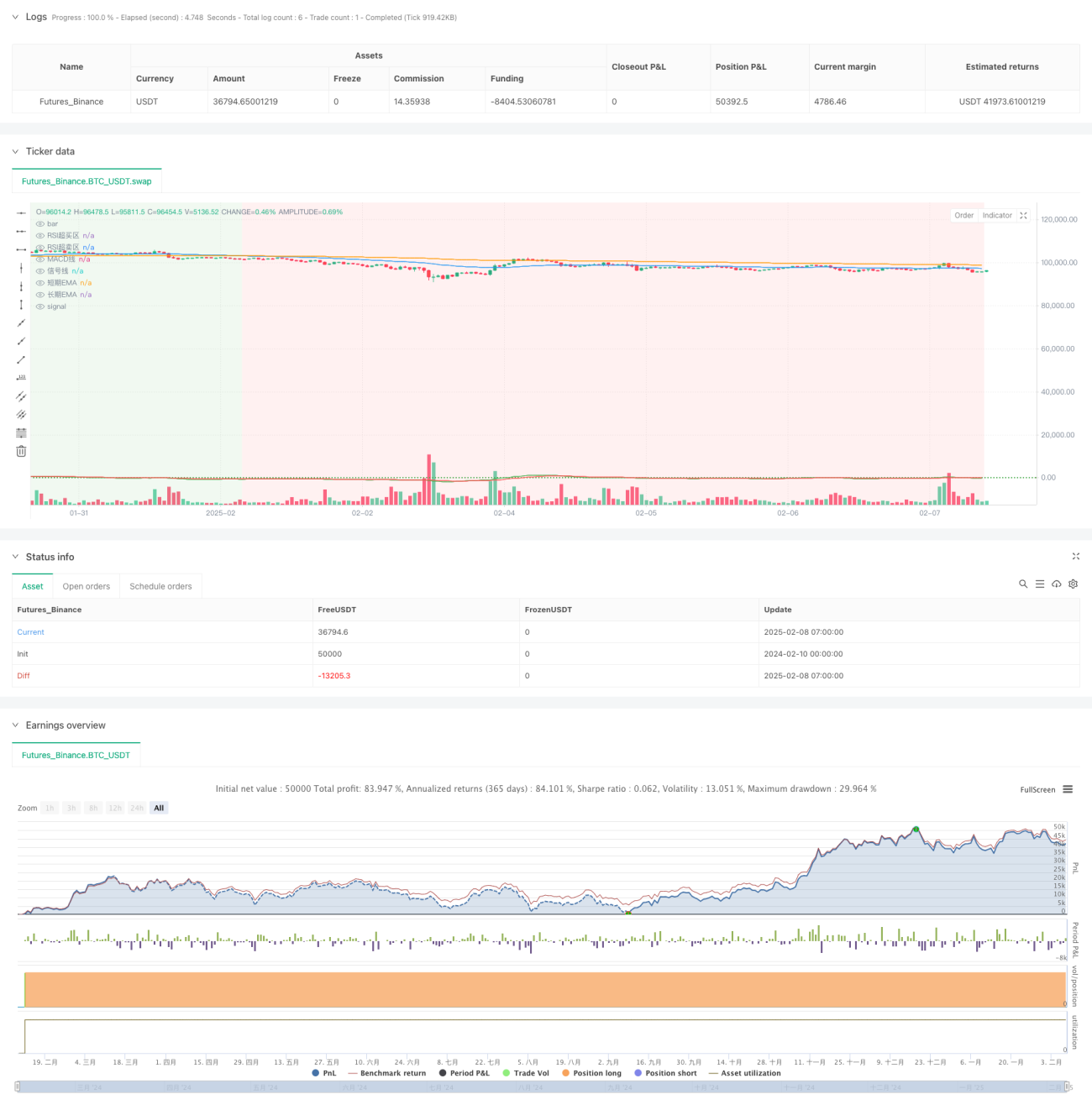
Overview
This strategy is a trend-following trading system that combines Moving Averages (EMA), momentum indicator (MACD), and overbought/oversold indicator (RSI) for signal generation and risk control. The strategy employs a dynamic take-profit mechanism, utilizing multiple technical indicators to assess market conditions and effectively capture trends. It also implements a fixed stop-loss for risk control, creating a balanced and robust trading system.
Strategy Principles
The core logic of the strategy is based on the following aspects:
- Trend Identification: Uses 50-period and 200-period EMA system to determine market trend, with bullish trend confirmed when short-term EMA is above long-term EMA.
- Entry Signals: Combines trend confirmation with MACD golden cross (12,26,9) and RSI(14) not in overbought territory (<70) as long entry conditions.
- Dynamic Take-Profit: Monitors multiple market state indicators for exit timing:
- Trend Reversal: Short-term EMA crosses below long-term EMA or price drops below short-term EMA
- MACD Death Cross: MACD line crosses below signal line
- RSI Overbought Pullback: RSI exceeds 70 and starts declining
- Risk Control: Implements fixed stop-loss at 1.5% below entry price.
Strategy Advantages
- Multi-dimensional Signal Confirmation: Combines trend, momentum, and overbought/oversold indicators to enhance signal reliability.
- Flexible Take-Profit Mechanism: Dynamic take-profit avoids premature exits associated with fixed take-profit levels, better capturing trending markets.
- Clear Risk Control: Fixed stop-loss percentage ensures controlled risk for each trade.
- Clear Strategy Logic: Each indicator's role is well-defined, facilitating understanding and optimization.
- High Adaptability: Core logic can be adapted to different trading instruments and timeframes through parameter adjustment.
Strategy Risks
- Choppy Market Risk: Moving average system may generate excessive false signals in ranging markets.
- Lag Risk: Technical indicators have inherent lag, potentially missing optimal entry/exit points in fast-moving markets.
- Parameter Sensitivity: Multiple indicator parameters affect strategy performance, requiring thorough testing.
- Market Environment Dependency: Strategy performs better in trending markets but may underperform in other market conditions.
Strategy Optimization Directions
- Incorporate Volume-Price Indicators: Consider adding volume and money flow indicators to enhance signal reliability.
- Dynamic Parameter Optimization: Dynamically adjust indicator parameters based on market volatility to improve adaptability.
- Enhance Take-Profit Mechanism: Implement multi-level take-profit with different exit conditions at various price levels.
- Add Market Environment Filters: Include volatility and trend strength indicators to assess strategy suitability.
- Optimize Stop-Loss Mechanism: Consider implementing trailing stops or ATR-based dynamic stops for more flexible risk control.
Summary
The strategy combines multiple technical indicators to create a trading system that balances trend following with risk control. The dynamic take-profit mechanism demonstrates deep market understanding, while clear stop-loss settings ensure controlled risk. The strategy framework offers good extensibility, with potential for improved trading performance through further optimization and refinement.
- 1