Multi-Timeframe Trend Following with Stochastic Oscillator Strategy

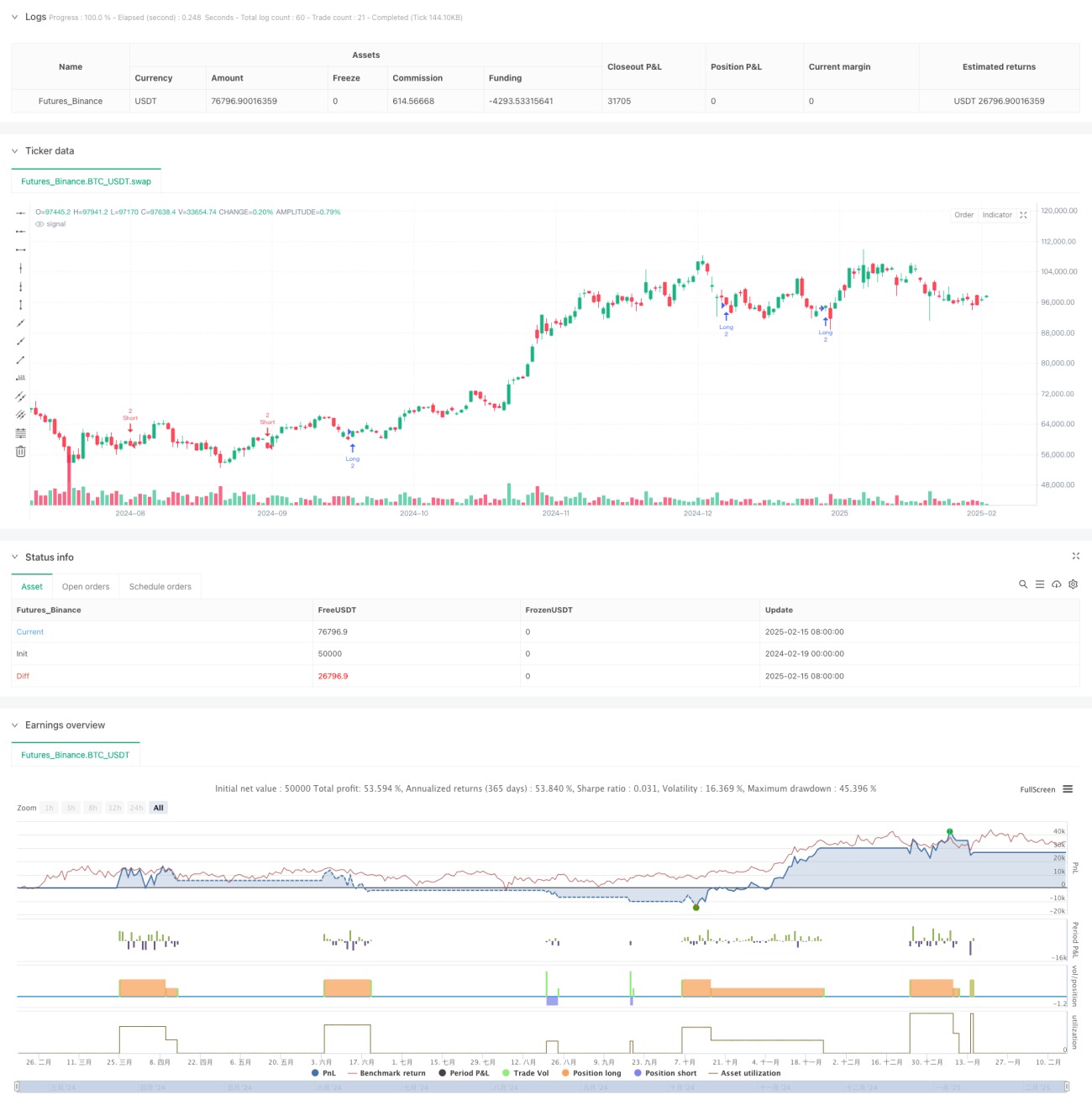
Overview
This strategy is a multi-timeframe trend following trading system that combines Exponential Moving Average (EMA) and Stochastic Oscillator to determine trading direction and entry timing. It confirms trends on the 15-minute timeframe and seeks specific entry opportunities on the 1-5 minute timeframe, optimizing trading performance through strict risk management and scaled profit-taking.
Strategy Principles
The strategy employs a multi-level trade validation mechanism:
- Trend Confirmation: Uses 50-period EMA as a trend direction benchmark, with price above EMA indicating uptrend and below indicating downtrend
- Entry Conditions: After trend confirmation, uses Stochastic Oscillator (14,3,3) to identify oversold/overbought opportunities, entering longs below 30 and shorts above 70
- Position Management: Uses fixed position size of 0.02 units per trade
- Risk Control: Sets stop-loss at 1.5x ATR and moves it to breakeven when price reaches 50% of target
- Profit Taking: Implements two-stage profit-taking, first at 1:1 risk-reward ratio and second at 1.5x target
Strategy Advantages
- Multi-timeframe Analysis Accuracy: Combines higher and lower timeframes to ensure both trend direction accuracy and precise entry timing
- Comprehensive Risk Management: Uses volatility-based dynamic stop-loss to avoid the limitations of fixed stops
- Flexible Profit-taking: Scaled exit strategy allows for both profit protection and participation in larger moves
- Moving Stop-loss Protection: Protects accumulated profits by moving stops to breakeven as price moves favorably
Strategy Risks
- Choppy Market Risk: May generate false signals leading to consecutive losses in range-bound markets
- Slippage Risk: Actual execution prices may significantly deviate from theoretical prices during volatile periods
- Money Management Risk: Fixed position sizing may not suit all account sizes
- Parameter Sensitivity: Strategy performance heavily depends on EMA and Stochastic parameter settings
Strategy Optimization Directions
- Market Environment Filtering: Introduce volatility or trend strength indicators to adjust parameters or suspend trading in different market conditions
- Dynamic Position Sizing: Adjust trade size based on account equity and market volatility
- Entry Condition Enhancement: Add price pattern or additional technical indicator confirmation to improve signal reliability
- Stop/Target Optimization: Implement dynamic risk-reward ratios based on market conditions for more flexible capital management
Summary
This strategy constructs a comprehensive trend following system through multi-timeframe analysis and multiple technical indicators. Its core strengths lie in strict risk management and flexible profit-taking, though practical application requires parameter optimization based on market conditions and account size. Through the suggested optimization directions, the strategy has potential for more stable performance across various market environments.
/*backtest
start: 2024-02-19 00:00:00
end: 2025-02-16 08:00:00
period: 1d
basePeriod: 1d
exchanges: [{"eid":"Futures_Binance","currency":"BTC_USDT"}]
*/

//@version=6
strategy("15-Min Trend Strategy", overlay=true, default_qty_type=strategy.fixed, default_qty_value=1)

// Define EMA for trend confirmation- 1