Multi-Zone MA100 Price Retracement Smart Grid Trading Strategy

Overview
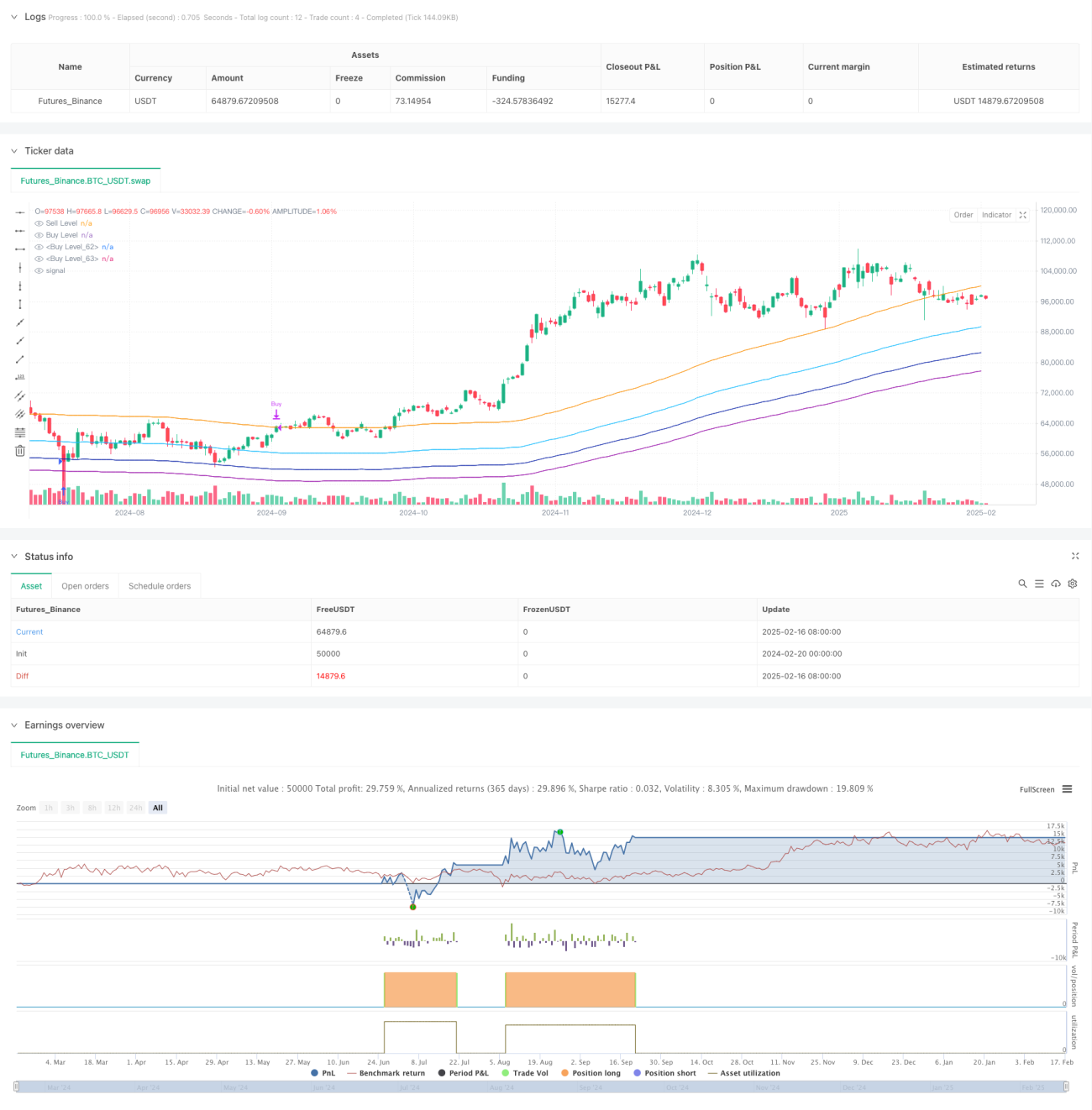
This strategy is a multi-zone grid trading system based on the MA100 moving average. It implements batch position building through different price retracement zones (-8%, -15%, -20%), buying gradually during significant market drops and taking profits when prices bounce back by 3%. The strategy adopts a smart grid approach, controlling risk by limiting the maximum number of positions and trading intervals in each zone.
Strategy Principles
The core logic includes the following aspects:
- Uses 100-period Simple Moving Average (SMA) as the strategy's reference price
- Sets three buying zones:
- Zone 2: 8% price retracement, maximum 2 trades allowed
- Zone 3: 15% price retracement, maximum 3 trades allowed
- Zone 4: 20% price retracement, maximum 4 trades allowed
- Unified closing condition: when price bounces back above 3% of MA100
- Each zone has a minimum trading interval of 50 candle periods to avoid excessive trading
Strategy Advantages
- Multi-zone layered position building reduces entry cost
- Adopts grid trading concept, capable of capturing opportunities in volatile markets
- Maximum position limits and trading intervals effectively control risk
- Simple strategy logic, easy to understand and maintain
- Suitable for high-volatility market environments
- Can be executed automatically without manual intervention
Strategy Risks
- May experience significant drawdowns in persistent downtrends
- Requires substantial capital to support multi-zone position building
- Simple closing conditions might miss larger upward movements
- Doesn't consider overall market trends, may underperform in trending markets
- Fixed percentage parameters may not suit all market conditions
Strategy Optimization Directions
- Introduce trend indicators to adjust strategy parameters in strong trends
- Optimize closing mechanism to dynamically adjust profit targets based on market volatility
- Add risk control module with overall position limits and stop-loss conditions
- Incorporate volatility indicators (like ATR) to dynamically adjust entry zones
- Optimize trading interval mechanism to adjust dynamically based on market conditions
Summary
This strategy achieves batch position building during significant market corrections through multi-zone grid trading, demonstrating good risk resistance. While there are potential risks, stable trading results can be achieved through appropriate parameter settings and risk control measures. Further optimization opportunities mainly lie in incorporating more market-adaptive indicators and improving risk control mechanisms.
- 1