
Overview
This strategy is an advanced trend-following system based on Bollinger Bands breakouts, incorporating multiple technical indicators such as RSI and ADX as filtering conditions, along with ATR-based dynamic stop-loss and trailing profit mechanisms. The strategy employs strict risk management methods and uses multiple indicators in combination to improve trading accuracy and stability.
Strategy Principles
The core logic of the strategy is based on the following key elements:
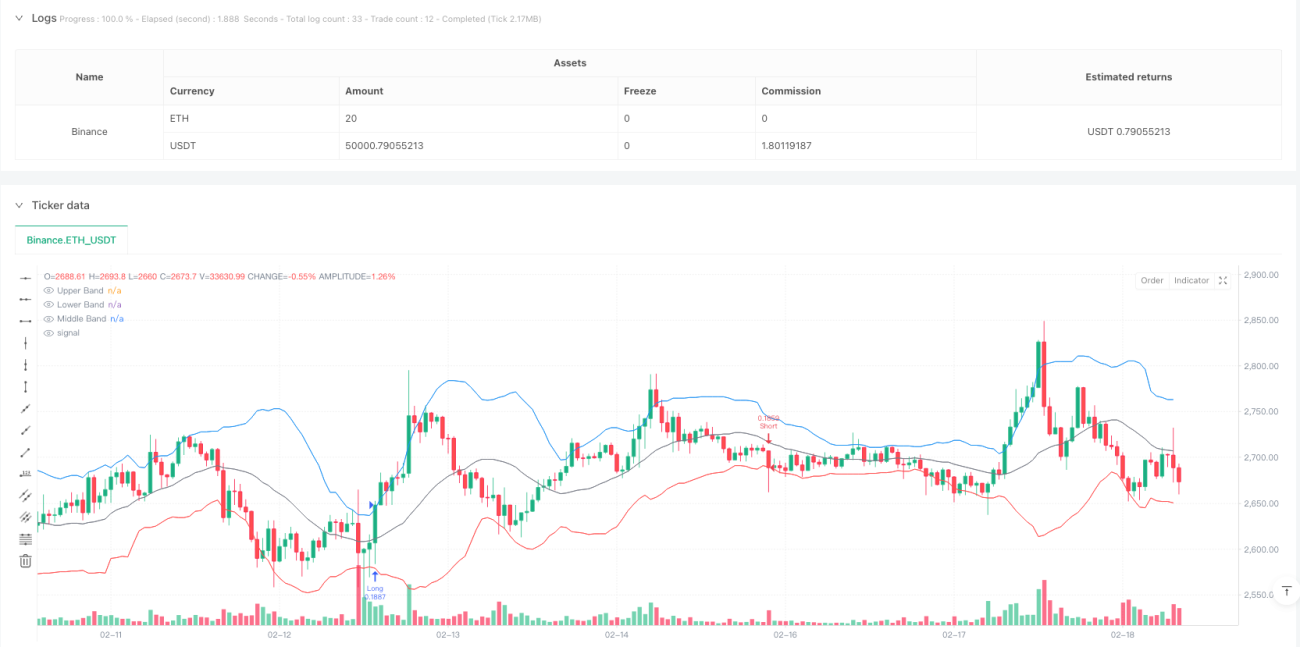
- Uses 20-period Bollinger Bands as the primary trend identification indicator with 2 standard deviations
- Filters false breakouts through RSI(14) neutral zone (40-60)
- Confirms trend strength using manually calculated ADX(14)>25
- Entry signals:
- Long: price breaks above upper band and meets RSI and ADX filtering conditions
- Short: price breaks below lower band and meets RSI and ADX filtering conditions
- Risk management:
- Initial stop-loss set at 1.5 times ATR
- Trailing stop at 1 times ATR
- Trail offset at 0.5 times ATR
Strategy Advantages
- Multiple technical indicators combination improves trading signal reliability
- Dynamic stop-loss and trailing profit mechanisms effectively protect profits
- RSI neutral zone filtering prevents overbought and oversold entries
- ADX filtering ensures trading only in strong trends
- Manually calculated ADX provides more precise trend strength measurement
- ATR-based dynamic position management adapts to different market volatility environments
Strategy Risks
- Multiple filtering conditions may cause missing some potential opportunities
- May generate frequent false breakout signals in ranging markets
- ATR stops might be triggered prematurely during sudden volatility expansion
- Requires significant price movement to generate valid trading signals
- May experience larger drawdowns at trend reversal points
Strategy Optimization Directions
- Introduce adaptive Bollinger Bands period and multiplier
- Dynamically adjust RSI filter zones based on market volatility
- Add volume indicators as additional confirmation
- Develop more intelligent trailing stop algorithms
- Add time filters to avoid trading during major news releases
- Implement volatility-based dynamic position sizing
Summary
This is a well-structured trend-following strategy that enhances trading stability through the synergy of multiple technical indicators. The strategy's risk management system is comprehensive and effectively controls downside risk. While there is room for optimization, the overall design philosophy aligns with modern quantitative trading requirements. The strategy is suitable for markets with higher volatility and is a good choice for traders seeking stable returns.
/*backtest
start: 2025-02-01 00:00:00
end: 2025-02-19 00:00:00
period: 1h
basePeriod: 1m
exchanges: [{"eid":"Binance","currency":"ETH_USDT"}]
*/

//@version=5
strategy("Optimized Bollinger Bands Breakout Strategy", overlay=true, default_qty_type=strategy.percent_of_equity, default_qty_value=1)

// 🎯 Bollinger Bands Settings- 1