Institutional Market Maker Tracking Strategy with Dynamic Cost Averaging and Liquidity Flow Analysis

VWAP CVD DCAA
Created on: 2025-02-20 15:35:17 Modified on: 2025-02-27 17:34:56
Copy: 0 Number of hits: 425
avatar of ianzeng123 ianzeng123
2
Follow
319
Followers

 Institutional Market Maker Tracking Strategy with Dynamic Cost Averaging and Liquidity Flow Analysis  Institutional Market Maker Tracking Strategy with Dynamic Cost Averaging and Liquidity Flow Analysis
Overview

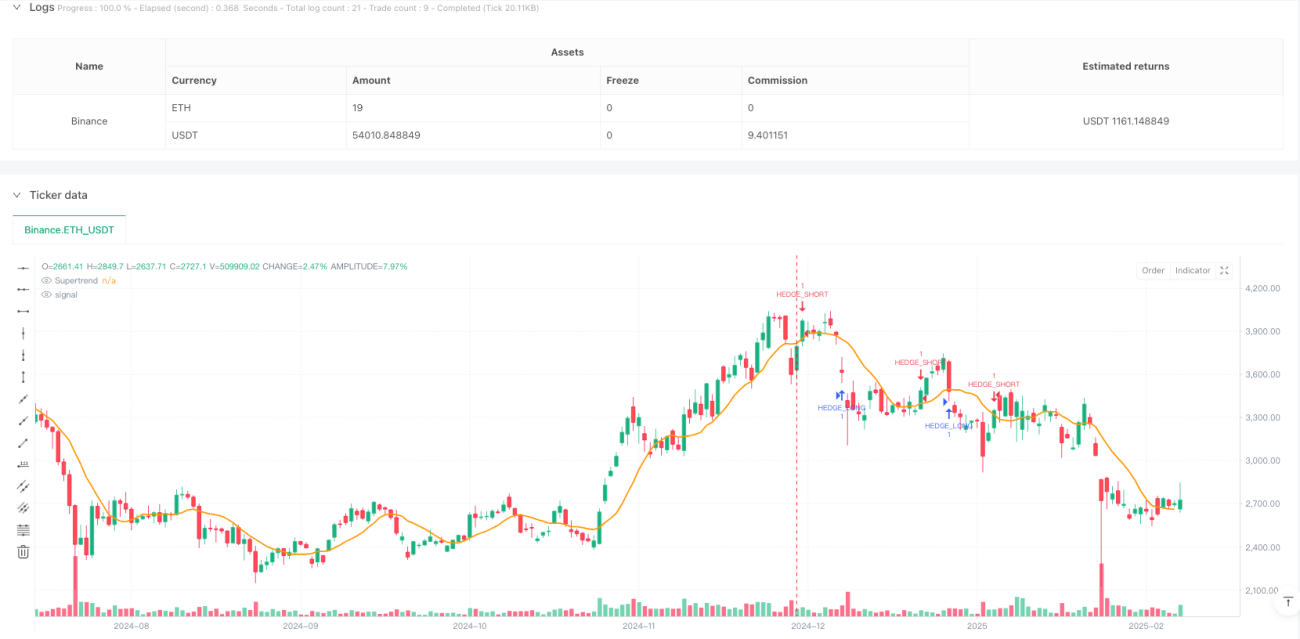
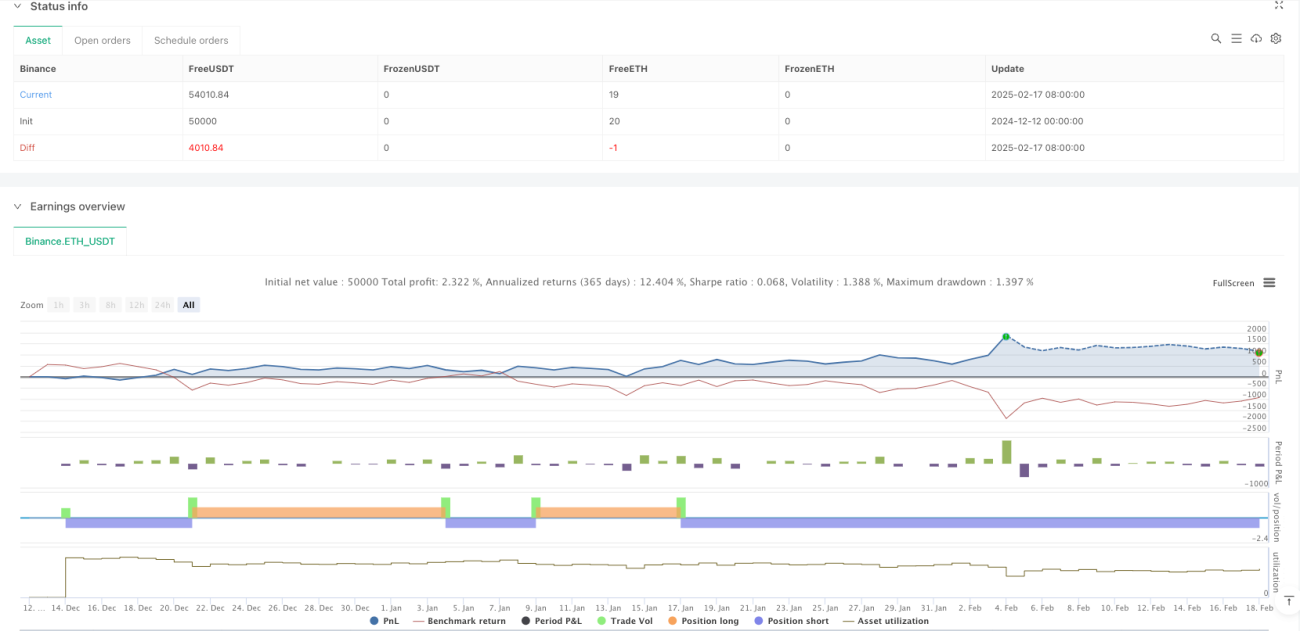
This strategy is a trading system based on market maker behavior and institutional-level liquidity analysis. It identifies high-probability trading opportunities by tracking market liquidity indicators, order book imbalances, and market maker footprints. The strategy combines Dynamic Cost Averaging (DCAA) with a hedge flow system to minimize risks and maximize returns. The system completely abandons traditional technical indicators in favor of institutional-level market microstructure analysis.

Strategy Principles

The core of the strategy is tracking market maker behavior through multi-dimensional data: 1. Using VWAP (Volume Weighted Average Price) to confirm institutional absorption/distribution positions 2. Analyzing CVD (Cumulative Volume Delta) to detect actual strength comparison between bulls and bears 3. Combining order book data to identify liquidity traps and stop-loss hunting zones 4. Implementing dynamic cost averaging method to establish staged position building at key support levels 5. Utilizing a hedging system for risk management during extreme market volatility

Strategy Advantages

  1. Entirely based on market microstructure, avoiding the lag of technical indicators
  2. Ability to predict large price movements in advance through market maker behavior analysis
  3. Dynamic cost averaging system enables gradual position building during downtrends, reducing overall position cost
  4. Hedging system provides additional risk protection, especially during periods of extreme market volatility
  5. Strategy can adapt to market conditions in real-time, not relying on static support/resistance levels

Strategy Risks

  1. Requires high-quality real-time market data, sensitive to data latency
  2. May struggle to accurately judge market maker intentions during extremely low liquidity periods
  3. Over-reliance on market maker behavior analysis may lead to false signals under certain market conditions
  4. Dynamic cost averaging system may accumulate significant losses in continuously declining markets
  5. Hedging strategy costs may erode profits in ranging markets

Optimization Directions

  1. Introduce machine learning algorithms to improve market maker behavior identification accuracy
  2. Optimize capital allocation ratios in the dynamic cost averaging system
  3. Add more market microstructure indicators to enhance signal reliability
  4. Develop adaptive hedge ratio adjustment mechanisms
  5. Establish more comprehensive risk control systems, especially under extreme market conditions

Summary

This is an institutional-grade trading strategy built on market microstructure foundations. Through deep analysis of market maker behavior, combined with dynamic cost averaging and hedging systems, the strategy maintains stability across different market environments. While implementation faces some technical and operational challenges, its core concepts and methodology have solid market microstructure foundations, showing potential for long-term stable profitability.

Strategy source code
/*backtest
start: 2024-12-12 00:00:00
end: 2025-02-18 08:00:00
period: 1d
basePeriod: 1d
exchanges: [{"eid":"Binance","currency":"ETH_USDT"}]
*/

//@version=6
strategy("EDGE Market Maker Strategy – DCAA & HedgeFlow", overlay=true)

// ✅ Import Indicators  
vwapLine = ta.vwap
superTrend = ta.sma(close, 10)  // Replace with actual Supertrend formula if needed
volData = volume // Volume from current timeframe
cvdData = ta.cum(close - close[1]) // Approximation of CVD (Cumulative Volume Delta)
orderBlockHigh = ta.highest(high, 20) // Approximate Order Block Detection
orderBlockLow = ta.lowest(low, 20)

// ✅ Market Maker Buy Conditions  
longCondition = ta.crossover(close, vwapLine) and cvdData > cvdData[1] and volData > volData[1]
if longCondition
    strategy.entry("BUY", strategy.long)

// ✅ Market Maker Sell Conditions  
shortCondition = ta.crossunder(close, vwapLine) and cvdData < cvdData[1] and volData > volData[1]
if shortCondition
    strategy.entry("SELL", strategy.short)

// ✅ Order Block Confirmation (For Stronger Signals)  
longOB = longCondition and close > orderBlockHigh
shortOB = shortCondition and close < orderBlockLow

if longOB
    label.new(bar_index, high, "BUY (Order Block)", color=color.green, textcolor=color.white, style=label.style_label_down)

if shortOB
    label.new(bar_index, low, "SELL (Order Block)", color=color.red, textcolor=color.white, style=label.style_label_up)

// ✅ DCAA Levels – Adaptive Re-Entry Strategy  
dcaaBuy1 = close * 0.97  // First re-entry for long position (3% drop)
dcaaBuy2 = close * 0.94  // Second re-entry for long position (6% drop)
dcaaSell1 = close * 1.03 // First re-entry for short position (3% rise)
dcaaSell2 = close * 1.06 // Second re-entry for short position (6% rise)

if longCondition
    strategy.entry("DCAA_BUY_1", strategy.long, limit=dcaaBuy1)
    strategy.entry("DCAA_BUY_2", strategy.long, limit=dcaaBuy2)

if shortCondition
    strategy.entry("DCAA_SELL_1", strategy.short, limit=dcaaSell1)
    strategy.entry("DCAA_SELL_2", strategy.short, limit=dcaaSell2)

// ✅ HedgeFlow System – Dynamic Hedge Adjustments  
hedgeLong = ta.crossunder(close, superTrend) and cvdData < cvdData[1] and volData > volData[1]
hedgeShort = ta.crossover(close, superTrend) and cvdData > cvdData[1] and volData > volData[1]

if hedgeLong
    strategy.entry("HEDGE_LONG", strategy.long)

if hedgeShort
    strategy.entry("HEDGE_SHORT", strategy.short)

// ✅ Take Profit & Stop Loss  
tpLong = close * 1.05  
tpShort = close * 0.95  
slLong = close * 0.97  
slShort = close * 1.03  

strategy.exit("TP_Long", from_entry="BUY", limit=tpLong, stop=slLong)
strategy.exit("TP_Short", from_entry="SELL", limit=tpShort, stop=slShort)

// ✅ Plot VWAP & Supertrend for Reference  
plot(vwapLine, title="VWAP", color=color.blue, linewidth=2)
plot(superTrend, title="Supertrend", color=color.orange, linewidth=2)