RSI Overbought/Oversold Crossover with Bollinger Bands Dynamic Stop-Loss Strategy

Overview
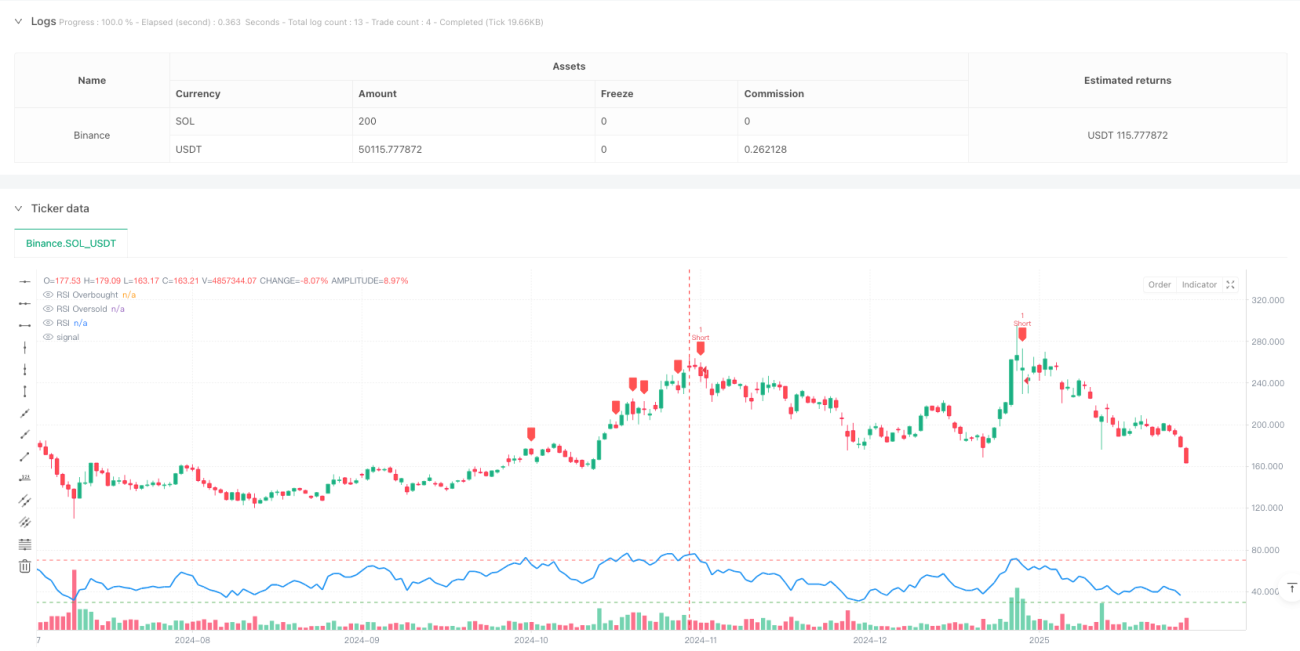
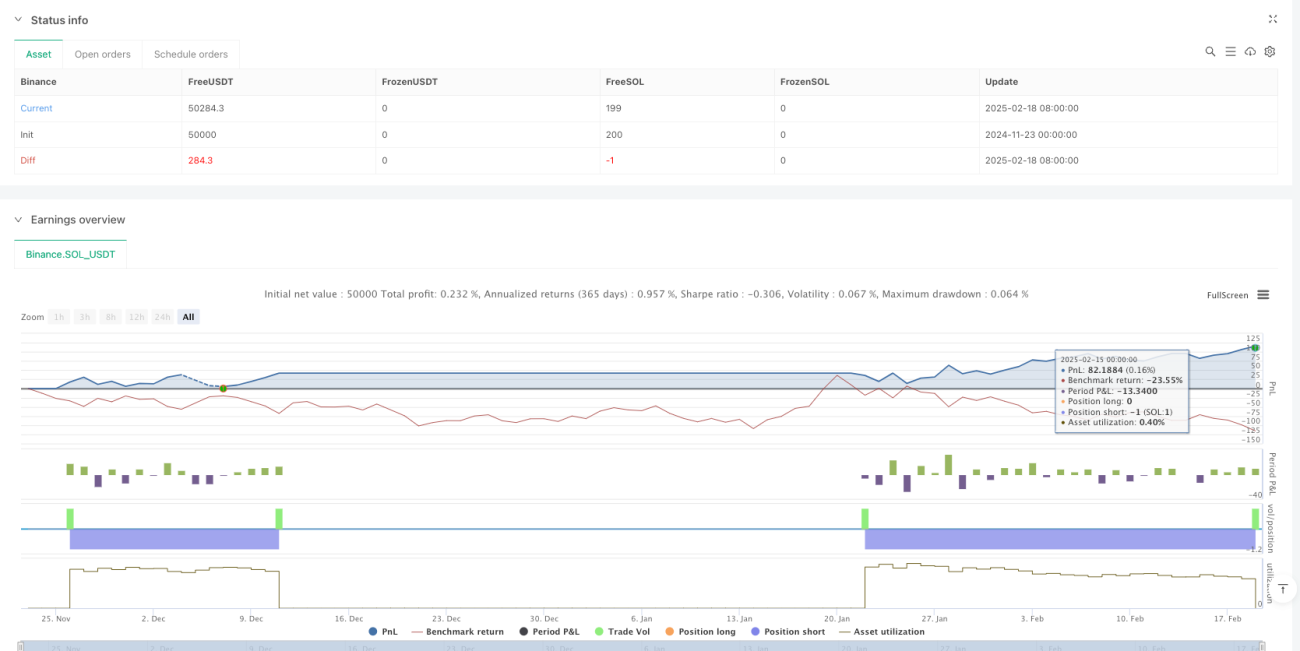
This strategy combines RSI overbought/oversold signals with Bollinger Bands boundaries to create a trading system that manages risk through dynamic stop-loss levels and reward-to-risk ratio-based take-profit levels. The core mechanism triggers trading signals when RSI crosses overbought/oversold levels, enhanced by price position within Bollinger Bands.
Strategy Principles
The strategy operates on several key principles:
- Uses 14-period RSI to measure market overbought/oversold conditions
- Generates long signals when RSI crosses above 30 (oversold)
- Generates short signals when RSI crosses below 70 (overbought)
- Sets long stop-loss based on 10-period low
- Sets short stop-loss based on 10-period high
- Calculates take-profit levels using 2:1 reward-to-risk ratio
- Confirms trade signals using Bollinger Bands position
Strategy Advantages
- Dynamic Risk Management: Strategy adapts to market volatility through dynamic stop-loss and take-profit levels
- Clear Risk-Reward Ratio: Fixed 2:1 ratio promotes consistent long-term profitability
- Multiple Signal Confirmation: Combines RSI and Bollinger Bands for improved signal reliability
- Automated Execution: Eliminates emotional bias through complete automation
- Flexible Parameters: Adjustable RSI and risk management parameters for different market characteristics
Strategy Risks
- False Breakout Risk: RSI crossover signals may generate false breakouts
- Ranging Market Risk: Frequent stop-losses may occur in sideways markets
- Stop-Loss Setting Risk: Fixed-period high/low stops may not suit all market conditions
- Money Management Risk: Fixed risk-reward ratio may be too aggressive in certain markets
- Slippage Risk: Significant price deviation may occur during high volatility periods
Optimization Directions
- Trend Filter Integration: Add moving averages for trend-aligned trading
- Stop-Loss Optimization: Consider ATR for dynamic stop-loss adjustment
- Volume Confirmation: Include volume indicators for signal validation
- Market Environment Classification: Adjust risk-reward ratio based on market conditions
- Time Filtering: Avoid trading during low volatility periods
- Parameter Adaptation: Implement adaptive mechanisms for RSI parameters
Summary
The strategy creates a comprehensive trading system by combining RSI overbought/oversold signals with Bollinger Bands boundaries. Its core strengths lie in dynamic risk management and clear risk-reward ratio settings, though attention must be paid to false breakout risks and changing market conditions. Further improvements can be achieved through trend filtering, stop-loss optimization, and other suggested enhancements.
- 1