Dynamic Supply-Demand Zone Midline Reversal Strategy

Overview
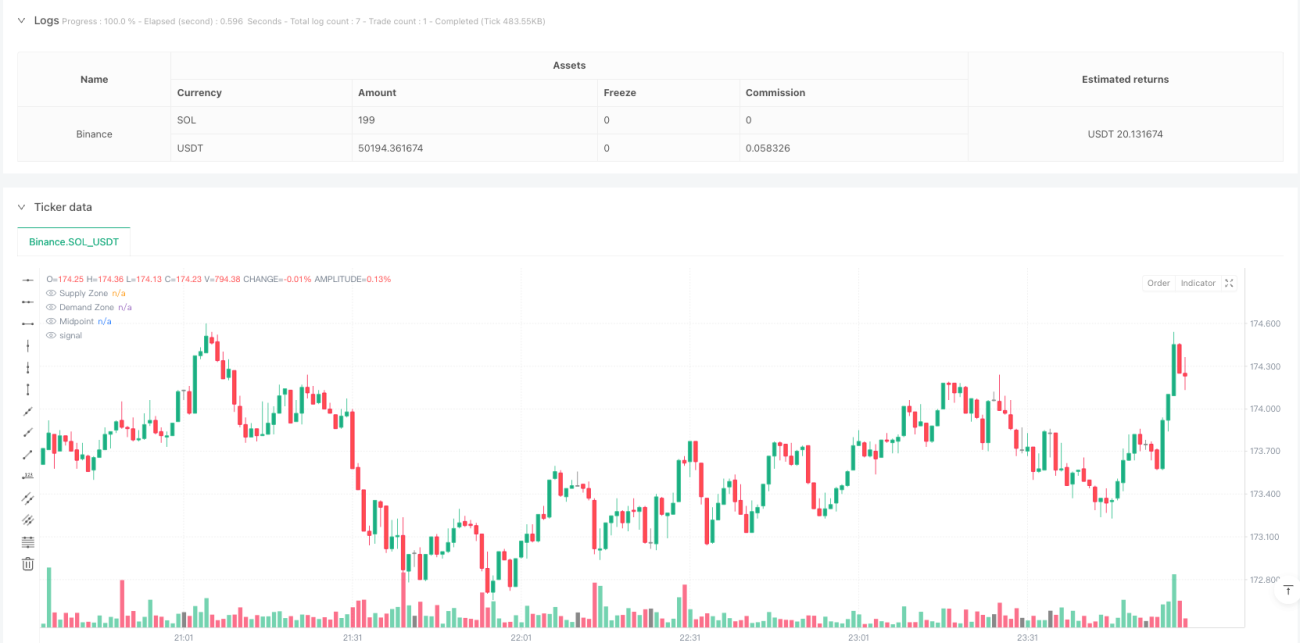
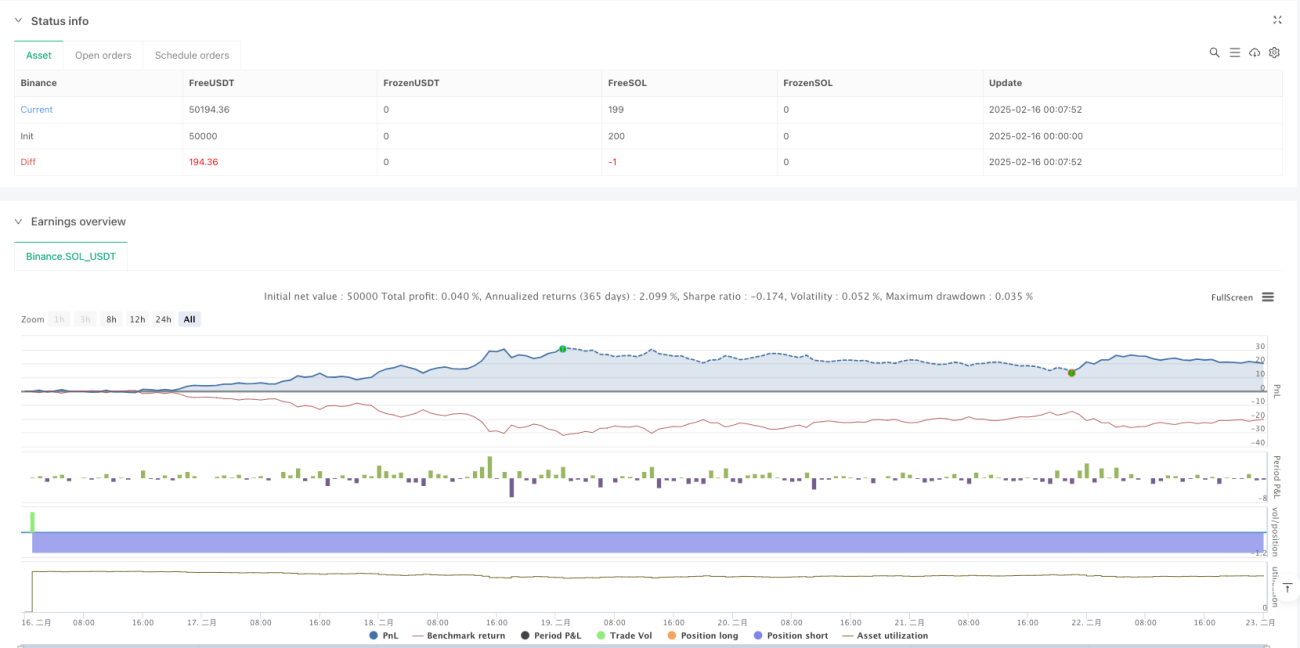
This strategy is a trading system based on supply-demand zones and midline reversal, operating on a 5-minute timeframe. It generates trading signals when price retraces to the midline during trends, with take-profit and stop-loss levels set at pre-identified supply and demand zones. The strategy combines Simple Moving Average (SMA) for trend direction, identifies supply-demand zones through highs and lows, and uses the zone midpoint as a crucial price reference level.
Strategy Principles
The core logic includes several key elements:
- Supply-Demand Zone Identification: Uses user-defined period (default 50) highs and lows to determine supply (resistance) and demand (support) zones
- Midline Calculation: Takes the midpoint of supply-demand zones as a key price reversal reference
- Trend Determination: Employs Simple Moving Average (default 20 periods) to determine current trend direction
- Entry Conditions:
- Long: Price above SMA (uptrend) with bullish candlestick pattern below midpoint
- Short: Price below SMA (downtrend) with bearish candlestick pattern above midpoint
- Take-Profit and Stop-Loss Setup:
- Long: Take-profit at supply zone, stop-loss at demand zone
- Short: Take-profit at demand zone, stop-loss at supply zone
Strategy Advantages
- Clear Logic: Combines trend, price structure, and candlestick patterns into a complete trading system
- Robust Risk Management: Sets profit targets and stops based on market structure
- High Adaptability: Can be adjusted through parameters for different market conditions
- Visual Support: Provides clear visualization of trading signals and key price levels
- High Automation: Clear entry and exit conditions enable fully automated trading
Strategy Risks
- False Breakout Risk: Price may oscillate within supply-demand zones, generating false signals
- Parameter Sensitivity: Different parameter settings may lead to significantly different trading results
- Market Environment Dependency: May underperform in highly volatile or ranging markets
- Slippage Impact: Actual execution prices may deviate significantly from signal prices in less liquid markets
- Overtrading: Frequent zone breakouts may lead to excessive trading
Strategy Optimization Directions
- Signal Filtering:
- Add volume confirmation
- Incorporate volatility indicators for market condition filtering
- Dynamic Parameters:
- Implement adaptive parameter adjustment based on market volatility
- Introduce adaptive moving averages
- Risk Management Enhancement:
- Implement dynamic position sizing
- Add risk-reward ratio filters
- Market Environment Recognition:
- Develop market state classification system
- Use different parameter settings for different market states
Summary
The Dynamic Supply-Demand Zone Midline Reversal Strategy is a trading system that combines multiple dimensions of technical analysis, capturing market opportunities through the interplay of supply-demand zones, trends, and price patterns. Its core strengths lie in its clear logical framework and comprehensive risk management system, but traders need to closely monitor market environment changes and adjust parameters accordingly. Through the suggested optimization directions, the strategy's stability and adaptability can be further enhanced.
- 1