15-Minute Engulfing Breakout Multi-Confirmation Strategy

Overview
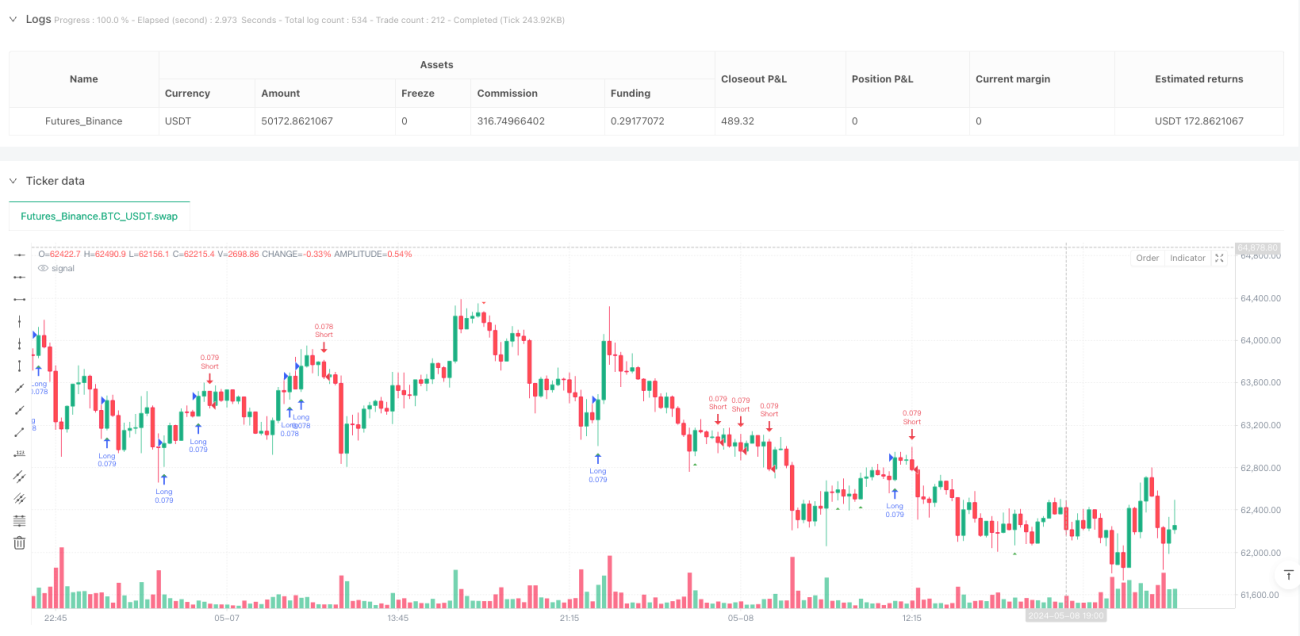
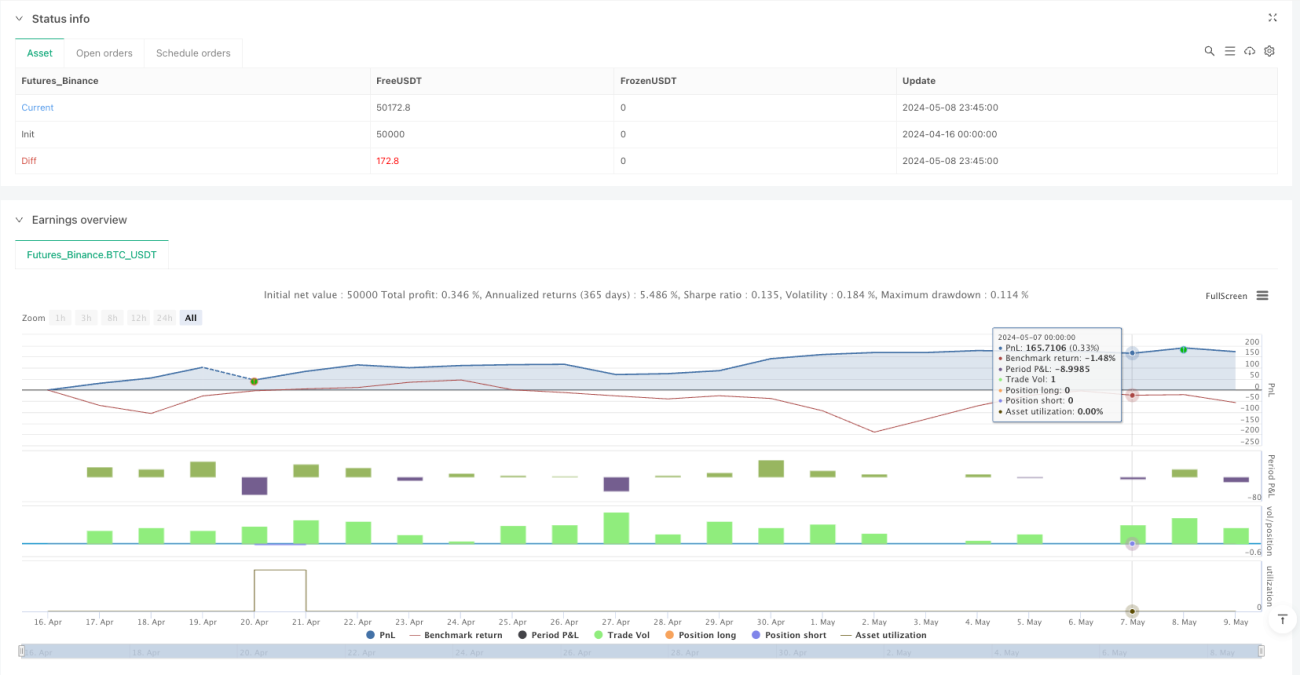
The 15-Minute Engulfing Breakout Multi-Confirmation Strategy is a technical analysis trading system based on price action and candlestick patterns, specifically designed for the 15-minute timeframe. The core of this strategy relies on identifying engulfing patterns combined with multiple confirmation conditions to trigger trading signals, reportedly achieving a win ratio of 76%. The strategy detects both bullish and bearish engulfing patterns, then validates whether the price breaks through at least two previous engulfing pattern levels in the opposite direction, thereby filtering out low-quality signals and improving trade success rates. The strategy also incorporates built-in stop-loss and take-profit mechanisms to effectively control risk and enhance capital management efficiency.
Strategy Principles
The core principles of this Engulfing Breakout Multi-Confirmation Strategy are based on several key technical elements:
-
Engulfing Pattern Recognition:
- Bullish Engulfing: Current candle is bullish, previous candle is bearish, with the current candle's opening price below the previous candle's closing price, and the closing price above the previous candle's opening price
- Bearish Engulfing: Current candle is bearish, previous candle is bullish, with the current candle's opening price above the previous candle's closing price, and the closing price below the previous candle's opening price
-
Multi-Confirmation System:
- The strategy stores price levels of the 10 most recent engulfing patterns (bullish engulfing highs and bearish engulfing lows) in arrays
- Trading signals must be confirmed by breaking through at least two previous engulfing pattern price levels in the opposite direction
-
Trading Zone Setup:
- Bullish Signal: When a bullish engulfing pattern is detected and breaks through at least two previous bearish engulfing lows, a buy zone is established
- Bearish Signal: When a bearish engulfing pattern is detected and breaks through at least two previous bullish engulfing highs, a sell zone is established
-
Entry Conditions:
- Long Entry: Price low touches the buy zone high and the closing price is higher than the buy zone low
- Short Entry: Price high touches the sell zone low and the closing price is lower than the sell zone high
-
Risk Management:
- Uses dynamic stop-loss levels based on the engulfing zone, plus additional pip protection (30 times pip size)
- Similarly sets dynamic take-profit levels based on the engulfing zone, ensuring a reasonable risk-reward ratio
Through this multi-layered confirmation mechanism, the strategy can effectively filter market noise and capture high-probability trading opportunities.
Strategy Advantages
After analyzing the code structure and logic, this strategy demonstrates the following significant advantages:
-
Multi-Confirmation Filtering Mechanism: By requiring breakouts through at least two previous engulfing patterns in the opposite direction, it significantly improves signal quality and reduces the risk of losses from false breakouts.
-
Dynamic Trading Zones: Unlike strategies using fixed price levels, this strategy dynamically adjusts trading zones based on real-time price patterns, better adapting to market changes.
-
High Win-Rate Performance: The 76% win rate mentioned in the code comments indicates that the strategy performs consistently on 15-minute charts, far exceeding the average performance of most trading systems.
-
Intelligent Risk Management: By setting stop-loss and take-profit positions related to the trading zone, each trade has a clear exit plan, avoiding the risks of emotional trading.
-
Clear Visualization: By marking engulfing patterns on the chart (triangle markers), traders can intuitively understand the strategy's operating principles and signal generation process.
-
Flexible Capital Management: The strategy uses a default percentage of account equity (10%) for position sizing, which helps maintain consistent risk exposure and supports long-term account growth.
-
Market Direction Adaptability: Since the strategy monitors both bullish and bearish engulfing patterns, it can perform well in both uptrends and downtrends adaptively.
Strategy Risks
Despite its many advantages, through code analysis, we've identified several potential risk points:
-
Rapid Volatility Market Risk: In highly volatile markets, prices may quickly break through the engulfing zone and then reverse, triggering stop-losses. Solution: Consider adjusting stop-loss distances or pausing trading when volatility indicators (such as ATR) are high.
-
Missing Major Trends: Since the strategy resets the corresponding trading zone after each signal trigger (setting it to na), it may miss consecutive opportunities in major trends. Solution: Add a trend filter to maintain directional preference in strong trends.
-
Fixed Capital Management: The strategy sets a fixed equity percentage (10%) for each trade without adjusting position size based on different risk characteristics of trades. Solution: Consider dynamically adjusting position size based on stop-loss distance or market volatility.
-
Pip Setting Optimization: The strategy uses a fixed pip value (30 × pip size) to adjust stop-loss and take-profit positions, which may need adjustment for different trading instruments. Solution: Parameterize the pip size and optimize based on the characteristics of different trading instruments.
-
Drawdown Risk: Consecutive failed trades may lead to significant account drawdowns, especially when market structure changes. Solution: Consider adding overall market health filters or automatically reducing trading size after consecutive losses.
-
Over-Optimization Risk: The code lacks obvious time filters or other market state filters, which may lead to suboptimal performance in certain market states. Solution: Test different market condition filters such as trading session restrictions and volatility filters.
Strategy Optimization Directions
Based on in-depth analysis of the code, this strategy can be optimized in the following directions:
-
Add Trend Filters:
Integrate moving averages, ADX, or other trend indicators to only enter positions when the trend direction aligns with the signal. This can significantly improve the strategy's win rate, as engulfing patterns typically have higher efficacy in the direction of the trend. -
Dynamic Stop-Loss Optimization:
Introduce the ATR indicator to dynamically adjust stop-loss distances rather than using fixed pip multipliers. This method better adapts to market conditions when volatility changes, reducing unnecessary exits due to tight stops. -
Add Trading Time Filters:
Implement trading time window restrictions to avoid low liquidity sessions and major news release times. This can reduce the risks of unexpected gaps and extreme volatility, improving trade quality. -
Integrate Volume Confirmation:
Use volume as an additional confirmation indicator, only confirming entry signals when volume significantly increases. This helps identify genuine market breakouts rather than random fluctuations. -
Develop Pyramid Position Building Functionality:
Allow the strategy to add positions at favorable locations when the trend continues to strengthen, maximizing returns from successful trends. Simultaneously, move stops to breakeven to protect accrued profits. -
Add Market Sentiment Indicators:
Integrate RSI, MACD, or other market sentiment indicators as additional entry confirmation conditions, only entering when these indicators synchronize with price action. This provides additional layers of signal confirmation. -
Develop Adaptive Parameter System:
Create a parameter adaptation mechanism that automatically adjusts key parameters (such as confirmation count, stop-loss distance, etc.) based on recent market performance. This helps the strategy self-optimize as market conditions change.
Summary
The 15-Minute Engulfing Breakout Multi-Confirmation Strategy is an efficient trading system that combines engulfing pattern recognition with multiple price confirmations. By requiring price to break through at least two previous engulfing pattern levels in the opposite direction, the strategy effectively filters out many low-quality signals, significantly improving trade success rates.
The core advantage of the strategy lies in its multi-layered confirmation mechanism and dynamic trading zone settings, allowing it to adapt to different market states while maintaining a high win rate. The built-in risk management system provides a clear risk control framework for each trade through stop-loss and take-profit settings associated with the trading zone.
However, there remains room for optimization, particularly in trend filtering, dynamic stop-loss adjustment, and market state identification. By integrating trend indicators, volatility measurements, and market sentiment indicators, the strategy's robustness and long-term performance can be further enhanced.
For investors looking to trade on medium timeframes (15-minute charts), this strategy provides a rule-based, easy-to-understand trading method with statistical advantages. By understanding and applying the principles behind it, traders can gain a consistent edge in the market.
/*backtest
start: 2024-04-16 00:00:00
end: 2024-05-09 00:00:00
period: 15m
basePeriod: 15m
exchanges: [{"eid":"Futures_Binance","currency":"BTC_USDT"}]
*/

//@version=6
strategy("15Min Engulfing Break Strategy", overlay=true, default_qty_type=strategy.percent_of_equity, default_qty_value=10)

// === INPUTS ===- 1