Pivot-Based Volume-Weighted Breakout/Reversal Strategy

2
Follow
526
Followers
Overview
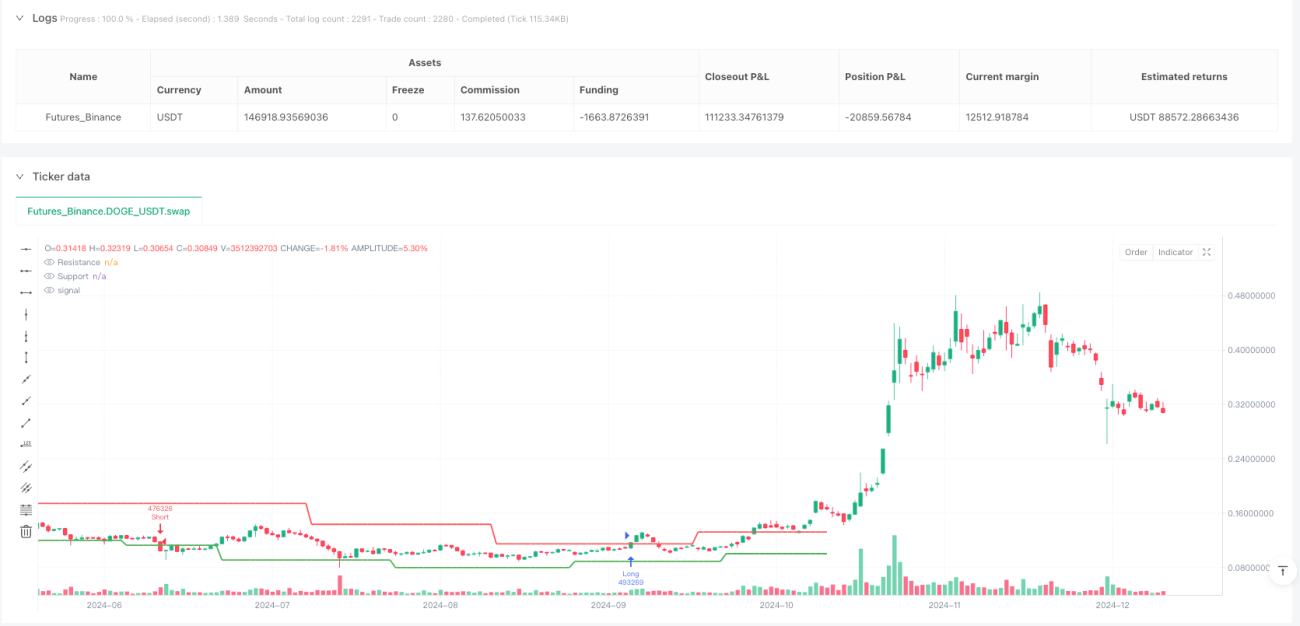
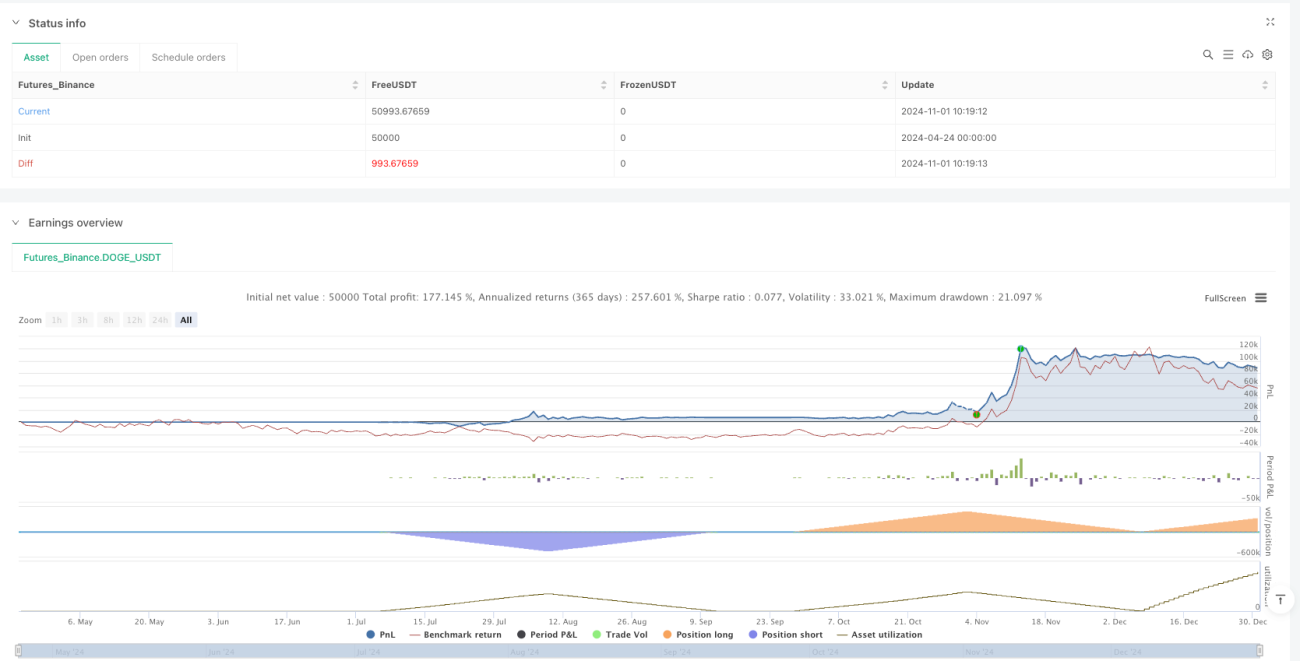
This strategy combines support/resistance (S/R) breakout/reversal, volume filtering, and alert systems to capture key market turning points. It identifies price breakout/reversal signals validated by abnormal volume activity to improve reliability. The strategy employs a fixed 2% stop loss and adjustable take profit (default 3%) for risk management.
Strategy Logic
- S/R Identification: Uses
ta.pivothigh()andta.pivotlow()to detect key price levels within a specified period (pivotLen). Signals trigger when price breaks resistance (upward >1%) or bounces from support (false breakdown recovery). - Volume Filter: Calculates volume SMA (volSmaLength periods). A valid signal requires current volume exceeding SMA by volMultiplier (default 1.5x).
- Long/Short Logic:
- Long Condition: Price breaks resistance (close > resZone*1.01) with high volume, or shows false breakdown near support (±1% range) with volume confirmation.
- Short Condition: Price breaks support (close < supZone*0.99) with high volume, or shows false breakout near resistance (±1% range) with volume confirmation.
- Risk Management: Fixed 2% stop loss and adjustable take profit (default 3%) via
strategy.exit().
Advantages
- Multi-Factor Validation: Combines price structure (S/R), volume, and market behavior (false breaks), significantly reducing false signals.
- Dynamic Adaptation: Auto-updates S/R levels to adapt to market changes.
- Strict Risk Control: Fixed stop loss prevents excessive losses; adjustable take profit suits varying market conditions.
- High Visibility: Real-time S/R plotting and clear signal labels.
- Alert Integration: Compatible with automated trading systems.
Risks
- Range-Bound Risk: Frequent false breakouts in choppy markets. Solution: Add trend filters like ADX or EMA.
- Parameter Sensitivity: pivotLen and volMultiplier require market-specific tuning. Solution: Parameter optimization and Walk-Forward testing.
- Volume Lag: Abnormal volume may follow price moves. Solution: Incorporate order book data or reduce volSmaLength.
- Gap Risk: Opening gaps may skip stop levels. Solution: Use limit orders or avoid high-volatility sessions.
Optimization Directions
- Trend Filtering: Add ADX>25 or 200EMA direction filters to avoid counter-trend trades.
- Dynamic Parameters: Auto-adjust pivotLen and volMultiplier based on volatility (e.g., ATR).
- Scaled Take Profit: Implement two-tier exits (e.g., close 50% at 2%, trail remainder).
- Machine Learning: Train models to optimize volMultiplier and tpPerc historically.
- Multi-Timeframe Confirmation: Validate signals with higher timeframe S/R levels.
Conclusion
This strategy establishes a high-probability framework through triple validation (price position, volume, price action), ideal for capturing early trend phases. Its transparency and controlled risk are key strengths, though range-bound performance requires caution. Future enhancements should focus on parameter self-adaptation and trend filtering for greater robustness.
Source
Pine
/*backtest
start: 2024-04-24 00:00:00
end: 2024-12-31 00:00:00
period: 1d
basePeriod: 1d
exchanges: [{"eid":"Futures_Binance","currency":"DOGE_USDT"}]
*/

//@version=5
strategy("S/R Breakout/Reversal + Volume + Alerts", overlay=true, default_qty_type=strategy.percent_of_equity, default_qty_value=100)

// === INPUTS ===Strategy parameters
Related strategies
Comment
All comments (0)
No data
- 1