
Overview
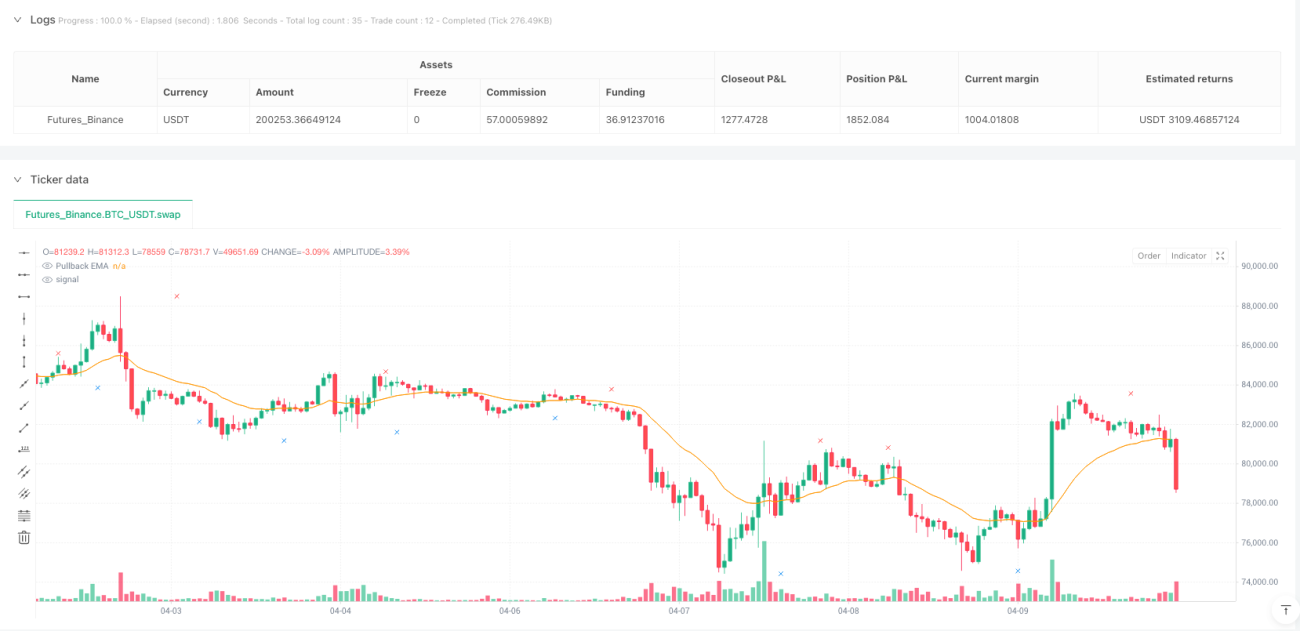
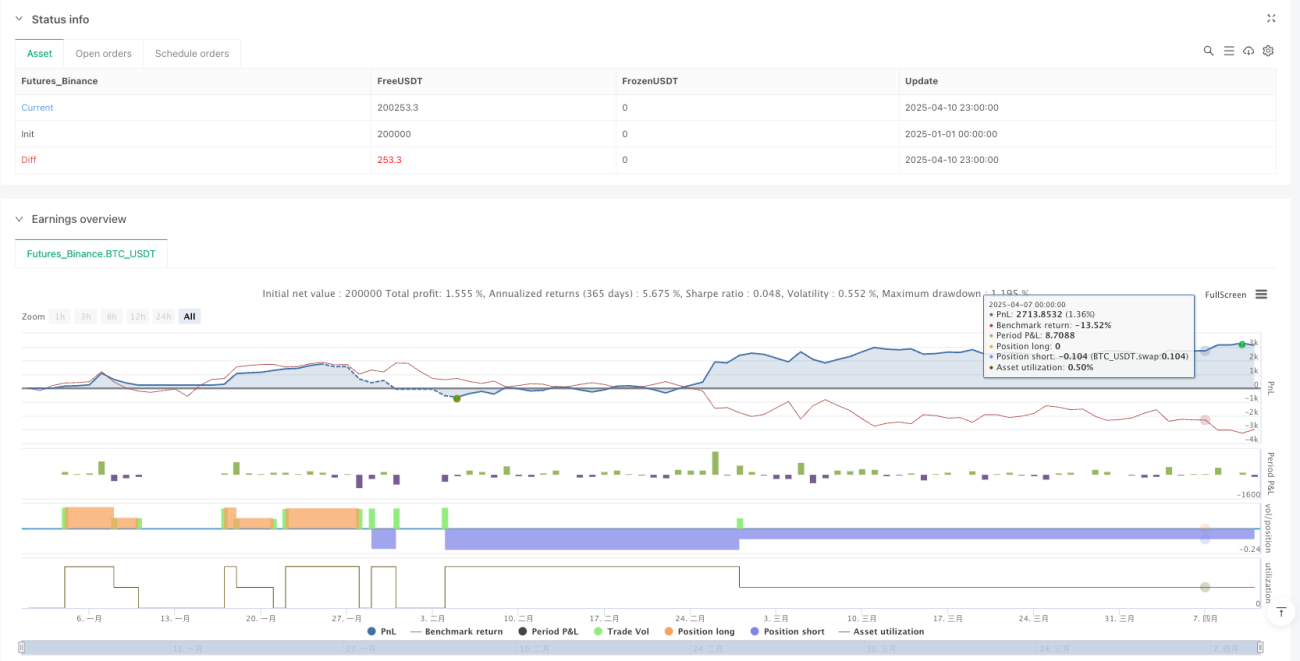
The Trend Pullback Professional Strategy is a trading system based on the core principles of Dow Theory, designed to identify and trade pullbacks within established trends. The strategy uses market structure (pivot highs and lows) to determine trend direction and leverages an Exponential Moving Average (EMA) to pinpoint pullback entry opportunities. To enhance trade quality and avoid ranging markets, an Average Directional Index (ADX) filter is integrated to ensure entries are only taken when the trend has sufficient momentum.
Strategy Principles
The strategy's logic is divided into three key steps:
Step 1: Trend Determination (Dow Theory)
- The primary trend is identified by analyzing recent pivot points
- An Uptrend is confirmed when the strategy detects a pattern of higher highs and higher lows (HH/HL)
- A Downtrend is confirmed by a pattern of lower highs and lower lows (LH/LL)
- If neither pattern is present, the strategy considers the market to be in a range and will not seek trades
Step 2: Entry Signal (Pullback to EMA)
- Once a clear trend is established, the strategy waits for a price correction
- Long Entry: In a confirmed uptrend, a long position is initiated when the price pulls back and crosses under the specified EMA
- Short Entry: In a confirmed downtrend, a short position is initiated when the price rallies and crosses over the EMA
Step 3: Confirmation & Risk Management
- ADX Filter: To ensure the trend is strong enough to trade, an entry signal is only validated if the ADX value is above a user-defined threshold (e.g., 25). This helps filter out weak signals during choppy or consolidating markets
- Stop Loss: The initial Stop Loss is automatically and logically placed at the last market structure point:
- For long trades, it's placed at the
lastPivotLow - For short trades, it's placed at the
lastPivotHigh
- For long trades, it's placed at the
- Take Profit: Two Take Profit levels are calculated based on user-defined Risk-to-Reward (R:R) ratios. The strategy allows for partial profit-taking at the first target (TP1), moving the remainder of the position to the second target (TP2)
Strategy Advantages
After thorough analysis of the code, the following significant advantages can be identified:
-
Market Structure-Based Trend Identification: The strategy uses Dow Theory's core principles by utilizing pivot highs and lows to determine market trends, rather than relying solely on indicators, providing more reliable trend confirmation
-
Objective Entry Conditions: Entry points are determined through clearly defined price-to-EMA crossover relationships, reducing subjective judgment and making trading decisions more consistent and repeatable
-
Dynamic Risk Management: Stop loss positions are automatically set based on market structure rather than using fixed percentages or points, ensuring that stop points are relevant and reasonable to current market conditions
-
Flexible Profit Strategy: Dual take-profit targets allow traders to lock in partial profits when initial targets are reached while maintaining remaining positions to capture larger moves
-
Market Condition Filtering: The ADX filter helps avoid trading in non-trending or weak-trending markets, entering the market only when trend momentum is sufficiently strong
-
High Adaptability: Through adjustable parameters (such as pivot lookback period, EMA length, and ADX threshold), the strategy can adapt to the characteristics of different markets and timeframes
-
Complete Trading Cycle: The strategy handles the full trading cycle from trend identification, entry timing, risk management to exit strategy, providing a comprehensive trading system
Strategy Risks
Despite its sound design, the strategy has several potential risks and limitations:
-
Trend Change Delay: Pivot-based trend identification is inherently lagging and may lead to confirming trend changes only after the trend has already begun to reverse, especially in rapidly changing markets
-
False Pullbacks: In strong trends, price may not pull back deeply enough to reach the EMA level, resulting in missed trading opportunities; conversely, in choppy markets, multiple false pullback signals may occur
-
Over-Filtering: Too high an ADX threshold may cause missed favorable trading opportunities, while too low a threshold may fail to effectively filter weak trend conditions
-
Parameter Sensitivity: Strategy performance is highly sensitive to parameter settings, particularly the pivot lookback period and EMA length, and improper parameter selection may lead to poor strategy performance
-
Market Environment Dependency: The strategy is designed specifically for trending markets and may perform poorly in sideways, ranging, or highly volatile markets
Risk Mitigation Methods:
- Conduct thorough historical backtesting to optimize parameters for specific markets and timeframes
- Consider adding additional filters such as volatility indicators or trend strength confirmation
- Implement adaptive parameters that adjust pivot lookback periods and EMA length based on current market conditions
- Consider modifying the entry mechanism, such as using price approaching the EMA rather than crossing the EMA as a signal
- Add volume confirmation or other market internal structure indicators to improve signal quality
Strategy Optimization Directions
Based on code analysis, the following optimization directions can be proposed:
-
Adaptive Parameters: Implement mechanisms to dynamically adjust pivot lookback periods and EMA length based on market volatility or trend strength, automatically adapting to different market environments
-
Multi-Timeframe Analysis: Integrate higher timeframe trend confirmation to ensure trading in the direction of the larger trend, avoiding counter-trend trading
-
Enhanced Trend Confirmation: Consider integrating other trend confirmation indicators beyond the current HH/HL and LH/LL patterns, such as trendlines, moving average slopes, or momentum indicators
-
Smart Stop Loss Management: Implement trailing stop mechanisms to automatically move stop positions once trades move favorably, protecting profits
-
Market Volatility Adjustment: Adjust risk-reward ratios and stop distances based on current market volatility, adopting more conservative settings in highly volatile markets
-
Volume Confirmation: Add volume analysis to ensure sufficient volume supports important price action turning points, increasing signal reliability
-
Time Filters: Implement time filtering to avoid trading during known low-liquidity or high-volatility periods, such as important news releases or market opening/closing sessions
-
Optimized Partial Profit Mechanism: The current strategy uses a fixed percentage for partial profits; consider implementing more dynamic approaches that adjust partial profit percentages based on market conditions
These optimizations will help improve the strategy's robustness, adaptability, and overall performance, especially across different market environments.
Summary
The Trend Pullback Professional Strategy is a well-structured trading system that combines the fundamental principles of Dow Theory with modern technical analysis tools. By using market structure to determine trends, EMA to identify pullbacks, and an ADX filter to ensure trend strength, the strategy provides a comprehensive framework for identifying high-probability trading opportunities.
The strategy's main advantages lie in its objective market structure-based trend identification, clear entry conditions, and dynamic risk management approach. However, users should be aware of potential risks such as trend identification delays, false pullback signals, and parameter sensitivity.
By implementing the suggested optimizations, such as adaptive parameters, multi-timeframe analysis, and enhanced stop-loss management, the strategy can be further improved to enhance its robustness and performance across different market conditions.
Ultimately, the success of any trading strategy depends on thorough backtesting, continuous monitoring, and adjustments when necessary. Traders should ensure comprehensive testing of the strategy on their preferred financial instruments and timeframes before considering any live application.
//@version=5
strategy("Pullback Pro Dow Strategy v7 (ADX Filter)",
         shorttitle="Pullback Pro v7 ADX",
         overlay=true,
         initial_capital=10000,
         default_qty_type=strategy.percent_of_equity,
         default_qty_value=10,
         commission_type=strategy.commission.percent,
         commission_value=0.04,
         process_orders_on_close=true)

// --- Grouping ---- 1