Opening Range Breakout ATR Trailing Stop Loss Strategy

ATR OR SMC 量化交易 追踪止损 开盘区间突破 风险管理 交易自动化
Created on: 2025-07-31 10:51:36 Modified on: 2025-07-31 10:51:36
Copy: 0 Number of hits: 267
avatar of ianzeng123 ianzeng123
2
Follow
319
Followers

 Opening Range Breakout ATR Trailing Stop Loss Strategy  Opening Range Breakout ATR Trailing Stop Loss Strategy

Strategy Overview

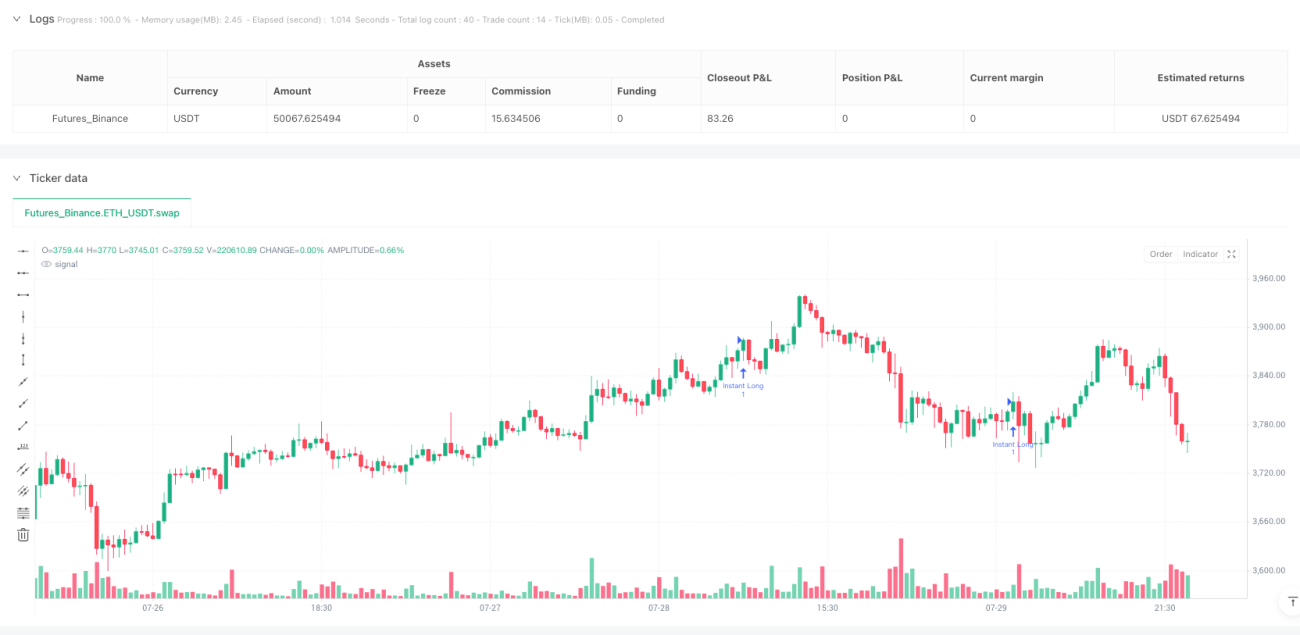
The Opening Range Breakout ATR Trailing Stop Loss Strategy is a quantitative trading system that combines Opening Range Breakout principles with Smart Money Concepts. This strategy focuses on capturing price breakouts from the range formed during the first 5 minutes of the US market opening (09:30-09:35 EST), incorporating multiple filtering conditions to ensure signal quality. The system supports instant or retracement entries, implements a dynamic risk-to-reward adjustment mechanism, and offers an optional ATR (Average True Range) trailing stop loss to optimize profit management. The strategy also features a “second chance” trading functionality, allowing traders to capture reverse breakout opportunities after an initial trade failure, while providing comprehensive visualization tools to help traders better understand market dynamics.

Strategy Principles

The Opening Range Breakout ATR Trailing Stop Loss Strategy’s core logic is built on the significance of the initial price range after market opening. The strategy first captures and records the highest and lowest prices during a specific time window (09:30-09:35 EST), forming the “Opening Range.” Subsequently, the system monitors price breakouts from this range, combining the following key mechanisms to ensure trade quality:

  1. Opening Range Identification and Breakout Validation: The system records price highs and lows within the specified time window, then monitors breakouts. Each breakout must pass through two filtering mechanisms:

    • Candlestick wick percentage filter: Ensures that the upper/lower shadow of the breakout candle does not exceed a specified percentage of the candle body, avoiding false breakouts.
    • Breakout distance filter: Ensures that the breakout magnitude is reasonable, neither too small (avoiding minor breakouts) nor too large (avoiding overextended movements).
  2. Entry Mechanism: The strategy supports two entry methods:

    • Instant entry: Direct entry at the closing price of the same candle that confirms a valid breakout.
    • Retracement entry: Waiting for price to retrace to a specified percentage position of the breakout candle body before entering, typically set at a 50% retracement level.
  3. Stop Loss Setup: The system provides two types of stop loss:

    • Breakout candle stop loss: Setting the stop loss just beyond the extreme point of the breakout candle.
    • Opposite range stop loss: Setting the stop loss beyond the opposite boundary of the opening range, allowing more room for price fluctuation.
  4. Risk Management: The system uses a Risk:Reward Multiplier to automatically calculate take profit positions, implementing dynamic risk management. For example, setting a 2:1 risk-to-reward ratio means the potential profit is twice the potential loss.

  5. ATR Trailing Stop Loss: Once profit reaches a preset risk-to-reward ratio, the system can activate an ATR-based trailing stop loss, locking in partial profits while allowing trends to continue.

  6. Second Chance Trading: When the initial trade triggers a stop loss or fails, the system can automatically look for breakout opportunities in the opposite direction of the opening range, enabling the possibility of bidirectional trading within the same day.

Strategy Advantages

  1. Focus on High-Quality Trading Opportunities: Through multiple validation mechanisms (wick filtering, distance filtering), the strategy significantly reduces false breakout trades, improving win rates.

  2. Flexible Entry Mechanisms: Supporting both instant and retracement entries to adapt to different trading styles and market conditions. Instant entries are suitable for strong trends, while retracement entries can provide more favorable entry prices.

  3. Adaptive Risk Management: Dynamic take-profit settings based on risk-to-reward multipliers ensure that each trade has consistent risk characteristics, achieving standardized capital management.

  4. Profit Maximization: The ATR trailing stop loss feature allows strong market movements to develop while protecting realized profits, avoiding premature exits.

  5. High Visualization: The system provides comprehensive visual aids, including range markers, breakout validation labels, trade status indicators, entry/stop-loss/take-profit markers, enhancing the intuitiveness of trading decisions.

  6. Bias-Free Backtesting Design: The strategy fully adopts barstate.isconfirmed to ensure all decisions are based on confirmed price data, avoiding look-ahead bias and conforming to real trading environments.

  7. Second Chance Mechanism: By enabling the second chance trading feature, the strategy can quickly adapt to market changes when the initial direction judgment is incorrect, capturing reverse opportunities and improving capital utilization efficiency.

  8. Session Management Optimization: Built-in session-end automatic position closing functionality ensures no overnight positions, reducing overnight risk.

Strategy Risks

  1. Range Formation Period Volatility Risk: During the opening range formation period (09:30-09:35), the market may experience abnormal volatility, resulting in ranges that are too wide or too narrow. Excessively wide ranges may lead to large stop losses, while narrow ranges may frequently trigger false breakouts. Solution: Consider adding filtering conditions for opening range size, excluding abnormal ranges; or adjust the trading date filter to avoid specific high-volatility days (such as important economic data release days).

  2. Severe Retracement Risk After Breakout: After a valid breakout, the market may experience severe retracements, causing stop losses to be triggered before the market continues in the original direction. Solution: Consider using more relaxed stop loss settings, such as opposite range stop losses; or adjust the entry mechanism to retracement entry to obtain better entry prices and smaller risk exposure.

  3. Signal Quality Dependence on Filter Settings: The wick filter and distance filter parameters for breakout validation significantly impact signal quality. Inappropriate parameters may filter out good trading opportunities or accept too many low-quality signals. Solution: Optimize filter parameters through historical backtesting to find the best settings for specific markets and instruments; consider using adaptive parameters to dynamically adjust filtering criteria based on market volatility.

  4. Trailing Stop Loss Parameter Sensitivity: ATR trailing stop loss parameters set too tight may lead to premature exits during small retracements, while settings that are too loose may result in excessive profit giveback. Solution: Adjust ATR periods and multipliers based on the historical volatility characteristics of the target instrument; consider implementing partial position closing strategies, with some positions using fixed take profits and others using trailing stops.

  5. Trading Frequency Limitations: The strategy executes a maximum of two trades per day (initial trade and second chance trade), potentially unable to fully utilize all intraday opportunities. Solution: Consider expanding the strategy to monitor important price ranges during other intraday time periods; or combine with other technical indicators to form a composite strategy, increasing trading signal sources.

Strategy Optimization Directions

  1. Adaptive Opening Range Period: The current strategy uses a fixed 5-minute opening range. Consider dynamically adjusting the range duration based on market volatility. In low-volatility markets, the range time could be shortened to 3 minutes, while in high-volatility markets, it could be extended to 10 minutes, better adapting to different market states.

  2. Volume Confirmation Integration: Add volume filtering conditions to the breakout validation mechanism, requiring significantly higher volume during breakouts compared to the average volume of previous periods, enhancing breakout validity. This can be implemented by calculating the ratio of breakout candle volume to the average volume of the previous N periods.

  3. Multi-Timeframe Analysis: Introduce higher timeframe trend direction filtering, only entering when the daily or hourly trend direction aligns with the breakout direction, improving trade win rates. Higher timeframe trends can be determined through simple moving average slopes or more advanced trend indicators.

  4. Optimized Capital Management: Implement a dynamic position sizing adjustment mechanism that automatically adjusts contract quantities based on historical volatility, current account size, and recent performance, achieving more refined risk control. For example, gradually increase positions after consecutive profitable trades and decrease positions after consecutive losses.

  5. Machine Learning Model Integration: Introduce machine learning models to evaluate breakout quality, training models to identify the most likely successful breakout patterns using historical data. Features may include opening range size, market volatility, previous trading day price movements, specific time patterns, etc.

  6. Enhanced Second Chance Trading Logic: Optimize the triggering conditions for second chance trades, considering not only initial trade failures but also market structure changes and emerging momentum indicators, improving the success rate of second trades.

  7. Personalized Instrument Parameters: Develop optimized parameter sets for different trading instruments, taking into account each instrument’s unique volatility characteristics and price behavior. For example, more volatile instruments may require more relaxed filter settings and more conservative risk-reward ratios.

  8. Market Sentiment Indicator Integration: Introduce the VIX index or other market sentiment indicators to adjust strategy parameters or temporarily disable trading during extreme market sentiment periods, avoiding high-uncertainty environments.

Conclusion

The Opening Range Breakout ATR Trailing Stop Loss Strategy is a well-structured quantitative trading system that cleverly combines opening range breakouts, intelligent filtering mechanisms, flexible entry options, and advanced risk management features. This strategy is particularly suitable for intraday trading in US stock and futures markets, achieving profits by capturing directional breakouts after market opening.

The core value of the strategy lies in its multi-layer validation mechanisms and risk management system, significantly reducing false breakout trades through wick and distance filters, while using risk-reward multipliers and ATR trailing stops to ensure consistent risk exposure and profit protection. The second chance trading feature adds adaptability and additional profit opportunities to the strategy.

Despite its numerous advantages, users should note the importance of parameter optimization, as different markets and instruments may require targeted adjustments to achieve optimal results. Simultaneously, traders are advised to use this strategy as part of a complete trading system, in conjunction with broader market analysis and risk management principles.

By implementing the suggested optimization directions, particularly adaptive parameters, multi-timeframe analysis, and enhanced capital management systems, this strategy has the potential to further improve its stability and profitability, becoming a powerful tool in the professional trader’s toolkit.

Strategy source code
/*backtest
start: 2025-07-18 00:00:00
end: 2025-07-30 00:00:00
period: 30m
basePeriod: 30m
exchanges: [{"eid":"Futures_Binance","currency":"ETH_USDT"}]
*/

//@version=5
strategy("Casper SMC 5min ORB - Roboquant AI", overlay=true, default_qty_type=strategy.fixed, default_qty_value=1, max_bars_back=500, calc_on_order_fills=true, calc_on_every_tick=false, initial_capital=50000, currency=currency.USD)

// === STRATEGY SETTINGS ===
// Risk Management
contracts = input.int(1, "Contracts", minval=1, group="Risk Management")
risk_multiplier = input.float(2.0, "Risk:Reward Multiplier", minval=0.5, maxval=10.0, group="Risk Management")
sl_points = input.int(2, "Stop Loss Points Below/Above Breakout Candle", minval=1, group="Risk Management")

// Entry Settings
entry_type = input.string("Instant", "Entry Type", options=["Retracement", "Instant"], group="Entry Settings")
retracement_percent = input.float(50.0, "Retracement % of Breakout Candle Body", minval=10.0, maxval=90.0, group="Entry Settings")

// Stop Loss Settings
sl_type = input.string("Opposite Range", "Stop Loss Type", options=["Breakout Candle", "Opposite Range"], group="Stop Loss Settings")

// Second Chance Trade Settings
enable_second_chance = input.bool(false, "Enable Second Chance Trade", group="Second Chance Trade")
second_chance_info = input.string("If initial SL is hit, allow opposite breakout trade", "Info: Second Chance Logic", group="Second Chance Trade")

// Breakout Filter Settings
use_wick_filter = input.bool(false, "Use Wick Filter", group="Breakout Filter")
max_wick_percent = input.float(50.0, "Max Wick % of Candle Body", minval=10.0, maxval=200.0, group="Breakout Filter")

// Breakout Distance Filters
use_breakout_distance_filter = input.bool(true, "Use Breakout Distance Filter", group="Breakout Distance Filter")
min_breakout_multiplier = input.float(0.1, "Min Breakout Distance (OR Size * X)", minval=0.0, maxval=3.0, group="Breakout Distance Filter")
max_breakout_multiplier = input.float(1.6, "Max Breakout Distance (OR Size * X)", minval=0.5, maxval=5.0, group="Breakout Distance Filter")

// Trailing Stop Loss Settings
use_trailing_sl = input.bool(false, "Use Trailing Stop Loss", group="Trailing Stop Loss")
profit_r_multiplier = input.float(1.0, "Start Trailing After X R Profit", minval=0.5, maxval=5.0, group="Trailing Stop Loss")
atr_length = input.int(14, "ATR Length", minval=1, maxval=50, group="Trailing Stop Loss")
atr_multiplier = input.float(1.0, "ATR Multiplier for Trailing", minval=0.5, maxval=5.0, group="Trailing Stop Loss")

// Session Management
or_start_hour = input.int(9, "Opening Range Start Hour", minval=0, maxval=23, group="Session Management")
or_start_minute = input.int(30, "Opening Range Start Minute", minval=0, maxval=59, group="Session Management")
or_end_minute = input.int(35, "Opening Range End Minute", minval=0, maxval=59, group="Session Management")
session_timezone = input.string("America/New_York", "Session Timezone", group="Session Management")
force_session_close = input.bool(true, "Force Close at Session End", group="Session Management")
session_end_hour = input.int(16, "Session End Hour", minval=0, maxval=23, group="Session Management")
session_end_minute = input.int(0, "Session End Minute", minval=0, maxval=59, group="Session Management")

// Day of Week Trading Filters
trade_monday = input.bool(true, "Trade on Monday", group="Day of Week Filters")
trade_tuesday = input.bool(true, "Trade on Tuesday", group="Day of Week Filters")
trade_wednesday = input.bool(true, "Trade on Wednesday", group="Day of Week Filters")
trade_thursday = input.bool(true, "Trade on Thursday", group="Day of Week Filters")
trade_friday = input.bool(true, "Trade on Friday", group="Day of Week Filters")

// Visual Settings
high_line_color = input.color(color.green, title="Opening Range High Line Color", group="Visual Settings")
low_line_color = input.color(color.red, title="Opening Range Low Line Color", group="Visual Settings")

// Label Control Settings
show_trading_disabled_labels = input.bool(false, "Show Trading Disabled Labels", group="Label Controls")
show_breakout_validation_labels = input.bool(true, "Show Breakout Validation Labels", group="Label Controls")
show_second_chance_labels = input.bool(false, "Show Second Chance Labels", group="Label Controls")
show_trade_status_labels = input.bool(false, "Show Trade Status Labels", group="Label Controls")
show_entry_labels = input.bool(false, "Show Entry Labels", group="Label Controls")
show_sl_tp_labels = input.bool(false, "Show Stop Loss / Take Profit Labels", group="Label Controls")

// === VARIABLES ===
// ATR for trailing stop loss
atr = ta.atr(atr_length)

// === NYSE OPENING RANGE LOGIC ===
// FIXED: Using configurable hour/minute inputs with timezone
current_time = time(timeframe.period, "0000-2400:23456", session_timezone)
current_hour = hour(current_time, session_timezone)
current_minute = minute(current_time, session_timezone)
is_opening_range = current_hour == or_start_hour and current_minute >= or_start_minute and current_minute <= or_end_minute

// Check if we're at the start of a new trading day - FIXED: More reliable detection
is_new_day = ta.change(time("1D"))

// ADDED: Check if trading is allowed on current day of week (using session timezone)
current_day = dayofweek(current_time, session_timezone)
is_trading_day_allowed = (current_day == dayofweek.monday and trade_monday) or (current_day == dayofweek.tuesday and trade_tuesday) or (current_day == dayofweek.wednesday and trade_wednesday) or (current_day == dayofweek.thursday and trade_thursday) or (current_day == dayofweek.friday and trade_friday)

// Variables to store opening range high and low for current day
var float or_high = na
var float or_low = na
var bool lines_drawn = false
var bool breakout_occurred = false
var float breakout_candle_high = na
var float breakout_candle_low = na
var float breakout_price = na
var string breakout_direction = na
var int or_start_bar = na  // ADDED: Store the bar index when opening range starts

// ADDED: Second chance trade variables
var bool first_trade_sl_hit = false
var string first_trade_direction = na
var bool second_chance_available = false
var bool second_trade_taken = false
var bool daily_trades_complete = false  // ADDED: Prevent more than 2 trades per day

// Reset variables at the start of each trading day
if is_new_day
    or_high := na
    or_low := na
    lines_drawn := false
    breakout_occurred := false
    breakout_candle_high := na
    breakout_candle_low := na
    breakout_price := na
    breakout_direction := na
    or_start_bar := na  // ADDED: Reset opening range start bar
    // ADDED: Reset second chance variables
    first_trade_sl_hit := false
    first_trade_direction := na
    second_chance_available := false
    second_trade_taken := false
    daily_trades_complete := false  // ADDED: Reset trade limit

// Capture opening range data during 09:30-09:35 EST
if is_opening_range
    if na(or_high) or na(or_low)
        or_high := high
        or_low := low
        or_start_bar := bar_index  // ADDED: Store the bar index when opening range starts
    else
        or_high := math.max(or_high, high)
        or_low := math.min(or_low, low)

// Draw lines when we're past the opening range and haven't drawn yet
if not is_opening_range and not na(or_high) and not na(or_low) and not na(or_start_bar) and not lines_drawn
    // FIXED: Lines start from the actual opening range start time and extend forward
    start_x = or_start_bar
    end_x = bar_index + 50  // Extend lines forward for visibility


    lines_drawn := true
    
    // ADDED: Show visual indicator if trading is disabled for current day
    if not is_trading_day_allowed and show_trading_disabled_labels
        day_name = current_day == dayofweek.monday ? "Monday" :
                   current_day == dayofweek.tuesday ? "Tuesday" :
                   current_day == dayofweek.wednesday ? "Wednesday" :
                   current_day == dayofweek.thursday ? "Thursday" :
                   current_day == dayofweek.friday ? "Friday" : "Weekend"
        label.new(x=bar_index, y=(or_high + or_low) / 2, text="Trading Disabled\n" + day_name, color=color.gray, textcolor=color.white, style=label.style_label_center, size=size.normal)

// Check for breakouts after opening range is complete (only first breakout of the day)
// FIXED: Added barstate.isconfirmed to avoid lookahead bias
if barstate.isconfirmed and not is_opening_range and not na(or_high) and not na(or_low) and lines_drawn and not breakout_occurred and not daily_trades_complete and is_trading_day_allowed
    // Calculate candle body and wick percentages
    candle_body = math.abs(close - open)
    top_wick = high - math.max(open, close)
    bottom_wick = math.min(open, close) - low
    top_wick_percent = candle_body > 0 ? (top_wick / candle_body) * 100 : 0
    bottom_wick_percent = candle_body > 0 ? (bottom_wick / candle_body) * 100 : 0
    
    // ADDED: Calculate opening range size for distance filters
    or_size = or_high - or_low
    
    // Check for first breakout above opening range high
    if close > or_high
        // FIXED: Mark breakout as occurred FIRST (this is THE breakout candle)
        breakout_occurred := true
        breakout_candle_high := high
        breakout_candle_low := low
        breakout_price := close
        breakout_direction := "long"
        
        // ADDED: Validate this specific breakout candle against distance filter
        breakout_distance_valid = true
        if use_breakout_distance_filter
            min_breakout_level = or_high + (or_size * min_breakout_multiplier)
            max_breakout_level = or_high + (or_size * max_breakout_multiplier)
            breakout_distance_valid := close >= min_breakout_level and close <= max_breakout_level
        
        // Apply wick filter for long breakouts
        wick_filter_valid = not use_wick_filter or top_wick_percent <= max_wick_percent
        
        // Show appropriate label based on validation results
        if show_breakout_validation_labels
            if wick_filter_valid and breakout_distance_valid
                label.new(x=bar_index, y=high, text="VALID", color=high_line_color, textcolor=color.white, style=label.style_label_down, size=size.tiny)
            else
                label.new(x=bar_index, y=high, text="INVALID", color=color.gray, textcolor=color.white, style=label.style_label_down, size=size.tiny)
        
        // Mark breakout as invalid so no trade will be placed (regardless of label setting)
        if not (wick_filter_valid and breakout_distance_valid)
            breakout_direction := "invalid"
    
    // Check for first breakout below opening range low  
    else if close < or_low
        // FIXED: Mark breakout as occurred FIRST (this is THE breakout candle)
        breakout_occurred := true
        breakout_candle_high := high
        breakout_candle_low := low
        breakout_price := close
        breakout_direction := "short"
        
        // ADDED: Validate this specific breakout candle against distance filter
        breakout_distance_valid = true
        if use_breakout_distance_filter
            min_breakout_level = or_low - (or_size * min_breakout_multiplier)
            max_breakout_level = or_low - (or_size * max_breakout_multiplier)
            breakout_distance_valid := close <= min_breakout_level and close >= max_breakout_level
        
        // Apply wick filter for short breakouts
        wick_filter_valid = not use_wick_filter or bottom_wick_percent <= max_wick_percent
        
        // Show appropriate label based on validation results
        if show_breakout_validation_labels
            if wick_filter_valid and breakout_distance_valid
                label.new(x=bar_index, y=low, text="VALID", color=low_line_color, textcolor=color.white, style=label.style_label_up, size=size.tiny)
            else
                label.new(x=bar_index, y=low, text="INVALID", color=color.gray, textcolor=color.white, style=label.style_label_up, size=size.tiny)
        
        // Mark breakout as invalid so no trade will be placed (regardless of label setting)
        if not (wick_filter_valid and breakout_distance_valid)
            breakout_direction := "invalid"

// ADDED: Check for second chance breakout (opposite direction after initial SL hit)
// FIXED: Added barstate.isconfirmed to avoid lookahead bias
if barstate.isconfirmed and not is_opening_range and not na(or_high) and not na(or_low) and lines_drawn and second_chance_available and not second_trade_taken and not daily_trades_complete and is_trading_day_allowed
    // Calculate candle body and wick percentages
    candle_body = math.abs(close - open)
    top_wick = high - math.max(open, close)
    bottom_wick = math.min(open, close) - low
    top_wick_percent = candle_body > 0 ? (top_wick / candle_body) * 100 : 0
    bottom_wick_percent = candle_body > 0 ? (bottom_wick / candle_body) * 100 : 0
    
    // ADDED: Calculate opening range size for distance filters
    or_size = or_high - or_low
    
    // If first trade was LONG and failed, look for SHORT breakout
    if first_trade_direction == "long" and close < or_low
        // FIXED: Mark second chance breakout as taken FIRST
        second_trade_taken := true
        second_chance_available := false
        breakout_candle_high := high
        breakout_candle_low := low
        breakout_price := close
        breakout_direction := "short"
        
        // ADDED: Validate this specific breakout candle against distance filter
        breakout_distance_valid = true
        if use_breakout_distance_filter
            min_breakout_level = or_low - (or_size * min_breakout_multiplier)
            max_breakout_level = or_low - (or_size * max_breakout_multiplier)
            breakout_distance_valid := close <= min_breakout_level and close >= max_breakout_level
        
        // Apply wick filter for short breakouts
        wick_filter_valid = not use_wick_filter or bottom_wick_percent <= max_wick_percent
        
        // Show appropriate label based on validation results
        if show_second_chance_labels
            if wick_filter_valid and breakout_distance_valid
                label.new(x=bar_index, y=low, text="2nd Chance\nOR Low Break\nVALID", color=color.orange, textcolor=color.white, style=label.style_label_up, size=size.tiny)
            else
                label.new(x=bar_index, y=low, text="2nd Chance\nOR Low Break\nINVALID", color=color.gray, textcolor=color.white, style=label.style_label_up, size=size.tiny)
        
        // Mark breakout as invalid so no trade will be placed (regardless of label setting)
        if not (wick_filter_valid and breakout_distance_valid)
            breakout_direction := "invalid"
    
    // If first trade was SHORT and failed, look for LONG breakout
    else if first_trade_direction == "short" and close > or_high
        // FIXED: Mark second chance breakout as taken FIRST
        second_trade_taken := true
        second_chance_available := false
        breakout_candle_high := high
        breakout_candle_low := low
        breakout_price := close
        breakout_direction := "long"
        
        // ADDED: Validate this specific breakout candle against distance filter
        breakout_distance_valid = true
        if use_breakout_distance_filter
            min_breakout_level = or_high + (or_size * min_breakout_multiplier)
            max_breakout_level = or_high + (or_size * max_breakout_multiplier)
            breakout_distance_valid := close >= min_breakout_level and close <= max_breakout_level
        
        // Apply wick filter for long breakouts
        wick_filter_valid = not use_wick_filter or top_wick_percent <= max_wick_percent
        
        // Show appropriate label based on validation results
        if show_second_chance_labels
            if wick_filter_valid and breakout_distance_valid
                label.new(x=bar_index, y=high, text="2nd Chance\nOR High Break\nVALID", color=color.orange, textcolor=color.white, style=label.style_label_down, size=size.tiny)
            else
                label.new(x=bar_index, y=high, text="2nd Chance\nOR High Break\nINVALID", color=color.gray, textcolor=color.white, style=label.style_label_down, size=size.tiny)
        
        // Mark breakout as invalid so no trade will be placed (regardless of label setting)
        if not (wick_filter_valid and breakout_distance_valid)
            breakout_direction := "invalid"

// === STRATEGY LOGIC ===
// Check if we have a breakout and place retracement entry orders
var bool entry_placed = false
var bool second_entry_placed = false  // ADDED: Track second trade entry separately
var float entry_price = na
var float stop_loss = na
var float take_profit = na
var float trailing_stop = na
var bool trailing_active = false
var float initial_risk = na
var bool trailing_started = false
var string current_entry_id = na  // FIXED: Track which entry ID we're using

// Arrays to store historical trade boxes
var array<box> historical_trade_boxes = array.new<box>()
var array<box> historical_sl_boxes = array.new<box>()
var array<box> historical_tp_boxes = array.new<box>()

// Variables to track current active trade boxes for extending to exit
var box current_profit_box = na
var box current_sl_box = na

// ADDED: General position close detection for extending boxes - Handle timing issues
if barstate.isconfirmed and strategy.position_size == 0 and strategy.position_size[1] != 0
    // Extend trade visualization boxes to exact exit point when any position closes
    if not na(current_profit_box)
        // Ensure minimum 8 bars width or extend to current bar, whichever is longer
        box_left = box.get_left(current_profit_box)
        min_right = box_left + 8
        final_right = math.max(min_right, bar_index)
        box.set_right(current_profit_box, final_right)
        current_profit_box := na  // Clear reference after extending
    if not na(current_sl_box)
        // Ensure minimum 8 bars width or extend to current bar, whichever is longer
        box_left = box.get_left(current_sl_box)
        min_right = box_left + 8
        final_right = math.max(min_right, bar_index)
        box.set_right(current_sl_box, final_right)
        current_sl_box := na  // Clear reference after extending

// ADDED: Backup safety check - extend boxes if position is closed but boxes still active
if not na(current_profit_box) and strategy.position_size == 0
    box_left = box.get_left(current_profit_box)
    min_right = box_left + 8
    final_right = math.max(min_right, bar_index)
    box.set_right(current_profit_box, final_right)
    current_profit_box := na
if not na(current_sl_box) and strategy.position_size == 0
    box_left = box.get_left(current_sl_box)
    min_right = box_left + 8
    final_right = math.max(min_right, bar_index)
    box.set_right(current_sl_box, final_right)
    current_sl_box := na

// Reset entry flag on new day
if is_new_day
    entry_placed := false
    second_entry_placed := false  // ADDED: Reset second entry flag
    entry_price := na
    stop_loss := na
    take_profit := na
    trailing_stop := na
    trailing_active := false
    initial_risk := na
    trailing_started := false
    current_entry_id := na  // FIXED: Reset entry ID
    current_profit_box := na  // ADDED: Reset current trade boxes
    current_sl_box := na

// SIMPLIFIED: Detect when position closes to enable second chance (FIXED for lookahead bias)
if barstate.isconfirmed and strategy.position_size == 0 and strategy.position_size[1] != 0 and entry_placed and not first_trade_sl_hit
    // A position just closed and we had an active trade
    if enable_second_chance and not second_trade_taken
        // Simplified logic - if position closed, enable second chance
        first_trade_sl_hit := true
        first_trade_direction := breakout_direction
        second_chance_available := true
        
        // Reset variables for potential second trade
        entry_price := na
        trailing_stop := na
        trailing_active := false
        initial_risk := na
        trailing_started := false
        current_entry_id := na
        
        // Add visual marker
        if show_trade_status_labels
            label.new(x=bar_index, y=close, text="Trade Closed\nSecond Chance Available", color=color.yellow, textcolor=color.black, style=label.style_label_down, size=size.tiny)
    else
        // Second chance not enabled or already taken - mark day complete
        daily_trades_complete := true

// ADDED: Handle case where first breakout was invalid (no trade placed)
if breakout_occurred and breakout_direction == "invalid" and enable_second_chance and not first_trade_sl_hit
    // First breakout was invalid, enable second chance immediately
    first_trade_sl_hit := true
    // Determine what direction the invalid breakout was
    first_trade_direction := breakout_price > or_high ? "long" : "short"
    second_chance_available := true
    if show_trade_status_labels
        label.new(x=bar_index + 1, y=(or_high + or_low) / 2, text="First Breakout Invalid\nSecond Chance Available", color=color.yellow, textcolor=color.black, style=label.style_label_center, size=size.tiny)

// REMOVED: Complex historical box cleanup to avoid lookahead bias
// Historical boxes will be cleaned up automatically by Pine Script's runtime

// Place entry orders after breakout - FIXED: Add barstate.isconfirmed for consistency
if barstate.isconfirmed and not daily_trades_complete and is_trading_day_allowed and ((breakout_occurred and not entry_placed and not na(breakout_candle_high) and breakout_direction != "invalid") or (second_trade_taken and not second_entry_placed and not na(breakout_candle_high) and breakout_direction != "invalid"))
    // For long breakout
    if breakout_direction == "long"
        // Calculate stop loss based on selected method
        if sl_type == "Breakout Candle"
            stop_loss := breakout_candle_low - (sl_points * syminfo.mintick)
        else
            // Use opposite side of opening range (below opening range low)
            stop_loss := or_low - (sl_points * syminfo.mintick)
        
        if entry_type == "Retracement"
            // Calculate retracement entry price (x% of breakout candle body)
            breakout_candle_body = breakout_candle_high - breakout_candle_low
            retracement_amount = breakout_candle_body * (retracement_percent / 100)
            entry_price := breakout_candle_high - retracement_amount
            
            // FIXED: Store the entry ID we're using (differentiate first vs second chance)
            current_entry_id := second_trade_taken ? "Long Retracement 2nd" : "Long Retracement"
            
            // Place buy limit order at retracement level
            strategy.entry(current_entry_id, strategy.long, limit=entry_price, qty=contracts)
            
            // Add visual markers
            if show_entry_labels
                entry_label_text = second_trade_taken ? "BUY LIMIT (2nd)\n" + str.tostring(entry_price, "#.##") : "BUY LIMIT\n" + str.tostring(entry_price, "#.##")
                label.new(x=bar_index, y=entry_price, text=entry_label_text, color=color.green, textcolor=color.white, style=label.style_label_up, size=size.tiny)
        else
            // Immediate entry at breakout candle close
            entry_price := breakout_price
            
            // FIXED: Store the entry ID we're using (differentiate first vs second chance)
            current_entry_id := second_trade_taken ? "Instant Long 2nd" : "Instant Long"
            
            // Place buy market order
            strategy.entry(current_entry_id, strategy.long, qty=contracts)
            
            // Add visual markers
            if show_entry_labels
                entry_label_text = second_trade_taken ? "BUY MARKET (2nd)\n" + str.tostring(entry_price, "#.##") : "BUY MARKET\n" + str.tostring(entry_price, "#.##")
                label.new(x=bar_index, y=entry_price, text=entry_label_text, color=color.green, textcolor=color.white, style=label.style_label_up, size=size.tiny)
        
        // Calculate take profit based on risk:reward
        risk_size = entry_price - stop_loss
        take_profit := entry_price + (risk_size * risk_multiplier)
        
        // FIXED: Set exit orders with proper entry ID and always include initial stop loss
        if use_trailing_sl
            // Initialize trailing stop and calculate initial risk
            trailing_stop := stop_loss
            trailing_active := true
            initial_risk := math.abs(entry_price - stop_loss)
            trailing_started := false
            // FIXED: Always set initial stop loss, even with trailing enabled
            exit_id = second_trade_taken ? "Long Exit 2nd" : "Long Exit"
            strategy.exit(exit_id, current_entry_id, stop=stop_loss, limit=take_profit)
        else
            // FIXED: Use stored entry ID
            exit_id = second_trade_taken ? "Long Exit 2nd" : "Long Exit"
            strategy.exit(exit_id, current_entry_id, stop=stop_loss, limit=take_profit)
        
        // Create trade visualization boxes (TradingView style) - FIXED: Minimum 8 bars width
        // Blue profit zone box (from entry to take profit)

        
        // Store trade boxes for historical display - FIXED: Remove time usage
        array.push(historical_trade_boxes, current_profit_box)
        array.push(historical_sl_boxes, current_sl_box)
        array.push(historical_tp_boxes, na) // No TP box for long trades
        
        // Add stop loss and take profit markers
        if show_sl_tp_labels
            label.new(x=bar_index, y=stop_loss, text="SL\n" + str.tostring(stop_loss, "#.##"), color=color.red, textcolor=color.white, style=label.style_label_down, size=size.tiny)
            label.new(x=bar_index, y=take_profit, text="TP\n" + str.tostring(take_profit, "#.##"), color=color.blue, textcolor=color.white, style=label.style_label_down, size=size.tiny)
        
        // ADDED: Set the appropriate entry flag based on which trade this is
        if second_trade_taken
            second_entry_placed := true
            daily_trades_complete := true
        else
            entry_placed := true
    
    // For short breakout
    else if breakout_direction == "short"
        // Calculate stop loss based on selected method
        if sl_type == "Breakout Candle"
            stop_loss := breakout_candle_high + (sl_points * syminfo.mintick)
        else
            // Use opposite side of opening range (above opening range high)
            stop_loss := or_high + (sl_points * syminfo.mintick)
        
        if entry_type == "Retracement"
            // Calculate retracement entry price (x% of breakout candle body)
            breakout_candle_body = breakout_candle_high - breakout_candle_low
            retracement_amount = breakout_candle_body * (retracement_percent / 100)
            entry_price := breakout_candle_low + retracement_amount
            
            // FIXED: Store the entry ID we're using (differentiate first vs second chance)
            current_entry_id := second_trade_taken ? "Short Retracement 2nd" : "Short Retracement"
            
            // Place sell limit order at retracement level
            strategy.entry(current_entry_id, strategy.short, limit=entry_price, qty=contracts)
            
            // Add visual markers
            if show_entry_labels
                entry_label_text = second_trade_taken ? "SELL LIMIT (2nd)\n" + str.tostring(entry_price, "#.##") : "SELL LIMIT\n" + str.tostring(entry_price, "#.##")
                label.new(x=bar_index, y=entry_price, text=entry_label_text, color=color.red, textcolor=color.white, style=label.style_label_down, size=size.tiny)
        else
            // Immediate entry at breakout candle close
            entry_price := breakout_price
            
            // FIXED: Store the entry ID we're using (differentiate first vs second chance)
            current_entry_id := second_trade_taken ? "Instant 2nd" : "Instant Short"
            
            // Place sell market order
            strategy.entry(current_entry_id, strategy.short, qty=contracts)
            
            // Add visual markers
            if show_entry_labels
                entry_label_text = second_trade_taken ? "SELL MARKET (2nd)\n" + str.tostring(entry_price, "#.##") : "SELL MARKET\n" + str.tostring(entry_price, "#.##")
                label.new(x=bar_index, y=entry_price, text=entry_label_text, color=color.red, textcolor=color.white, style=label.style_label_down, size=size.tiny)
        
        // Calculate take profit based on risk:reward
        risk_size = stop_loss - entry_price
        take_profit := entry_price - (risk_size * risk_multiplier)
        
        // FIXED: Set exit orders with proper entry ID and always include initial stop loss
        if use_trailing_sl
            // Initialize trailing stop and calculate initial risk
            trailing_stop := stop_loss
            trailing_active := true
            initial_risk := math.abs(entry_price - stop_loss)
            trailing_started := false
            // FIXED: Always set initial stop loss, even with trailing enabled
            exit_id = second_trade_taken ? "Short Exit 2nd" : "Short Exit"
            strategy.exit(exit_id, current_entry_id, stop=stop_loss, limit=take_profit)
        else
            // FIXED: Use stored entry ID
            exit_id = second_trade_taken ? "Short Exit 2nd" : "Short Exit"
            strategy.exit(exit_id, current_entry_id, stop=stop_loss, limit=take_profit)
        
        // Create trade visualization boxes (TradingView style) - FIXED: Minimum 8 bars width

        
        // Store trade boxes for historical display - FIXED: Remove time usage
        array.push(historical_trade_boxes, current_profit_box)
        array.push(historical_sl_boxes, current_sl_box)
        array.push(historical_tp_boxes, na) // No TP box for short trades
        
        // Add stop loss and take profit markers
        if show_sl_tp_labels
            label.new(x=bar_index, y=stop_loss, text="SL\n" + str.tostring(stop_loss, "#.##"), color=color.red, textcolor=color.white, style=label.style_label_up, size=size.tiny)
            label.new(x=bar_index, y=take_profit, text="TP\n" + str.tostring(take_profit, "#.##"), color=color.blue, textcolor=color.white, style=label.style_label_up, size=size.tiny)
        
        // ADDED: Set the appropriate entry flag based on which trade this is
        if second_trade_taken
            second_entry_placed := true
            daily_trades_complete := true
        else
            entry_placed := true

// === TRAILING STOP LOGIC ===
// FIXED: Proper trailing stop loss management
if use_trailing_sl and trailing_active and strategy.position_size != 0 and not na(current_entry_id)
    if strategy.position_size > 0  // Long position
        // Calculate current unrealized profit in points
        current_profit = close - entry_price
        profit_r = current_profit / initial_risk
        
        // Check if we should start trailing (after X R profit)
        if not trailing_started and profit_r >= profit_r_multiplier
            trailing_started := true
            // Start trailing from a level that's better than the initial stop
            trailing_stop := math.max(trailing_stop, close - (atr * atr_multiplier))
        
        // Update trailing stop if trailing has started
        if trailing_started
            // Calculate new trailing stop using ATR
            potential_new_stop = close - (atr * atr_multiplier)
            // Only move stop loss up (never down) and ensure it's better than initial SL
            if potential_new_stop > trailing_stop and potential_new_stop > stop_loss
                trailing_stop := potential_new_stop
                // Update the exit order with new trailing stop
                exit_id = second_trade_taken ? "Long Exit 2nd" : "Long Exit"
                strategy.exit(exit_id, current_entry_id, stop=trailing_stop, limit=take_profit)
    
    else if strategy.position_size < 0  // Short position
        // Calculate current unrealized profit in points
        current_profit = entry_price - close
        profit_r = current_profit / initial_risk
        
        // Check if we should start trailing (after X R profit)
        if not trailing_started and profit_r >= profit_r_multiplier
            trailing_started := true
            // Start trailing from a level that's better than the initial stop
            trailing_stop := math.min(trailing_stop, close + (atr * atr_multiplier))
        
        // Update trailing stop if trailing has started
        if trailing_started
            // Calculate new trailing stop using ATR
            potential_new_stop = close + (atr * atr_multiplier)
            // Only move stop loss down (never up) and ensure it's better than initial SL
            if potential_new_stop < trailing_stop and potential_new_stop < stop_loss
                trailing_stop := potential_new_stop
                // Update the exit order with new trailing stop
                exit_id = second_trade_taken ? "Short Exit 2nd" : "Short Exit"
                strategy.exit(exit_id, current_entry_id, stop=trailing_stop, limit=take_profit)

// === SESSION END CLOSE ===
// Force close all positions at configured session end time (optional)
// FIXED: Using configurable hour/minute with timezone
if force_session_close and current_hour == session_end_hour and current_minute == session_end_minute
    // ADDED: Extend boxes immediately before session close to prevent timing issues
    if not na(current_profit_box)
        // Ensure minimum 8 bars width or extend to current bar, whichever is longer
        box_left = box.get_left(current_profit_box)
        min_right = box_left + 8
        final_right = math.max(min_right, bar_index)
        box.set_right(current_profit_box, final_right)
        current_profit_box := na  // Clear reference after extending
    if not na(current_sl_box)
        // Ensure minimum 8 bars width or extend to current bar, whichever is longer
        box_left = box.get_left(current_sl_box)
        min_right = box_left + 8
        final_right = math.max(min_right, bar_index)
        box.set_right(current_sl_box, final_right)
        current_sl_box := na  // Clear reference after extending
    
    strategy.close_all(comment="Session End Close")

// === ALERTS ===
alert_once_long = (strategy.position_size > 0) and (strategy.position_size[1] == 0)
alert_once_short = (strategy.position_size < 0) and (strategy.position_size[1] == 0)

alertcondition(alert_once_long, title="Long Entry (Once)", message="Long Entry Signal")
alertcondition(alert_once_short, title="Short Entry (Once)", message="Short Entry Signal")