Dynamic Balancing Strategy

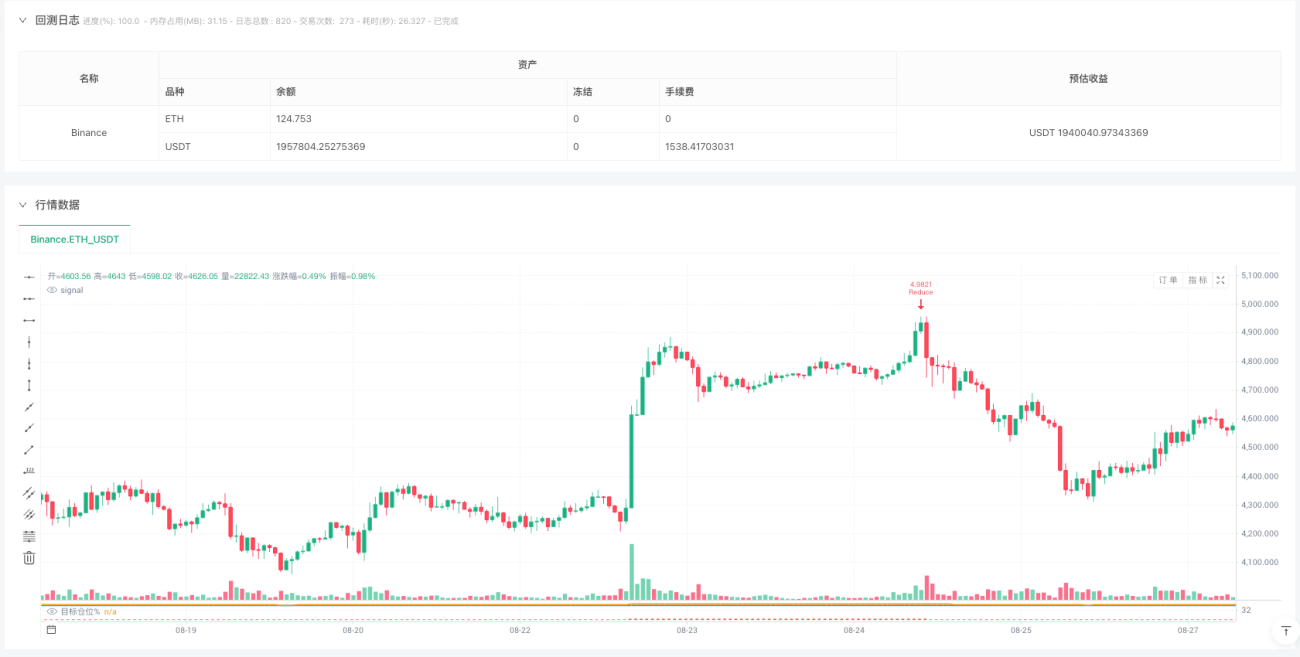
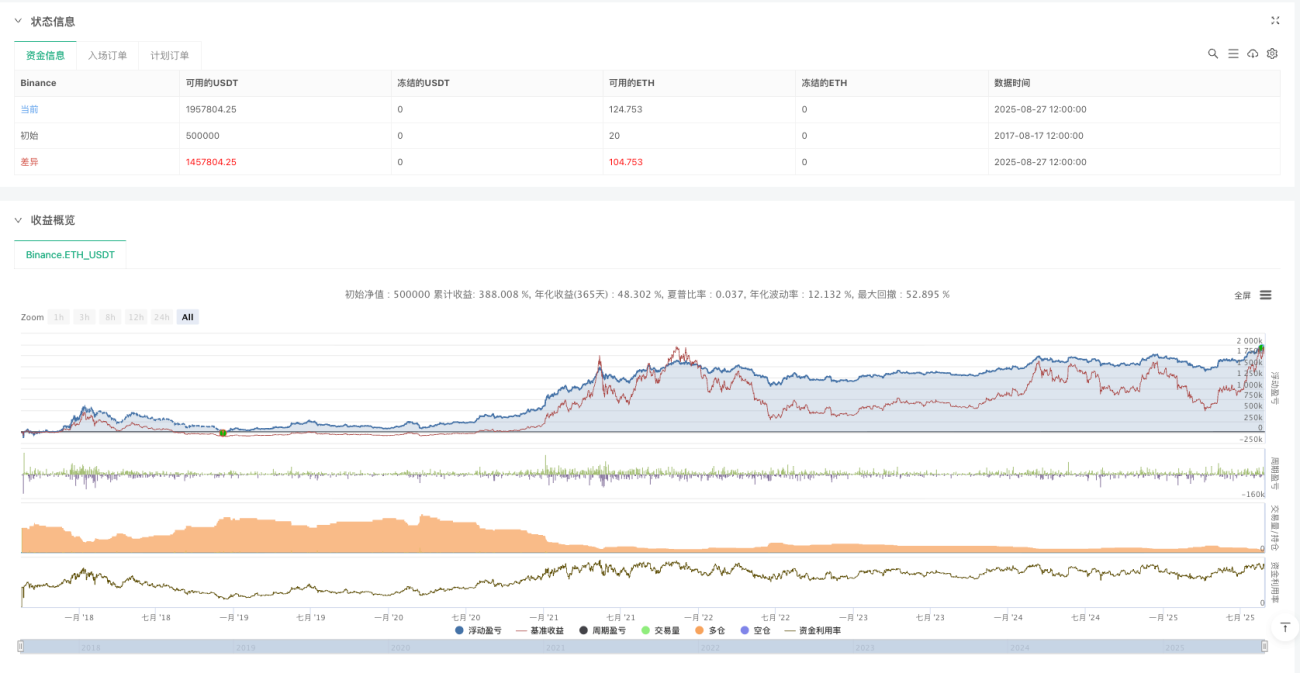
Why Do Traditional Buy-and-Hold Strategies Underperform in Volatile Markets?
In the field of quantitative trading, we often face a core question: how to maintain portfolio stability amid market volatility? While traditional buy-and-hold strategies are simple, they often lack flexibility when facing severe fluctuations. The dynamic balance strategy we're analyzing today is an intelligent position management system designed specifically to address this pain point.
The core philosophy of this strategy is: by dynamically adjusting position ratios, keep the investment portfolio operating around a target position at all times, capturing upward market opportunities while controlling downside risks.
How Does the Strategy's Core Mechanism Operate?
Target Position Setting Mechanism
The strategy first establishes a target position ratio (default 50%), meaning we aim to invest 50% of total capital into the underlying asset. This ratio selection is crucial:
- Higher position ratios can yield greater returns but increase risk exposure accordingly
- Lower position ratios are safer but may miss market opportunities
Dynamic Rebalancing Trigger Conditions
The strategy sets a 5% rebalancing threshold, a reasonable range validated through practice. When actual positions deviate from target positions by more than 5%, the system automatically triggers adjustment operations:
- When actual positions fall below target positions by more than 5%, execute position additions
- When actual positions exceed target positions by more than 5%, execute position reductions
Trading Frequency Control Mechanism
To avoid overtrading, the strategy introduces a minimum trading interval (5 periods) restriction. This design is quite ingenious because:
- It prevents frequent trading caused by minor price fluctuations
- It reduces trading cost erosion on overall returns
- It improves the strategy's practical executability
What's the Quantitative Logic Behind This Design?
Mathematical Modeling Perspective
From a mathematical standpoint, this strategy is essentially a feedback control system. The target position ratio serves as the setpoint, actual position ratio as feedback, with control actions triggered when deviation exceeds thresholds. This design's advantages include:
Deviation = Actual Position% - Target Position%
When |Deviation| > Threshold, execute rebalancing
Risk-Return Balance Mechanism
The strategy uses a fixed proportion (2.5%) of capital for each rebalancing operation, with the following considerations:
- Avoids impact costs from large single adjustments
- Maintains consistency and predictability in rebalancing actions
- Controls risk while maintaining sensitivity to market changes
In What Market Environments Does This Strategy Perform Best?
Advantages in Oscillating Markets
In sideways oscillating markets, this strategy performs exceptionally well because:
- Automatically reduces positions during price rises, achieving "sell high"
- Automatically adds positions during price drops, achieving "buy low"
- Accumulates returns through constant rebalancing during oscillations
Performance in Trending Markets
In strong trending markets, the strategy performs relatively conservatively:
- During uptrends, constant position reduction may miss some gains
- During downtrends, constant position addition may face certain drawdowns
But this "conservatism" is precisely the strategy's design intent—pursuing steady rather than aggressive returns.
What Key Points Should Be Noted in Strategy Implementation?
Importance of Parameter Optimization
- Target Position Ratio: Needs adjustment based on personal risk tolerance and market characteristics
- Rebalancing Threshold: Too small leads to frequent trading, too large reduces strategy sensitivity
- Trade Size: Need to balance between rebalancing effectiveness and trading costs
Practical Execution Considerations
In actual application, also consider:
- Trading cost impact on strategy returns
- Slippage effects in large transactions
- Market liquidity impact on execution effectiveness
What Are This Strategy's Innovation Points?
Compared to traditional dollar-cost averaging or grid strategies, this dynamic balance strategy's innovations include:
- Adaptability: Can automatically adjust positions based on market changes
- Risk Control: Naturally controls maximum risk exposure through position limits
- Execution Efficiency: Improves practical operability through trading interval controls
From my practical experience, this type of strategy is particularly suitable for investors who want to participate in markets without bearing excessive risk. It maintains sensitivity to market opportunities while avoiding emotional decision-making interference through systematic risk control mechanisms.
Overall, the dynamic balance strategy represents a typical implementation of the "steady growth" philosophy in quantitative trading, finding a relatively ideal balance between risk control and return generation through sophisticated position management mechanisms.
//@version=4
strategy("Dynamic Balance Strategy")

// === 策略参数 ===
target_position_pct = input(50, "目标仓位百分比", minval=10, maxval=90)
rebalance_threshold = input(5, "再平衡阈值(%)", minval=1, maxval=20)
trade_size = input(2.5, "交易比例(%)", minval=0.5, maxval=10, step=0.5)
min_trade_interval = input(5, "最小交易间隔(K线)", minval=1)

// === 核心变量 ===
// 目标仓位价值
target_position_value = strategy.equity * target_position_pct / 100- 1