QFL, ATR, PANIC-SELL, REBOUND, MEAN-REVERSION
In the blood and thunder of financial markets, when retail investors frantically sell due to panic, there’s always a group of calm traders positioning themselves in the shadows. They’re not chasing momentum, but waiting for a special moment—extreme market panic. This is the core philosophy of the Jackson Quickfingersluc (QFL) strategy: be greedy when others are fearful.
The QFL strategy isn’t simply contrarian thinking, but a sophisticated quantitative system that attempts to capture the most valuable trading opportunities in markets—technical rebounds following panic selling. The strategy’s name comes from a legendary trader’s nickname, who was famous for quickly buying dips during market crashes.
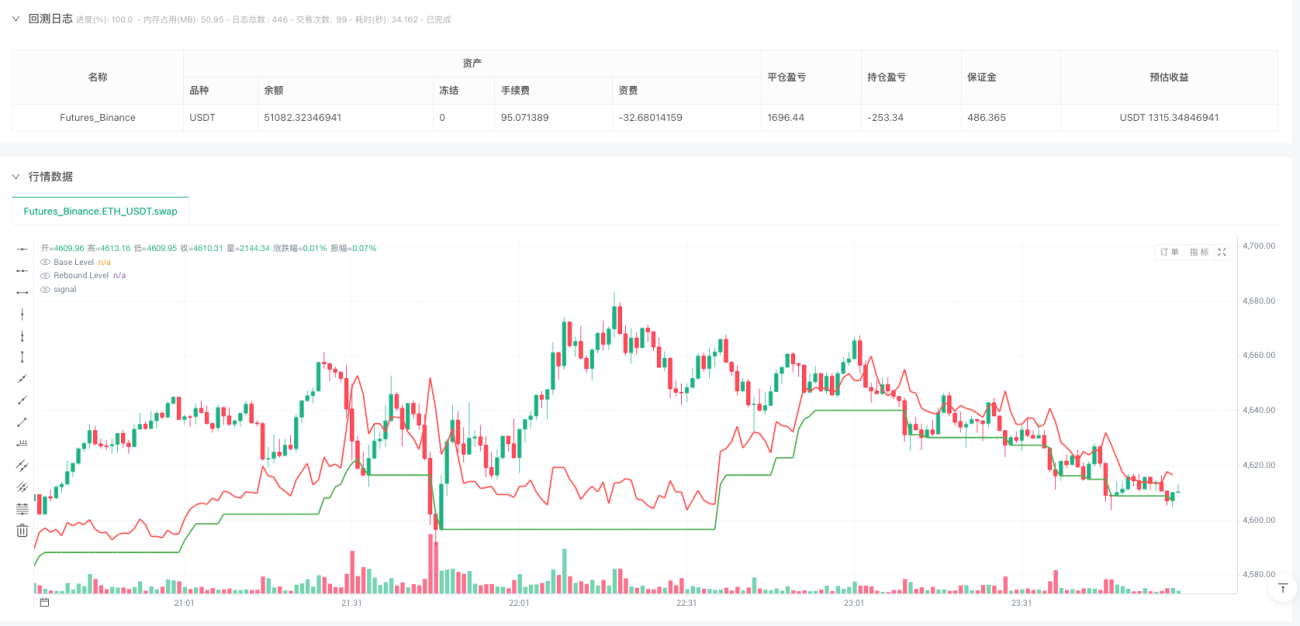
The core of the QFL strategy lies in identifying two key price levels: the Base Level and the Rebound Level. The base level is calculated by analyzing historical lowest closing prices, representing a relatively safe support zone. The rebound level, based on recent price volatility ranges, provides reference points for profit-taking.
More ingeniously, the strategy incorporates ATR (Average True Range) to identify panic selling. When price volatility exceeds specific multiples of ATR, the system determines abnormal market movement, often accompanied by panic sentiment release. This design avoids premature entries during normal market corrections, focusing instead on capturing genuine market imbalances.
The strategy also implements a cooldown mechanism, preventing frequent trading within short periods. This design reflects deep understanding of market psychology—genuine panic selling often requires time for full release, and overly frequent operations might miss optimal timing.
The QFL strategy offers three different profit-taking approaches, each corresponding to different risk preferences and market understanding:
Average Price Mode suits traders seeking steady returns. By calculating the average cost of all positions, this approach smooths the impact of individual trades, reducing timing selection pressure.
First Entry Mode is more aggressive, closing all positions once the first trade reaches profit targets. This approach suits traders confident in their market timing judgment, enabling quick profit locking.
Individual Position Mode is the most refined, allowing management of each independent position. This approach is particularly effective in highly volatile markets, maximizing utilization of multiple price rebounds.
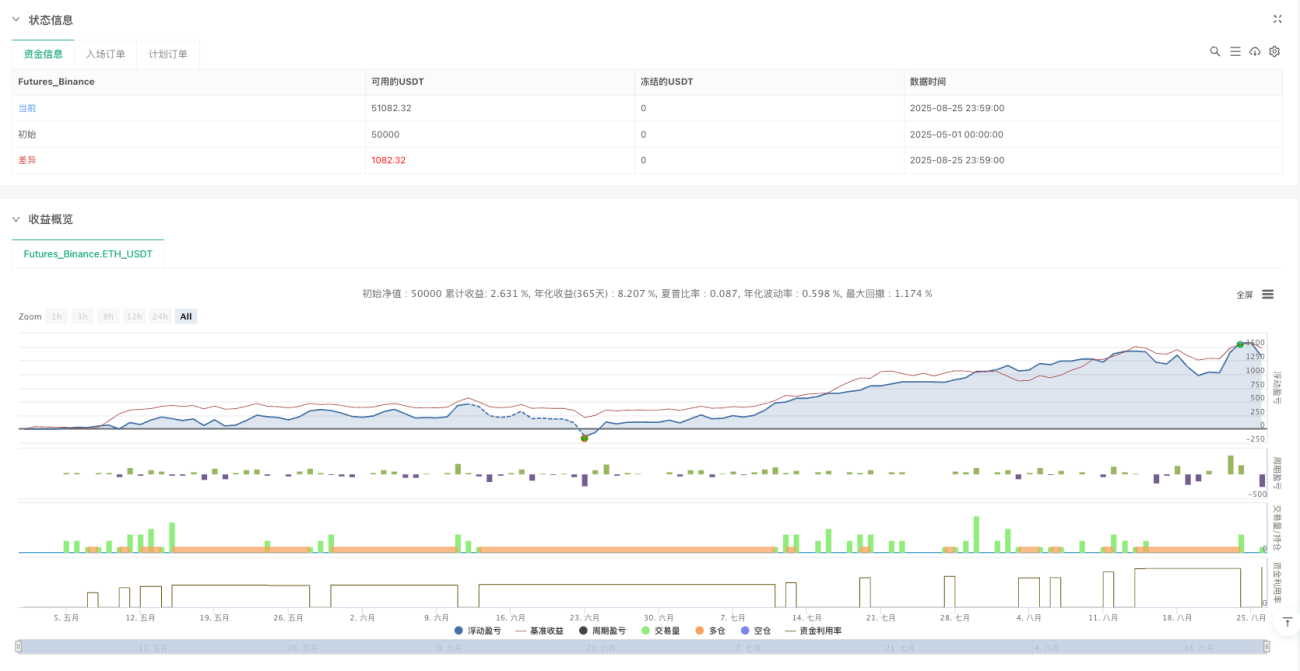
From backtesting data, the QFL strategy demonstrates good adaptability across different market environments. In trending downward markets, the strategy captures multiple technical rebounds; while individual returns may be limited, win rates are relatively high. In ranging markets, the strategy performs even better, as rebounds following panic selling are often more rapid and obvious.
However, the strategy also has obvious limitations. In strong uptrending markets, panic selling opportunities are relatively rare, significantly reducing trading frequency. Additionally, during extreme systemic risk events, traditional technical analysis may fail, and base levels might be quickly breached.
QFL strategy’s risk management manifests across multiple levels. First, through ATR dynamic adjustment of panic identification sensitivity, enabling strategy adaptation to different market volatility environments. Second, the cooldown mechanism effectively prevents overtrading, protecting capital safety.
More importantly, the strategy’s profit-taking mechanism cleverly balances greed and fear. By requiring simultaneous satisfaction of both profit targets and rebound confirmation conditions, the strategy avoids premature exits while preventing significant profit drawdowns.
As market structures continuously evolve, the QFL strategy also requires ongoing optimization. Machine learning technology integration might improve panic identification accuracy, while sentiment indicator incorporation could enhance predictive capabilities.
Furthermore, considering modern markets’ high-frequency characteristics, the strategy might need to operate on shorter timeframes, requiring corresponding parameter adjustments and optimizations.
The true value of the QFL strategy lies not only in its profitability, but in the trading philosophy it embodies—maintaining rationality in markets’ darkest moments, showing courage when crowds fear. This quantitative implementation of contrarian thinking provides modern traders with a unique perspective for understanding and participating in financial markets.
/*backtest
start: 2025-05-01 00:00:00
end: 2025-08-26 00:00:00
period: 1m
basePeriod: 1m
exchanges: [{"eid":"Futures_Binance","currency":"ETH_USDT","tradesMode":"1"}]
*/
//@version=6
strategy("Jackson Quickfingersluc (QFL) Strategy", overlay=true)
// Parameters
baseLevelMultiplier = input.float(1, title="Base Level Multiplier", minval=0.1, maxval=1.0, step=0.05)
reboundMultiplier = input.float(0.8, title="Rebound Level Multiplier", minval=0.0001, maxval=1.0, step=0.01) // Multiplier for range of past candles
lookBackPeriod = input.int(50, title="Look-back Period", minval=10)
atrPeriod = input.int(14, title="ATR Period", minval=1)
atrMultiplier = input.float(1.2, title="Panic Sell ATR Multiplier", minval=0.1, maxval=5.0, step=0.1) // Multiplier for ATR threshold
panicSellPercentage = input.float(0.005, title="Panic Sell Percentage Below Base Level", step=0.0001) // Percentage below base level for panic sell
exitProfitThreshold = input.float(0.01, title="Exit Profit Threshold", minval=0.001, maxval=0.1, step=0.001) // Minimum profit threshold (e.g., 1%)
takeProfitOption = input.string("avg_price", title="Take Profit Option", options=["avg_price", "first_entry", "each_position"]) // TP option selection
rangeBars = input.int(3, title="Number of Bars for Range Calculation", minval=1) // Input for number of bars for range calculation
cooldownBars = input.int(5, title="Cooldown Period (Bars)", minval=1) // Input for cooldown period after a buy
// Calculate Base Level
lowestClose = ta.lowest(close, lookBackPeriod)
baseLevel = lowestClose[1] * baseLevelMultiplier
// Calculate Rebound Level as a multiplier of the range of the last 'rangeBars' bars
rangeLastBars = ta.highest(high, rangeBars) - ta.lowest(low, rangeBars)
reboundLevel = reboundMultiplier * rangeLastBars + baseLevel
// Plotting base and rebound levels
plot(baseLevel, color=color.green, linewidth=2, title="Base Level")
plot(reboundLevel, color=color.red, linewidth=2, title="Rebound Level")
// Calculate ATR
atrValue = ta.atr(atrPeriod)
// Factorial average and panic sell movement calculation
var bool panicSellMovement = false
// Loop through each range and check for panic sell condition
for bar_i = 1 to rangeBars+1
currentBarRange = high[bar_i - 1] - low[bar_i - 1] // Current bar range
rangeOfLastXBars = ta.highest(high, bar_i) - ta.lowest(low, bar_i) // Range of the last `bar_i` bars
// Condition 1: Check if the average range of the last `bar_i` bars exceeds ATR multiplier
if (rangeOfLastXBars / bar_i) > atrMultiplier * atrValue
panicSellMovement := true
break // Exit the loop immediately
// Condition 2: Check if the current bar range exceeds ATR multiplier
if currentBarRange > atrMultiplier * atrValue
panicSellMovement := true
break // Exit the loop immediately
// Define the adjusted base level threshold for panic sell (base level - percentage)
panicSellThreshold = baseLevel[0] * (1 - panicSellPercentage)
// Define panic sell condition with base level check and the panic sell percentage threshold
isPanicSell = low < panicSellThreshold and panicSellMovement
// Define rebound condition
isRebound = close > reboundLevel
// Track the last entry bar index
var float lastEntryBar = na
// Store entry prices for each position in an array
var float[] entryPrices = na
var float[] entrySizes = na
bool exit_cond = false
if (na(entryPrices))
entryPrices := array.new_float(0)
if (na(entrySizes))
entrySizes := array.new_float(0)
// Strategy to simulate buys and sells (for backtesting purposes)
entry_cond = isPanicSell and (na(lastEntryBar) or (bar_index - lastEntryBar) > cooldownBars)
if entry_cond
strategy.entry("Buy", strategy.long)
lastEntryBar := bar_index // Set last entry bar to current bar index
// Store the entry price and size for this new position
array.push(entryPrices, close)
array.push(entrySizes, strategy.position_size)
isTakeProfitCondition(entryPrice) =>
profitPercentage = (close - entryPrice) / entryPrice
profitCondition = profitPercentage >= exitProfitThreshold
reboundCondition = isRebound
profitCondition and reboundCondition
// Check TP condition based on selected option
if takeProfitOption == "avg_price"
avgEntryPrice = strategy.position_avg_price
if isTakeProfitCondition(avgEntryPrice)
exit_cond := true
strategy.close("Buy")
else if takeProfitOption == "first_entry"
firstEntryPrice = strategy.opentrades.entry_price(0)
if isTakeProfitCondition(firstEntryPrice)
exit_cond := true
strategy.close("Buy")
else if takeProfitOption == "each_position"
// Ensure we only check when there is at least one entry
if array.size(entryPrices) > 0
// Loop until there are no more entries left
i = 0
while i < array.size(entryPrices)
entryPrice = array.get(entryPrices, i)
positionSize = array.get(entrySizes, i)
// Check profit condition for each position
if isTakeProfitCondition(entryPrice)
exit_cond := true
// Remove the entry price and size from the arrays once the position is closed
array.remove(entryPrices, i)
array.remove(entrySizes, i)
strategy.close("Buy", qty=positionSize) // Close only the position that reached the target
else
// Only increment the index if the current entry is not closed
i := i + 1
// Trigger BUY alert
if entry_cond
alert("BUY ALERT: Panic Sell condition triggered", alert.freq_once_per_bar)
// Trigger SELL alert
if exit_cond
alert("SELL ALERT: Exit condition met (take profit or rebound)", alert.freq_once_per_bar)