Estrategia de trading bidireccional de posiciones largas y cortas con oscilador de doble pista RSI


Fecha de creación: 2023-10-25 11:57:46 Última modificación: 2023-10-25 11:57:46
Copiar: 1 Número de Visitas: 627
1
Seguir
1617
Seguidores

Estrategia de trading bidireccional de posiciones largas y cortas con oscilador de doble pista RSI

Descripción general

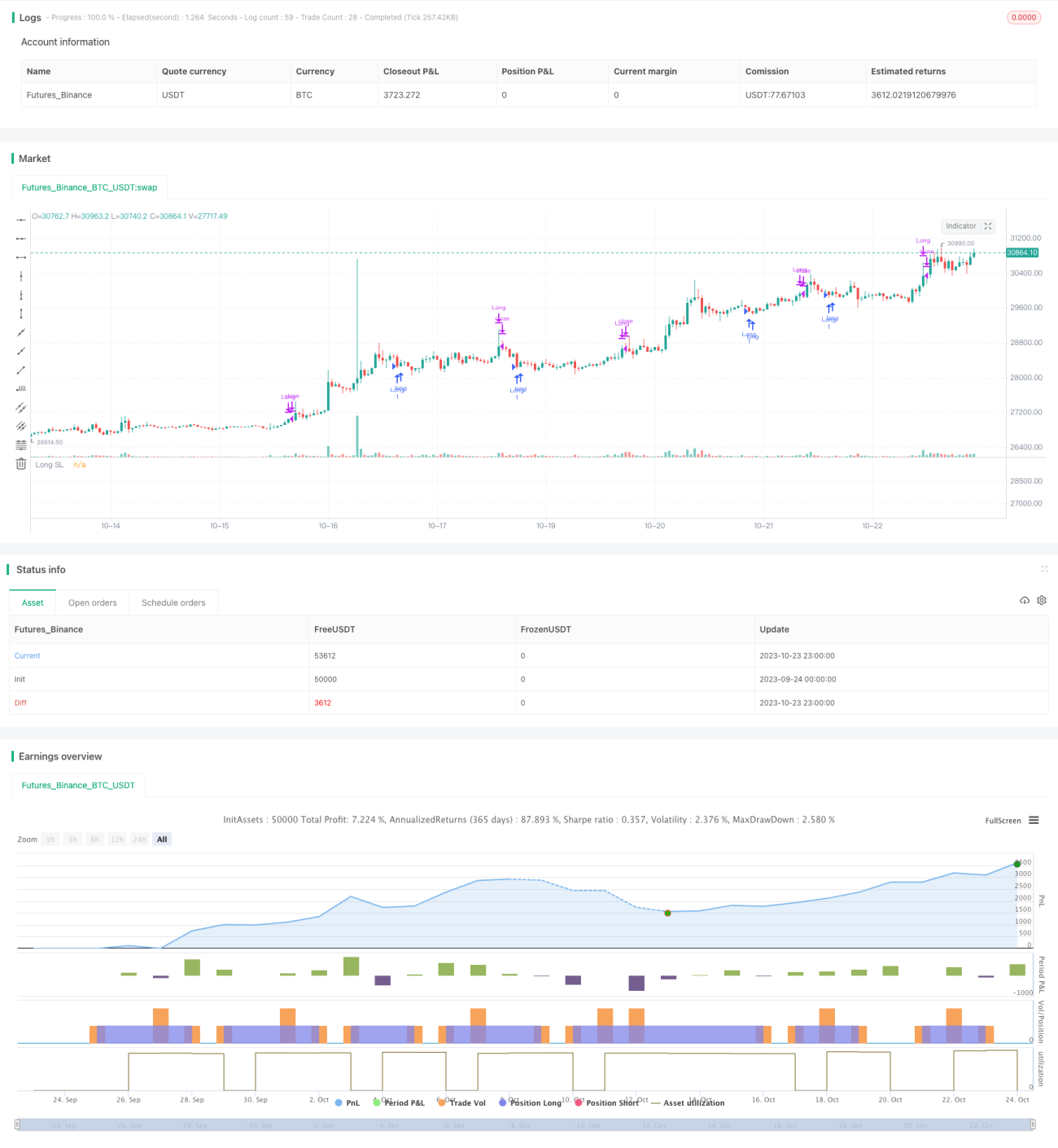
La estrategia de comercio bidireccional es una estrategia de comercio bidireccional que utiliza el indicador RSI para el comercio bidireccional. La estrategia utiliza el principio de sobrecompra y sobreventa del indicador RSI, que combina la configuración de las dos orbitales y la señal de comercio uniforme, para lograr una posición abierta y cerrada bidireccional eficiente.

Principio de estrategia

La estrategia se basa principalmente en el principio de sobrecompra y sobreventa del indicador RSI. La estrategia primero calcula el valor devrsi del indicador RSI, así como el tren superior sn y el tren inferior ln de la doble trayectoria. Se produce una señal de plus cuando el RSI se desvía por debajo del tren inferior ln, y una señal de falta cuando el RSI se eleva por encima del tren superior sn.

La estrategia también detecta los cambios en las tendencias de la línea K y genera más señales de vacío. Concretamente, la estrategia genera una señal de vacío cuando la línea K se rompe de arriba a abajo.

Después de generar varias señales de toma de posición, la estrategia calcula la frecuencia de la señal y controla la cantidad de posiciones abiertas. A través de los parámetros, se pueden configurar diferentes reglas de toma de posición. Las condiciones de posición libre incluyen paradas, paradas y paradas móviles. Se pueden configurar diferentes porcentajes de paradas y paradas.

En resumen, la estrategia utiliza un conjunto de técnicas como el indicador RSI, el cruce de la media, el alza estadística y el stop loss para lograr el comercio automático de largo y corto en ambos sentidos.

Ventajas estratégicas

  • Utiliza el principio de sobrecompra y sobreventa del indicador RSI para establecer más posiciones de descubierto en posiciones razonables.
  • La configuración de doble vía evita señales erróneas. La vía superior evita la liquidación prematura de las posiciones múltiples y la vía inferior evita la liquidación prematura de las posiciones vacías.
  • La línea media de las señales de negociación filtra las falsas rupturas. El precio de las acciones solo genera señales de ruptura de la línea media para evitar señales falsas.
  • Cantidad de señales estadísticas y acumulaciones, control de riesgos.
  • Se puede personalizar el porcentaje de stop loss y el riesgo de ganancias.
  • El bloqueo móvil sigue el bloqueo y bloquea aún más los beneficios.
  • Se puede hacer solo más, solo vacío o señales de giro, para adaptarse a diferentes condiciones de mercado.
  • Sistemas automatizados de negociación para reducir los costos de manejo.

Riesgo estratégico

  • El indicador RSI tiene riesgo de reversión y fracaso.
  • El punto de parada fijo corre el riesgo de ser ajustado. La configuración incorrecta del punto de parada puede causar una parada prematura o una parada.
  • Dependiendo de los indicadores técnicos, existe el riesgo de optimización de los parámetros. La configuración incorrecta de los parámetros de los indicadores puede afectar la eficacia de la estrategia.
  • El riesgo de que se pierda una tarjeta es el de que se desencadene simultáneamente una serie de condiciones.
  • El sistema de comercio automático tiene un riesgo de error.

Para los riesgos anteriores, se puede optimizar la configuración de los parámetros, ajustar la estrategia de stop loss, aumentar la filtración de liquidez, optimizar la lógica de generación de señales, aumentar la monitorización de errores de excepción, etc.

Dirección de optimización de la estrategia

  • Prueba de diferentes parámetros de optimización del RSI.
  • Prueba diferentes configuraciones del porcentaje de pérdida de frenado.
  • Aumentar el volumen de transacciones o la tasa de ganancias para evitar la falta de liquidez.
  • Optimización de la lógica de generación de señales y mejora en el modo de cruce de la línea media.
  • Aumentar el tiempo de prueba para comprobar la estabilidad.
  • Considerar la inclusión de otros indicadores para optimizar el efecto de la señal.
  • Participar en las estrategias de gestión de posiciones.
  • Aumentar la vigilancia de las anomalías.
  • Optimización de los algoritmos de seguimiento automático de pérdidas.
  • Considerar la inclusión de estrategias para mejorar el aprendizaje automático.

Resumir

La estrategia de comercio bidireccional RSI permite la automatización de operaciones bidireccionales mediante la aplicación integral de varios medios técnicos, como el indicador RSI, el principio estadístico de apertura de posición y parada. La estrategia tiene una gran personalización, y los usuarios pueden ajustar los parámetros según las necesidades y adaptarse a diferentes entornos del mercado.

Código Fuente de la Estrategia
/*backtest
start: 2023-09-24 00:00:00
end: 2023-10-24 00:00:00
period: 1h
basePeriod: 15m
exchanges: [{"eid":"Futures_Binance","currency":"BTC_USDT"}]
*/

//@version=3
// Learn more about Autoview and how you can automate strategies like this one here: https://autoview.with.pink/
// strategy("Autoview Build-a-bot - 5m chart", "Strategy", overlay=true, pyramiding=2000, default_qty_value=10000)
// study("Autoview Build-a-bot", "Alerts")

///////////////////////////////////////////////
//* Backtesting Period Selector | Component *//
///////////////////////////////////////////////

//* https://www.tradingview.com/script/eCC1cvxQ-Backtesting-Period-Selector-Component *//
//* https://www.tradingview.com/u/pbergden/ *//
//* Modifications made *//

testStartYear = input(1, "Backtest Start Year") 
testStartMonth = input(11, "Backtest Start Month")
testStartDay = input(10, "Backtest Start Day")
testPeriodStart = timestamp(testStartYear,testStartMonth,testStartDay,0,0)

testStopYear = input(77777777, "Backtest Stop Year")
testStopMonth = input(11, "Backtest Stop Month")
testStopDay = input(15, "Backtest Stop Day")
testPeriodStop = timestamp(testStopYear,testStopMonth,testStopDay,0,0)

testPeriod() => true

/////////////////////////////////////
//* Put your strategy logic below *//
/////////////////////////////////////
RSIlength = input(1,title="RSI Period Length") 
price = close
vrsi = (rsi(price, RSIlength))
src = close
len = input(2, minval=1, title="Length")

up = rma(max(change(src), 0), len)
down = rma(-min(change(src), 0), len)
rsi = down == 0 ? 100 : up == 0 ? 0 : 100 - (100 / (1 + up / down))

rsin = input(12)
sn = 100 - rsin
ln = 0 + rsin

// Put your long and short rules here
longLocic = crossunder(rsi, ln)
shortLogic = crossover(rsi, sn)

//////////////////////////
//* Strategy Component *//
//////////////////////////

isLong = input(true, "Longs Only")
isShort = input(false, "Shorts Only")
isFlip = input(false, "Flip the Opens")

long = longLocic
short = shortLogic

if isFlip
    long := shortLogic
    short := longLocic
else
    long := longLocic
    short := shortLogic

if isLong
    long := long
    short := na

if isShort
    long := na
    short := short
    
////////////////////////////////
//======[ Signal Count ]======//
////////////////////////////////

sectionLongs = 0
sectionLongs := nz(sectionLongs[1])
sectionShorts = 0
sectionShorts := nz(sectionShorts[1])

if long
    sectionLongs := sectionLongs + 1
    sectionShorts := 0

if short
    sectionLongs := 0
    sectionShorts := sectionShorts + 1

//////////////////////////////
//======[ Pyramiding ]======//
//////////////////////////////

pyrl = input(2, "Pyramiding less than") // If your count is less than this number
pyre = input(1, "Pyramiding equal to") // If your count is equal to this number
pyrg = input(1000000, "Pyramiding greater than") // If your count is greater than this number

longCondition = long and sectionLongs <= pyrl or long and sectionLongs >= pyrg or long and sectionLongs == pyre ? 1 : 0 and vrsi < 20
shortCondition = short and sectionShorts <= pyrl or short and sectionShorts >= pyrg or short and sectionShorts == pyre ? 1 : 0

////////////////////////////////
//======[ Entry Prices ]======//
////////////////////////////////

last_open_longCondition = na
last_open_shortCondition = na
last_open_longCondition := longCondition ? close : nz(last_open_longCondition[1])
last_open_shortCondition := shortCondition ? close : nz(last_open_shortCondition[1])

////////////////////////////////////
//======[ Open Order Count ]======//
////////////////////////////////////

sectionLongConditions = 0
sectionLongConditions := nz(sectionLongConditions[1])
sectionShortConditions = 0
sectionShortConditions := nz(sectionShortConditions[1])

if longCondition
    sectionLongConditions := sectionLongConditions + 1
    sectionShortConditions := 0

if shortCondition
    sectionLongConditions := 0
    sectionShortConditions := sectionShortConditions + 1
    
///////////////////////////////////////////////
//======[ Position Check (long/short) ]======//
///////////////////////////////////////////////

last_longCondition = na
last_shortCondition = na
last_longCondition := longCondition ? time : nz(last_longCondition[1])
last_shortCondition := shortCondition ? time : nz(last_shortCondition[1])

in_longCondition = last_longCondition > last_shortCondition
in_shortCondition = last_shortCondition > last_longCondition

/////////////////////////////////////
//======[ Position Averages ]======//
/////////////////////////////////////

totalLongs = 0.0
totalLongs := nz(totalLongs[1])
totalShorts = 0.0
totalShorts := nz(totalShorts[1])
averageLongs = 0.0
averageLongs := nz(averageLongs[1])
averageShorts = 0.0
averageShorts := nz(averageShorts[1]) 

if longCondition
    totalLongs := totalLongs + last_open_longCondition
    totalShorts := 0.0

if shortCondition
    totalLongs := 0.0
    totalShorts := totalShorts + last_open_shortCondition

averageLongs := totalLongs / sectionLongConditions
averageShorts := totalShorts / sectionShortConditions

/////////////////////////////////
//======[ Trailing Stop ]======//
/////////////////////////////////

isTS = input(false, "Trailing Stop")
tsi = input(100, "Activate Trailing Stop Price (%). Divided by 100 (1 = 0.01%)") / 100 
ts = input(100, "Trailing Stop (%). Divided by 100 (1 = 0.01%)") / 100

last_high = na
last_low = na
last_high_short = na
last_low_short = na
last_high := not in_longCondition ? na : in_longCondition and (na(last_high[1]) or high > nz(last_high[1])) ? high : nz(last_high[1])
last_high_short := not in_shortCondition ? na : in_shortCondition and (na(last_high[1]) or high > nz(last_high[1])) ? high : nz(last_high[1])
last_low := not in_shortCondition ? na : in_shortCondition and (na(last_low[1]) or low < nz(last_low[1])) ? low : nz(last_low[1])
last_low_short := not in_longCondition ? na : in_longCondition and (na(last_low[1]) or low < nz(last_low[1])) ? low : nz(last_low[1])

long_ts = isTS and not na(last_high) and low <= last_high - last_high / 100 * ts and longCondition == 0 and last_high >= averageLongs + averageLongs / 100 * tsi
short_ts = isTS and not na(last_low) and high >= last_low + last_low / 100 * ts and shortCondition == 0 and last_low <= averageShorts - averageShorts/ 100 * tsi

///////////////////////////////
//======[ Take Profit ]======//
///////////////////////////////

isTP = input(true, "Take Profit")
tp = input(125, "Take Profit (%). Divided by 100 (1 = 0.01%)") / 100
long_tp = isTP and close > averageLongs + averageLongs / 100 * tp and not longCondition
short_tp = isTP and close < averageShorts - averageShorts / 100 * tp and not shortCondition

/////////////////////////////
//======[ Stop Loss ]======//
/////////////////////////////

isSL = input(true, "Stop Loss")
sl = input(140, "Stop Loss (%). Divided by 100 (1 = 0.01%)") / 100
long_sl = isSL and close < averageLongs - averageLongs / 100 * sl and longCondition == 0
short_sl = isSL and close > averageShorts + averageShorts / 100 * sl and shortCondition == 0

/////////////////////////////////
//======[ Close Signals ]======//
/////////////////////////////////

longClose = long_tp or long_sl or long_ts ? 1 : 0
shortClose = short_tp or short_sl or short_ts ? 1: 0

///////////////////////////////
//======[ Plot Colors ]======//
///////////////////////////////

longCloseCol = na
shortCloseCol = na
longCloseCol := long_tp ? purple : long_sl ? maroon : long_ts ? blue : longCloseCol[1]
shortCloseCol := short_tp ? purple : short_sl ? maroon : short_ts ? blue : shortCloseCol[1]
tpColor = isTP and in_longCondition ? purple : isTP and in_shortCondition ? purple : white
slColor = isSL and in_longCondition ? red : isSL and in_shortCondition ? red : white

//////////////////////////////////
//======[ Strategy Plots ]======//
//////////////////////////////////

plot(isTS and in_longCondition ? averageLongs + averageLongs / 100 * tsi : na, "Long Trailing Activate", blue, style=3, linewidth=2)
plot(isTS and in_longCondition and last_high >= averageLongs +  averageLongs / 100 * tsi ? last_high - last_high / 100 * ts : na, "Long Trailing", fuchsia, style=2, linewidth=3)
plot(isTS and in_shortCondition ? averageShorts - averageShorts/ 100 * tsi : na, "Short Trailing Activate", blue, style=3, linewidth=2)
plot(isTS and in_shortCondition and last_low <= averageShorts - averageShorts/ 100 * tsi ? last_low + last_low / 100 * ts : na, "Short Trailing", fuchsia, style=2, linewidth=3)
plot(isTP and in_longCondition and last_high < averageLongs + averageLongs / 100 * tp ? averageLongs + averageLongs / 100 * tp : na, "Long TP", tpColor, style=3, linewidth=2)
plot(isTP and in_shortCondition and last_low > averageShorts - averageShorts / 100 * tp ? averageShorts - averageShorts / 100 * tp : na, "Short TP", tpColor, style=3, linewidth=2)
plot(isSL and in_longCondition and last_low_short > averageLongs - averageLongs / 100 * sl ? averageLongs - averageLongs / 100 * sl : na, "Long SL", slColor, style=3, linewidth=2)
plot(isSL and in_shortCondition and last_high_short < averageShorts + averageShorts / 100 * sl ? averageShorts + averageShorts / 100 * sl : na, "Short SL", slColor, style=3, linewidth=2)

///////////////////////////////
//======[ Alert Plots ]======//
///////////////////////////////

// plot(longCondition, "Long", green)
// plot(shortCondition, "Short", red)
// plot(longClose, "Long Close", longCloseCol)
// plot(shortClose, "Short Close", shortCloseCol)

///////////////////////////////////
//======[ Reset Variables ]======//
///////////////////////////////////

if longClose or not in_longCondition
    averageLongs := 0
    totalLongs := 0.0
    sectionLongs := 0
    sectionLongConditions := 0

if shortClose or not in_shortCondition
    averageShorts := 0
    totalShorts := 0.0
    sectionShorts := 0
    sectionShortConditions := 0

////////////////////////////////////////////
//======[ Strategy Entry and Exits ]======//
////////////////////////////////////////////

if testPeriod()
    strategy.entry("Long", 1, when=longCondition)
    strategy.entry("Short", 0,  when=shortCondition)
    strategy.close("Long", when=longClose)
    strategy.close("Short", when=shortClose)