Estrategia de ruptura de precios basada en la puntuación estándar

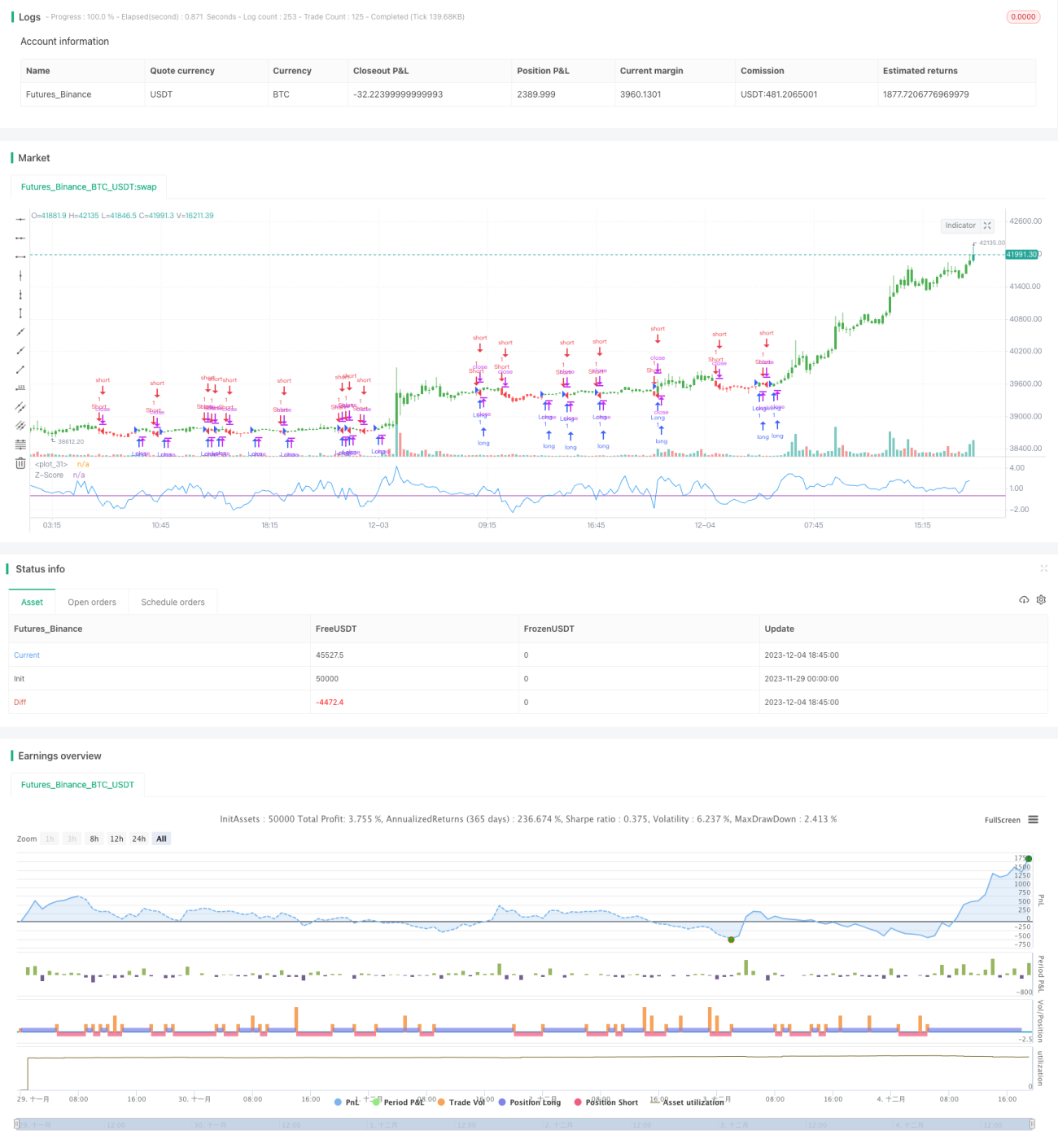
Resumen
La Estrategia de Ruptura del Precio basada en el Puntaje Z (Z-Score Price Breakout Strategy) utiliza el puntaje Z del precio para determinar si el precio actual se encuentra en un estado anormal, generando así señales de negociación. Cuando el puntaje Z del precio supera o cae por debajo de un cierto umbral, indica que el precio ha entrado en un estado anormal, momento en el cual se pueden realizar operaciones de compra (largo) o venta (corto).
Principio de la Estrategia
El indicador central de esta estrategia es el puntaje Z del precio, cuya fórmula de cálculo es la siguiente:
Z_score = (C - SMA(n)) / StdDev(C,n)
Donde C es el precio de cierre, SMA(n) es la media móvil simple de n períodos, y StdDev(C,n) es la desviación estándar del precio de cierre en n períodos.
El puntaje Z refleja el grado de desviación del precio actual respecto al precio promedio. Cuando el puntaje Z del precio es mayor que un umbral positivo (por ejemplo, +2), indica que el precio actual está dos desviaciones estándar por encima del promedio, lo que representa un nivel relativamente alto; cuando es menor que un umbral negativo (por ejemplo, -2), indica que el precio actual está dos desviaciones estándar por debajo del promedio, lo que representa un nivel relativamente bajo.
Esta estrategia primero calcula el puntaje Z del precio, luego establece un umbral positivo y uno negativo (por ejemplo, 0 y 0). Cuando el puntaje Z supera el umbral positivo, se genera una señal de compra; cuando cae por debajo del umbral negativo, se genera una señal de venta.
Análisis de Ventajas
- Utilizar el puntaje Z del precio para identificar anomalías en el precio es un método cuantitativo común y efectivo.
- Permite implementar fácilmente operaciones bidireccionales (largo y corto).
- Parámetros flexibles: se pueden ajustar períodos, umbrales, etc.
- Se puede combinar con otros indicadores para formar un sistema de negociación.
Análisis de Riesgos
- La estrategia basada en el puntaje Z es relativamente básica y propensa a generar señales falsas.
- Requiere establecer parámetros adecuados, como períodos y umbrales.
- Es necesario considerar estrategias de stop-loss para controlar el riesgo.
Direcciones de Optimización
- Optimizar los parámetros de período para encontrar el período óptimo.
- Optimizar los umbrales positivo y negativo para reducir señales falsas.
- Agregar filtros y combinar con otros indicadores.
- Incorporar estrategias de stop-loss.
Resumen
La Estrategia de Ruptura del Precio basada en el Puntaje Z determina si el precio actual se encuentra en un estado anormal y realiza operaciones según el signo del puntaje Z del precio. Esta estrategia es simple y fácil de implementar, permite operaciones bidireccionales, pero también conlleva ciertos riesgos. Mediante la optimización de parámetros y el uso de stop-loss, se puede fortalecer la estrategia y combinarla con otros indicadores para formar un sistema cuantitativo de negociación completo.
/*backtest
start: 2023-11-29 00:00:00
end: 2023-12-04 19:00:00
period: 15m
basePeriod: 5m
exchanges: [{"eid":"Futures_Binance","currency":"BTC_USDT"}]
*/

//@version=2
////////////////////////////////////////////////////////////
//  Copyright by HPotter v1.0 18/01/2017
// The author of this indicator is Veronique Valcu. The z-score (z) for a data - 1