Estrategia de trading que combina el indicador RSI con las Bandas de Bollinger

I. Resumen de la Estrategia
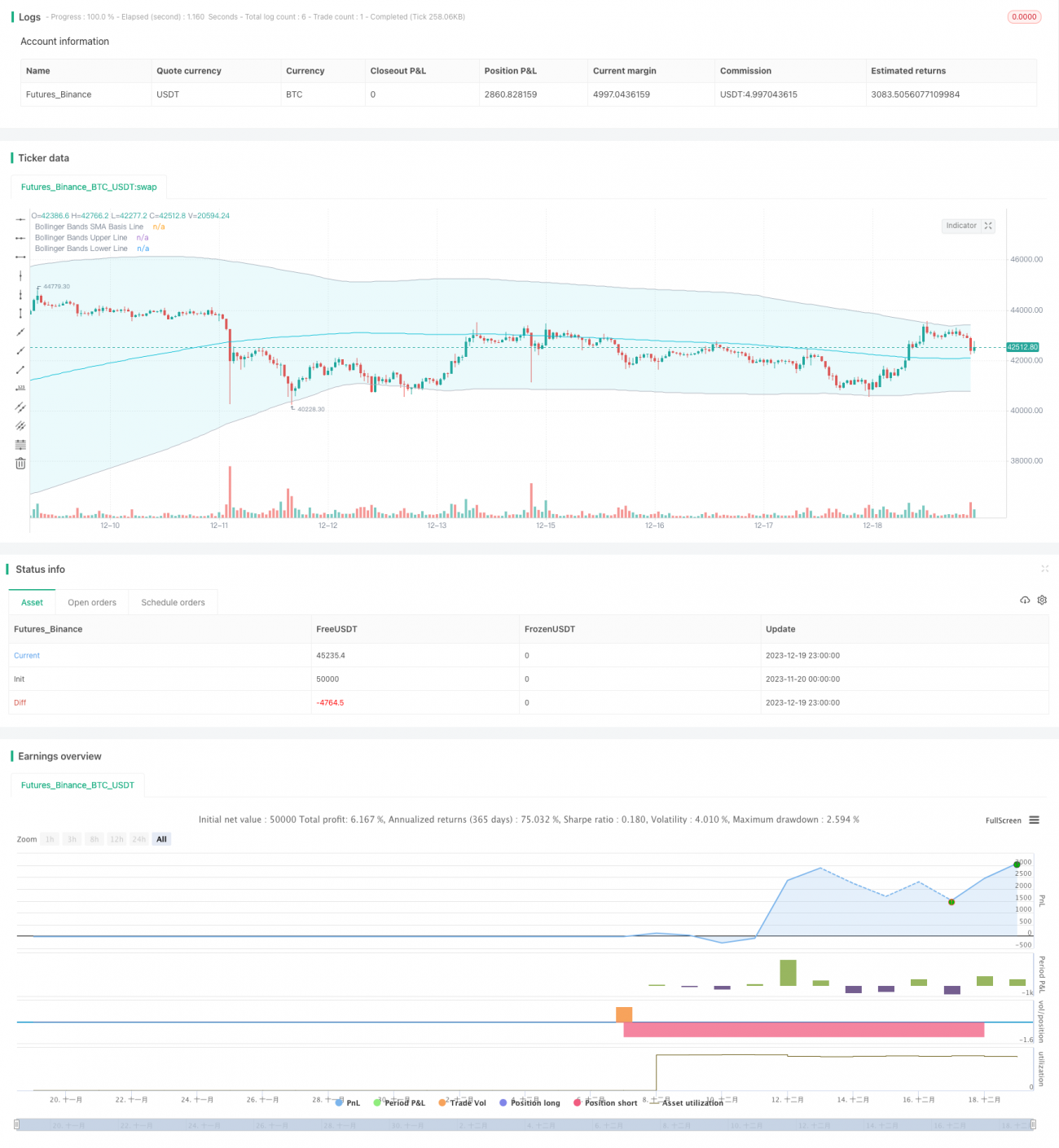
Esta estrategia se denomina Estrategia de Take Profit y Stop Loss con RSI y Bandas de Bollinger (RSI Bollinger Bands TP/SL Strategy). La estrategia combina el indicador RSI y las Bandas de Bollinger para lograr el posicionamiento de tendencia y la operativa de ruptura. Cuando el RSI muestra señales de sobrecompra o sobreventa y el precio toca o supera la banda superior o inferior de Bollinger, se ejecuta una operación larga o corta. Además, la estrategia establece puntos de take profit y stop loss para mejorar la estabilidad.
II. Principio de la Estrategia
1. Juicio de reversión mediante el indicador RSI
El indicador RSI permite determinar si una acción se encuentra en zona de sobrecompra o sobreventa. Cuando el RSI supera la línea de sobrecompra establecida, se considera sobrecompra; cuando es inferior a la línea de sobreventa, se considera sobreventa. En esta estrategia, la línea de sobrecompra se fija en 50 y la línea de sobreventa en 50.
2. Juicio de tendencia mediante las Bandas de Bollinger
Las Bandas de Bollinger calculan la desviación estándar del precio de la acción para obtener las bandas superior e inferior. La banda superior actúa como resistencia y la banda inferior como soporte. Cuando el precio cruza por encima de la banda inferior, es una señal de compra; cuando cruza por debajo de la banda superior, es una señal de venta.
3. Combinación del RSI y las Bandas de Bollinger
Cuando el RSI muestra una señal de reversión desde el suelo, al mismo tiempo que el precio supera la banda inferior de Bollinger, se considera que la tendencia cambia de bajista a alcista y se abre una posición larga. Cuando el RSI muestra una señal de reversión desde el techo, al mismo tiempo que el precio perfora la banda superior de Bollinger, se considera que la tendencia cambia de alcista a bajista y se abre una posición corta.
III. Ventajas de la Estrategia
1. Mayor precisión de las señales gracias al doble filtro
Tanto el RSI como las Bandas de Bollinger se utilizan para juzgar la tendencia y los puntos de reversión. Su combinación mejora la precisión en la identificación de señales reales de compra y venta, evitando falsas rupturas.
2. Control de riesgo mediante mecanismo de take profit y stop loss
La estrategia establece puntos de take profit y stop loss. Para posiciones largas, el take profit es el precio de entrada * (1 + porcentaje de take profit) y el stop loss es el precio de entrada * (1 - porcentaje de stop loss); para posiciones cortas es al contrario. Esto permite asegurar ganancias, minimizar pérdidas y controlar el riesgo.
3. Dirección de operaciones personalizable
La estrategia permite elegir solo largos, solo cortos o ambas direcciones. Los usuarios pueden seleccionar la dirección según el entorno del mercado y controlar el riesgo de manera flexible.
IV. Riesgos de la Estrategia
1. Sensibilidad a los parámetros de las Bandas de Bollinger
El tamaño de la desviación estándar afecta la anchura de las Bandas de Bollinger y, por tanto, la generación de señales. Si los parámetros no se configuran adecuadamente, pueden generarse muchas señales falsas.
2. Riesgo derivado del take profit y stop loss
Si se produce una reversión en forma de V, la configuración de take profit y stop loss podría ser demasiado agresiva, provocando pérdidas innecesarias.
3. Sensibilidad a los parámetros del RSI
Los parámetros del RSI también afectan la forma de su curva. Si los parámetros son incorrectos, la precisión de las señales de reversión del RSI disminuye.
V. Direcciones de Optimización de la Estrategia
1. Optimizar los parámetros del RSI
Se pueden probar diferentes longitudes del RSI para encontrar la combinación óptima de parámetros.
2. Optimizar los parámetros de las Bandas de Bollinger
Se pueden probar diferentes longitudes de las Bandas de Bollinger y desviaciones estándar para encontrar la combinación óptima de parámetros.
3. Probar diferentes porcentajes de take profit y stop loss
Mediante backtesting se puede encontrar el porcentaje óptimo de take profit y stop loss.
VI. Conclusión
Esta estrategia combina el RSI y las Bandas de Bollinger para juzgar la tendencia y las reversiones, e incorpora un mecanismo de take profit y stop loss para controlar el riesgo. Puede identificar automáticamente puntos de compra y venta, y detener pérdidas o asegurar ganancias a tiempo. Sin embargo, la estrategia también conlleva ciertos riesgos, que pueden mitigarse principalmente mediante la optimización de parámetros. En general, la estrategia tiene una gran aplicabilidad práctica.
- 1