Estrategia de zona de transición

Resumen
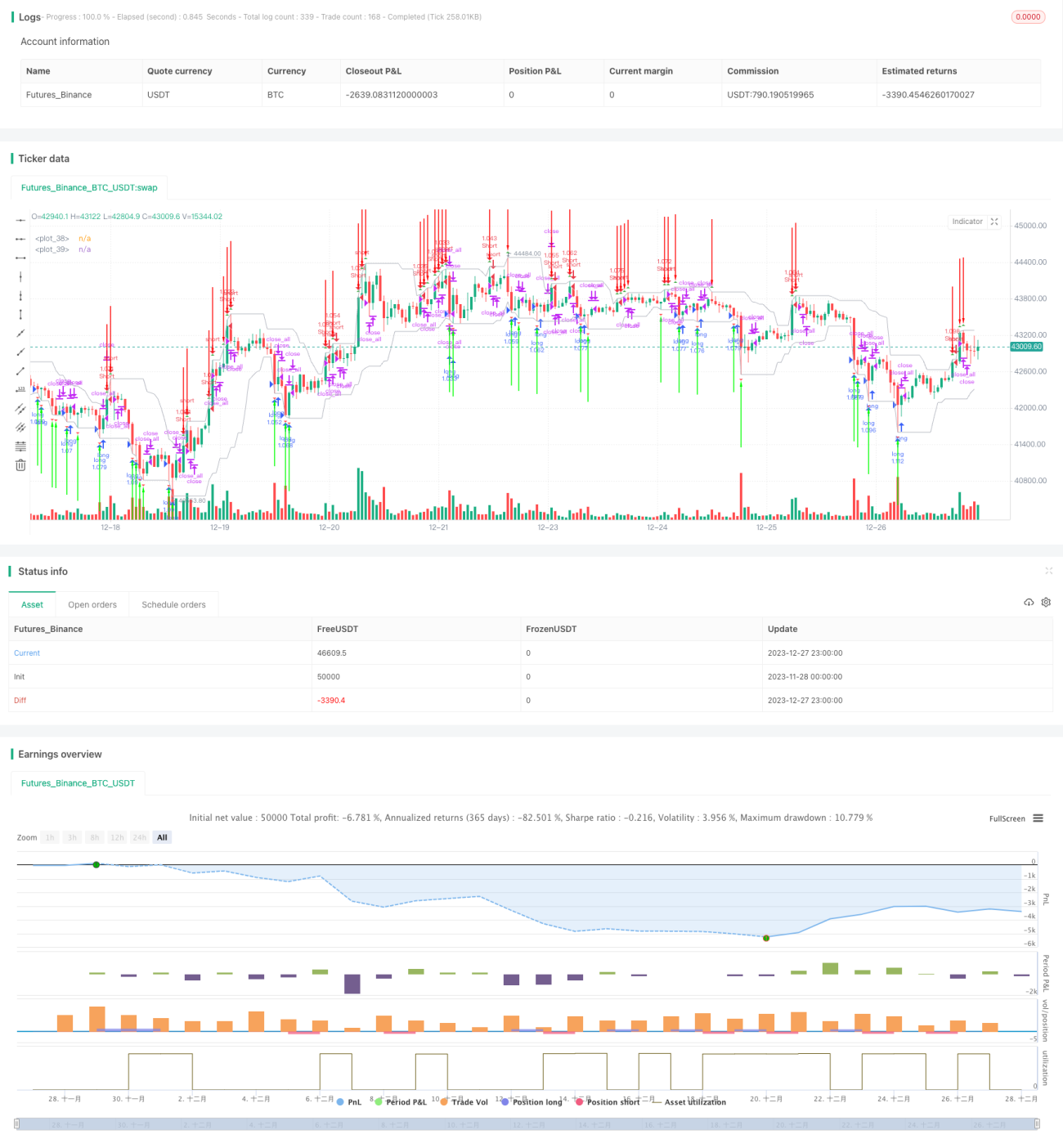
La estrategia de rango de transición es una estrategia de trading a corto plazo basada en rangos de fluctuación de precios. Utiliza el rango de fluctuación formado por el precio dentro de un intervalo de tiempo determinado para juzgar la tendencia del mercado, y entra en largo/corto cuando se supera el rango.
Principio de la estrategia
Esta estrategia construye el rango de fluctuación del precio calculando el precio máximo y mínimo de las últimas N velas. Cuando la última vela penetra este rango, se determina un cambio de tendencia y se genera una señal de trading.
Específicamente, la estrategia rastrea continuamente el precio máximo y mínimo de las últimas N velas (parámetro ajustable N), donde:
- Precio mínimo = el punto más bajo de las últimas N velas
- Precio máximo = el punto más alto de las últimas N velas
De esta manera se construye el rango de fluctuación del precio.
Cuando el precio de cierre de la última vela es superior al precio máximo del rango, indica una ruptura del rango y se genera una señal de largo; cuando el precio de cierre de la última vela es inferior al precio mínimo del rango, también indica una ruptura y se genera una señal de corto.
Además, la estrategia incorpora un filtro de color y un filtro de cuerpo real. El filtro de color filtra las señales según el color de las velas; el filtro de cuerpo real filtra las señales según el tamaño del cuerpo de la vela. Esto ayuda a eliminar señales falsas.
Ventajas de la estrategia
Esta estrategia tiene las siguientes ventajas:
- Captura el rango de precios, identifica puntos de inflexión de la tendencia, y realiza operaciones largas/cortas con precisión.
- Los filtros de color y de cuerpo real pueden eliminar señales falsas.
- La lógica de la estrategia es simple y clara, fácil de entender y ajustar parámetros.
- Dispone de varios parámetros ajustables para optimizar la estrategia.
Análisis de riesgos
Esta estrategia también presenta algunos riesgos:
- Una configuración inadecuada de parámetros puede provocar operaciones excesivamente frecuentes y comisiones elevadas.
- Un rango mal ajustado puede generar demasiadas señales falsas de ruptura.
- En condiciones de mercado muy volátiles, la predicción del rango de precios es menos efectiva.
- No puede manejar situaciones de gaps de precios.
Estos riesgos se pueden reducir ajustando los parámetros del rango y optimizando las condiciones de filtrado de señales.
Direcciones de optimización
Esta estrategia se puede optimizar en los siguientes aspectos:
- Ajustar dinámicamente el rango de precios en lugar de usar un número fijo de N velas.
- Incorporar lógica de stop loss para reducir el riesgo de pérdidas.
- Optimizar los parámetros del filtro para mejorar la calidad de las señales.
- Agregar lógica para manejar gaps de precios.
- Combinar múltiples marcos temporales para juzgar las señales y evitar quedar atrapado.
Conclusión
En general, la estrategia de rango de transición es una estrategia de trading a corto plazo simple y práctica. Al identificar puntos de inflexión de la tendencia mediante rangos de precios, puede aprovechar rápidamente las oportunidades del mercado. Sin embargo, también tiene ciertos riesgos que deben tenerse en cuenta. Mediante el ajuste y la optimización de parámetros, se puede mejorar aún más la estrategia para aumentar su rentabilidad.
- 1