Estrategia de backtesting de bandas de números primos

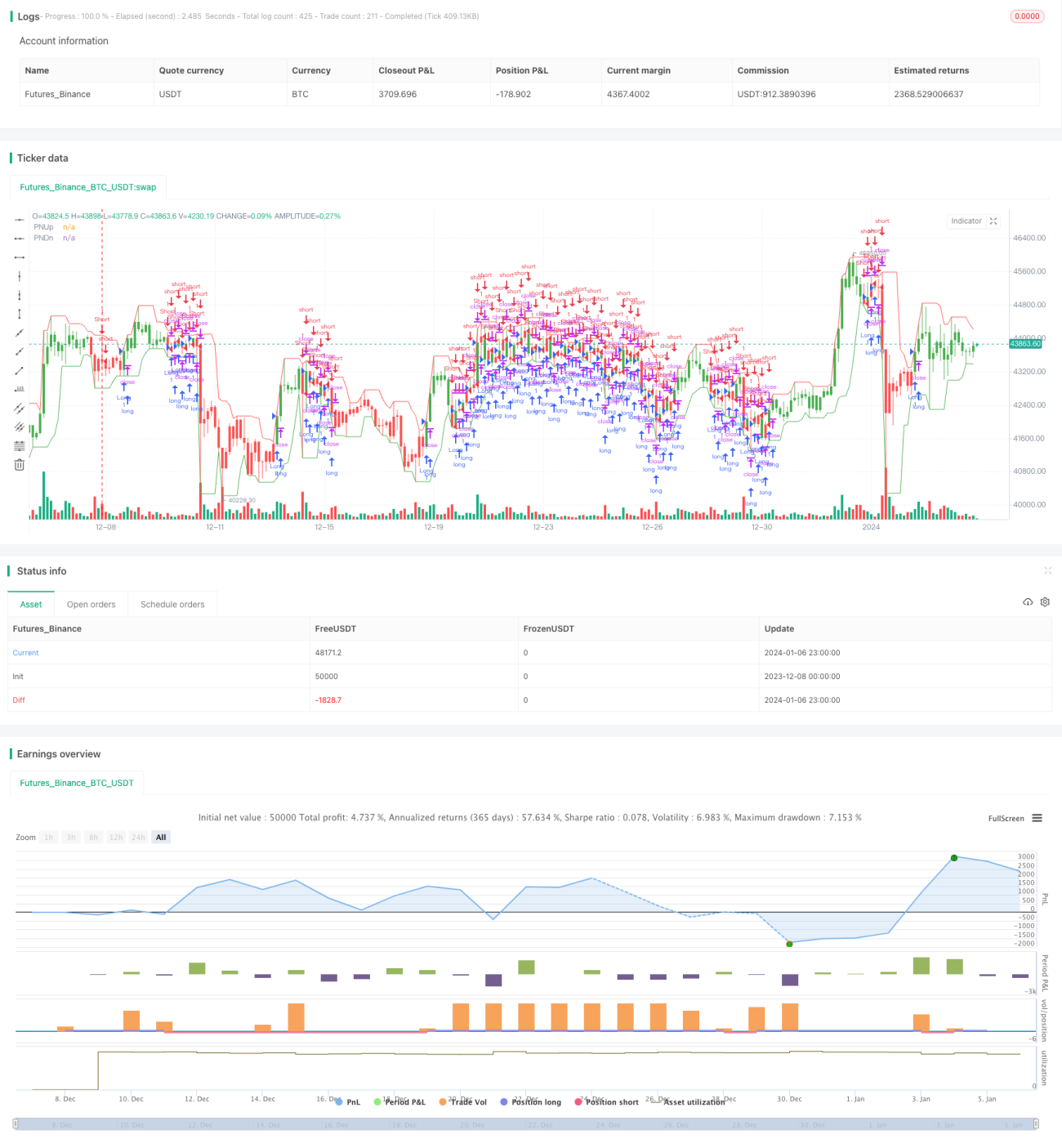
Resumen
La estrategia de backtesting de la Banda de Números Primos identifica los números primos más altos y más bajos alrededor del precio, y dibuja estas dos series de primos como una banda para determinar la tendencia del mercado. Esta estrategia fue desarrollada por Modulus Financial Engineering.
Principio de la estrategia
- Según el porcentaje de tolerancia
percentingresado, se recorre un rango de fluctuación positivo y negativo alrededor de un precio especificado para encontrar el primo más alto y el más bajo. - Utilice las funciones
highestylowestpara obtener el punto más alto y el más bajo de la banda de primos en las últimas N velas. - Determine si el precio de cierre supera el punto más alto o el punto más bajo de la banda de primos para decidir la dirección de compra o venta.
- Es posible invertir la señal de negociación.
Análisis de ventajas
- Aprovecha la naturaleza aleatoria e irregular de los números primos para capturar la aleatoriedad del mercado.
- La banda de primos tiene cierto rezago, lo que ayuda a filtrar parte del ruido.
- Los límites superior e inferior de la banda de primos son flexibles; se pueden ajustar modificando el porcentaje de tolerancia para adaptarse a diferentes períodos y diferentes instrumentos de negociación.
Análisis de riesgos
- La banda de primos no se ajusta perfectamente al movimiento del precio y presenta cierto grado de rezago.
- Las reversiones extremas del precio pueden generar señales falsas.
- Si el porcentaje de tolerancia se establece demasiado grande, se filtrarán algunas señales válidas.
Se pueden evitar riesgos ajustando adecuadamente los parámetros o combinando con otros indicadores.
Direcciones de optimización
- Se puede combinar con indicadores como medias móviles para establecer condiciones dobles que activen la señal.
- Se puede investigar el uso de otros números aleatorios, como los números de Fibonacci, etc.
- Se pueden introducir algoritmos de aprendizaje automático para lograr la optimización automática de parámetros.
Conclusión
En general, la estrategia de backtesting de la Banda de Números Primos es una estrategia muy innovadora y de valor práctico. Utiliza las propiedades de los números primos para capturar la aleatoriedad del mercado, y al mismo tiempo considera el rezago del precio para identificar la tendencia, lo que la hace de gran valor de investigación. Los próximos pasos pueden enfocarse en mejorar la calidad de las señales, ampliar los tipos de números aleatorios y la optimización automática para lograr un rendimiento aún mejor de la estrategia.
/*backtest
start: 2023-12-08 00:00:00
end: 2024-01-07 00:00:00
period: 3h
basePeriod: 15m
exchanges: [{"eid":"Futures_Binance","currency":"BTC_USDT"}]
*/

//@version=2
////////////////////////////////////////////////////////////
//  Copyright by HPotter v1.0 27/03/2018
// Determining market trends has become a science even though a high number - 1