Estrategia de costo promedio ponderado múltiple de EMA basada en stop loss dinámico y toma de ganancias objetivo

Resumen
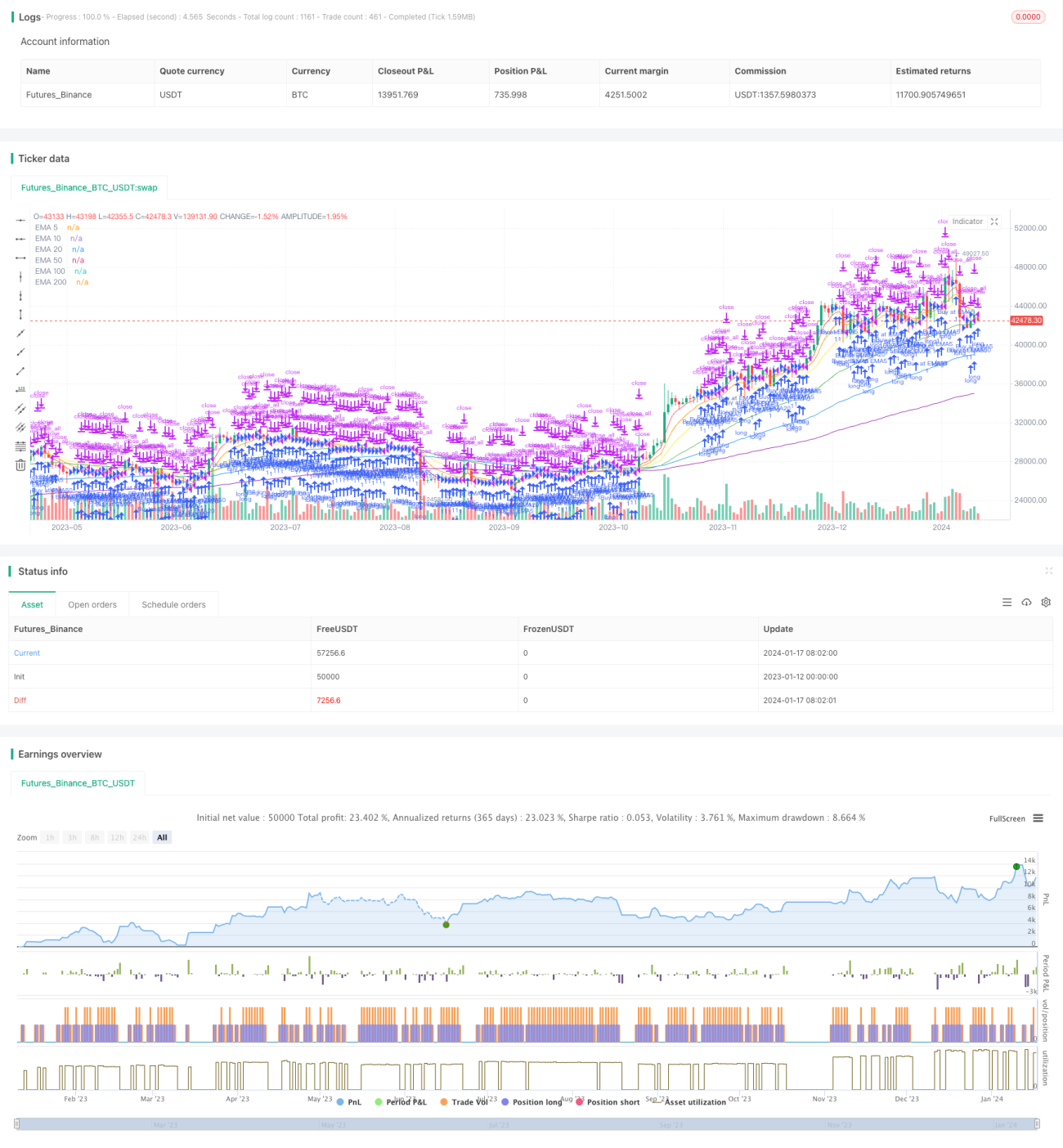
Esta estrategia utiliza múltiples medias móviles exponenciales (EMA) dinámicas como señales de entrada al mercado, combinadas con un stop loss dinámico y un mecanismo de toma de ganancias para gestionar el riesgo y las ganancias. Aprovecha la suavidad de las EMA para identificar tendencias y controla los costos mediante múltiples inversiones DCA (promedio de costos en dólares). Además, la integración de un stop loss dinámico y un objetivo de ganancias predefinido hace que toda la estrategia sea más inteligente y automatizada.
Principio de la Estrategia
Cálculo de Indicadores
- EMA5, EMA10, EMA20, EMA50, EMA100, EMA200 (medias móviles exponenciales)
- ATR (Rango Verdadero Promedio)
Señal de Entrada
Se genera una señal de entrada cuando el precio se acerca o cruza el período EMA seleccionado. Los períodos EMA son personalizables, típicamente se usan los períodos 5, 10, 20, 50, 100, 200. Esta estrategia usa como condición de entrada que el precio esté dentro de un rango del 1% por encima o por debajo de la EMA.
Gestión de Riesgos
Incorpora múltiples mecanismos de gestión de riesgos:
- Stop loss basado en ATR: cierra la posición cuando el ATR supera un umbral predefinido.
- Control del número máximo de entradas: evita una inversión excesiva.
- Stop loss dinámico: trailing stop que se ajusta en tiempo real según la fluctuación del precio.
Mecanismo de Toma de Ganancias
Se establece un nivel objetivo de ganancias; cuando el precio supera el precio objetivo, se sale de la posición.
Análisis de Ventajas de la Estrategia
- Uso de EMA para identificar tendencias, con buen filtro de fluctuaciones a corto plazo.
- Diversificación del costo mediante DCA, evitando comprar caro y vender barato.
- Combinación de múltiples EMA mejora la tasa de éxito de las entradas.
- Stop loss dinámico controla las pérdidas en tiempo real.
- Objetivo de ganancias claro, no se desperdician demasiadas ganancias.
Riesgos y Mejoras
- La selección de los factores EMA debe optimizarse; diferentes mercados y combinaciones de períodos producen resultados muy variables.
- El exceso de operaciones DCA puede inmovilizar demasiado capital.
- El ajuste del nivel de stop loss requiere optimización mediante backtesting.
Ideas de Optimización de la Estrategia
- Utilizar un sistema avanzado de EMA para identificar tendencias.
- Optimización multivariable para determinar el mejor número de DCA y el nivel de stop loss.
- Incorporar modelos de aprendizaje automático para predecir cambios de precio.
- Integrar un módulo de gestión de capital para controlar la inversión total.
Conclusión
Esta estrategia integra múltiples mecanismos: identificación de tendencias mediante EMA, control de costos mediante DCA, stop loss dinámico y salida por objetivo de ganancias. Hay amplio margen de optimización en el ajuste de parámetros y el control de riesgos. En general, la estrategia tiene una gran adaptabilidad y capacidad de expansión, ofreciendo a los inversores la posibilidad de obtener retornos excedentes estables.
/*backtest
start: 2023-01-12 00:00:00
end: 2024-01-18 00:00:00
period: 1d
basePeriod: 1h
exchanges: [{"eid":"Futures_Binance","currency":"BTC_USDT"}]
*/

//@version=4
strategy("EMA DCA Strategy with Trailing Stop and Profit Target", overlay=true )

// Define the investment amount for when the condition is met- 1