Estrategia de cruce rápido QQE basada en filtro de tendencia

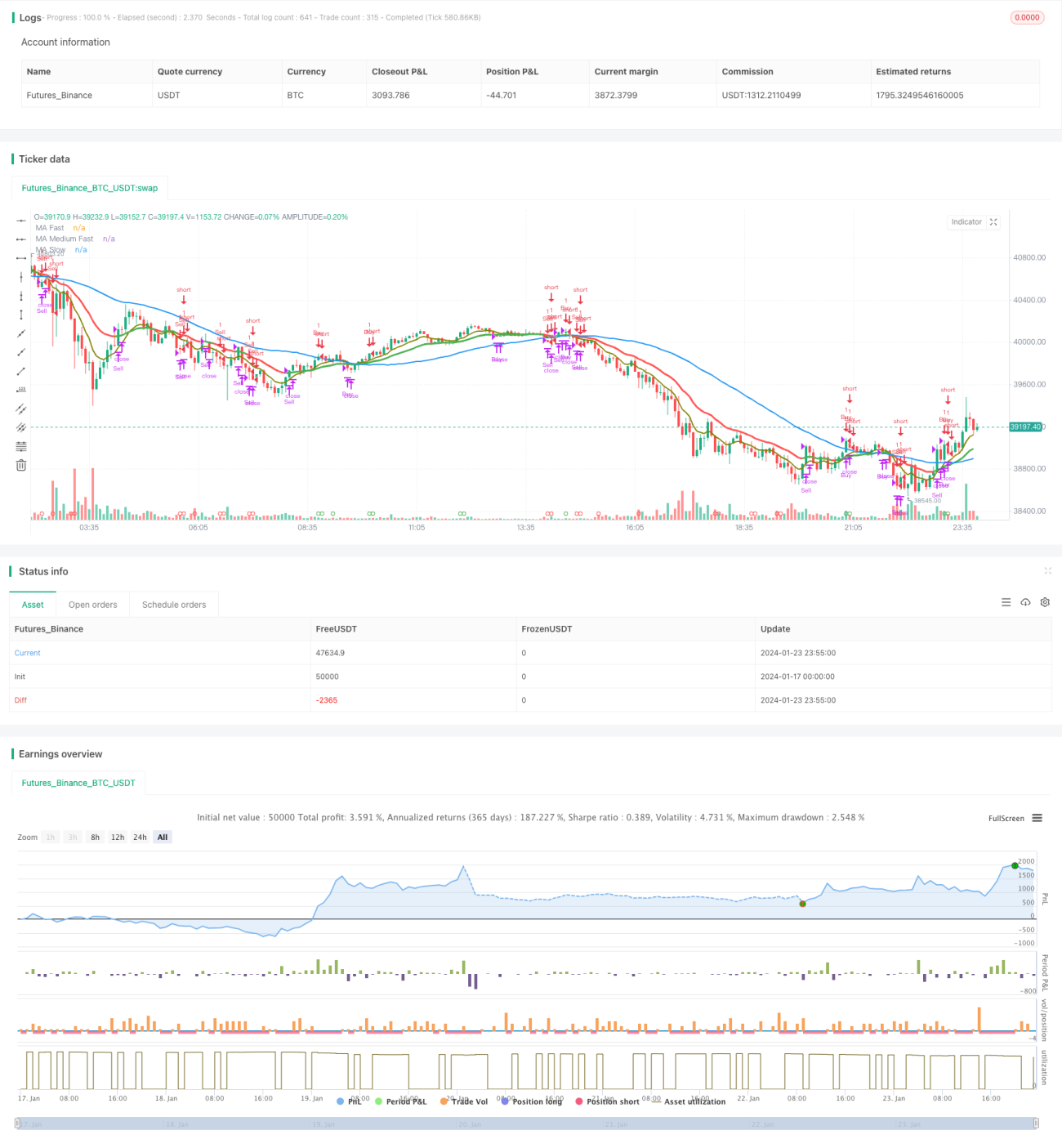
Resumen
La estrategia de cruce rápido QQE basada en filtro de tendencia es una estrategia de trading que sigue la tendencia, utilizando el cruce rápido QQE junto con medias móviles para filtrar la dirección de la tendencia. El QQE (Estimación Cualitativa Cuantitativa) se basa en el Índice de Fuerza Relativa (RSI), pero utiliza una técnica de suavizado como transformación adicional. Se pueden seleccionar tres tipos de cruces (por defecto están todos seleccionados):
- Cruce de la línea de señal RSI con la línea cero (XZERO)
- Cruce de la línea de señal RSI con la línea rápida RSIatr (XQQE)
- Salida de la línea de señal RSI del canal de umbral RSI (compra/venta)
Las señales de compra/venta pueden filtrarse opcionalmente mediante medias móviles:
- Para señales de compra, el precio de cierre debe estar por encima de la media móvil rápida, y la media móvil rápida (EMA8) > media móvil media (EMA20) > media móvil lenta (SMA50)
- Para señales de venta, el precio de cierre debe estar por debajo de la media móvil rápida, y la media móvil rápida (EMA8) < media móvil media (EMA20) < media móvil lenta (SMA50)
Y/o un filtro de dirección de tendencia:
- Para señales de compra, el precio de cierre debe estar por encima de la media móvil lenta (SMA50), y la media móvil direccional (EMA20) debe ser verde.
- Para señales de venta, el precio de cierre debe estar por debajo de la media móvil lenta (SMA50), y la media móvil direccional (EMA20) debe ser roja.
XZERO y XQQE no están incluidos en el filtro; se utilizan para indicar señales de compra/venta pendientes, especialmente XZERO.
Esta estrategia debería funcionar en cualquier par de divisas y en la mayoría de los marcos temporales de los gráficos.
Principio de la estrategia
La idea central de esta estrategia es utilizar los cruces direccionales del indicador rápido QQE como señales de trading, y filtrar las señales ruidosas mediante una combinación de medias móviles para capturar la dirección de la tendencia.
Específicamente, la estrategia utiliza los siguientes indicadores y señales:
Indicador rápido QQE: Es un indicador basado en el RSI, sometido a un suavizado adicional que lo hace más sensible y rápido. El indicador consta de tres líneas: la línea central es la media móvil exponencial del RSI, la banda superior es la línea central + ATR rápido * un coeficiente, y la banda inferior es la línea central - ATR rápido * un coeficiente. Cuando el RSI cruza por encima de la banda superior, es una señal de venta; cuando cruza por debajo de la banda inferior, es una señal de compra.
Cruce de la línea cero: Se genera una señal cuando la línea central del RSI cruza la línea cero; un cruce hacia arriba es una señal de compra, y hacia abajo una señal de venta. Estas señales indican un posible cambio de tendencia.
Rotura del canal: Se genera una señal cuando la línea central del RSI entra en el canal de umbral establecido; la rotura del canal superior es una señal de venta, y la rotura del canal inferior es una señal de compra. Estas son señales de tendencia más fuertes.
Combinación de medias móviles: Se utilizan tres grupos de medias móviles: rápida (8 periodos), media (20 periodos) y lenta (50 periodos). Cuando las tres líneas están ordenadas como: rápida > media > lenta, es una tendencia alcista; cuando están como rápida < media < lenta, es una tendencia bajista. La combinación se utiliza para determinar la dirección general de la tendencia.
Filtro de dirección de tendencia: Solo se genera una señal de compra si el precio de cierre está por encima de la media móvil lenta y la media móvil media es ascendente (máximo del periodo > mínimo); solo se genera una señal de venta si el precio de cierre está por debajo de la media móvil lenta y la media móvil media es descendente. Esto ayuda a filtrar señales falsas en dirección contraria.
Al combinar las señales de cruce del indicador rápido QQE con el filtro de tendencia de las medias móviles, se pueden capturar puntos de reversión a corto y mediano plazo dentro de la dirección de la tendencia en marcos temporales más grandes, formando un sistema de trading relativamente completo. Al mismo tiempo, los parámetros del indicador están configurados para ser sensibles, permitiendo detectar los puntos de inflexión de la tendencia lo antes posible.
En resumen, se trata de una estrategia que sigue tendencias a mediano y largo plazo, utilizando indicadores rápidos para capturar oportunidades de compra/venta en reversiones a corto plazo, y empleando filtros de medias móviles para reducir el riesgo de operar en contra de la tendencia, maximizando así las ganancias.
Ventajas de la estrategia
- Utiliza el indicador rápido QQE, que puede capturar rápidamente señales de reversión.
- Aplica múltiples medias móviles para determinar la dirección a largo plazo, evitando operaciones en contra de la tendencia.
- Incluye varios tipos de señales de cruce que pueden combinarse, aumentando las oportunidades de beneficio.
- Parámetros ajustables, optimizables para diferentes activos y marcos temporales.
- Utiliza señales de ruptura de canales del propio indicador, sin definir canales independientes, evitando la dependencia de parámetros.
- Puede capturar bien movimientos de reversión a corto plazo dentro de una tendencia general a medio-largo plazo.
- Concepto simple y claro, fácil de entender e implementar.
Riesgos de la estrategia
La estrategia también presenta algunos riesgos potenciales:
- Los indicadores rápidos tienden a generar señales falsas, y las medias móviles no pueden filtrarlas por completo, existiendo el riesgo de seguir la dirección equivocada.
- Cuando se produce un cambio de tendencia en marcos temporales grandes, es fácil generar señales de trading contrarias al riesgo.
- No considera factores de gestión de capital, existe la posibilidad de pérdidas debido a operaciones excesivas.
- No tiene stop loss, lo que aumenta el riesgo de ampliar las pérdidas.
- Riesgo de sobreajuste en backtesting; el rendimiento en vivo debe ser verificado.
Las contramedidas y soluciones incluyen:
- Ajustar los parámetros de las medias móviles, utilizando más periodos para juzgar la tendencia.
- Agregar otros indicadores de filtro combinados, como MACD, bias, etc.
- Incorporar una estrategia de stop loss para controlar las pérdidas por operación.
- Verificar en vivo y optimizar los parámetros.
Direcciones de optimización de la estrategia
La estrategia aún tiene margen para una mayor optimización:
- Optimizar los parámetros de las líneas rápida y lenta del indicador QQE para encontrar la mejor combinación.
- Probar más combinaciones de medias móviles para encontrar el mejor filtrado.
- Agregar la combinación de otros indicadores, como MACD, para filtrar señales auxiliares.
- Aplicar estrategias de gestión de capital para optimizar la gestión de posiciones.
- Establecer una estrategia de stop loss para controlar el riesgo de pérdida por operación.
- Optimizar los parámetros para diferentes activos.
- Determinar la tendencia en marcos temporales superiores para evitar ser engañado por reversiones a corto plazo.
Mediante la optimización de parámetros, la combinación de más indicadores y la implementación de medidas sólidas de gestión de capital y riesgo, se espera mejorar el rendimiento en vivo de la estrategia.
Conclusión
En general, la estrategia de cruce rápido QQE basada en filtro de tendencia es una opción que vale la pena considerar. Su ventaja radica en capturar rápidamente oportunidades de trading de reversión mientras utiliza múltiples medias móviles para determinar la tendencia general, evitando en la medida de lo posible operaciones erróneas en dirección contraria. Mediante la optimización de los parámetros del indicador y las condiciones de filtro, junto con una estricta gestión de capital, la estrategia puede generar retornos de inversión relativamente estables.
Por supuesto, los riesgos no pueden ignorarse; es necesario realizar verificaciones en vivo y ajustes continuos para garantizar la practicidad y confiabilidad de la estrategia. En general, merece la pena que los inversores la estudien y realicen un seguimiento a largo plazo. Se cree que con el avance de la tecnología de trading algorítmico, este tipo de estrategias basadas en indicadores rápidos y filtros de tendencia seguirán mejorándose y generalizándose.
- 1