Estrategia de reversión con stop loss de seguimiento de tendencia

Resumen
La estrategia de reversión con trailing stop y seguimiento de tendencia es una estrategia que utiliza el indicador Parabolic SAR para identificar la tendencia y tomar posiciones opuestas cuando se produce una reversión. Esta estrategia combina mecanismos de stop loss y take profit para controlar el riesgo.
Principio de la estrategia
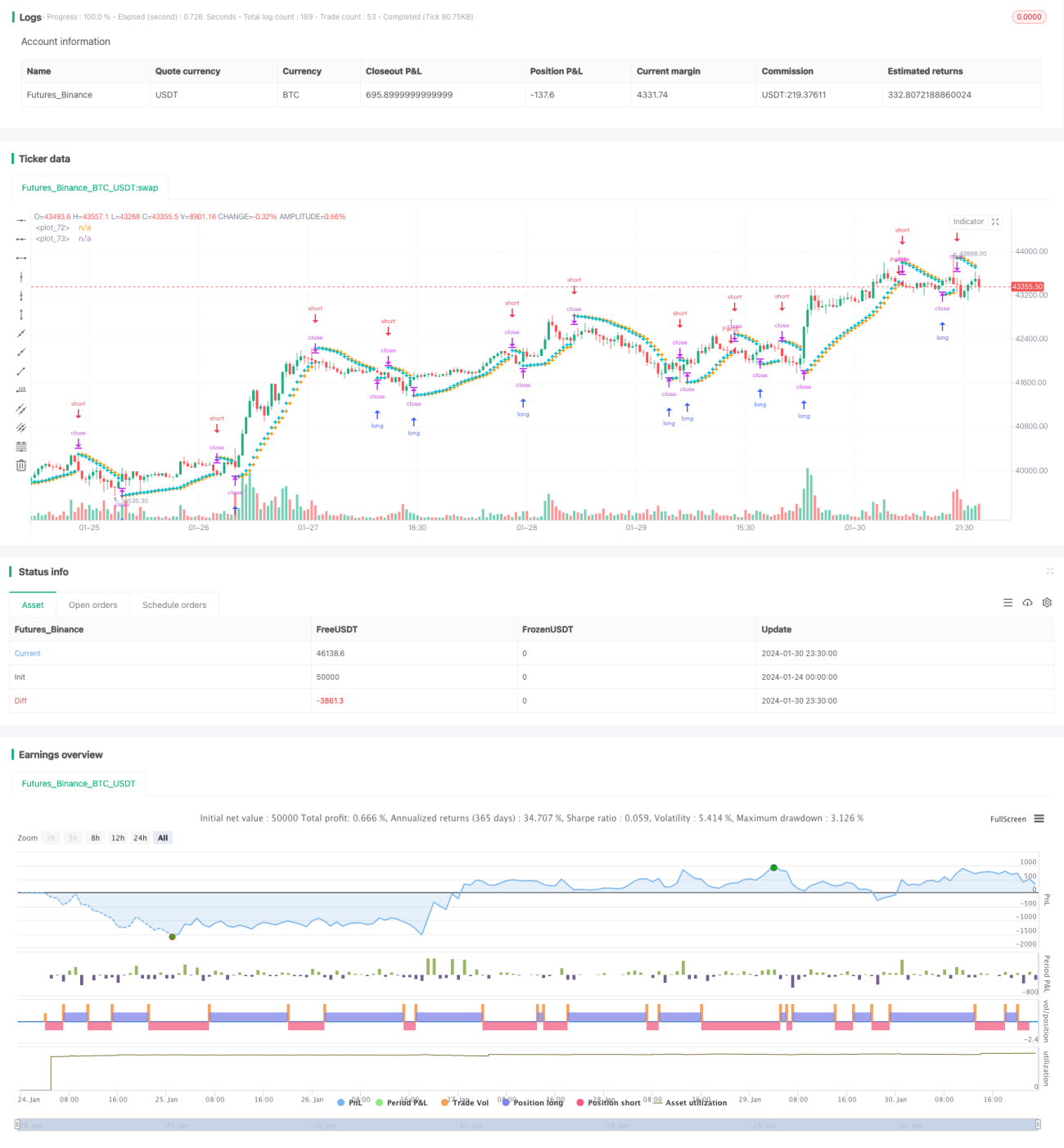
La estrategia utiliza el indicador Parabolic SAR para determinar la tendencia actual del mercado. El nombre completo de Parabolic SAR es "Parabolic Stop and Reverse" (Parabólico de Parada y Reversión). Sus líneas indicadoras aparecen en el gráfico de precios como una serie de parábolas, donde los puntos parabólicos representan posibles puntos de reversión.
Cuando los puntos SAR descienden y están por debajo del precio, indica una tendencia alcista; cuando los puntos SAR ascienden y están por encima del precio, indica una tendencia bajista. La estrategia determina la dirección actual de la tendencia según la posición de los puntos SAR.
Específicamente, cuando los puntos SAR están en una tendencia ascendente y por encima del precio, la estrategia toma una posición corta; cuando los puntos SAR están en una tendencia descendente y por debajo del precio, la estrategia toma una posición larga. Es decir, cuando los puntos SAR indican una reversión de la tendencia, se ingresa en la posición contraria.
Además, la estrategia establece mecanismos de stop loss y take profit. Al tomar una posición larga, es posible establecer un precio de stop loss para limitar las pérdidas; al mismo tiempo, se puede fijar un precio de take profit para cerrar la posición cuando el precio alcance un objetivo de ganancia determinado. El mecanismo para posiciones cortas es similar.
Análisis de ventajas
Esta estrategia combina un indicador de tendencia con mecanismos de stop loss/take profit, ofreciendo las siguientes ventajas principales:
- Permite capturar oportunamente las oportunidades de reversión de tendencia, realizando operaciones en sentido contrario.
- Al establecer stop loss y take profit, se puede controlar activamente el riesgo y las ganancias.
- El Parabolic SAR es un indicador de reversión de tendencia bastante utilizado con buenos resultados.
- Las reglas de la estrategia son simples y claras, fáciles de entender e implementar.
Análisis de riesgos
Esta estrategia también presenta algunos riesgos a tener en cuenta:
- El indicador Parabolic SAR no es perfecto y en ocasiones puede generar señales falsas.
- Es necesario establecer precios de stop loss o take profit razonables, de lo contrario, se podría salir prematuramente de la posición.
- Las comisiones de trading también afectan el beneficio final.
- La nueva tendencia tras la reversión puede ser de corta duración.
Estos riesgos se pueden mitigar ajustando los parámetros u optimizando la estrategia, o combinándola con otros indicadores de filtración.
Direcciones de optimización
La estrategia se puede optimizar en los siguientes aspectos:
- Optimizar los parámetros del Parabolic SAR para encontrar la mejor combinación de parámetros.
- Probar diferentes estrategias de stop loss y take profit, como trailing stop.
- Agregar indicadores o condiciones para filtrar las señales de reversión.
- Incorporar control de posición, aumentando o reduciendo el tamaño de la posición según las condiciones del mercado.
- Ajustar los parámetros para diferentes activos negociados.
Resumen
En general, esta estrategia de reversión con trailing stop y seguimiento de tendencia es un enfoque de trading clásico. Cumple la función de identificar reversiones de tendencia, complementada con stop loss y take profit para controlar el riesgo. Mediante la optimización, puede convertirse en una idea de estrategia viable para la operativa real.
- 1