Estrategia de trading de opciones periódica basada en el indicador Stochastic

Resumen
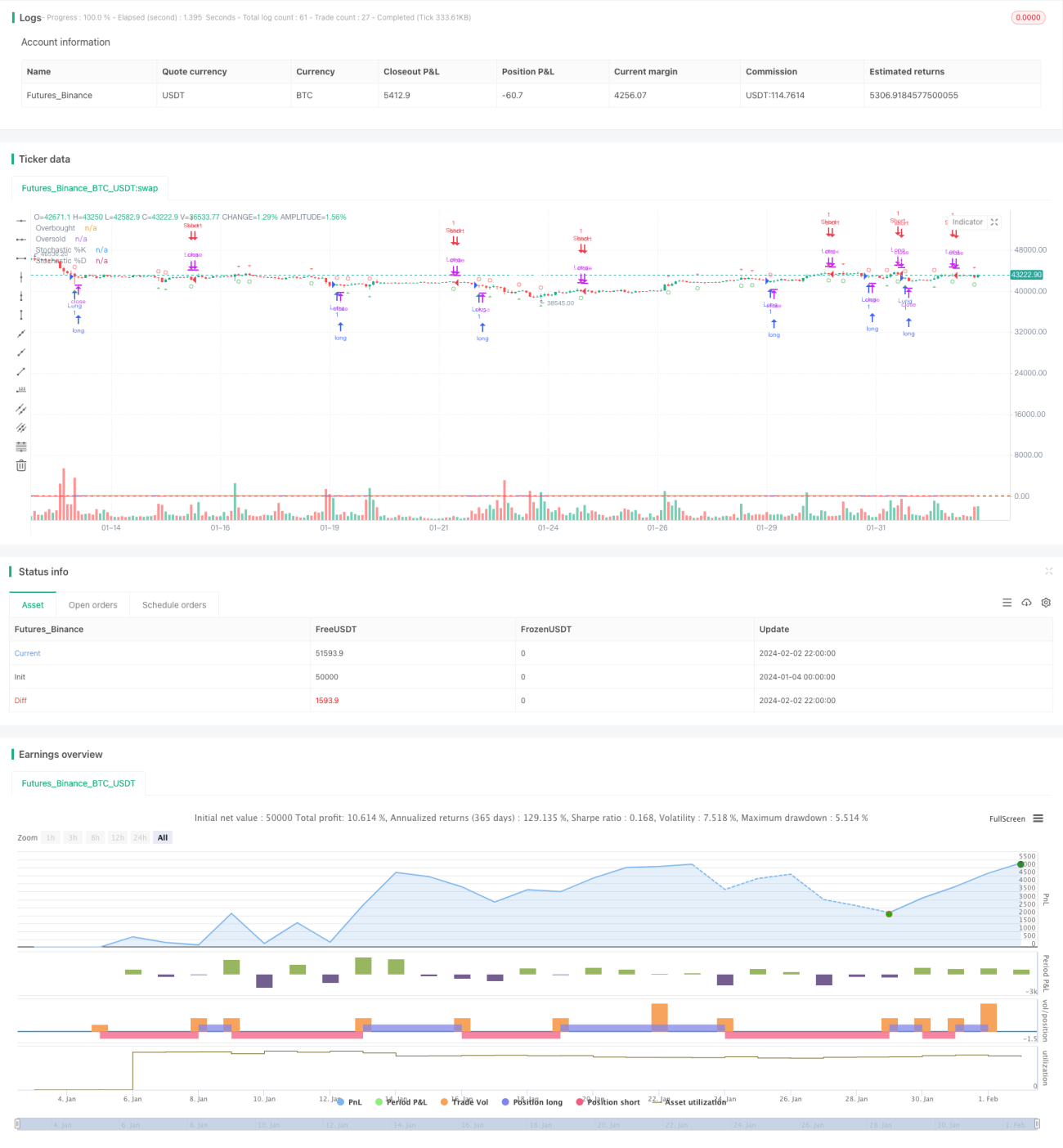
Esta estrategia, denominada "Estrategia de trading de opciones periódicas basada en el indicador Stochastic", utiliza el oscilador estocástico para identificar posibles puntos de entrada y salida en el trading de opciones. Está diseñada específicamente para el trading de opciones, permitiendo identificar oportunidades tanto en posiciones largas como cortas.
Principio de la estrategia
La estrategia utiliza la línea %K del Stochastic de 14 períodos y una media móvil simple de 3 períodos para trazar la línea %D del Stochastic. Cuando la línea %K cruza al alza por encima de la línea %D desde niveles bajos, se considera una señal alcista; cuando la línea %K cruza a la baja por debajo de la línea %D desde niveles altos, es una señal bajista. Las condiciones específicas de entrada y salida son las siguientes:
- Entrada larga: cuando la línea %K cruza al alza por encima de la línea %D desde un nivel inferior a 20.
- Salida larga: cuando la línea %K cruza a la baja por debajo de la línea %D desde un nivel superior a 80.
- Entrada corta: cuando la línea %K cruza a la baja por debajo de la línea %D desde un nivel superior a 80.
- Salida corta: cuando la línea %K cruza al alza por encima de la línea %D desde un nivel inferior a 20.
Ventajas de la estrategia
- Utiliza el indicador Stochastic para identificar zonas de sobrecompra y sobreventa, evitando comprar en techos y vender en suelos.
- La optimización de los parámetros del indicador puede mejorar la calidad de las señales de trading.
- Permite personalizar las condiciones de entrada y salida para optimizar la gestión de posiciones.
- Es aplicable al trading de opciones, mejorando la eficiencia en el uso del capital.
Análisis de riesgos
- El indicador Stochastic puede generar señales falsas, por lo que es necesario combinarlo con otros indicadores para filtrarlas.
- La configuración fija de parámetros puede perder algunas oportunidades de trading.
- Las reducciones pueden ampliarse, por lo que es necesario controlar el tamaño de cada posición.
- Es necesario prestar atención a los fundamentos de las acciones y a los cambios macroeconómicos.
Direcciones de optimización de la estrategia
- Combinar con indicadores como medias móviles para filtrar señales falsas.
- Probar diferentes combinaciones de parámetros para optimizar la configuración.
- Aumentar el umbral de cruce para reducir señales falsas.
- Optimizar las condiciones de stop-loss y take-profit para controlar las pérdidas por operación.
Resumen
Esta estrategia aprovecha el principio de sobrecompra y sobreventa del indicador Stochastic para identificar momentos potenciales de entrada. En comparación con las estrategias tradicionales de seguimiento de tendencia, puede capturar movimientos significativos en puntos de inflexión del mercado. Mediante la optimización de parámetros y el filtrado de señales, se puede mejorar aún más la estabilidad de la estrategia. Esta estrategia es aplicable al trading de opciones, buscando obtener altos rendimientos bajo un control adecuado del riesgo.
- 1